Podcasts

Why do some women find killers irresistible?

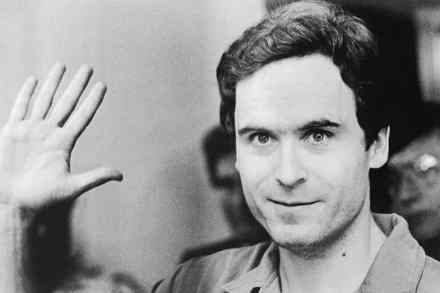
Women who fall in love with killers have always fascinated and repulsed me. What drives them? Do they think they can ‘save’ these men? Are they secret sadists, acting by proxy? Are they masochists, getting a cheap thrill from communicating with someone who has tortured a fellow woman to death? Bonnie and Clyde syndrome, also known as hybristophilia, puts the case that, as an evolutionary reproductive trait, some women can be drawn to ‘bad boys’ who are prepared to break rules/laws and are therefore ‘stronger’. I was pleased to see that Denmark has now banned prisoners serving life sentences from starting romantic relationships while in jail.

How the good intentions of Title IX ended up punishing the innocent

How do we have difficult conversations? Especially in an age of polarisation, where everything is immediately politicised? But also where calls for ‘nuance’ and ‘complication’ are sometimes used to justify what is really just bigotry. Is it possible to be both protective of the vulnerable and to allow for a larger pursuit of justice and compassion? These are the questions I was left with after listening to the podcast series The Inbox (part of the larger anthology The 11th), a tricky but sensitive look at the questions that surround the adjudication of sexual violence accusations on college campuses through the Title IX system. Sarah Viren wrote an essay for the New York Times about the accusations of sexual harassment against her wife that went viral.

A podcast that will rescue your relationship: Where Should We Begin? reviewed

Let me give you a free piece of relationship advice: just break up. If it’s more work than pleasure, if your heart sinks when they call, if you catch yourself writing ‘have sex’ on your to-do list, break up. Life is short, death is certain, relationships are for loving in, and if you can’t be with the one you love, you can at least leave the one you’re with. I give this advice because I know that people in bad relationships don’t take it. They are like those evacuation refuseniks, stumping around on the volcanic hillside, saying they’ve lived there 20 years and they’ll be damned if the whole thing blowing sky-high will change that.

Must all history programming be ‘relevant’?

When it comes to history programming, television’s loss is increasingly audio’s gain. People moan to me most weeks over the lack of really good, rigorous, eye-opening documentaries on the screen, and I can only nod along in agreement. Oh for a Kenneth Clark-style lecture! More Michael Wood! There’s an especially strong appetite for the adventurous commissions of the 1990s and 2000s. It’s principally podcasts, now, that are pouring into this void. Stephen Fry’s Edwardian Secrets, a 12-episode sequel to his previous series on the Victorians, even sounds like an extended BBC4 documentary, replete with talking heads, choral background music and just a dash of Horrible Histories.

Dad’s the word

From our US edition

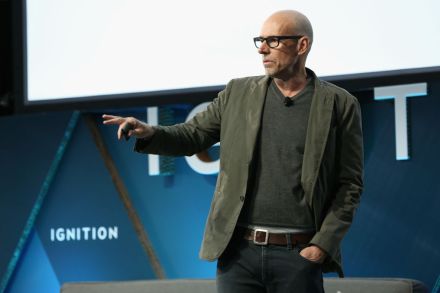
My partner has taken to calling his favorite podcast host ‘Dad’. ‘Can I put Dad on?’ he asks when we get into the car. I’ve fallen into the habit too. ‘Does your dad have a new episode today?’ I don’t know how much he actually agrees with Dad — Scott Galloway, the NYU professor and business expert whose podcast properties include Pivot with Kara Swisher and The Prof G Pod — as he is yet to invest in Galloway-approved stocks or repeat Dad’s opinions as his own. I also don’t think he aspires to be like Galloway, with his clearly nonexistent work-life balance and tragic dad jokes.

parasocial

Contains moments of spellbinding banality: Radio 4’s The Poet Laureate has Gone to his Shed reviewed

The interview podcast is a genre immoderately drawn to gimmicks, as the logical space of possible formats is gradually exhausted. The interviewee, quite often themselves a podcaster, might be, for example, invited to noisily eat lunch while nominating their top-five deceased childhood pets. The theory is that fanciful formats encourage the interviewee to open up. Under such conditions, the interview itself can come to seem incidental to the main event, the atmosphere chummy, comfortable, back-scratching, but fundamentally uninterested: you do my interview, I’ll do yours, no real questions asked.

A podcast that listens to what anti-vaxxers think rather than lecturing them

Work is our new religion. There are people whose primary job is writing listicles of celebrity gossip, illustrated with gifs from the Fast & Furious franchise, who refer to being a writer as a ‘calling’. If I think about this for too long my brain simply shuts down to protect itself. What we used to do for God we now do for our work. In a secular culture, it seems totally normal — admirable, even — to sacrifice the possibility of having a family, to give up all leisure time, to starve yourself or live on insane, totally made-up diets like intermittent fasting or paleo for the sake of your job as an Instagram beauty influencer or whatever. But to wear a habit and be celibate and fast out of a religious devotion? That must be a cult!

Floods you with fascinating facts: Trees A Crowd reviewed

Listening to Trees A Crowd, a podcast exploring the ‘56(ish) native trees of the British Isles’, solved one of childhood’s great mysteries for me. Why, when you plant a pip from one type of apple, does it grow into a completely different type of apple tree? The answer — one kind of apple tree will typically cross-pollinate with another variety to pass on a different set of genes — is less interesting than the next bit. Which is that if you do plant, say, a Braeburn seed, and it takes, you’re likely to end up with crab apples.

The best theatre podcasts

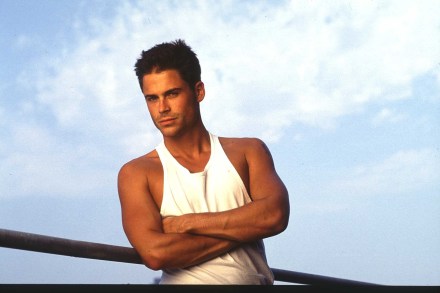
All the world’s on stage again so where to go to for insight into what to see and why? Podcasts, of course. Lowe’s ‘luck’ is that he happens to be friends, neighbours, or have starred, with everyone he interviews Let’s start with Literally! With Rob Lowe. An hour-long conversation between the most swoonable actor in the world who we’ve all forgotten, and everyone he knows and likes, from Alec Baldwin and Oprah Winfrey to St Elmo’s Fire co-star Demi Moore. It’s a wonderful and eye-opening listen. Lowe combines the enthusiasm and curiosity of the best interviewers with a knowledge and experience that makes conversation flow until the cup spilleth over.

Wallace Shawn’s Designated Mourner feels like watching the news

Pity the aesthete, the flâneur and the opera-goer. Those who find the contents of their own heads so dull and mundane they must fill them instead with the fantastical inventions of our most extravagant lunatics. They have been locked out of the theatres and cinemas and public spaces that make them feel at their most alive and abandoned to the content programming of Netflix and whatever Tenet was supposed to be. They’ve been deprived, sheltered, cut off from the only thing that gives their lives meaning. I’m describing me. I’m asking you to feel sorry for me.

Much smarter than your average podcast: Passenger List reviewed

Passenger List opens with a carefully structured ripple of breaking news bulletins: a mysterious catastrophe, an unconvincing official explanation, the repetitive stupidity that surrounds disaster. A plane has disappeared, no wreckage has been found. A woman whose brother was on board begins to search for the truth. The authorities say it was a bird strike: a flock of geese was shredded in the engines and 200 passengers crumpled on impact with the Atlantic ocean. Of course, the authorities’ story doesn’t make sense. So we follow our hero, Caitlin, a lone citizen searching indefatigably for answers in a shadow world of half-truth and paranoia. It seems that we never tire of this subject matter.

The best food podcasts

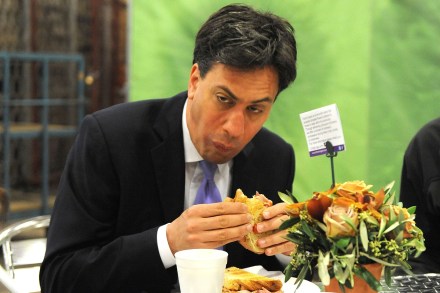
You have to hand it to Ed Miliband. After bacon sandwich-gate, he might never have eaten in public again, but there he was, wolfing down cod and chickpeas, eggs and Za’atar on the chart-topping podcast Table Manners with Jessie Ware. Presumably he thought that audio would be a fail-safe medium in which to redeem himself. No cameras, no aggressive questioning (the show is co-hosted by singer Jessie Ware and her mum Lennie), no risk. Suffice it to say he underestimated this one. An early part of the conversation, in précis, ran like this: ‘What’s your go-to dish?’, ‘I’m a recipe-box follower and a recipe follower.’ ‘Which recipe books?’, ‘That’s a good question.’ [Some minutes later.

Our Struggle is the worst idea ever for a podcast — and it’s great

From our US edition

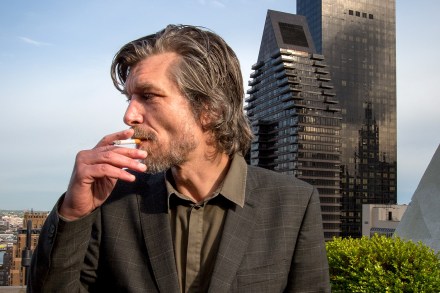
Our hosts are Lauren and Drew and they want to talk about Karl Ove Knausgaard. Or rather, they want to talk around Knausgaard. Or to talk through Knausgaard, towards the sense of what the Knausgaard phenomenon means. Or, it sometimes seems, they want to talk about everything but Knausgaard — cigarettes, Constance Garnett, the history of literary criticism, to what extent hotness is a function of tallness, Clarice Lispector, media hype, backlash, cancel culture, sneakers, Gen X, how Geoff Dyer got where he did — until the only territory left uncovered by the conversation is Knausgaard himself, described only through omission, in negative outline, raising yet another cigarette to his smoldering, craggy face.

knausgaard struggle

Mind of a murderer

From our US edition

There are a lot of theories as to why we are living through a true crime boom. Is it white women fetishizing our pain and fear of men? Is it a psy-op to discredit leftist attempts to defund the police and abolish prisons? Or is it the collective psyche trying to metabolize a few decades of turmoil and violence now that murder rates are down from their Seventies and Eighties peak? I think it’s less complicated. It’s entertaining, it’s cathartic and it’s a way of externalizing anxiety. You listen to stories of bloody murder and grave injustice, and then you listen to the problem getting resolved as the murderer is revealed, the innocent person released, the mystery solved.

true crime

The best podcasts to be enjoyed at 4 a.m.

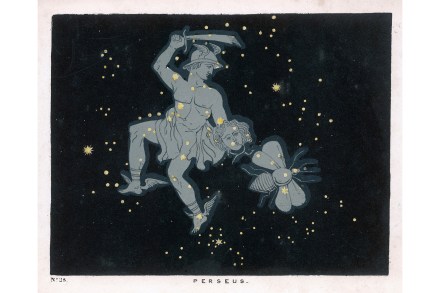
Now that all of the billionaires are going into space, the night sky holds a special new kind of allure. We see a little twinkle in the distance and we can think to ourselves, there they are, out there, far away, away from us. It’s not clear whether Jeff Bezos and Elon Musk spent their childhoods looking up at the stars, fantasising fervently about joining them at some future date, or if they are now just bored. But perhaps their sense of identification and belonging in the vast night sky can be understood in another way. Humans have always told stories about the stars, and many of these myths could be relevant to the ambitions of these very wealthy men. Think of Prometheus, too smart and powerful for his own good.

The joy of Radio 4 Extra

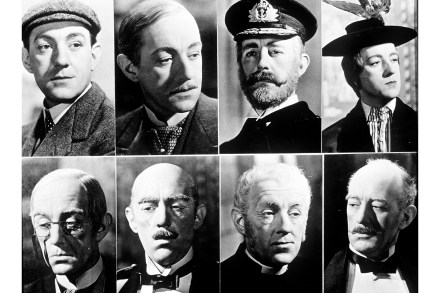
The best thing on the radio last week was, without question, Kind Hearts and Coronets. You may have missed it because it was on Radio 4 Extra, the poor, forgotten relation of the BBC’s main channels, which many regard as merely a Radio 4+1 for yesterday’s replays, when it is in fact home to the drama and comedy archive. Like the BBC4 TV channel, which is sadly ceasing commissioning, it hosts the sort of intelligent programmes people really enjoy, to the consternation of those who dismiss them as ‘old’. Fittingly, for Radio 4 Extra, Kind Hearts is all about a poor, forgotten relation who strives to reclaim his place within a family unwilling to acknowledge his existence.

The podcast that makes the world strange, mysterious and compelling again

It’s interesting that we have decided shaming and yelling are the easiest ways to change people’s minds. Which is not to say I do not think there are people in this world who deserve to be shamed and yelled at: people who use the term ‘cancel culture’ sincerely, people who are deeply invested in the marriage and divorce cycles of celebrities, Meryl Streep. But do I think yelling at Ms Streep will accomplish what I fervently wish for, which is for her to stop ruining perfectly fine movies with her barely adequate performances? No. Every issue in our cultural lives is politicised right now.

Insane and fascinating: BBC World Service’s Lazarus Heist reviewed

The narrative podcast remains a form in search of a genre. The template set by the hit show Serial — enterprising American journalists with janky piano theme tune shed new light on tantalising murder — still predominates seven years on. To this we can add the format pioneered by S-Town (initial murder investigation subsides into rich human detail) and, more recently, the excellent Wind of Change (intriguing what-if maps cultural and macropolitical shifts, with bonus CIA window-dressing). I remain sceptical about the form’s usefulness as a way of breaking hard news. Caliphate, the New York Times jaw-dropper on the Islamic State, is less gripping now its key source has been revealed as a fraud.

So many stories are boring

From our US edition

We need to stop letting people ‘tell their stories’. Why should random people get half an hour to tell what Oprah would call ‘their truth’? There are so many podcasts out there that simply broadcast people’s rambling anecdotage about the worst thing that ever happened to them — going for that salacious, daytime-TV vibe, but with the authority of journalism, which means narrating traumatic and often outlandish stories while the hosts offer weighty reflections like ‘huh’ and ‘crazy’. The moment when I gave up on the podcast Committed, a series dedicated to letting couples tell their ‘hilarious, heartbreaking, and inspiring stories’ with no journalistic interference whatsoever, was in an episode called ‘No More Secrets’.

podcast mckay truth

Seldom less than gripping: Banged Up podcast reviewed

Prison-based podcast Banged Up, now in its second series, is far more uplifting — and less soapy — than its name suggests. It begins with the tacit assumption that, if you haven’t personally been incarcerated, you probably have at least a dozen questions you’d want to ask someone who had. Is the food really awful? How likely are you to be beaten up? Is there a lending library? (I’d start with the last.) Banged Up has the answers to plenty more besides. The podcast is hosted by a prison lawyer named Claire Salama and two ex-inmates, a former footballer, Mike Boateng, known as ‘Boats’, and university-educated Rob Morrison, who describes himself as ‘probably not their [prisons’] target market’.