Podcasts

Enjoyable and informative but where’s the drama? Political Currency reviewed

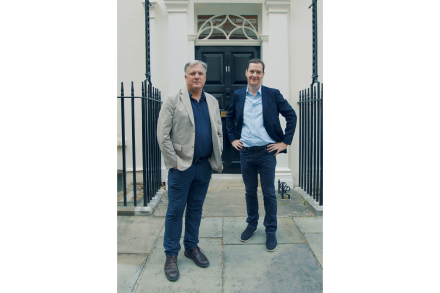
The first episode of George Osborne and Ed Balls’s new podcast, Political Currency, opened with an old clip of the pair arguing across the despatch box. Osborne had described his latest Budget as ‘steady as she goes’ and Balls was having none of it. ‘What kind of ship does he think he’s on, the Titanic?’ If producers hoped that the duo would bring something of this, er, biting dynamic to their podcast, they were in for a surprise. The opening number saw little in the way of sparring between the former opponents. Seated in a studio in east London, they spent most of the time doing what so many in their milieu are doing at the moment, chummily sharing their views and frustrations and trying to squeeze some entertainment out of it.

The best cooking podcasts

From our US edition

There comes a time in every home cook’s life when she is separated from her craft. This may be due to illness, incapacity, repairs, renovations or, worstof all, moving house. This month, I moved from Texas to Pennsylvania. Between packing up my utensils and appliances, waiting for the moving truck to make its halting way across the nation, and finally unpacking and reorganizing my tools, I lost my kitchen for four weeks. But benched cooks like mehave a surprisingly satisfying alternative: cooking podcasts. The first podcast I tried is most similar to traditional cooking shows: Food 52’s Play Me a Recipe. Chefs and cookbook authors host episodes in which they introduce a favorite recipe and talk through its ingredients and method, encouraging listeners to pause and rewind as needed.

podcasts

The rise of vampirism in Silicon Valley

The Immortals, which begins on Radio 4 this week, is not for the faint-hearted. While it professes to be about the human quest for longevity and the elusive ‘cure’ for getting older, it focuses largely upon the transferral of blood plasma from healthy young people to reluctantly ageing people, or, as anyone with good sense might put it, the desperate descent from vanity to vampirism. I was on the verge of switching over to something more anodyne when a 46-year-old tech entrepreneur began talking about being injected with plasma from his 17-year-old son.

Gripping tale of Ireland’s most polite bank robber: I’m Not Here To Hurt You reviewed

There should really be a special word for it: that vicarious fragility you feel when hearing of a minor decision with catastrophically heavy consequences, as if a falling acorn had tipped a boulder. In the case of John O’Hegarty, the subject of the engrossing podcast I’m Not Here To Hurt You, the catalyst for disaster was a quick short cut the wrong way down a one-way Dublin street while working as a bicycle courier. It would ultimately lead him – an academic with a master’s degree in psychology – into heroin and crack cocaine addiction, followed by a stint as a bank robber and eight years in prison.

The stuff of nightmares: Retrievals podcast reviewed

It is the stuff of nightmares, or a queasily dystopian film plot. A woman is undergoing a surgical procedure in a top-rated US clinic. The aim is ‘egg retrieval’, a process which collects eggs from the ovaries for use in IVF. It involves nerves and hope, long needles and pain – except the patient has been promised that the latter will be minimal, thanks to an injection of fentanyl, a powerful opioid. The pain certainly isn’t minimal, however. It’s excruciating. When the woman says how much it hurts, the nurse tops up the dose, and then says the patient has now received the maximum allowed. There might be a touch of reproof in the refusal, if you’re sensitive to such things, and most women are.

The problem with podcasts

A few months ago, a clip from a podcast went mildly viral online. A lightly dressed woman sits in front of a microphone, explaining her sex life in pedantic detail to an offscreen interviewer. It was strange and unpleasant, which was why people couldn’t stop looking at it. What kind of podcast is this, exactly? Who’s listening to it? The answer was nobody. The woman was a porn actress called Vicky Banxx, and the podcast didn’t exist. Across the world, thousands of people are doing the same thing: plonking themselves down in front of mics, setting up a camera and talking in a genial, conversational style to absolutely no one.

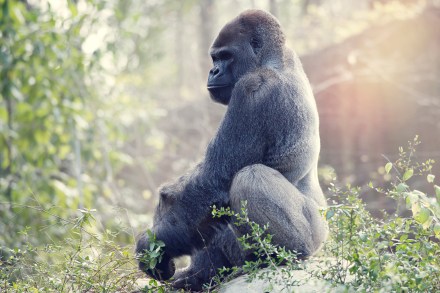
Looking for a male role model? Check out the silverback gorilla

One so often hears about famous people who are horrible when they think no one important is looking – barking at assistants, or snapping at waiters – that it’s heartening to learn of the opposite: kindness in circumstances that promise little obvious reward. The author and filmmaker Jon Ronson had just such a story last week about his pick for Radio 4’s Great Lives series: the late Terry Hall, lead singer of the Specials and Fun Boy Three, and an attractively morose and compelling presence on the 1970s and ’80s music scene.  The 12-year-old Ronson was at the front of an ‘excitingly feral’ Specials gig in Cardiff when he conceived ‘on a whim’ of the daring plan of pretending to faint, so that bouncers would lift him to watch the show from the side of the stage.

Shocked and moved me far more than I anticipated: Hoaxed reviewed

I shied away from conspiracy stuff during the Trump era. Not the theories themselves, but the huge volume of content proclaiming that we lived in a post-truth age of misinformation and conspiracy. It wasn’t that I disagreed with the idea that something like this was happening, or the idea that it was bad. It was more a certain tone these podcasts, essays and articles shared – almost a shared idiom and turn of phrase. People talked about ‘truth’ and ‘facts’ and ‘evidence’ with unwavering self-certainty.

Welcome to the weird world of the New Right: Subversive podcast reviewed

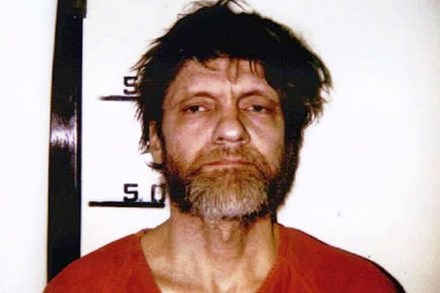
Subversive is a podcast that documents the world of the ‘New Right’, a strange development in conservatism. Host Alex Kaschuta, one of the movement’s intellectual leaders, gives a good sense of the New Right’s weirdness. Trembling minor-key synths play in the theme and Alex purrs that we’re about to hear a two-hour long conversation with ‘Covfefe Anon’. Other guests include ‘Zero H.P. Lovecraft’ and ‘Yeerk.P’. Some are anonymous commentators who have their voices distorted like a drug dealer in a Ross Kemp documentary. Others are known entities: journalists like Sohrab Ahmari, Ed West and Louise Perry. They like the classical world, the Unabomber, steak. They hate CNN, porn, sunflower oil I can’t explain the New Right.

Rivals Wagatha Christie for its lowbrow twists: FT’s Hot Money – Who Rules Porn? reviewed

It was recently reported that almost 8 per cent of global internet traffic is to pornographic websites. The rise of working from home may make this statistic less startling than it might have been three years ago, but still, that’s an awful lot of procrastination and, well, not much WFH. Given the dominance of the porn industry, it’s a wonder there hasn’t been an exposé of the kind produced by the Financial Times before now. The newspaper’s investigation into who lurks behind the webcams and controls this business took more than six months to complete and has now been turned into a riveting eight-part podcast series. Hot Money: Who Rules Porn? rivals Wagatha Christie for lowbrow twists.

Why is post-colonial guilt only applied to Western classical traditions? Radio 3’s World of Classical reviewed

The blurb accompanying the Radio 3 series World of Classical, inviting us to ‘join the dots between classical music traditions of the world’, suggests an introduction to the field of comparative musicology. Such a noble venture – searching for commonalities in melodies, ornamentation, rhythms, use of instruments, vocal styles and techniques and so on – would once have been a vital part of Radio 3’s continued adherence to the Reithian ideals of informing and educating as well as entertaining. Jon Silpayamanant’s series however resembles more a series of episodes of Late Junction, married to a moralising and historically unbalanced commentary.

A belter of a podcast, featuring a mad South African: Smoke Screen reviewed

I go back and forth on tobacco companies. On the one hand, they are merchants of death. On the other, cigarettes are fun and delicious. On the one hand, they push cigarettes on children, which is unconscionable. And on the other, I remember how I would gather in the park with other children to collectively venerate a ten-pack of Marlboro Lights, our soft, pink fingers shivering and struggling with the lighter mechanism, our untutored lips puffing ineffectually at the speckled filter, all of us beginning to grow woozy from the acrid smoke filling our virgin lungs as we stood there and thought: this is the life. Luckily, Smoke Screen sidesteps this question to focus more squarely on corporate espionage within the tobacco industry.

The cruelty of reality TV was part of the appeal

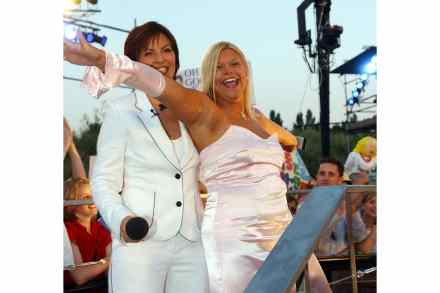
Jade Goody appeared on Big Brother in 2002. She was a short, loud, blonde-haired woman who broadcast her every thought and feeling, either in her thick Cockney accent or with her unforgettable face. She became a star. In 2007 she appeared on Celebrity Big Brother, where she made racist comments about her fellow contestant, the Bollywood actress Shilpa Shetty. Effigies of Goody were burned in India; the Sun called her ‘the face of hate’. Hoping to redeem herself, she agreed to appear on Indian Big Brother, where she was told she had cervical cancer with the cameras still rolling. She died less than nine months later. It was a three-act drama that only reality TV could have delivered. Call it 45 minutes of fame.

Boldly and brilliantly unoriginal: Kermode and Mayo’s Take reviewed

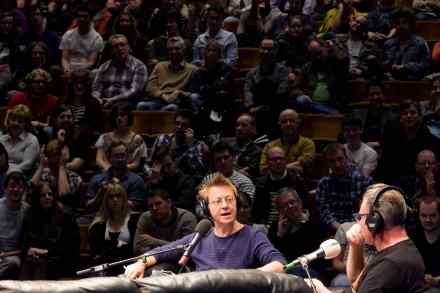
Last April Fools’ Day, Mark Kermode and Simon Mayo wound up their award-winning film review show on BBC Radio 5 Live after 21 years on air. A little more than a month later they are back with Kermode and Mayo’s Take, a podcast so similar in flavour and format that you could call it an up-yours to their critics. While Mayo stressed that it was their decision to go their own way – ‘we have decided, and to be clear: that’s no one else has decided’ – he was slightly more candid about his experience in an interview with the Radio Times a few weeks ago. People of my generation have grown up with Kermode and Mayo, and were as surprised as any by their departure. But we needn’t fret.

Enjoyably plummy and male: Battleground – The Falklands War podcast reviewed

The Battleground podcast on the wars of the 20th century, said presenter Saul David happily, ‘will have lots of bombs and bullets but we’re also interested in other aspects of conflict: social, political and cultural’. He’s a military historian. His co-presenter, Patrick Bishop, went on: ‘Alongside the personalities, the battles and the technology – and there will be plenty of that, we promise – expect to hear some thought-provoking stuff that puts conflict into its wider context.’ He is a veteran foreign correspondent who has written lots of war books; I first met him in Kosovo.

A podcast with real emotional heft: Philippa Perry’s Siblings in Session reviewed

Have you ever taken a piece of advice? I’m not asking a rhetorical question. Have you ever once in your life been given a piece of advice that you’ve then acted on? I ask this question a lot at parties, and generally find the answer is: ‘No, not that I can think of.’ It may be that when we take good advice, we begin to imagine we came up with the idea in the first place. It may be that we always just do whatever it is we were always going to do. All I can say for sure is that if you ask: ‘What’s the best piece of advice you’ve ever given someone else?’, people will keep you there all night. Best Friend Therapy bills itself as a chat between two best friends that will impart the blessings and insight of therapy.

A wonderfully unguarded podcast about the last bohemians

Ordinarily, if a podcast purports to be revelatory, you can assume it is anything but. There’s a glut of programmes at the moment featuring interviewer and interviewee locked in passionate heart-to-hearts in which a few, carefully selected beans are spilled to no real consequence or effect. The Last Bohemians makes no claim to shatter the earth with secrets, but the guests are so unguarded that the episodes possess that longed-for bite. Maggi Hambling reels off a to-do list she made at art school while she was seeking to lose her virginity: ‘Older man, younger man, black man, woman’. Dana Gillespie, singer and former flame of David Bowie, describes undoing her top button to be photographed in the cleavage-obsessed press of her youth.

Dan Savage has fallen out of love with the left

From our US edition

It was a suspenseful business, arranging to meet Dan Savage, America’s most famous giver of sex advice, LGBT rights advocate, porn-festival organizer and all-round cult figure. He was by turns stern, snappy and apologetic in his emails; he was brisk in his replies and then months would pass with no word. And so I breathe a sigh of relief when Savage approaches the outside table of the café I suggested in the Capitol Hill area of Seattle. He is wearing jeans, bright orange hightop sneakers and layered flannel shirts. He walks softly, with the supple watchfulness of a teenage boy. He also talks softly — a contrast with his more forceful podcast voice — apologizing for being five minutes late.

savage

Power couple

From our US edition

By now we know that there are creeps and abusers in pretty much any industry that exists today. In the world of podcasts, the question appears to be: are we really going to create an investigatory series detailing the horrors lurking within every single one? Yes — of course — seems like the resounding answer. New York magazine has launched a new podcast, Cover Story: Power Trip, and its first season is devoted to rooting out the predators and boundary-crossers of one extremely minor occupational field: the psychedelic therapeutic community.

power

Why we drink

‘I like to have a martini,/ Two at the very most./ After three I’m under the table,/ After four I’m under my host.’ I never fully appreciated the brilliance of that spurious quote of Dorothy Parker until I visited Dukes Bar in Mayfair. It used to be the case – it probably still is – that you may order no more than two martinis there owing to their potency. Had she not preferred whisky to gin, Parker might well have banged her fists on that table for a third. After one-and-a-half before dinner, however, this critic would be more inclined to dance on it. Humans may respond to drink in different ways, but we are, in fact, better at processing it than most other primates. In ‘Why do we use intoxicants?