Paris

The tragedy of Paul Celan – trapped in his own allusive poems

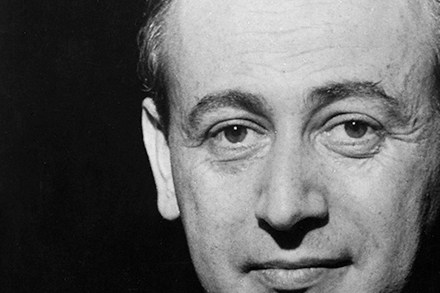
Some time in the late 1950s, Jacques Derrida and other intellectual luminaries at the École Normale Supérieure in Paris were surprised to be told that the excruciatingly introverted German-language instructor they had been avoiding in the corridors for several years was ‘the greatest living poet in the German language’. Paul Celan was reputed to be as ‘difficult’ as his poetry – rebarbative, then intriguing and finally unforgettable. His best known poem is ‘Todesfuge’ (‘Death Fugue’), which may refer to Jewish musicians in a Nazi death camp: ‘Black milk of dawn, we drink you at night...’ He can be heard online reciting the poem in a rising tone of suppressed hysteria.

French letters – Albert Camus’s great epistolary love affair

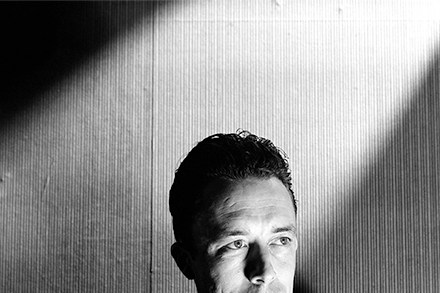
The extraordinary correspondence between Albert Camus and the love of his life Maria Casarès must rank among the most passionate ever written. Rarely can two lovers have expressed with such fervour a comparable range of emotions, from ecstasy to darkest despair. At times one shies away from the letters’ raw, searing intimacy, feeling like an intruder; but the sheer force of the feelings expressed and the finesse with which they are articulated propel one through. These letters were first published in France in 2017 by Camus’s daughter Catherine, who was given them for safe-keeping by Casarès shortly before her death in 1996.

Is the Pont-Neuf bridge the new Plato’s cave?

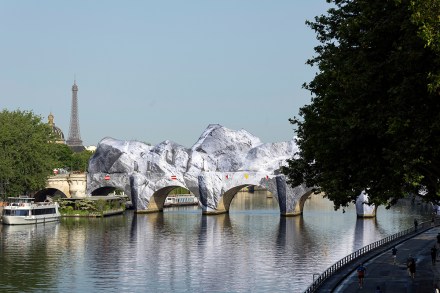
An artist, J.R., working with something called Snap Inc., has covered the Pont-Neuf bridge in Paris with a gigantic tarpaulin shaped like a cave, through which the public is invited to walk. It is supposed to represent the underground cave where Plato (d. 348 BC) thought most of mankind metaphorically lived. Of course it bears no likeness whatsoever, being empty of everything with which Plato filled his cave. But then he is an artist, beyond such banausic considerations. Plato’s cave is seen as an allegory of the human situation. Plato sees mankind chained into position from birth like prisoners, able to see only the wall directly in front of them.

Was Marcel Duchamp’s notorious ‘Fountain’ even his own work?

This slim volume has only one fault. It has no illustrations. So you’ll have to do some Googling or visit the current Duchamp exhibition at MoMA (until 22 August) if you want to know what ‘The Bride Stripped Bare by Her Bachelors, Even’ looks like. Otherwise it’s perfect – wittily written and packed with many fascinating characters besides the ever intriguing Marcel Duchamp. He didn’t actually arrive in New York until 1915, but when he did he found himself already famous. His ‘Nude Descending a Staircase, No. 2’ had been included in the 1913 International Exhibition of Modern Art, alongside works by Picasso, Van Gogh, Gauguin, Matisse and Braque, and completely stole the show. Duchamp didn’t even know the painting was being exhibited.

Defiantly creative to the end: the transgressive Dorothea Tanning

I received this book for review on the same day that Dorothea Tanning was making headlines in the auction world, breaking records with the sale at Christie’s of a tiny but key early work for more than £4 million. Her prices have risen an astonishing sevenfold in the past year, as collectors cotton on to her significance as a Surrealist; and while she may still be trailing on Leonora Carrington’s coat-tails, she looks to be steadily catching up.   Born in America to Swedish parents, Tanning was the very model of a fiercely independent artist, and her works are singular and disquieting like few others. She was largely self-taught as a painter and developed a virtuoso technique.

James Baldwin – dogged by painful uncertainties throughout life

James Baldwin, like many American novelists before him, F. Scott Fitzgerald and John Dos Passos included, spent his formative years flitting restlessly between New York and Europe – New York being a source of fascination but also of creative burnout. He completed his first novel, Go Tell It On the Mountain (1953), not in Harlem, where he grew up and set the book, but in a Swiss chalet owned by the family of his then boyfriend, Lucien Happersberger. As he lived and worked in Loèche-les-Bains, Baldwin reasoned that the village children who shouted ‘neger’ at him did not mean to be unkind. They were simply curious and could never have known ‘the echoes this sound raises in me’.

Adventures in the City of Light: Rousseau’s Lost Children, by Gavin McCrea, reviewed

What biographer would pass up a time-travelling opportunity to meet their subject face to face? This novel’s protagonist, Gavin Mulvany, an academic specialising in Jean-Jacques Rousseau, is somehow able to slip back in time to 1777, a year before the fractious French writer died. He turns from irritating fan to close companion, accompanying Jean-Jacques on long philosophical rambles and coach journeys around Paris. They attend the premiere of Voltaire’s last play (as does Marie Antoinette), call on Benjamin Franklin and visit the Marquis de Sade in a lunatic asylum. Gavin’s long-delayed book about Rousseau is concerned to solve the puzzle of why a passionate theorist on children’s education could dispatch his own five newborns to a foundling hospital, never to see them again.

The turbulent life of the Marquis de Morès – the 19th-century aristocrat turned populist thug

The Marquis de Morès (1858-96) was a man of many abilities, but balancing a chequebook was not one of them. Bested (savaged, frankly) by the Chicago meat-packing lobby and frustrated in his attempt to build a railroad across Indochina, the soldier, duelist and self-styled ‘economist’ returned to his native France in 1886, caused havoc and invented fascism (if we allow the Italian historian Sergio Luzzatto to have his way) – only to meet his nemesis much closer to home.

Paul Poiret and the fickleness of fashion

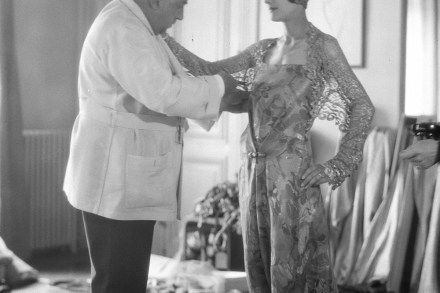
Such was Paul Poiret’s influence that he is the only couturier whose clothes are known to have caused several fatal accidents. At a time (1910-11) when fashion was loosening up he persuaded chic women into the hobble skirt, a garment so narrow round the ankles that only tiny, mincing steps were possible, with the result that several tripped over when stepping down from a pavement and one toppled from a bridge into a river where, unable to swim from the constriction around her ankles, she drowned.  In Mary E. Davis’s book, however, this dangerous garment gets only a brief mention.

There’s something about Marianne – but can French identity be defined?

In October 2018, Andrew Hussey, the convivial and courageous observer and analyst of the political and social travails of modern France, was cycling back to his office after lunch through the rather staid and un-bohemian environs of the Boulevard Raspail on the Left Bank in Paris. To the ‘middle-aged man who already has a heart condition’, the scene into which he pedalled near the Montparnasse cemetery was terrifying, but to the veteran historian of the fractious Fifth Republic not particularly unusual. Parisians were sitting on café terraces and queuing for ice cream while just around the corner ‘a mini-civil war’ was taking place.

Roman Polanski ruined my hair

The Prom was Berlioz and Strauss, but the Albert Hall is always the star for me. It is a lover’s gift from Queen to Consort which completes a circle of passion for a Queen who loved music and sex in equal measure. Strauss was a music president of Hitler’s Reichsmusikkammer, but in a private letter to his Jewish lyricist, Stefan Zweig, he said the whole regime appalled him. His letter was intercepted and his job went down das Klosett. Afterwards I went for drinks with my friend Fraser, who was playing second clarinet. We were refused entry into the Polish Hearth Club, so we ended up shrieking over merlot and crisps in a nearby pub in front of the penalties which sealed the Lionesses’ victory. Oh the glorious girls! I couldn’t be happier.

Art deco gave veneer and frivolity a bad name

The jazz style was the blowsy filling between the noxious crusts of two world wars. More than 30 years passed between its flourishing and its remonikered second coming as art deco, no longer gaudy ephemera, now a legitimate addition to the inventory of fashions. The coinage was initially ascribed to the antique dealer John Jesse. It is, more probably, Bevis Hillier’s. He was a scholar of the style, then organiser of its first retrospective, far ahead of the game, in Minneapolis-St Paul in 1971.

The grooming of teenaged Linn Ullmann

Girl, 1983, a fusion of novel and memoir, tantalises with what we already know of its author. Linn Ullmann is the daughter of the Norwegian actress Liv Ullmann and the much older Swedish film director Ingmar Bergman. Their relationship was probed in her previous work, Unquiet. Here the parents are more distant figures, as the adult Linn attempts to reconstruct her headstrong 16-year-old self and recover a disturbing interlude spent in Paris as a would-be model. In 2019, Ullmann is struggling to write when her younger self materialises like an imaginary friend with a message that demands to be heard. Ullmann has a daughter now, which makes the quest to understand the events of decades ago all the more urgent.

Who’s the muse? In a Deep Blue Hour, by Peter Stamm, reviewed

The Swiss writer Peter Stamm’s fiction is often enigmatic – unreliable narrators, contradictory behaviour and characters who can’t admit to their emotions. In his latest novel, fortysomething Andrea is in Paris with her cameraman boyfriend Tom, attempting to make a documentary about a celebrated author 20 years older than herself. The subject, Richard Wechsler, appears to like Andrea, but isn’t enthusiastic about the film. His novels generally feature a muse to whom the male character frequently returns, and Andrea becomes obsessed with discovering if this relates to Wechsler’s life. At the same time, she is annoyed if Tom asks Wechsler similar personal questions. (Andrea is easily irritated, ending several relationships when none of them lives up to her exacting standards.

Clouded memories: Ballerina, by Patrick Modiano, reviewed

There are, broadly speaking, two types of artist: the explorer and the miner. The explorer keeps moving on, staking out new aesthetic or thematic terrain, while the miner keeps returning, digging deeper into the same earth each time. Patrick Modiano, the French Nobel prizewinner for literature in 2014, is an artist firmly of the second camp. Ballerina may be Modiano’s 32nd novel, but it feels more like the latest haunting chapter of the one long book that makes up his career. Blending noir, elegy, Paris and an obsession with memory, Modiano writes like Proust conducting a police line-up.

A painful homecoming: The Visitor, by Maeve Brennan, reviewed

Maeve Brennan (1917-93) was a supremely gifted Irish/American writer, whose work is periodically rediscovered, only to vanish again. It’s as if her literary reputation (she has been compared with Joyce, Flaubert and Chekhov among others) won’t stay fixed and is as homeless as she herself became. Arriving home to Dublin, Anastasia expects a warm welcome – only to be steadily spurned by her grandmother Aged 32, she secured a job at the New Yorker, contributing sardonic observations of city life as well as wry, melancholy short stories, part-fiction, part-memoir. The Visitor, her only novella, written in her late twenties when she was working as a journalist in Manhattan, remained unpublished in her lifetime.

Reliving the terror of the Bataclan massacre

On Friday 13 November 2015 France suffered the deadliest terrorist attack in its history. In quick succession, gunmen and suicide bombers struck the outer concourse of Paris’s Stade de France; then the pretty canal-side cafés and restaurants of the tenth arrondissement; then, most notoriously, the Bataclan theatre, where the doors were blocked and, over the course of an hour, 90 people massacred. The subsequent trial was not just a gargantuan administrative undertaking (20 defendants faced around 2,000 plaintiffs, and the proceedings occupied the purpose-built courtroom for the best part of a year); it was a cultural phenomenon.

The stark, frugal world of Piet Mondrian

In September 1940 the Dutch abstract artist Piet Mondrian arrived in New York, a refugee from war and the London Blitz. He was 68, a well known figure in modern art circles in Europe but as yet little appreciated on the other side of the Atlantic. His visas, his travel and his accommodation had been sorted out for him by well-wishers in Britain and he was welcomed in America by Harry Holtzman, an artist some 40 years his junior. On the evening of his arrival, Holtzman entertained the stiff, fastidious, well-dressed Mondrian to dinner in his apartment and introduced him, via the phonograph, to boogie-woogie. He recalled: Mondrian’s response was immediate, he clapped his hands together with obvious pleasure. He sat in complete absorption to the music, saying, ‘Enormous! Enormous!

The spy with the bullet-proof Rolls-Royce

‘Biffy’ Dunderdale (1899-1991) was a legend in his own lifetime within MI6. Born in Odessa to an Austrian countess and a British trader representing Vickers, his cosmopolitan upbringing endowed him with English, Russian, German, Turkish, French and Polish. His real first name was Wilfred, Biffy being acquired through youthful handiness with his fists. Biffy played an important role in smuggling the Polish copy of the Enigma cipher machine to London Education and family connections made him intimate with prominent Levantine trading families such as the Whittalls, Keuns and La Fontaines. Members of each served with him in MI6 and two into modern times.

Two young men in flight: Partita and A Winter in Zürau, by Gabriel Josipovici reviewed

Two books in one: you flip it over, and it becomes the other. A Winter in Zürau is about Franz Kafka’s stay in a small Bohemian village with his sister Ottla after being diagnosed with tuberculosis. Or, as Gabriel Josipovici arrestingly puts it in the preface: ‘One day in the summer of 1917 the writer Franz Kafka woke up to find his mouth full of blood.’ (The echo of the opening line of Metamorphosis is surely deliberate.) Here, in isolation, he recuperated, or tried to. He wrote to Max Brod: ‘I’m not writing. What’s more, my will is not directed towards writing. If I could save myself... by digging holes, I would dig holes.’ Josipovici quotes this, and adds that there is a photograph of Samuel Beckett ‘doing just that’ in the second volume of his Collected Letters.