Paintings

Damien Hirst should burn down his gallery 

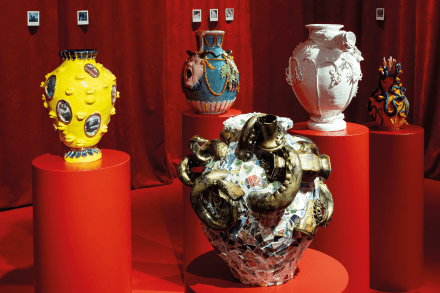
I love my friends at the loucher fringes of the art world, but every now and again, someone does something so obviously stupid that it calls certain such ties into question. Last week, a pal’s poor judgment engendered a Salo-grade spectacle so nightmarish that I can’t bring myself to elaborate. Suffice to say: some parties present will never shake off the trauma; and that the instigator was extremely lucky to avoid castration. It gets worse, too. I’d just returned from Margate, where I’d spent ages taking notes on the locale’s second-most-famous artist: a noisy, blue-haired ceramicist called Lindsey Mendick (b.1987). Mendick is fluent in the art-historical resonances and material subtleties of her chosen medium.
How Grandma Moses’s art shaped American history

From our US edition

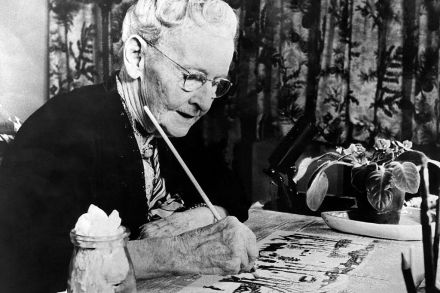
Growing up on the border of Pennsylvania and Ohio, I am well acquainted with a good country fair – that uniquely rural convergence of rodeo games, fried food, barnyard smells and arts and crafts. Washington DC too is now relishing the American-ness of state fairs by hosting the Great American State Fair in the weeks leading up to the semi-quincentennial. And the Smithsonian American Art Museum has prepared a temporary exhibition celebrating a quintessential American artist who first debuted her works at state fairs in rural New York. That gallery is Grandma Moses: A Good Day’s Work, a collection of 88 paintings which will be in DC until July 12, and then heads on tour.

Grandma Moses

The masterpieces on your doorstep

I do not, if I can help it, catch a train to anywhere on a Sunday. Yet there I was at 9.14 a.m. heading out from Woodbridge in Suffolk towards Cambridge to view a painting by Walter Sickert, a work I had not seen before and whose vital statistics – what even the work was of – I had no way of knowing; its owner had refused to send a photograph or describe it over the telephone. Arriving at the owner’s address, I was met by a neighbour who told me that in the name of letting go and embracing surprise, they had decided to visit a relative in Scotland the night before.

The masterpieces of Sussex’s radical Christian commune

Ditchling in East Sussex is a small, picturesque village with all the trappings: medieval church, half-timbered house, tea shops, a common, intrusive new housing developments down the road, a good walk from the nearest train station and the Downs on its doorstep. But the resonance of the place owes much to the remarkable artistic activity that has bloomed since Eric Gill moved his family there in 1907. It was part craft commune, part lay monastery, a living experiment in distributism, the radical Christian political philosophy that held that land should be distributed as widely as possible. It was an attempt to resurrect the medieval guild.

The podcast of the summer

The cover painting for The Specialist, a new podcast from Sotheby’s, looks like a scene from Mad Men. The people are so good-looking and so well dressed that you barely notice how odd they are. One chap’s walking along with a porcelain bowl as if it were a macchiato; a lady holds a plant in her palms in the manner of receiving communion; someone else walks the street with a gavel. The admen have done their job: intrigued, I press play. It becomes apparent that the people who work at Sotheby’s have no interest in persuading anyone that they are normal. I listen to Ottilie, Julian and Gregory, and to mouths that volunteer, with ease, such phrases as ‘the visceral power is undimmed by the passage of time’.

Figures emerge like ghosts from Antonia Showering’s canvases

From our US edition

Figures emerge like ghosts from Antonia Showering’s canvases, their sketchy lines and expressionistic color palette relaying an atmosphere of deeply personal narrative as much as an emotional message, wordless but with universal resonance. Take 2025's "The Waiting Room" (2025), from her current show, titled In Line, at Timothy Taylor: A woman, resting on a bed in a pool of maroon, has just given birth; her belly appears aglow in a warm yellow as her newborn, outlined in pale purple, rests next to her, umbilical cord still attached. “I wanted to talk about the vulnerability about someone postpartum,” says the artist. The hues she’s employed are bodily, those of flesh, fat, and veins, yet here transcend into a surreal haze of life’s first moments. Antonia Showering, 5L (2024).

Antonia Showering

Booze now has its own Rest is History-style podcast

Intoxicating History is the perfect title for drinks expert Henry Jeffreys and food critic Tom Parker Bowles’s new podcast. Its theme is alcohol, but its contents are predominantly historical, which is good news if, like me, you are quick to apply the word ‘bore’ to any man who talks about wine for more than eight minutes. The first episodes came out before Christmas but they have been gathering momentum since Dry January. Today’s drinking culture, which has spawned this bizarre annual group sacrifice, has an interesting pedigree. Europeans have apparently been on their guard against boozing Englishmen for nearly a millennium. The Portuguese were certainly left in no doubt as to our reputation when we aided them in their Reconquista.

Presenting our planet and perilous situation as art

From our US edition

Philippe Pastor is an artist on a mission to educate, alarm and call to action. His subject: our planet and the perilous situation we find ourselves in at this moment of time.  Pastor’s latest works, installed to coincide with Climate Week in New York, are a clear indication of where he sees the state of play. The first enormous canvas, ominously titled La Fin Du Monde, seems to depict an apocalyptic clash of water, fire and ice. Heavy brush strokes are densely laid on with glue and pigment, giving a sense of the swirling waters enveloping us all. “I start the paintings with a story in my mind,” he said, speaking from his studio — a former seventeenth-century farm near Cadaqués.

Breathtaking: Mary Cassatt at Work, at the Philadelphia Museum of Art, reviewed

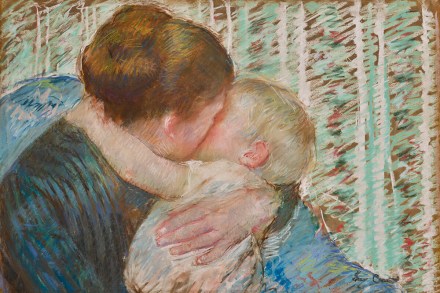
Work – in the sense of toil – is about the last thing a 19th-century painter wished to be associated with. Inspiration and success were gifts bestowed on the lucky few – about as easy to grasp as smoke. For Mary Cassatt, however, art was nothing more than work. ‘Effort upon effort,’ is how she described the process of painting to her friend, the collector Louisine Havemeyer. Pissarro admired her technical skill, Gauguin her charm and strength, but Degas was her true mentor Still, she produced almost 1,000 works in her lifetime, and Mary Cassatt at Work – a new exhibition at the Philadelphia Museum of Art – tells us how. Spoiler: unswerving determination, ambition and, well, work.

The divine Dalí and his ‘Christ’

From our US edition

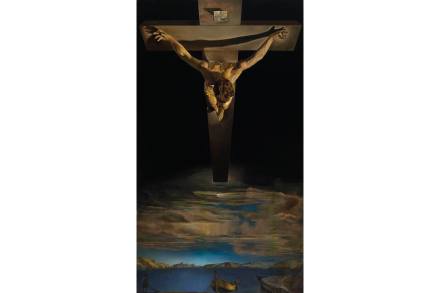
I arrived in the city of Figueres early one January morning to visit one of the most popular, and bizarre, art museums in the world, the Teatre-Museu Gala Salvador Dalí. It houses a dreamlike picture that, for the first time since it left over seventy years ago, has made a temporary return journey to Spain. Originally simply titled “The Christ,” the 1951 canvas depicting the giant figure of a man on a cross, shown at an overhead angle hovering over a moody seascape, was painted by the most famous son of Figueres, Salvador Dalí. Through April 30, it forms the centerpiece of a show exploring its creation, history, local connections and symbolism.

Dalí

Radical in the Rotunda

From our US edition

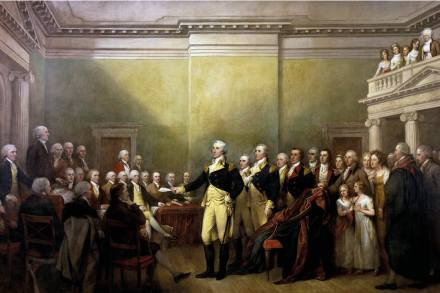
In a recent Saturday Night Live sketch, comedian Nate Bargatze portrayed General George Washington addressing his troops around a campfire in 1777, as they ask themselves what the Revolution is for. Washington shares some of his dreams for the new American republic — though he dodges difficult questions about slavery — in an effort to inspire his men to fight on. The writers take full advantage of the fact that a number of peculiarly American things, such as our version of football (in which feet rarely figure) or our complicated system of weights and measures, seem rather odd to the rest of the world. “We will be free to measure liquids in liters and milliliters, but not all liquids,” the general explains. “Only soda, wine and alcohol.

Trumbull

Inside the traditional art revolution

From our US edition

More and more often lately, people are rejecting tired modern art. They often find solace in the art of the past; online accounts admiring “traditional art” have amassed hundreds of thousands of followers, but they act as online repositories for a bittersweet recognition: what once was, no longer is. But the kind of art they seek, involving detail, meaning and skill, still exists, and it is growing. The cultural hegemony of contemporary, abstract art is slowly beginning to crack; through those cracks we can see new art surfacing. As I have become increasingly disillusioned with the state of politics, an observation from Ernst Jünger, the German philosopher and skeptic of the extreme politics of his day, rings true to me.

art revolution Milano Painting Academy

Why are there no paintings in Star Wars?

From our US edition

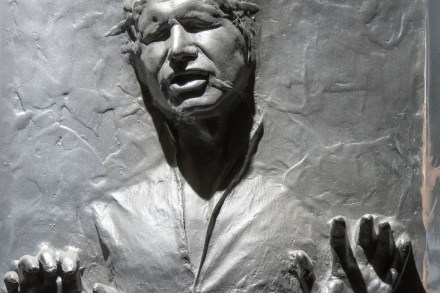
Why are there no paintings in Star Wars movies? The question occurred to me recently, rewatching The Rise of Skywalker. I’m old enough to recall seeing A New Hope in a drive-in in summer 1977, as well as the infamous Star Wars Holiday Special on television in 1978. Over time, my interest in Star Wars has shifted into something akin to nostalgia, so it may not be surprising that this question never struck me before. What is surprising, however, given their glaring omission from the films, is that the man who created the Star Wars universe happens to be a major collector of art — including paintings — and is due to open the Lucas Museum of Narrative Art in Los Angeles by 2025.

Star Wars

The art of the monarchy

Elizabeth II spent virtually all her life surrounded by one of the world’s greatest art collections. Even when she was a child, and the likelihood of her inheriting the throne still seemed remote, visits to her grandparents at Buckingham Palace involved looking at pictures, since George V enjoyed showing her the Victorian narrative paintings that hung there, such as William Powell Frith’s ‘Ramsgate Sands’. Nobody knows exactly how many works of art there are in the Royal Collection, but at the end of Elizabeth II’s reign nearly 300,000 objects had been catalogued online, probably just under a third of the whole.

The dynamic genius of Milton Avery

From our US edition

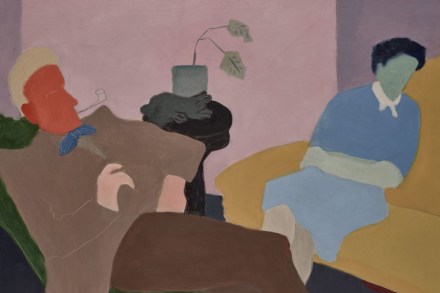
It’s hard not to feel slightly odd when standing in front of a Milton Avery painting. Take his 1943 work Hors d’Oeuvres as an example. The painting — currently on show at London’s Royal Academy’s exhibition, Milton Avery: American Colorist — is large, at nearly a meter across, and the background is what appears to be a coastal landscape, with a greenish sea and the curve of a bay appearing in the upper right-hand corner. In the foreground of the painting is a cream table and on it, a blue platter of food: the “hors d’oeuvres” of the work’s title. So far, it might be hard to understand what is so disconcerting about this painting.

Nationalise the royal collection!

The royal collection consists of millions of objects whose purpose and ownership are sometimes obscure. Does the collection serve the monarchy, and if so how? Or is the care of the collection, and of the palaces that contain it, the sacred duty of the Queen? Housed throughout the royal palaces, it includes works held by the Queen in trust for the public as well as those owned personally by Elizabeth Windsor, such as valuable paintings by Monet and Paul Nash that were bought by the late Queen Mother and not taxed as part of her estate. This is the sort of confusion that needs to be cleared up to prevent the perception that the royals act in their own narrow interest when it suits them, a necessary step in the post-Prince Andrew era.

Paintings dominate – the good, the bad and the very ugly: Frieze London 2021 reviewed

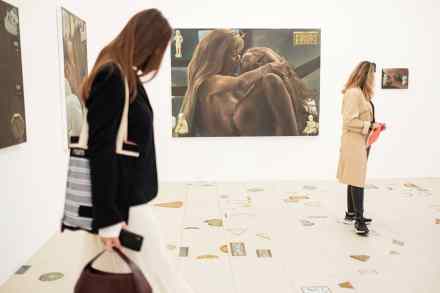
There’s a faint scent of desperation wafting through the Frieze tent this year. Pre--pandemic, this was where you came to see gallerists and artists at the top of their game, knocking back the Moët with collectors to toast another big-ticket sale. But it’s been a tough few years. No art fairs, paltry sales and now there’s a limit on visitor numbers to the fair and travel restrictions are keeping international buyers at bay. So, wandering around the gleaming alleys of the fair, you feel like prime meat being eyed by starving lions. Sadly for them, my bank account is more spam than filet mignon. The first visual thing that hits you about Frieze London 2021 is the near overwhelming amount of painting.

The yumminess of paint

‘Painting has always been dead,’ Willem de Kooning once mused. ‘But I was never worried about it.’ The exhibition Mixing It Up: Painting Today at the Hayward Gallery is crammed with work by 31 artists who likewise don’t allow the allegedly moribund state of their medium to keep them away from pigments and palette. This is well worth a visit, not only to see such good things as ‘Hold the Right Rail’ by the 87-year-old Rose Wylie, containing a patch of yellow curtain that somehow holds the eye and stays in the memory; the kind of magic that paint can work like nothing else. Elsewhere there is plenty of evidence on show of ebullient pleasure in the material itself, whether thick or thin, loose and free or applied with a delicate touch.

Full of masterpieces: Paula Rego at Tate Britain reviewed

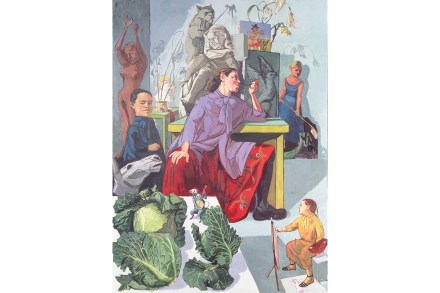
The Victorian dictum ‘every picture tells a story’ is true of Paula Rego’s works, but it’s only part of the truth. Rego has said that she hopes and expects that when people look at her pictures, ‘Things will come out that I’m not even aware of.’ And that’s right too: every marvellous picture tells so many stories, and is so charged with under- and overtones, that no one, including its creator, can be aware of everything that’s going on. That’s certainly true of many works in the Rego retrospective at Tate Britain. All notable painters and sculptors are, of course, sui generis. They don’t follow established rules; instead they make up a new set to suit their own creative personalities.

Nina Hamnett’s art was every bit as riveting as her life

Nina Hamnett is in vogue again. She is the subject of a new pocket biography, no. 7 in Eiderdown Books’s Modern Women Artists series, and her first ever retrospective is now open at Charleston Farmhouse’s gallery space. I confess I didn’t know much about her before this resurrection, but she is now one of my favourite 20th-century artists. In this bucolic gallery space, where cows can be heard bellowing, her portraits are at last hanging together, like a cocktail party finally regrouped. The colours are subtle, beautiful without being decorative; as the co-curator Alicia Foster explains, Hamnett’s use of colour is ‘meaningful, incisive’.