I love my friends at the loucher fringes of the art world, but every now and again, someone does something so obviously stupid that it calls certain such ties into question. Last week, a pal’s poor judgment engendered a Salo-grade spectacle so nightmarish that I can’t bring myself to elaborate. Suffice to say: some parties present will never shake off the trauma; and that the instigator was extremely lucky to avoid castration.
It gets worse, too. I’d just returned from Margate, where I’d spent ages taking notes on the locale’s second-most-famous artist: a noisy, blue-haired ceramicist called Lindsey Mendick (b.1987). Mendick is fluent in the art-historical resonances and material subtleties of her chosen medium. And on a technical level, her art is significantly more accomplished than anything Grayson Perry has produced of late; it is also a lot more annoying.
Her ceramics are more accomplished than anything Grayson Perry has produced of late – and more annoying
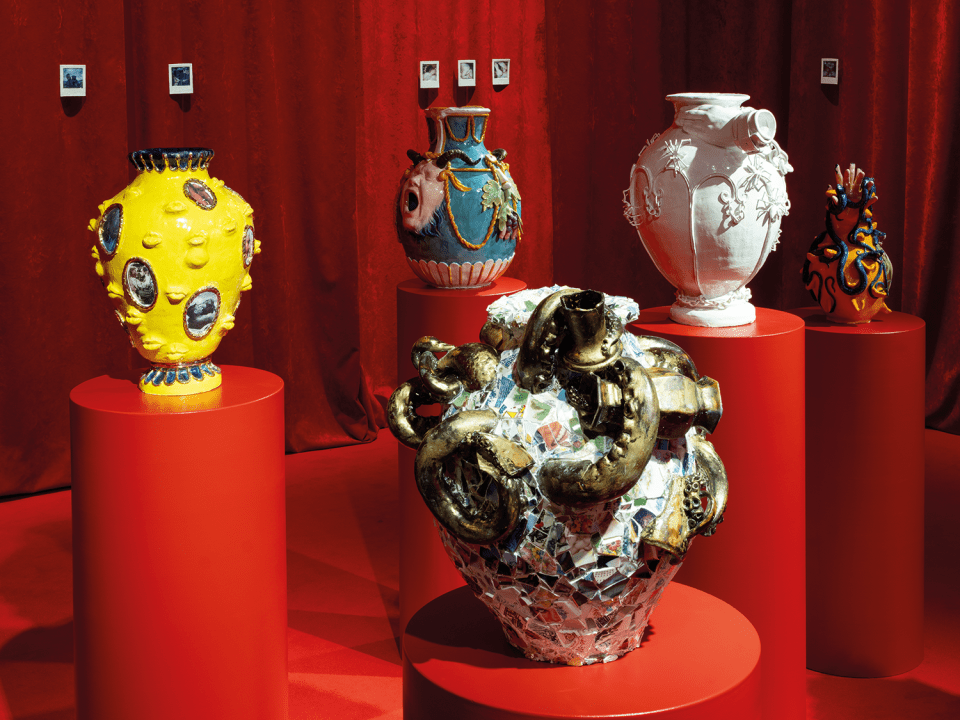
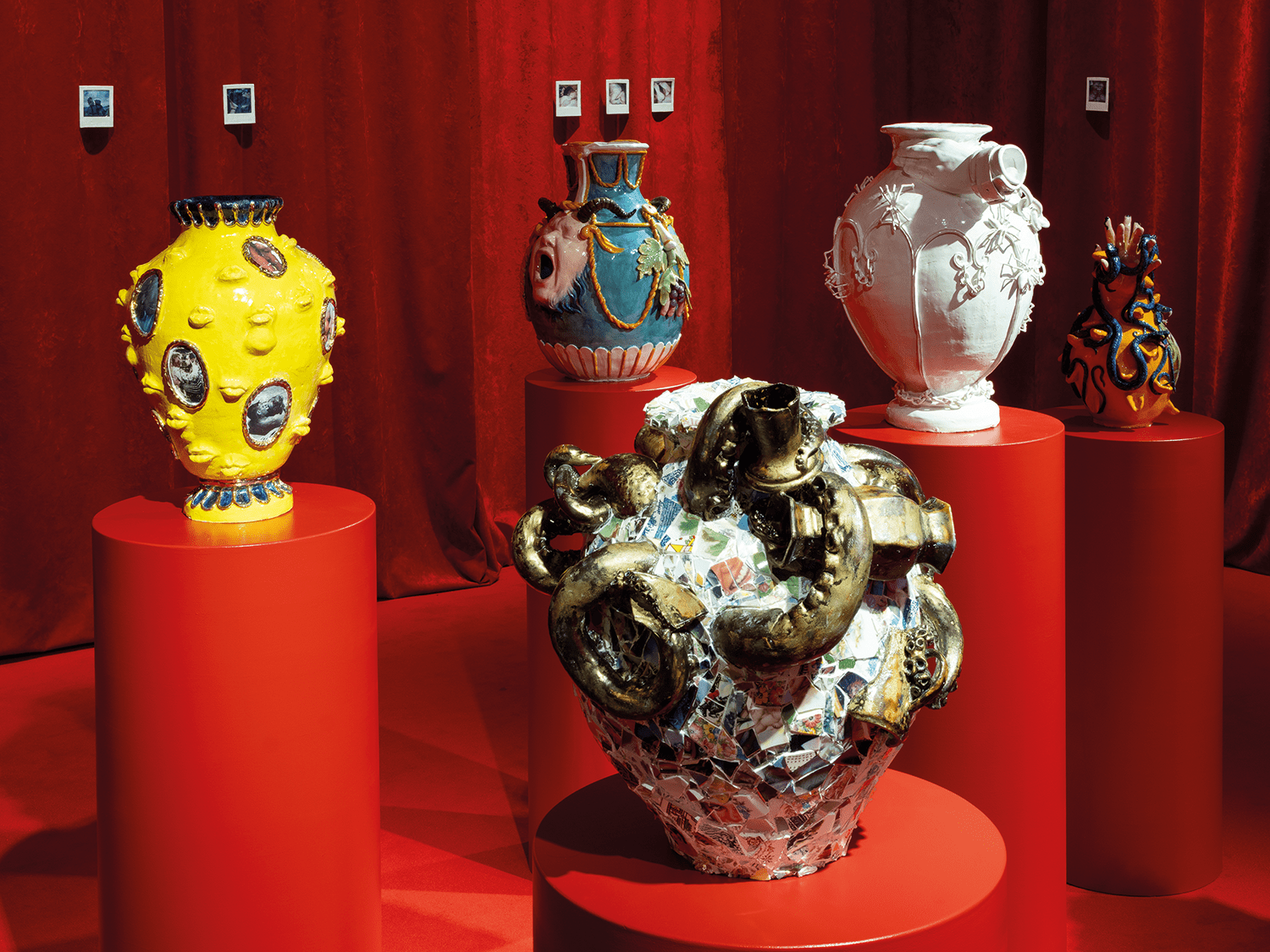
Her current exhibition is broadly concerned with romantic attachment, specifically Mendick’s own bond with her husband and her dog. A lot of money and thought has gone into it, but it nevertheless sees the artist play to her worst tendencies: her tendency to crowd pieces with zany, quasi-surrealist detail; and her apparent compulsion to overshare.
There are vases sprouting hands, puckered lips and, in one instance, a relief of a slack-jawed male face for ever paralysed at the moment of orgasm. There are ceramic sex toys and recreations of the artist’s dirty polaroids; disembodied fragments of plaster carrying conjoined likenesses of the couple, their faces and groins contorted, stretched and deformed to grotesque proportions. It’s all deeply personal and, for art that aspires to surrealism, weirdly literal-minded. Mendick has clearly felt an Emin-like urge to disclose the most intimate details of her private life, which to most of us won’t be very interesting. In other words I hated the show. Mostly because it embodies everything I hate about British art but also because I sense that, with a bit of editing, Mendick might well produce something genuinely interesting.

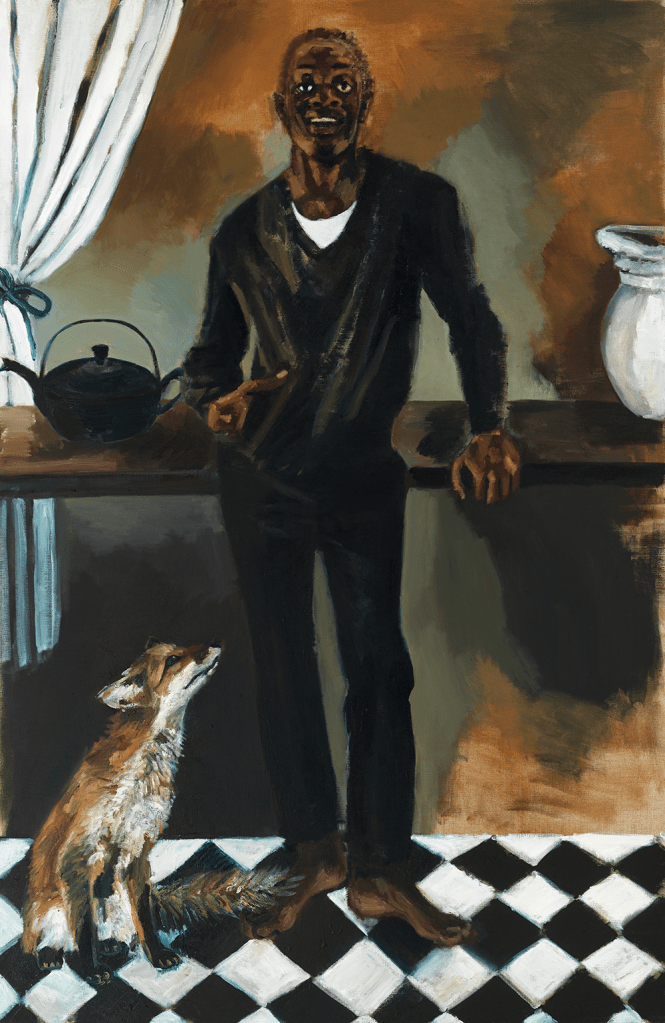
Further down the coast, Bexhill’s De La Warr pavilion is currently playing host to a so-so touring show that nevertheless contains some fabulous moments. Its curator is the painter Lynette Yiadom-Boakye (b.1977), whose ambiguous, wilfully anachronistic portraits of imaginary black figures long ago became a fixture of blue-chip collections. Her own works are hung – ‘in conversation’ – among pieces by her heroes and contemporaries, and not much of it makes any sense.
The major exception comes with a handful of pictures by Walter Sickert that look superb in the context – and return the compliment to Yiadom-Boakye’s own paintings. Looking at a terrifically murky Sickert self-portrait here, you start to realise quite how closely his admirer has studied his efforts, consciously mimicking her forebear’s rough brush strokes and palette, as well as the unreadable, glowering intensity of his subjects’ expressions.
Back in London, I get the distinct sense that the art dealers have already switched to high-summer autopilot. So it was that I ended up at the Newport Street Gallery, at once a fabulous space and the capital’s most ludicrous cultural institution. It’s essentially a private museum belonging to Damien Hirst, who opened it to great fanfare in 2015 and initially staged some fun shows of works from his own, vast collection. The quality dropped off and Hirst handed curatorial duties to his son.
Its latest non-event of an exhibition is a showcase for the art of the musician Jack White, formerly of garage-rock duo the White Stripes. Back in his early-2000s heyday, White displayed a distinct and mildly creepy aesthetic sensibility, one that somehow met the twain between the formal purity of Mondrian and the unplaceable unease of Grant Wood’s ‘American Gothic’. I couldn’t for the life of me envisage a situation in which White’s show might be any good, but I held vague hopes that it might at least be entertaining.
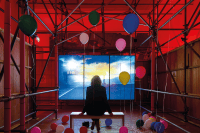
It isn’t, and I don’t recommend it. White has variously installed a gargantuan, traffic light-red sculpture of a tree in the gallery’s stairwell; turned a load of wooden palettes into platforms for some lame assemblages; and commissioned an army of sculptures based on a charity-shop figurine of a ukelele-strumming hillbilly. You could cruise through the show in ten minutes, or you could – as I did, out of duty – spend a full two hours therein. It wouldn’t make the slightest difference to your appreciation of an inert show still far from being the gallery’s worst.
None of this bothered me remotely, but I do suspect that Hirst and Son could use the building and its excellent exhibition spaces for purposes more useful. I realise that planning applications may be a concern, but they could, for instance, repurpose it as a studio complex for emerging artists. They could also follow the smart money and torch the place, pocketing a hefty insurance payout in
the process.




Comments