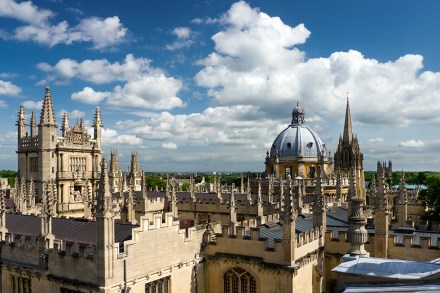
Oxford university

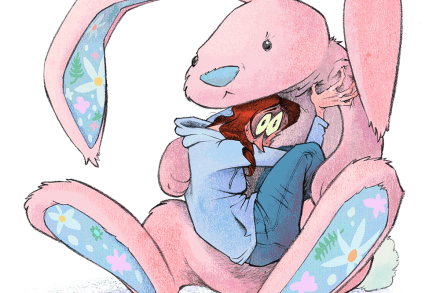
Letters: Why I love my Jellycats

Defence agreement Sir: If (a big ‘if’, I know) our politicians really would like to address the parlous state of the UK’s defences (‘Indefensible’, 21 February) but refrain from the necessary tax increases and/or spending cuts out of fear their unpopularity would open the door to their opponents, they should consider adopting a device the Danes have used to great effect for many decades. ‘Political agreements’, which I came across when advising the Danish finance ministry in the 1990s, are legally binding, long-term contracts between political parties to support and implement specified courses of action, regardless of who is in power, and requiring all parties’ sign-off to amend. Perhaps Labour,

The woke wars intensify

Nigel Biggar was not an obvious target for cancellation. A New Labourite, a Remainer and a public supporter of gay marriage and abortion up to 18 weeks, he might have seemed almost right-on – for an Oxford Professor of Divinity, at any rate. Nonetheless, when in 2017 he had the temerity to suggest that the British Empire had done some good as well as bad, 170-plus academics signed a letter urging Oxford University to withdraw support for his work. This was one of the first stirrings of ‘cancel culture’, the tactic of quashing wrongthink not by argument or persuasion but by sheer force of numbers.   Unfortunately for themselves, Biggar’s detractors

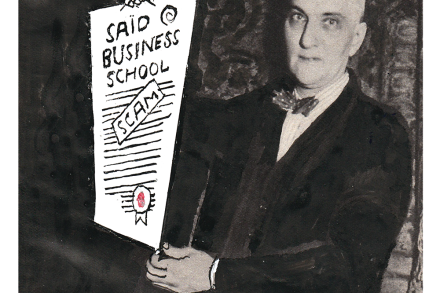
‘Yes, it’s that bad’: inside Oxford’s Saïd Business School

How do you get into the University of Oxford? It is a question asked by thousands of young people every year. In Martin Amis’s The Rachel Papers (1973), Charles Highway discovers that the key is to feign socialism and memorise a few book reviews. It turns out there is an even better ruse: the Saïd Business School. Saïd has, at best, a dubious origin story. In 1996 the project was forced through at Oxford’s Congregation, the university’s legislative body, despite concerns that naming a school after Wafic Saïd, known for his role as a ‘fixer’ in the al-Yamamah arms deal, in return for £20 million might not do wonders for

Even as literate adults, we need to learn how to read

Few readers can claim to be what Samuel Taylor Coleridge called ‘Mogul diamonds’ – those who not only ‘profit by what they read’, but ‘enable others to profit by it also’. If such people were rare in Coleridge’s time, then today, when reading is in dramatic decline, they are scarce enough that even the white rhino might feel a little smug. Anyone seeking a glimpse of this endangered reader could be forgiven for thinking that a university English department was its most likely habitat, but they would be wrong. Behind the brown office doors where academics labour, one is more likely to find the common squirrel, hoarding information and burying

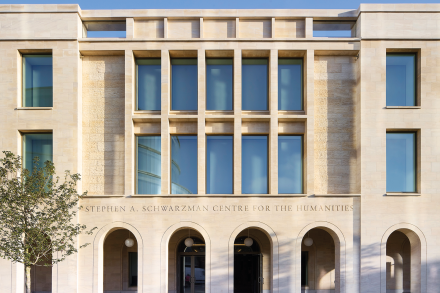
The triumph of classical architecture

It is very hard to imagine the University of Oxford ever constructing a modernist building again. This is the significance of the new Schwarzman Centre for the Humanities. In its sheer scale, in its prominence both within the city centre and within the university – the first multi-department, purpose-built structure to open in its history – it is the most important building to be erected in Oxford in half a century and an endstop to an architectural era. One can imagine that its use of a restrained classicism won’t just influence the architectural aesthetics of Oxford but also of other universities within historical cities, both in the UK and internationally.

George Abaraonye deserves his downfall

Contrary to what I had expected, the Oxford Union president-elect, George Abaraonye, lost his vote of no confidence by a whopping margin and will now have to resign. More than 70 per cent of Union members voted for the semi-literate, dreadlocked leftie to lose his job following his apparent delight at the murder of Charlie Kirk. Intimidation and hostility was reported as his supporters sought to disrupt proceedings by hampering the work of the returning officer and Abaraonye, in the manner of a presidential candidate who has been defeated in a general election in a country composed largely of what we are now enjoined to call the global majority, refused

Learning to speak Latin and Ancient Greek can save civilisation

Finally, some good news from Oxford. The university has recently been through a gloomy patch. It slipped from the top three in UK rankings for the first time since records began. The Oxford Union president-elect, George Abaraonye, also shamed the institution by gloating over the murder of Charlie Kirk. However, the university’s classicists are bringing light into the darkness. Dons at four colleges – Jesus, Harris Manchester, Brasenose and Queen’s – are engaged in an extraordinary initiative that is widening access to the subject, improving standards and bringing back a Renaissance spirit to the study of ancient languages. In short, they have started to teach their students to speak Latin

Letters: French universities still offer a proper education

Unhappy Union Sir: John Power is correct about George Abaraonye, the president-elect of the Oxford Union (‘Violent opposition’, 20 September). Abaraonye appears to advocate that most extreme form of censorship: the bullet. As such, he poses an existential threat to the Oxford Union, which for 250 years has been a beacon of free speech for the world. Invited speakers are dropping out. Donors to the much-needed building repairs appeal are snapping shut their chequebooks. Freshmen with a belief in free speech and open debate will not join. If Abaraonye cared about the institution, he would resign. Evidently, he cares not one jot. He seems to want its destruction. For this reason,

Bring on the robot-run railways!

I awoke on Sunday to what felt like a Brave New World moment: Radio 4’s news-reader reciting an unedited Downing Street script for Donald Trump’s visit, about US financial firms (mostly Citigroup, in fact) agreeing to invest £1.2 billion over here to create 1,800 jobs. Or some such propaganda, the Financial Times having already set the tone with ‘Rush for deals ahead of Trump trip – tech, nuclear and whisky on table’. As the President packed his best leisurewear for Windsor Castle, news followed of £5 billion from Google for UK-based AI services; and finally, even bigger bucks from Microsoft. All to the good if pledges turn into realities and

The failure of Britain’s elite universities

Politicians, authors, priests and the occasional Spectator editor have all served as the Oxford Union’s president over its 200-year history. Few among them would know what to make of George Abaraonye. The debating society’s president-elect faces disciplinary proceedings for celebrating the killing of Charlie Kirk. Upon hearing of the conservative activist’s assassination – some four months after the pair had debated in person – Abaraonye posted ‘Charlie Kirk got shot loool’ on social media, along with other excited expletives in a WhatsApp group chat. He deleted the remarks but defended making them. Something is rotten in the state of Oxford when its chief debater celebrates the murder of a free

The Oxford Union’s lynch-mob mentality

The case of George Abaraonye, the incoming Oxford Union president who rejoiced in the assassination of Charlie Kirk, has provoked fierce debate about free speech at Oxford. Abaraonye considered the murder of the 31-year-old father of two, whom he had met at an Oxford Union debate, to be a cause for celebration. On a WhatsApp group he posted several messages cheering the assassination and on Instagram he crowed: ‘Charlie Kirk got shot loool.’ Now messages from student group chats linked to the Oxford Union reveal that those who objected to Abaraonye’s conduct have themselves been subjected to threats and intimidation designed to silence them. I’ve seen messages from two group

The school tie renaissance

In the street across the road from my third-year Christ Church room, sat a pub called The Bear. It marketed itself as Oxford’s oldest inn – as so many of the city’s hostelries do – but it is most famous for its tie collection. More than 4,500 are on display, enclosed in cases around the walls. The collection began in 1952, when the landlord offered half a pint to anyone who would let him snip off a tie end. To qualify, the ties had to indicate membership of some institution: a club, college, regiment, sports team or school. Over the decades, a cornucopia of colours, stripes and logos has been

A small world: Shibboleth, by Thomas Peermohamed Lambert, reviewed

Two shibboleths are treated in Thomas Peermohamed Lambert’s audacious debut novel. The first is the University of Oxford; the second is the Israeli-Palestinian controversy. ‘It is the great issue, isn’t it? The great shibboleth.’ Edward, the protagonist, is a state-educated undergraduate whose connection to Islam is a Muslim grandfather from Zanzibar. He finds himself in a world of wealthy public school boys with ‘a social calendar, rugby fixtures and sexual assault hearings’, and girls from sister schools, ‘fully recovered from eating disorders’. This fictitious world is outdated, but Lambert’s satirical touch still hits the mark about ‘the creatures of the written word [the university] specialised in churning out, as if

The BBC’s Israel problem

Intrepidly, the BBC dared recently to visit Dover, Delaware – source, it implied, of starvation in Gaza. I listened carefully as its State Department correspondent, Tom Bateman, hunted down the Gaza Humanitarian Foundation in the state which, he explained, is ‘a corporate haven for those who like privacy’. Brave Tom did not find much, but that only proved to him that ‘The main ingredients of this aid are its politics’. The foundation’s chairman says he is a Christian Zionist which, for the BBC, is almost as bad as saying you are a neo-Nazi. The portentousness aside, it is reasonable to ask tricky questions of the American/Israeli organisation which claims it

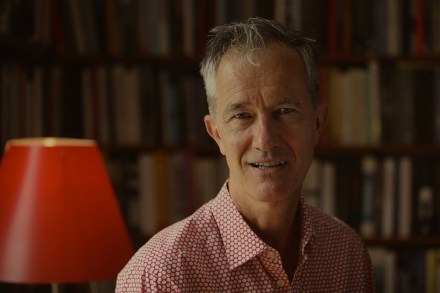
‘Sitting the 11-plus was the most momentous event of my life’ – Geoff Dyer

Geoff Dyer, eh? Geoff Bloody Dyer – without doubt one of contemporary Eng. Lit.’s most successful, intellectually playful and stylistically distinctive voices. His extraordinary oeuvre spans fiction, non-fiction, memoir, criticism and genre-defying hybrids, often likened – I don’t know by who, but by me at least now – to greats such as W.G. Sebald or Roland Barthes. Dyer expertly navigates the tricky territory between high culture and everyday experience, balancing erudition with comic digression in books ranging from Out of Sheer Rage (a hilarious study of not writing a book about D.H. Lawrence) to But Beautiful (a genre-blending and largely non-irritating meditation on jazz) to Zona (a mercifully unpretentious personal

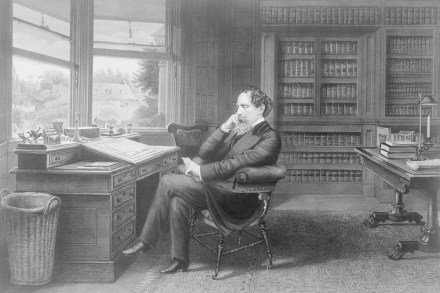
Studying Dickens at university was once considered demeaning. Now it’s too demanding

Any consideration of Stefan Collini’s subject has surely to address a major recent issue. The academic study of English, both at school and university, has fallen away significantly, with the numbers opting for it greatly diminishing. Anecdotal evidence from even the most serious institutions suggests that many students are now finding previously accessible texts impossible to read or understand – because of their length (Charles Dickens), their complexity of meaning (Alexander Pope) or remote sensibility or politics (Joseph Conrad). Collini has been given a generous amount of space to write his history. Despite this, he has chosen to end it more than 50 years ago. His subtitle is quite misleading.

In the footsteps of Cecil Rhodes

In a scrubby paddock on the edge of Bulawayo, I walked up to a half-broken leatherwood tree growing in a tangle of old barbed wire. It looked no different to a million tough trees across Zimbabwe, the still-beautiful, still-friendly country which remains the most wonderful place in Africa. But this tree is exceptional: it is listed as a national monument. Beneath it, in October 1888, a concession was agreed which led Lobengula Khumalo, King of the Ndebele, to lose his lands to a consortium led by Cecil Rhodes. It’s disputed what Lobengula thought he was agreeing to when he made his mark on the treaty. ‘I thought you came to

My bid to be chancellor of Oxford

I have spent the past couple of weeks in Oxford rediscovering the art of conversation while campaigning for election as the university’s chancellor. I have sung for my supper in Christ Church Cathedral before being questioned in the SCR on my fitness for the role, and I performed again at evensong at Univ before debating postcolonial reparations over vegetable broth and venison. I have been gifted cyclamens following visits to St Hilda’s and Corpus. At St Hugh’s my understanding of the Higher Education (Freedom of Speech) Act was taken apart by the law don, while at Worcester I was challenged on the state of Britain’s naval hard power and the

Inside the race for the Chancellor of Oxford

What do we mean these days when we talk about the British ‘establishment’? When Henry Fairlie coined the term in 1955 – in The Spectator, of course – he defined it as ‘the whole matrix of official and social relations within which power is exercised’. A lot has changed in the past 70 years. The influence of the monarchy has diminished, the class system no longer holds sway, party politics is almost unrecognisable. Yet the idea of the establishment retains its powerful allure and, in the election of the next chancellor of Oxford University, we see how much it still matters to Britain’s 21st-century elite. Dons complain of candidates inviting

Familiar scenarios: Our Evenings, by Alan Hollinghurst, reviewed

There’s a certain pattern to an Alan Hollinghurst novel. A young gay man goes to Oxford. He’s middle class and riddled with suburban self-consciousness – a kind of complicated awareness of his non-posh failings and resulting subtle superiority. He meets another young man – possibly gay – who is posh. An intricate dance ensues of social slip-ups and huge townhouses in Notting Hill, bags of money and country piles. It’s a formula which can be transposed between Edwardian drawing rooms and 1980s parties with only the slightest changes. Sometimes our protagonist is the aristocrat himself; sometimes he even went to Cambridge. He’s always cultured – interested in poetry, theatre and