Olympics

Simone Biles, Plutarch and an Olympic trial

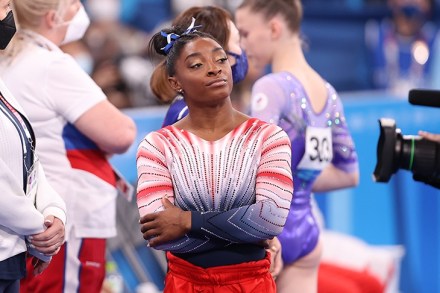
The outstanding gymnast Simone Biles has pulled out of several Olympic events, saying: ‘I just don’t trust myself as much any more.’ Many took the view that this was a fashionable ‘mental health’ issue. Ancient Greeks might have come up with a rather different analysis. Plutarch (c. ad 100) is said to have been the author of a letter of condolence to one Apollonius whose son had just died. In it he considered how best one should react to loss in the context of the whole field of human suffering, which Greeks regarded as the common lot of all mankind. For example, Achilles in the Iliad claimed that Zeus possessed two storage-jars, one filled with evil, the other with blessings. A man could be served from the jar of evil alone, or from a mixture of both.
Is it fair for Laurel Hubbard to compete against women?

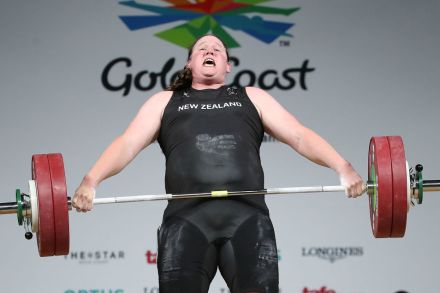
Today, the conversation about transgender rights and the interests of women turns to sport. At the Olympic Games, Laurel Hubbard of New Zealand, will compete in the +87kg women’s weightlifting. Hubbard, as you surely know, was born male and grew up to become a competitive weightlifter. At the age of 33, the athlete then transitioned and became a trans woman. And because the International Olympic Committee effectively signs up to the mantra of trans rights – 'Trans women are women' – Hubbard can duly compete in the women’s contest in Tokyo.

In defence of Novak Djokovic

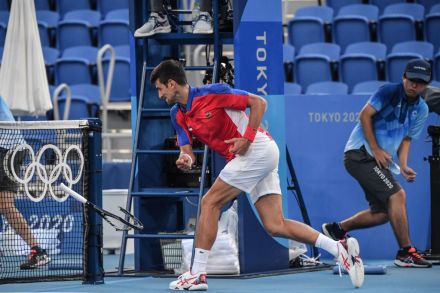
Why does no one like Novak Djokovic? If Roger Federer is the player that even non-tennis fans can't help but fawn over, Djokovic has few admirers. The world number one smashed two racquets during his defeat to Pablo Carreno Busta in the semi-finals of the Tokyo Olympics yesterday. The game marked the end of Djokovic's dream of achieving the Golden Slam by winning four grand slams and Olympic gold in the same year.  While Djokovic still had a phenomenal year, even champions have bad days. But despite his many achievements, there is a palpable sense that a lot of fans were happy to see him lose – both the game itself and his temper. It’s fair to say that Djokovic is a polarising figure, so criticism is not unusual for the 33-year-old Serbian.

Is rain getting heavier?

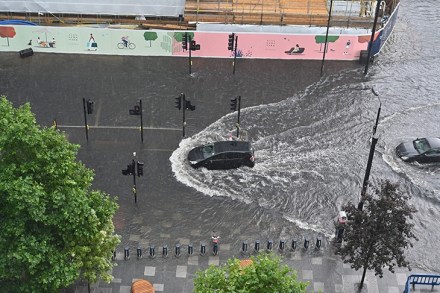
Reinventing the wheels Skateboarding made its debut at the Olympics. Who invented the skateboard? — There are many reports of homemade skateboards being created in the 1940s and 1950s by Californian surfers who wanted to continue a form of their sport out of season, but the first commercial skateboard was marketed by roller-skate company Roller Derby in 1959. The sport, however, failed to catch on until 1973, with the introduction of urethane wheels and a curve at the end of a board known as the ‘kick-tail’, which allowed acrobatics to be performed. Water logs There was more surface flooding in London. Is heavy rain becoming more common in London? The Met Office uses different ways to measure long-term rainfall trends. 1.

Why do the Japanese still seem so ambivalent about Naomi Osaka?

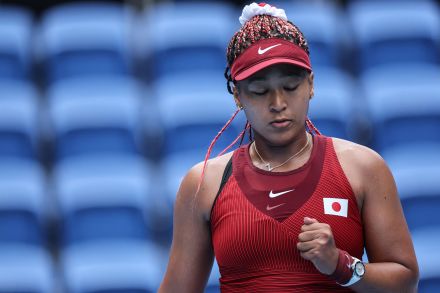
It had all started so well for Naomi Osaka. Dressed in the colours of the Japanese flag, the tennis star was given the signal honour of lighting the cauldron in Friday’s opening ceremony at the Tokyo Olympics. She was presented as a symbol not only of Japan, but also of the Olympic movement’s self-proclaimed diverse and progressive philosophy. Yet her hopes of glory were extinguished just four days later after an error-strewn performance against world number 42 Markéta Vondroušová. Her underwhelming Olympic adventure prompted words of sympathy from many.

Simone Biles is a quitter

From our US edition

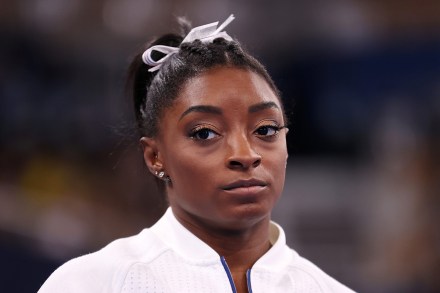
Just a few days before the Tokyo Olympics opening ceremony, my mom and I watched the gymnastics comedy Stick It. The movie is about a star gymnast fighting for redemption after dropping out of a World Championship right before the floor event. Reality seemed to mirror fiction on Tuesday when Simone Biles, the star of the US gymnastics team who is widely considered the greatest gymnast of all time, withdrew from competition during the Olympic team final. Biles botched her vault attempt, not performing the full trick she planned to do and taking a huge step upon landing, before being led away from the floor by a team trainer.

simone biles

Bronze is the best medal

In the 50-kilometre walk at the 1948 Olympics, the gold and silver medallists were aged 28 and 33 respectively. The man who took bronze, Britain’s ‘Tebbs’ Lloyd-Johnson, was 48 years old. Still the oldest person ever to win an Olympic track and field medal, Tebbs is now more famous than the men who finished ahead of him. Another British bronze at those 1948 London Olympics was also worth more than most gold medals. Just three years previously when released from forced labour in a Japanese prisoner of war camp, weightlifter Jim Halliday had weighed a skeletal six stone (38 kg).

In defence of the BBC’s Olympic coverage

For viewers of the BBC Olympics coverage, it’s back to the old days. Not since Sydney in 2000 has all the Games content been squeezed into the main terrestrial channels, with the red button and its one extra stream making its debut in Athens 2004. ‘The Olympics are perfect for interactive television,’ said a BBC executive celebrating the innovation, ‘because there are so many events happening at the same time.’ In the run up to London 2012 we made the promise that UK viewers would be able to watch any event they chose, from beginning to end – and the corporation delivered 24 HD television channels and an equivalent number of online streams to achieve that.

What’s changed since the last Tokyo Olympics?

Waiting Games What did Japan, and the world, look like the last time Tokyo held the Olympics in 1964? — As this year, Tokyo had to wait to hold the Games. It was awarded the 1940 Olympics, but the offer was withdrawn after the Japanese invasion of China (before the 1940 Games were abandoned altogether). — South Africa was banned for the first time for refusing to send a single, multiracial team to the Games. — In spite of it being three years since the building of the Berlin Wall, East and West Germany entered a single ‘united’ team. — They were the first Games broadcast around the world by satellite. — They were the last Games to use a cinder athletics track.

The ancient Greeks had no time for losers

Every red-blooded Englishman has believed that exercise in the open air is the finest prophylactic against popery, adultery and the fine arts. Baron de Coubertin, who dreamt up the modern Olympic Games, took a different view. He admired the spirit of games on the playing fields of Eton and thought that they might provide a model for games of the sort he imagined the ancient Greeks enjoyed at Olympia: competitive but amateur, fair, wholesome, played for the sake of it and also, he hoped, acting as a stimulus to world peace. Up to a point, Lord Copper. The Olympic Games, founded in 776 bc, celebrated Zeus, god of Mount Olympus, at his sacred site, Olympia (the actual mountain is more than 160 miles away).

How Leni Riefenstahl shaped the modern Olympics

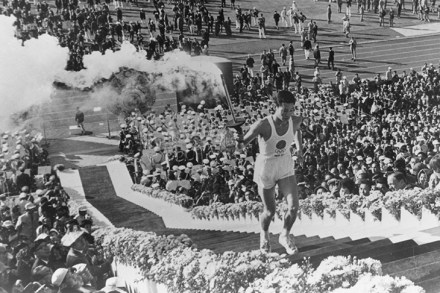
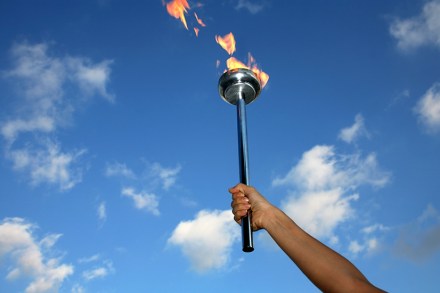
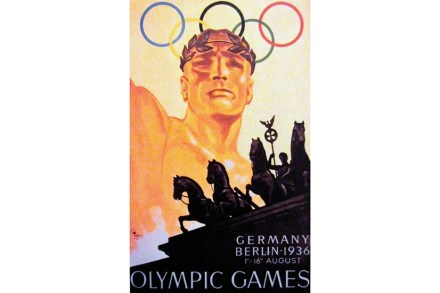
It’s an uncomfortable truth, but the Olympic Games in their modern form were pretty much invented by the Nazis. They came up with the idea of the torch relay, for example, the one that begins in Olympia and ends with the lighting of the cauldron at the opening ceremony. But it wasn’t the events at the 1936 Olympics that were new, so much as the way they were presented and filmed. Even today, the style of coverage owes much to Leni Riefenstahl, Hitler’s favourite filmmaker and arguably the most gifted and influential female director of the 20th century.

Tokyo’s doomed Olympics could be the worst yet

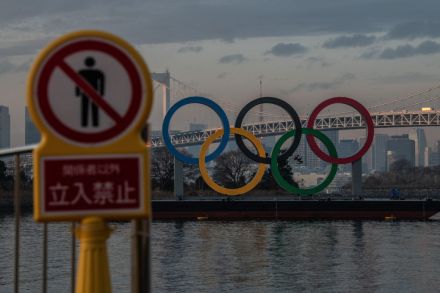
The Tokyo 2020/2021 Olympics, which begins on Friday, looks set to be one of the worst in the event's history. A book detailing all the scandals and mishaps of the games would be longer then the Tales of Genji.  Won way back in 2013, it wasn't long before allegations of suspicious payments materialised. Since then there have been: massive cost overruns, cock-ups with venues (the Olympic stadium was built without a crucible!), multiple gaffes and resignations from the principals, the relocation of the marathon, plus, of course, the one-year postponement and endless uncertainty wrought by the pandemic. The games will open under a dark cloud of public discontent.

The Olympics are canceled

From our US edition

The Olympic Games in Tokyo are doomed. Before the opening ceremony, before even the torch is lit, it’s not going to be OK. The games, I’m afraid, just aren’t woke enough. Apologies to Tokyo and Japan — and #StopAsianHate and so on. But for the international left, sport no longer matters unless it can be used to win on Twitter and advance the War for Progress. Professional football can no longer be about the game. It must be a staging ground for raising awareness for racism and police brutality. Classrooms can no longer be about math and reading. They must be a nursery for implanting and implementing critical race theory. Now, the Olympics must be about anthems, swimming caps — and weed.

olympic

Laurel Hubbard is the beginning of the end of women’s sports

When women’s professional soccer was deemed good enough for our TV screens a couple of years ago, I was watching with a friend and her four-year-old son. He was enthralled by the game, and asked his mother, ‘Are boys allowed to play football as well as girls, mummy?’ This little boy’s comment clearly highlighted the insidious sexism prevalent in all aspects of competitive sport. When it comes to soccer, rugby, weightlifting, darts, you name it, commentating, sports writing, sports photography and so many other operational aspects of competitive sports are dominated by men. Female sports champions can be such important feminist role models for girls. Look at Martina Navratilova, Jessica Ennis-Hill, Nicola Adams and Sian Massey-Ellis.

For the sake of athletics, the Olympics must not be delayed again

Whatever became of athletics? It’s fallen nearly as far as show jumping and that is a long way. But the world needs athletics: it is the purest sport. Lots of countries can’t row or sail or do equestrianism, tennis or golf. Anyone, anywhere can run, jump and throw. But where is athletics now? Can you name the fastest man in the world this year over 100m?* Who are the best middle-distance runners? The sport has fallen nearly as far as show jumping and that is a long way In the 1970s and 1980s everyone knew the names of countless athletes, domestic and foreign.

Olympics’ organisers could regret banning ‘taking the knee’

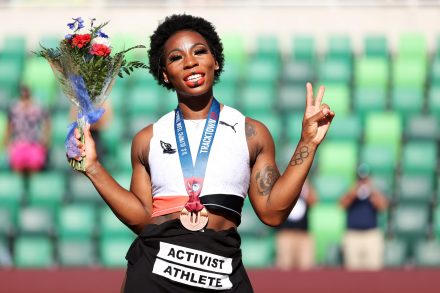
Knee-taking and fist-raising protests have been banned at the upcoming Tokyo Olympics, with the International Olympic Committee warning athletes who flout the rules that they will be punished. The IOC clearly hopes this will mean the delayed and accursed Olympics – already set to be loaded with a slew of joy-killing Covid restrictions – can take place without the additional burden of political controversy. That’s the theory, but could it all backfire? At first glance it looks as if the IOC has been clever. Rather than issue a top-down declaration, they canvassed 3,500 athletes asking whether the current Rule 50, which bars all political demonstrations on the podium (not specifically the knee or the fist), should be retained.

Japan’s Olympic ‘scandals’ mark the arrival of cancel culture

Things are going from bad to worse for Tokyo's cursed Olympics. Just a month after Yoshiro Mori, the former PM, and ex-head of the Tokyo Olympic organising committee was forced to quit for suggesting female members should have their speaking time rationed, along comes another storm in a green tea cup, and yet another resignation.  The latest fiasco concerns comments made by Hiroshi Sasaki, the now former creative director of the opening and closing ceremonies about the actress, comedian and fashion designer Naomi Watanabe. Watanabe, a ubiquitous presence on the inane and exhaustingly upbeat variety shows that dominate TV here, is known as the ‘Japanese Beyoncé’ for the impressions of the American singer, which brought her to prominence.

How the West can avoid Beijing’s propaganda trap

This time next year the Winter Olympics will have drawn to a close. Beijing will have become the first city to have hosted both the summer and winter games. The Chinese Communist party’s (CCP) central propaganda department will have worked to ensure a gold medal performance in harnessing sport to bolster the party’s image (before we get too self-righteous about that, remember that all hosts use the games to boost soft power). Or maybe not. A year out, global momentum is gathering for an Olympic boycott in reaction to the genocide and crimes against humanity in Xinjiang. Former United Nations ambassador Nikki Haley has called on the Biden administration to pull the US out of the games to send a message to Beijing.

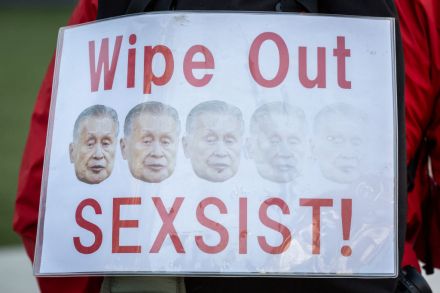
Japan Olympic chief resigns over sexism. But did he have to go?

Yoshiro Mori the 83-year-old former Japanese prime minister has resigned from his position as president of the Tokyo Olympic Organising Committee less than 6 months before the games are due to start. Mori’s crime? Making spectacularly unwise comments during a discussion of how to increase women’s representation on the committee. ‘When you increase the number of female executive members, if their speaking time isn’t restricted to a certain extent, they have difficulty finishing, which is annoying,’ he was reported as saying. Along with a litany of other problems and embarrassments, Mori is the second senior Olympic official to quit due to a scandal.

Yoshihide Suga is the Japanese Gordon Brown

‘Analytical intelligence, absolutely. Emotional intelligence, zero’. That was Tony Blair’s withering assessment of his successor Gordon Brown. It is a description which could as easily be applied to Japan’s beleaguered prime minister Yoshihide Suga. The former chief cabinet secretary, long-time right-hand man and ‘brain’ of long serving PM Shinzo Abe is showing alarming Brownite tendencies in his handling of the media and political relationships. Amid plummeting poll ratings the rumour is that he’ll be lucky to make it to his first anniversary in power. Like Gordon Brown, Suga took over as PM from a three-time election winner.