Nuclear

Only Iran is happy with Trump’s peace deal

President Trump might have thought that negotiating an interim diplomatic understanding with Iran was going to be the hard part. But selling the 14-point Memorandum of Understanding to the public is proving to be just as laborious.  Trump deserves blame not because he negotiated a poor peace deal but rather because he decided to go to war in the first place Less than 24 hours after the document was released, virtually nobody is particularly satisfied with it. Republican lawmakers on Capitol Hill, normally deferential or wholly supportive of Trump’s agenda across-the-board, are already expressing nervousness at the terms and demanding a full briefing from the administration about how the White House plans on executing them.
iran

Westminster waits for Donald’s decision

From our UK edition

14 min listen

Westminster waits with bated breath to discover whether Donald Trump will ally with Israel in striking Iranian nuclear sites. The President called for ‘UNCONDITIONAL SURRENDER!’ from Tehran overnight. The day to day of domestic politics appears diminished by comparison with the ever-looming threat of an escalated conflict… But the show must go on: today’s PMQs saw Chris Philp (why not Robert Jenrick?) and Angela Rayner deputising for their absent leaders; Liz Kendall introduced legislation to enact cuts to personal independence payments for disabled people; the Commons voted to decriminalise abortion at any point until birth; and the Office for National Statistics (ONS) is up to its old tricks, announcing that inflation has fallen when the reality is much more complicated.

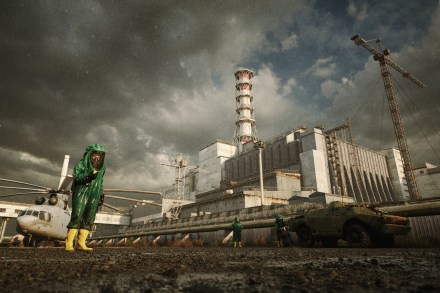
My Chernobyl holiday

There are few things that look sadder than an abandoned football ground. I spent longer than I meant to sitting on a decaying bench looking out over the forest that was once the intended playing surface for the Stroitel Pripyat football club. The sky above was cerulean, cloudless and entirely still. The only life came from my hand-held Geiger counter which spluttered and crackled, telling me that I was in a territory that wasn’t fit for a stroll, let alone 90 minutes of lung-bursting athleticism.  Stroitel Pripyat ceased to be a club 30 years ago, just as they were about to move into the purpose-built Avanhard Stadium where I sat that afternoon.

Labour goes nuclear while Reform turns to coal

From our UK edition

17 min listen

Rachel Reeves has pledged a ‘new era of nuclear power’ as the government confirms a £14.2 billion investment in the Sizewell C nuclear plant in Suffolk. This comes on the eve of Labour’s spending review, with the government expected to highlight spending pledges designed to give a positive impression of Labour’s handling of the economy. However, as Michael Simmons tells James Heale and Lucy Dunn, there are signs that the government’s National Insurance hike is starting to bite. Plus – Nigel Farage has made two announcements in as many days. This morning, he unveiled Reform’s new chairman, former MEP Dr David Bull, taking over from the recently returned Zia Yusuf.

What to do about Iran?

China is surely America’s most dangerous threat over the medium term, but Iran is surely the most dangerous right now. The Islamic Republic would be even more dangerous if the Israelis had not decimated the Mullah’s deadly “ring of fire,” the proxy forces across the Middle East funded, armed, trained, and directed by Tehran. But removing these proxies (all except the Houthis in Yemen) does not remove Iran’s nuclear threat. That threat now faces the Trump administration and Netanyahu’s coalition in Israel, leaving only difficult choices. To understand the current problems, we need to grasp a series of fundamental issues surrounding Iran’s nuclear program. • What are Iran’s objectives?

Fordow

ESG is a surprise boon for fossil fuel giants

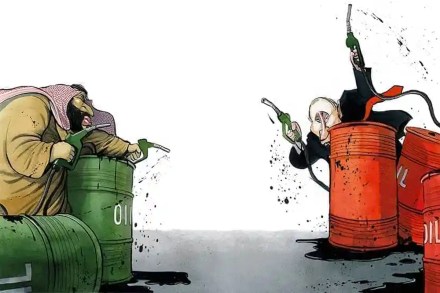
ESG, or environmental, social and corporate governance, has taken the financial world by storm. It first hit the scene in a 2004 United Nations report that argued the financial sector could rack up more profits if it focused on carbon dioxide reduction and UN-approved progressive causes and has ballooned into a big, green financial juggernaut. In 2021, ESG assets under management hit an estimated $35 trillion. Bloomberg projects that by 2025 $53 trillion will be invested in ESG vehicles — that’s over one third of global assets under management and over five times 2007’s total of $10 trillion of ESG assets.  The main thrust is to hasten the renewable energy transition to solve climate change by diverting capital from fossil projects to various green projects.

opec aramco esg

Jimmy Carter’s second act was better than his first

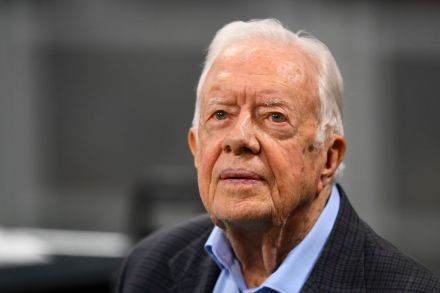
Jimmy Carter is commonly depicted as one of America’s worst presidents. His four-year tenure is said to be a mishmash of screw-ups, from high energy prices and even higher inflation to low economic growth and a very public, very embarrassing hostage rescue attempt in Iran. His signature achievement, the 1978 Camp David Accords, which codified peace and normalized diplomatic relations between Egypt and Israel, is treated as a small stretch of fresh pavement in an otherwise potholed road. Fair or not, that’s the perception.

jimmy carter

Japan’s nuclear renaissance

From our UK edition

Japan is reversing its avowedly anti-nuclear stance, restarting idled plants and looking to develop a new generation of reactors, announced Prime Minister Fumio Kishida on Wednesday. This major policy shift from the world’s third biggest economic power underlines both the seriousness of the global energy crisis and points to the most likely way ahead. This announcement would have seemed unimaginable a decade ago in the wake of the Fukushima nuclear disaster, which saw the plant flooded and led to three separate hydrogen explosions. Then prime minister Naoto ordered those living within a 12-mile radius of the plant to be evacuated as the Fukushima area was designated a contaminated wasteland.

Biden cracks down even on green energy

We know that government’s knack for finding something wrong with everything rivals even the most stereotypical mother-in-law. But the relentless fault-finding’s latest victim may surprise you: federal prosecutors have fined a green energy company $8 million and slapped on a five-year probation period after bald and golden eagles died on its wind farms. There is now no such thing as “clean energy.” Even so-called “green energy” is tinged with the blood of birds. Just when you thought the war on energy couldn’t get any more ridiculous, Joe Biden's Department of Justice has sucker-punched one of its own golden boys.

Israel’s shadow war with Iran explodes into ‘nuclear terrorism’

From our UK edition

If time flows at an even pace, then history does not. Joe Biden may still be new in the job, but he finds himself at the centre of a war between Israel and Iran in everything but name. After a comparative lull, events are not so much accelerating as whirling around the president, drawing him inexorably in. Last night, Iranian officials reported that the Natanz uranium enrichment plant – a lynchpin of its nuclear programme – had been the victim of what they described as 'nuclear terrorism'. According to US officials quoted in the New York Times, an explosion destroyed the independent power system that supplied the centrifuges for enriching uranium.

Stop enabling the crisis junkies

Did you make good use of the neatly palindromic 2/22/22? To refresh your memory, it was a day that turned out be the narrow window between the moment when the evolving “science” suddenly allowed Democratic governors to start lifting their states’ mask mandates, and Vladimir Putin launching his special mission to “protect the people” in eastern Ukraine. I hope you enjoyed it, because given the way the mainstream media portray the news these days, it may be a while before we’re all allowed our next respite from the seemingly permanent existential crisis that runs as a through-line to our human condition.

crisis

Chernobyl Two?

From our UK edition

The electricity supply to the ruined nuclear plant at Chernobyl in Ukraine has been cut off. According to one knowledgeable source I spoke to, this is a serious problem as power is needed to pump water around spent nuclear fuel rods stored there. There is a back-up diesel generator, but it has just one day’s supply of fuel left and once that runs out, the temperature could start to climb. If the water evaporates, the zirconium metal ‘fuel assemblies’ could start to melt – with radioactive material released into the atmosphere. This would not be anywhere near as bad as the original Chernobyl disaster, in 1986, when a reactor had a power surge and exploded – but still bad enough.

The nuclear bunker market is booming

From our UK edition

As the spectre of nuclear war returns so does another very modern phenomenon: a spike in interest amongst the paranoid rich seeking to procure their own nuclear bunker. Over in Texas – already home to a vibrant culture of ‘preppers’ who spend their time planning for every shade of apocalypse – one creator of custom shelters, Rising S Bunkers, says it’s had a 700pc increase in interest in the last month. Made from long-lasting plate steel, their bunkers are designed to be buried under the average American yard. Of the five units sold last month, the largest fetched $240,000.

The Iran nuclear talks are on the brink of collapse

With diplomats fearing that the Iranian nuclear talks will collapse, minds are inevitably turning to what happens the morning after. In the realm of politics, this has amounted to buck-passing. Last week, White House press secretary Jen Psaki told journalists: “None of the things we’re looking at now…would be happening if the former president had not recklessly pulled out of the nuclear deal, with no thoughts about what might come next.” In the real world, meanwhile, with regional peace in the balance, the stakes are rather higher. As the Biden administration’s softly-softly approach plunges towards global humiliation, American negotiators have been waking up to what should have been obvious from the start: you can’t build an effective Iran strategy with carrots.

Exclusive: How Israel is attacking Iran’s nuclear sites

Israel has carried out three major operations over the last eighteen months against Iran's nuclear sites. These attacks involved as many as a thousand Mossad personnel and were executed with ruthless precision using high-tech weaponry including drones and a quadcopter — and spies within Tehran's holy of holies, its nuclear program. While Joe Biden’s nuclear negotiators try to snatch catastrophe from the jaws of defeat in Vienna, Israel is taking things more seriously. Last week, Naftali Bennett, the Israeli prime minister, pivoted to a new policy on Tehran: retaliating against aggression from militias backed by Tehran with covert strikes on Iranian soil. This builds on the extensive capabilities that the Mossad has built up in the Islamic Republic in recent years.

Why are we so afraid of nuclear power?

From our UK edition

The climate change summit in Glasgow will have one important part of the discussion missing: the role of nuclear power. It seems the government is in no mood for a discussion with the nuclear industry — every one of its applications to exhibit at the COP26 summit has been rejected. That’s a shame, because there are plenty of myths to be addressed. We could discuss the lessons from the plant at Fukushima, seriously harmed by a tsunami in March 2011. Sometime later, two of the reactors overheated, burst and released a small quantity of radioactive material into the environment. At the time of this event, my wife Sandy and I were at our home in St Louis, Missouri. Our daily paper, the Wall Street Journal, had a detailed account of the tsunami.

Who should pay for nuclear?

From our UK edition

How much longer is the government going to suppress the cost to households of achieving net zero carbon emissions, or try to imply, as business secretary Kwasi Kwarteng recently seemed to imply on the Today programme, that it won’t cost us at all?  Even as he spoke Kwarteng was working on a new model for the funding of nuclear power stations that was unveiled yesterday in the form of the Nuclear Energy Finance Bill. The proposed legislation will impose levies on energy bills in order to subsidise the construction of new nuclear power stations.

The troubling truth about Britain’s nuclear deal with China

From our UK edition

The most shocking thing about the news that the government is looking to remove China from Britain’s nuclear power programme is that it has taken so long. But it will not be a straight-forward process. It will likely provoke tantrums from Beijing, as well as grumbles from a nuclear lobby that will have to find somebody else to stump up the billions needed for their pet projects. China General Nuclear should never have been allowed anywhere near such a critical piece of national infrastructure. The state-owned company has been accused by the US government of stealing technology for military use and placed on a national security blacklist which severely limits US companies from doing business with it. Washington has warned Britain against partnering with the company.

A nuclear crisis is closer than you think

From our UK edition

It has long been widely accepted as orthodoxy that the world was saved from nuclear war during the Cuban Missile Crisis because of the wisdom of John F. Kennedy and the diplomatic backchannel his aides had with Soviet leader Nikita Khrushchev. But this is only half true. The Soviet sources that have emerged since the end of the Cold War as well as recently declassified KGB archives suggest that, more than anything, we were saved from nuclear annihilation by sheer luck. In the late hours of 27 October 1962, the crucial day of the crisis, American ships targeted a Soviet nuclear-armed submarine with practice depth charges, forcing it to surface. A negotiation by means of searchlight signals began.

Building Sizewell C would be a nuclear-sized disaster

From our UK edition

I love Suffolk. This Christmas I will be there with my family and we’ll almost certainly walk up the coast, joining dog-walkers, bird-watchers, hikers and even swimmers in one of the most beautiful and unspoiled parts of the UK. The secret of Suffolk is its relative inaccessibility. No major motorway connects it and once you arrive you’re committed to a sprawling network of country lanes that twist through heathland and grazing marsh, mudflats and reedbeds. Minsmere, a nature reserve that’s home to 6,000 wildlife species, is among its glories. The nightjar, the woodlark, the Dartford warbler and the silver-studded butterfly are just some of the rare species found there. At least for the time being.