Nuclear

How many people have swum the Channel?

From our UK edition

Journey’s end Holidaymakers are being flown home after travel company Thomas Cook failed. The idea might have horrified the company’s eponymous founder, whose first excursion was a temperance outing from Leicester to Loughborough on 5 July 1841, on a charter train from the Midland Railway Company. All 500 tickets were swiftly sold. A holiday from Leicester to Liverpool and North Wales followed in 1845, including several nights in temperance hotels and a night-time ascent of Snowdon. Thomas Cook went on to organise trips to the 1851 Great Exhibition for 150,000 from the Midlands. Financial health A Labour activist and parent of a patient accused the Prime Minister on a visit to a London hospital of ‘destroying’ the NHS.
Blast from the past | 6 June 2019

From our UK edition

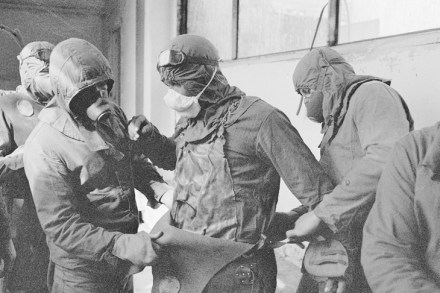
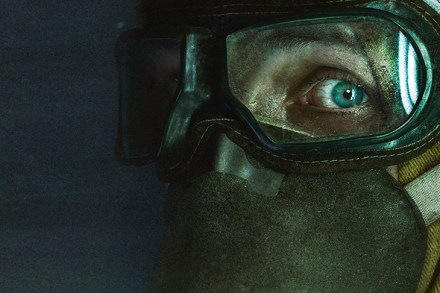
How many people do you think died at Chernobyl? 10,000? 50,000? 300,000? The correct answer, according to the never knowingly understated World Health Organisation — in a thorough report released nearly 20 years after the 1986 explosion — was ‘fewer than 50’. Ah, but what about all the mutant babies who ended up with two heads and webbed feet? What about the inevitable epidemic of cancers? Well, yes, it’s true that 4,000 more cases of thyroid cancer were loosely attributable to Chernobyl, mainly in children and adolescents. But the survival rate was 99 per cent.

Trump’s Iran sanctions send a message to Europe: the U.S. is still the boss

From our UK edition

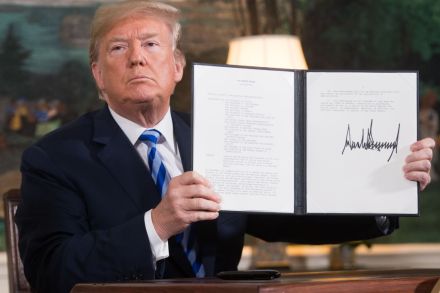
On Monday, August 6, the long-arm of the U.S. Treasury Department reached into Europe and violently shook the continent. The first wave of U.S. secondary sanctions on entire sectors of the Iranian economy are now back in force, which means major European conglomerates and large-sized businesses have a potentially existential choice to make. Do we continue to do sign deals in Iran that Washington now explicitly prohibits? Or do we take the path of least resistance by removing our money from the Iranian market and saving ourselves the trouble of billions of dollars of U.S. fines, billions more in asset freezes, and severe damage to the company’s reputation?

Nucleus

From our UK edition

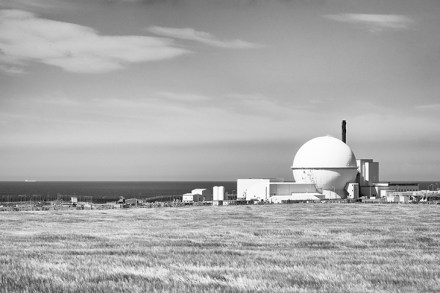
Doubtless Spectator readers based in Caithness will scoff when I say that the old fishing port of Wick (top right corner of the country, close to John O’ Groats) is a bit remote. But for the rest of us, it is. Indeed, its relative isolation is one of the reasons it was chosen to house the archive of the UK nuclear industry, in a brand-new public building called Nucleus. Another is the presence of the Dounreay nuclear plant near Thurso, a big employer in the area, now being slowly dismantled. I went to see Nucleus, relishing the beautiful 110-mile drive up the east coast from Inverness. Nucleus stands in the flat fieldscape north of the town next to another airport, Wick John O’Groats (only two scheduled services, to Edinburgh and Aberdeen).

Fingers on the nuclear button

In 1983, Soviet spies skulked in our midnight streets to check the lights were out. The Kremlin, convinced the West was planning nuclear war, launched Project RYAN, whereby agents watched for signs of impending attack. One was that lights would burn all night in government buildings, as fiendish mandarins drew up the war plans. It didn’t occur to them that lights might indicate nothing more than cleaners on a late shift. Soviet paranoia was such that they saw menace everywhere, and agents, eager to please Moscow, reinforced this fear. ‘The more alarming the reports, the more the agents were congratulated for their diligence.’ RYAN became self-fulfilling.

An accident waiting to happen

From our UK edition

In the early days of the atomic age, Soviet students debated whether it was nobler to become a physicist or a poet. Some of them seem to have been genuinely torn, and one of those may well have been Anatolii Diatlov, who was the deputy chief engineer at Chernobyl during the late-night turbine test that led to the 1986 explosion. Such was Diatlov’s reverence for verse that he described the great blasts of steam, hot water and machine oil, along with the violent crackling and popping of the inundated electrical system, as ‘a picture worthy of the pen of the great Dante’. The disaster, as Serhii Plokhy shows in his haunting new history, left Ukrainians grasping for similes and allegories. One of Diatlov’s colleagues reached for ‘Hiroshima’.

Vital signs

From our UK edition

Exhibit A. It is 1958 and you are barrelling down a dual carriageway; the 70 mph limit is still eight years away. The road signs are nearly illegible. You miss your turning, over-correct, hit a tree and die. The following year, graphic designer Margaret Calvert is driving her Porsche 356c along the newly built M1. The motorway signs are hers. It is information design of a high order, possibly even life-saving. The clarity and intelligence of Calvert’s British road signs remain unmatched nearly 60 years later. And the font she created became the NHS, and later rail and airport, standard. Exhibit B. The French are worried about nuclear waste. Given the half-life of radio-active detritus, warning signs must be legible in 100,000 years when written language may be redundant.

Trump is treating Kim Jong-un like a rival New York real estate developer

From our UK edition

When I first heard Donald Trump threaten North Korea with “fire and fury,” I immediately despaired—because I’m sick and tired of hackneyed Game of Thrones references. Amongst American pundits, mentioning the hit show has become a desperate way of showing off one's knowledge of popular culture. To that end, Steve Bannon isn’t Rasputin or Jean-Paul Marat; he’s Qyburn, of course, and Sean Spicer is Hodor. Now this lazy form of posturing has infiltrated even the highest levels of the United States government. What have we come to?

Homer Simpson in a chasuble

From our UK edition

This is one of the most remarkable, hilarious, jaw-droppingly candid and affecting memoirs I have read for some time — not since, perhaps, Dave Eggers’s A Heartbreaking Work of Staggering Genius or Rupert Thomson’s This Party’s Got to Stop. Patricia Lockwood is a poet — dubbed ‘The Smutty-Metaphor Queen of Lawrence, Kansas’ — who, after unexpected and costly medical bills, was forced to move, with her husband, back to her parents’ home. Her mother is more than mildly neurotic, fretting over things like children jumping out of windows in imitation of Superman.

More gas, less wind

From our UK edition

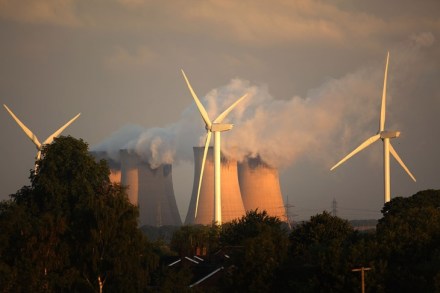
The Global Wind Energy Council recently released its latest report, excitedly boasting that ‘the proliferation of wind energy into the global power market continues at a furious pace, after it was revealed that more than 54 gigawatts of clean renewable wind power was installed across the global market last year’. You may have got the impression from announcements like that, and from the obligatory pictures of wind turbines in any BBC story or airport advert about energy, that wind power is making a big contribution to world energy today. You would be wrong. Its contribution is still, after decades — nay centuries — of development, trivial to the point of irrelevance. Here’s a quiz; no conferring.

When will we ever learn?

From our UK edition

In 2012, sugar became more dangerous than gunpowder. According to the historian Yuval Noah Harari, of the 56 million people who died that year, 620,000 did so by the hand of their fellow humans: 120,000 in war and 500,000 from crime. By contrast, 1.5 million died from diabetes. Harari’s wry observation adds weight to Steven Pinker’s assertion in The Better Angels of Our Nature (2011) that humans are on a trajectory towards peace and non-violence. But wars in the Middle East, Afghanistan, across the Sahel and Yemen; Russian and Chinese irredentism; nuclear threats from North Korea; Trump’s belligerency, not to mention the asymmetry of terrorism, render urgently relevant the continued study of war. In War: An Enquiry, the philosopher and ethicist A.C.

Stand and deliver

From our UK edition

Some opera-lovers prefer concert performances to full stagings. I don’t. It’s that whole Gesamtkunstwerk thing: opera needs to be seen as well as heard. There’ll always be circumstances in which concert performances are welcome — to rescue a neglected score, say, or if a symphony orchestra wants to stretch itself. But when a major company presents standard repertoire in concert, it feels like an admission of defeat. Opera North recently mounted a magnificent concert version of Wagner’s Ring — but for all the brave talk about a ‘radically stripped-back’ production, who seriously doubts that, if funds had allowed, it’d rather have gone the whole way? Now it’s doing Turandot in concert.

Arms race | 4 May 2017

From our UK edition

Like most documentaries, Britain’s Nuclear Bomb: The Inside Story (BBC4, Wednesday) began by boasting about all the exclusives it would be serving up. Unlike most, it was as good as its word. What followed did indeed contain much previously unseen footage and interviews with people — including ‘this country’s bomb-maker in chief’ — who’ve never before spoken about the part they played in Britain becoming a nuclear power. It also did a neat job of fitting the story to our favoured national myth: the one about old-fashioned British pluck and know-how triumphing over both the odds and the shamefully professional ways of other countries. In the 1930s, for example, the race was on to split the atom.

Watch: Dithering Labour frontbencher Jon Ashworth hounded by Piers Morgan

From our UK edition

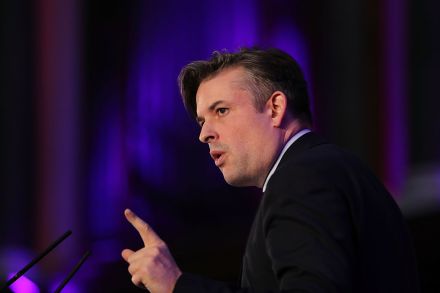
If Labour ever does make it to No.10, it’ll be Jeremy Corbyn with his finger on the nuclear button. The Labour leader has been famously wishy-washy on whether he'd retaliate in the event of a nuclear attack. And it seems Corbyn isn't alone on the Labour frontbench in dithering on the subject. Following his performance during an interview on Good Morning Britain today, Mr S hopes that Labour MP Jon Ashworth isn’t involved in the decision-making process in the event of a nuclear strike. Ashworth was repeatedly asked by Piers Morgan what he would do if another country launched an attack on Britain. Here's what he said: When @piersmorgan asks a question, Piers Morgan makes sure he gets an answer... pic.twitter.

Portrait of the week | 27 April 2017

From our UK edition

Home Jeremy Corbyn, the Labour leader, cheered the United Kingdom by promising four new bank holidays for the whole country when he becomes prime minister, for the patronal days of St David, St Patrick, St George and St Andrew. Asked about the replacement for the Trident nuclear deterrent, he said: ‘I’ve made clear any use of nuclear weapons would be a disaster for the whole world.’ Three hours later, the Labour party put out a statement saying: ‘The decision to renew Trident has been taken and Labour supports that.’ The Communist Party decided not to field candidates against Labour.

Barometer | 26 January 2017

From our UK edition

Nuclear near-misses It was revealed that last June an unarmed Trident missile test-fired off Florida from a British submarine headed in the wrong direction, towards the US. Some other accidents involving nuclear weapons: 24 Jan 1961 A B52 bomber exploded in mid-air after taking off from Seymour Johnson Air Force Base in North Carolina. Three of the four activation devices on one of the two hydrogen bombs it was carrying were turned on. 8 Dec 1964 A B-58 caught fire on the ground at Bunker Hill Air Force Base in Indiana. The nuclear bomb on board was burned but did not explode. 18 Sept 1980 A worker at Little Rock Air Force Base dropped a spanner on a Titan II missile, causing an explosion in which the warhead was blasted 100 feet — without being set off.

Long life | 8 December 2016

From our UK edition

While American conservatives, including Donald Trump and the Cuban exiles in Florida, whooped with joy at the news of the death of Fidel Castro, and while millions of America-haters throughout the world extravagantly mourned his passing, Barack Obama was circumspect. ‘History will record and judge the enormous impact of this singular figure on the people and world around him,’ he said. This was a restrained comment by an American president about a foreign leader whose 47 years of dictatorship had been sustained almost entirely by stirring up hatred of the United States; and we won’t have to wait for history’s verdict on his impact on that particular country, for we know already how enormous it was. He not only humiliated JohnF.

Agents of enterprise

From our UK edition

A teenager in the second decade of the Cold War, my father was taught to play snooker by a KGB agent. His own father was the principal of a theological college in London that had been allowed to accept two foreign students from Russia only if, said the Moscow authorities, a third ‘student’ (notably less ardent in his desire to become a clergyman) was allowed to accompany them. And this is the problem of the world of international espionage: you think it’s going to be all poisoned-tip umbrellas and canasta parties but can wind up in South Norwood studying early church history while making sure Sergey and Dmitry aren’t getting the bus up to Whitehall in the afternoons or swapping briefcases with carnation-wearing strangers at train stations.

1966 and all that

From our UK edition

In the song ‘All the Young Dudes’, David Bowie gamely tried to reassure the youth of the Seventies that, despite what their Sixties elders were always telling them, they hadn’t been born too late after all. On the contrary: it was the ‘brother back at home with his Beatles and his Stones’ who was missing out. Sadly, for those of us growing up at the time, even Bowie at his most thrilling wasn’t quite as persuasive as we’d have liked. OK, so it was definitely annoying to be surrounded by people banging on about how great the Sixties were. But once we’d heard the music, there was an uncomfortable sense that they might also be right.

Barometer | 28 April 2016

From our UK edition

Getting a head Barack Obama dismissed Boris Johnson’s accusations that he shown disdain for Sir Winston Churchill by removing a bust from the Oval Office. What’s the going rate on eBay for such a bust? One-sixth scale resin bust of Winston Churchill (removable head) £12.50 Sir Winston Churchill bronze/brass bust £44 English-made marble bust of Sir Winston Churchill £70 Signed classic Winston Churchill bust by Oscar Nemon £80 Tallent Winston Churchill Terracotta Bust Cigar Lighter (used) £165 The academy difference Education Secretary Nicky Morgan partially retreated on plans to turn all schools into academies, free from council control. How do academies perform against maintained schools at GCSE?