Nuclear

Portrait of the week | 18 February 2016

From our UK edition

Home David Cameron, the Prime Minister, spent time in Brussels before a meeting of the European Council to see what it would allow him to bring home for voters in a referendum on Britain’s membership of the European Union. The board of HSBC voted to keep its headquarters in Britain. Sir John Vickers, who headed the Independent Commission on Banking, said that Bank of England proposals for bank capital reserves were ‘less strong than what the ICB recommended’. The annual rate of inflation, measured by the Consumer Prices Index, rose to 0.3 per cent in January, compared with 0.2 per cent in December. Unemployment fell by 60,000 to 1.69 million. A dental nurse from Bradford who gave her friend a facelift was struck off the dental register.

Apocalypse now? Markets seem set on a self-fulfilling prophecy

From our UK edition

All this talk of a new financial apocalypse, so soon after the last one, is starting to annoy me. Partly because investors as a crowd are so irrational; -partly because so much that governments and central banks have done to contribute to the current market mayhem seems to work against the sensible efforts of ordinary folk to build a bottom-up recovery. Markets first. We’ve had hissy fits about China, even though connections between the Chinese and UK economies are so marginal. We’ve had near-hysteria about the prospect of (and in the US, the start of) rising interest rates.

I told you so: the UK electricity gap looms wider than ever

From our UK edition

Amid all the turmoil in global energy markets, we should not lose sight of the UK power programme that we’re praying will keep our lights on a decade hence: it is, as you know, a hobbyhorse of mine. So how’s it going down at Hinkley Point in Somerset? My man with big binoculars in the Bridgwater Bay nature reserve tells me he’s seeing plenty of lorry movements on the nuclear site, but signals from EDF of France — which has a two-thirds interest in this £18 billion project, alongside Chinese investors — are very worrying. Having already spent £2 billion, the French state utility has deferred until at least the middle of this month a final commitment that was expected last week.

Portrait of the week | 12 November 2015

From our UK edition

Home David Cameron, the Prime Minister, outlined four changes he sought in Britain’s membership of the EU. He wanted to protect the single market for Britain and others outside the eurozone; to increase commercial competitiveness; to exempt Britain from an ‘ever closer union’; and to restrict EU migrants’ access to in-work benefits. Mr Cameron put the demands in a letter to Donald Tusk, the President of the European Council. David Lidington, the Europe minister, said that others in the EU could put forward ‘alternative proposals that deliver the same result’. In a speech to the Confederation of British Industry, Mr Cameron had said: ‘The argument isn’t whether Britain could survive outside the EU; of course it could.

The great British kowtow

From our UK edition

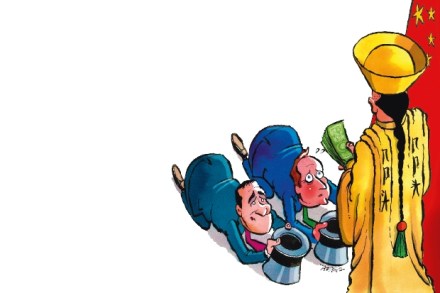
Any British Prime Minister who meets the Dalai Lama knows it will upset the Chinese government — but for decades, no British Prime Minister has much cared. John Major met him in 10 Downing Street, as did Tony Blair. These were small but important nods to Britain’s longstanding status as a friend of Tibet. Of course the Chinese Communist Party disliked seeing the exiled Buddhist leader welcomed in London — but that was their problem. How things have changed. Now China is far richer and Britain is anxious, sometimes embarrassingly so, to have a slice of that new wealth. From the start of his premiership, David Cameron has been explicit about this. ‘I want to refresh British foreign policy to make it much more focused on the commercial,’ he said.

Barometer | 24 September 2015

From our UK edition

Available for parties Labour deputy leader Tom Watson said that leaving his party to join the Liberal Democrats would be like ‘leaving the Beatles to join a Bananarama tribute band’. Is there such a thing? Bananaruma is a Leicester-based band led by the head of arts at a local secondary school. They advertise an hour-long show, for which they bring their own professional PA system with full lighting show. So far they have had one booking, at the Stamford Arms in Groby on 25 July. Tickets cost £20, including a three-course meal, with a bottle of bubbly thrown in for tables of six who booked before 1 July. Sporting chances The chief medical officer for World Rugby suggested that the game’s rules might have to be changed to reduce the risk of serious injury.

The clock that stopped: the victory of nuclear arms and defeat of nuclear power

From our UK edition

‘I visited the black marble obelisk which marks the epicentre of the explosion, and I saw the plain domestic wall-clock retrieved intact from the rubble with its bent hands recording the precise time of day when the city was obliterated: 11.02 a.m. I was glad to be alone, because I could not have spoken.’ Published here 20 years ago, that was my memory of Nagasaki, the target on 9 August 1945 of the second and last nuclear weapon ever deployed. The subsequent seven decades of non-use of nuclear arms — deterred by that most chilling of threats, ‘mutually assured destruction’ — is one of the miracles of modern history, given the unsafe hands in which much of the materiel was held.

Nuclear reaction

From our UK edition

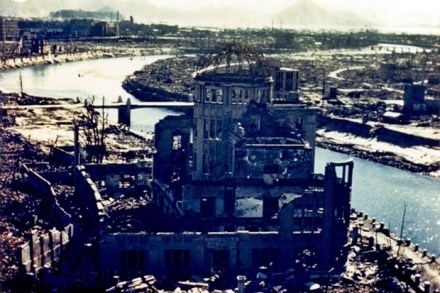
The 70th anniversary of Hiroshima and Nagasaki has produced some predictable wailing and gnashing of teeth about the horrors of nuclear weapons. The Guardian called the dropping of the bombs ‘obscene’, citing the figure of 250,000 casualties, and CND organised a commemorative event where Jeremy Corbyn renewed his call for unilateral nuclear disarmament. As a conservative and a realist, I don’t have the luxury of moral certainty. Was Harry Truman wrong to take the decision he did? On 16 August 1945, Winston Churchill defended him in a speech in the House of Commons, making what has since become the standard case. Yes, Japan would have been defeated eventually, but the bombings brought the second world war to an end without the need for a land invasion.

Nuclear overreaction

From our UK edition

When I was growing up in the 1970s, my three main fears were: being blown up by the IRA; being eaten by a Jaws-like great white shark; being vaporised by a nuclear bomb. I expect it was the same for most kids of my generation. The first two, obviously, were a function of the Birmingham bombings (et al.) and the Peter Benchley/Steven Spielberg axis of shark terror. And the third was the product of the relentless propagandising of CND as rehearsed faithfully on pretty much every BBC programme going from John Craven’s Newsround to The Archers, Animal Magic and Roobarb and Custard.

Selective memory

From our UK edition

It’s 70 years since the bombs were dropped on Hiroshima and Nagasaki and yet there has been no rush to commemorate this anniversary. It’s perhaps not surprising. Who would choose to recall the events of 6 August 1945 when the world first witnessed the effects of nuclear warfare? Yet the absence of date-setting, the annual forgetting, makes it appear that we’re much less keen to remember something that might make us feel uncomfortable or discredit us. One exception was on Radio 4 on Monday morning, when, in Under the Mushroom Cloud, Shuntaro Hida, a 98-year-old survivor of Hiroshima, told us frankly and without sentiment his memories of that day in August 1945.

There was a credible alternative to the Iran deal. Obama just chose to ignore it

From our UK edition

President Obama has accused critics of the recently announced deal with Iran of having no credible alternative. According to Obama, it was this deal or no deal. And then, alleges the president, the options are either acquiescence or war. But this is a false choice, set up by the Obama administration to make its bad deal look like the best we ever could have hoped for. Yet, the truth is that the alternative to this deal was not no deal, it was a better deal, one that actually met the international community’s objectives in undertaking negotiations in the first place. The Iran deal presented at Vienna is both weak and also far more dangerous than most observers had anticipated.

A deal for the good of the world, but in Vienna rather than Brussels

From our UK edition

As an occasional lecturer on the abstruse topic of the efficacy of sanctions in conflict resolution, I find myself much more excited about the emergence in Vienna of a settlement of the Iranian nuclear stand-off than I am about a third Greek bailout — which left-wingers of the Syriza party regard as a vindictive form of sanctions regime designed to humiliate the government in Athens and remove its fiscal autonomy. The only thing that’s clear about the Greek crisis is that it’s not over: impossible to see how it could be ‘over’ without the debt relief Prime Minister Tspiras asked for but the Germans adamantly refused.

Gambling on Iran

From our UK edition

Iran is, beyond doubt, a sponsor of terrorism and this week it has been made much stronger. It has (again) agreed not to make a nuclear bomb and in return trade sanctions are being dropped — so money will start to flow in once more. We can be sure that the cash will soon find its way to Hezbollah in Syria, and to what remains of Bashar al-Assad’s regime. A stronger Iran means a longer and bloodier Syrian civil war, a more vulnerable Israel and a further injection of money and arms into the world’s deadliest war zones. None of this is in doubt. The question is whether, after this week’s deal, Iran will be less likely to menace the region as a nuclear power.

An historic day for Iran and a horrifying one for Israel

From our UK edition

When the Shah of Iran gave the order to create the Atomic Energy Organisation of Iran (AEOI) in 1974 it is unlikely that he had any idea of just how controversial his move would ultimately prove. The AEOI brought order to what had hitherto been a disorganised programme and set the country on the path to an eventual clash with the world’s leading western powers. That clash began in 2002, when at a public press conference in Washington DC, an Iranian opposition group, the Mojahedin-e-Khalq (MKO) exposed details of undeclared Iranian nuclear activities, which had progressed much further than anyone had suspected. At least, almost anyone.

Remember when Britain could build stuff?

From our UK edition

Heathrow. The whole British story is there. Reading up around that debacle last week, I came across the eye-watering — and I think true — claim that, over the course of the second world war, Britain built 444 airfields. Four hundred and forty four. Although not all in the United Kingdom, probably. Some will have been in far-off lands, where Johnny Foreigner could be bought off in exchange for a pretty goat, or just shouted at, at gunpoint, until he went away. Hundreds, though, will have been here, on British soil — where it has now taken us over half an actual century to not quite build a new runway at Heathrow. 444. This is what we use to be able to do. So also trains.

Military inspections must be a non-negotiable part of Iran’s nuclear deal

From our UK edition

It is probably safe to say that the negotiations with Iran aren’t going very well. As the 30 June deadline for a final agreement looms America’s top negotiator Wendy Sherman has just announced that she will resign shortly after, telling the New York Times that it has been 'two long years' in that position. Meanwhile the Iranians are now saying that they want the deadline for reaching an agreement extended, with the Obama administration insisting that’s not an option. To make matters worse unconfirmed reports have recently emerged claiming that a delegation of North Korean nuclear weapons experts have been paying regular visits to Iranian military facilities.

The Iran deal heralds a new era for US policy across the Middle East

From our UK edition

What is it about a nuclear deal with Iran that induces hysteria in certain quarters of the West?  In recent weeks, editors at both the New York Times and the Washington Post have seen fit to run op-eds calling for preemptively bombing Iran, apparently under the impression that preventive war has not yet received a fair shake.  Sure, Iraq didn’t work out, but why quit now?  By ensuring that the American people and their leaders do not overlook the possibility of giving war one more chance in Iran, these newspapers are presumably performing a public service.    In the Times, John Bolton, Dr. Strangelove with an unkempt moustache, describes a situation on 'the brink of catastrophe,' entirely attributable to President Obama’s folly.

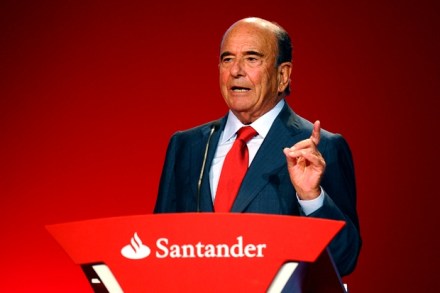
How Italy failed the stress test (and Emilio Botín didn’t)

From our UK edition

Continuing last week’s theme, it was the Italian banks — with nine fails, four still requiring capital injections — that bagged the booby prize in the great EU stress-testing exercise, followed predictably by Greece and Cyprus, while Germany and Austria (with one fail each) fared better than some of us had feared. The most delinquent European bank turned out to be the most ancient, Banca Monte dei Paschi di Siena, which was judged to have a capital shortfall of €2.1 billion as a result of a very modern set of problems. Founded in 1472 as a kind of charitable pawnbroker, the bank which eventually became Italy’s third largest had a more or less blameless 527-year record until it listed on the Italian stock exchange in 1999.

Spectator letters: EDF answers Peter Atherton, Christopher Booker on wildlife

From our UK edition

Nuclear reaction Sir: Peter Atherton questions whether a new nuclear power station at Hinkley Point is a fair deal for the UK (‘Nuclear fallout’, 22 February). However, his conclusion is based on some unvalidated assumptions. In May 2012, he wrote that EDF would need £166 for each megawatt hour of electricity produced to get a ‘realistic return’. Now he says that an agreed price of £92.50 offers rewards which are ‘eyewateringly attractive’. Neither claim is justified. It is a balanced deal which will unlock £16 billion of investment at the lowest possible cost for consumers. He claims returns to investors of up to 35 per cent.

Why has Britain signed up for the world’s most expensive power station?

From our UK edition

‘As part of our plan to help Britain succeed, after months of negotiation, today we have a deal for the first nuclear power station in a generation to be built in Britain.’ That was David Cameron in October, announcing that his government had reached an agreement with the French power giant EDF over the construction of two reactors at Hinkley Point in Somerset. The Prime Minister must have a funny idea of success, because the more we learn about the Hinkley deal, the more we can see that it is one of the worst ever signed by a British government. Even the European Union can smell a rat. Last month, the European Commission published an initial report suggesting that the contract involves illegal back-door government subsidies to EDF, and will now carry out a full investigation.