Nuclear war

Those remaking Threads mustn’t soften the horror

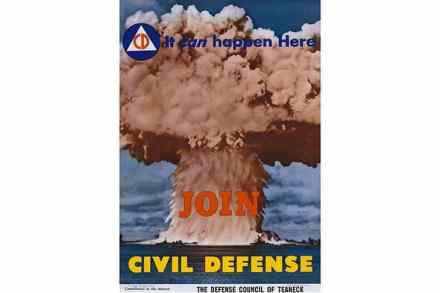
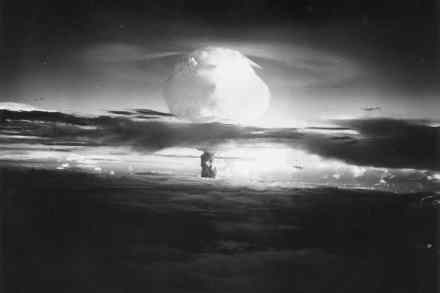
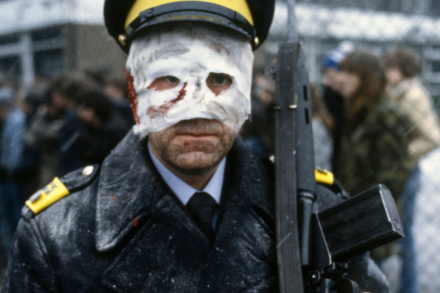
I was 11 years old when I saw the mushroom cloud go up but this wasn’t Hiroshima or Nagasaki in the 1940s – it was Sheffield in the 1980s. I was one of nearly seven million people who sat down on the evening of 23 September 1984 to watch a BBC drama called Threads, written by Barry Hines. For many viewers, choosing to watch this film about a nuclear attack on Britain turned out to be an epochal decision. Threads begins as a kitchen-sink drama, focused around a young couple in Sheffield. The realism of their lives is deftly blended with a documentary narration, making everything seem as real as any fictional drama ever could.
Biden-Harris should help destroy Iran’s nuclear and missile infrastructure

From our US edition

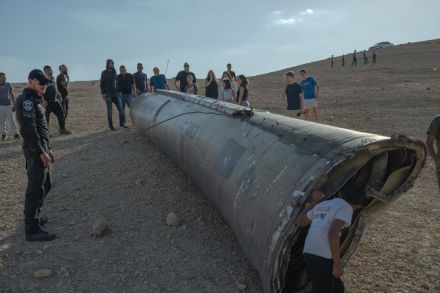
Iran on Tuesday launched 180 ballistic missiles against Israel, a democracy the size of New Jersey. It was the largest escalation to date in a year-long, seven-front war waged by the world’s leading state sponsor of terrorism against Israel, the United States, and global maritime shipping. President Joe Biden and Vice President Kamala Harris must come to terms with the fact that this attack resulted from their own foreign policy — subsidized by billions of dollars in US sanctions relief, legitimized by strategic accommodations to Tehran, encouraged by pressure on Israel and invited by the non-stop signaling of American fear of escalation.

An AI visionary looks forward to the best of all possible worlds

In 1993 Vernor Vinge popularised the notion of the Singularity – the point at which exponentially accelerating trends in multiple technologies move out of control in an endless positive feedback loop. Vinge was a science fiction writer; Ray Kurzweil is not. In 1993 he had already pioneered optical character recognition and synthesisers that could precisely mimic real instruments. His mission crystallised into making Vinge’s conceit a reality. He is principal researcher and ‘AI visionary’ at Google – and principal proselytiser, too, through any number of portentously titled books. The Age of Spiritual Machines (1999) set out his stall; The Singularity is Near (2005) staked a claim for human-level intelligence in computers by 2029 and a generalised apotheosis in 2045.

Richard Flanagan rails against wrongs ‘too vast to have a name’

‘Is it because we see our world only darkly that we surround ourselves with lies we call time, history, reality, memory, detail, facts?’ Richard Flanagan’s memoir opens at the Ohama coal mine in Japan, once home to his father and a host of other POW slave labourers. It then spirals outwards via his childhood (in a remote Tasmanian settlement), his much-put-upon mother (who hoped Richard would become a plumber), his semi-present, kindly, traumatised father Archie (enshrined in The Narrow Road to the Deep North) and on through all the now-familiar Flanagan themes.

The Cuban Missile Crisis has become a cultural touchstone

From our US edition

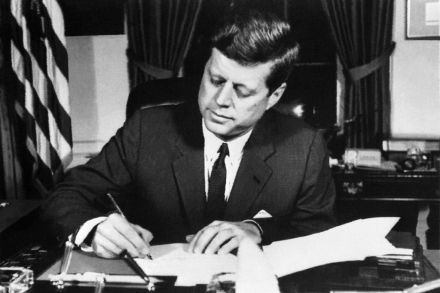
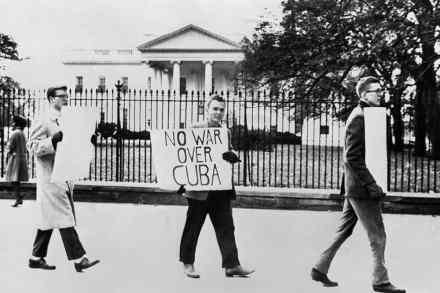
At the beginning of 1962, President John F. Kennedy had high hopes for a peaceful year with the Soviet Union, the United States’ most dangerous adversary. On December 30, 1961, Kennedy issued a statement offering his good wishes for the new year to Soviet Premier Nikita Khrushchev and the Soviet people. Ten months later, in October of 1962, the US and the Soviet Union were on the brink of war. The Soviets had moved missiles into Cuba, which initially went undetected by US intelligence. On October 14, an American U-2 spy plane took pictures showing missile base construction taking place in Cuba. The next evening, American analysts realized the implications of what that construction meant.

What Washington was like during the Cuban Missile Crisis (2002)

On 27 October 1962, US Defense Secretary Robert McNamara stepped out of crisis meetings and looked up at the sky. ‘I thought it was the last Saturday I would ever see,’ he recalled.  This month marks 60 years since the Cuban Missile Crisis. In 2002, Peregrine Worsthorne wrote about what it was like to be in Washington during humanity’s closest shave. Forty years ago the Americans won what I hope will be the nearest thing to nuclear war between superpowers — of which only one is left — ever fought; and the fact that they won it without firing a shot should not diminish but rather increase the extent of the victory. What I am referring to is known, of course, as the Cuban Missile Crisis, which is how it will go down in history.

Letters: What happened to hymns in schools?

Disarming by default Sir: Underpinning Rod Liddle’s amusing article on use of nuclear weapons last week is the reassurance provided by our deterrent (‘Will Putin go nuclear?’, 7 May). It is not difficult to imagine Putin’s behaviour if Russia alone possessed nuclear weapons. Our nation has embarked on refreshing the deterrent; and replacement of the four ballistic missile submarines, modifications to missiles and production of a new warhead are at the very limit of our nation’s industrial capability. Despite the US being extremely helpful, the performance of the Atomic Weapons Establishment (AWE) does not inspire confidence. It is crucial that there is sufficient funding, particularly at AWE, over the next ten years.

Down with the ‘Third World War’ doomsayers

From our US edition

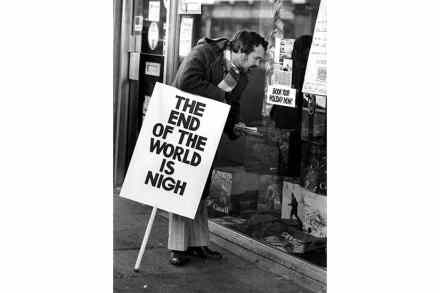
Some people are always telling you that the world is soon to end. In the old days many of them would wear sandwich boards describing near-term doom, and not wash. Now, their cousins in the environmental movement glue themselves to oil refineries and don’t shave. In each case, they drip with urgency. The oceans will boil, the land will burn. Your children will fry. Or, alternatively, the Lord will return and take only the righteous to their reward. Be afraid and confess, before it is too late. Public life has these people, too, for this tendency is quite universal. Financial doom-mongering is a profitable little side-line for some economists. The great crash they predict is always upcoming.

world war three

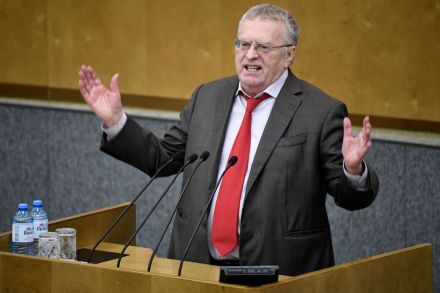
The Kremlin’s clown prince

From our US edition

The beginning of the year has not gone as well as it could have for Vladimir Zhirinovsky. Mostly because he is now dead, but also because Zhirinovsky, a Russian politician of the “managed” (pro-Kremlin) opposition, predicted and vigorously supported Russia’s invasion of Ukraine. If Zhirinovsky were able to follow the campaign from his hospital bed, it could not have met his expectations. The imperial Russia of his imagination ought to have come into glorious existence, but its armed forces instead suffered reversal and humiliation. Zhirinovsky was the long-time leader of the Russian Liberal Democratic Party — a grouping that, as many wags have separately concluded, was under his leadership neither liberal nor democratic nor, in some lights, a party.

Is global warming really more dangerous than Putin’s nuclear threats?

Having just dusted down my Geiger counter and argued with the family about whether or not there is room for our dog, Jessie, in the cellar fallout shelter, I thought I would check in with the Bulletin of the Atomic Scientists to see how long we’ve got before our recently acquired small paddock sprouts its first crop of Cobalt-60. The Bulletin of the Atomic Scientists was begun in 1945 by the physicists who, having devoted several years of their lives to the Manhattan Project, suddenly realised that their striving might not be, in the end, exclusively beneficial for the human race. As the most lionised of them, J. Robert Oppenheimer, put it at the time (without a great deal of cheer): ‘Now I am become death, destroyer of worlds.

In defence of mutually assured destruction

The slow return of the 1980s has reached its logical conclusion. The prospect of nuclear annihilation is haunting our nightmares once again. Vladimir Putin’s invasion of Ukraine has been marked by a willingness to engage in blatant nuclear sabre-rattling of a sort not seen since the end of the Cold War.  From his statement that anyone 'interfering from outside' would 'face consequences greater than any you have faced in history' to his placing Russia’s nuclear forces on 'a special combat duty regime', Putin’s strategy has been to threaten nuclear war to keep the West out of what he sees as his business. But these threats don't mean that Putin is about to send missiles soaring over Europe at any moment.

Nuclear war, magic mushrooms and a teenage trip I’ll never forget

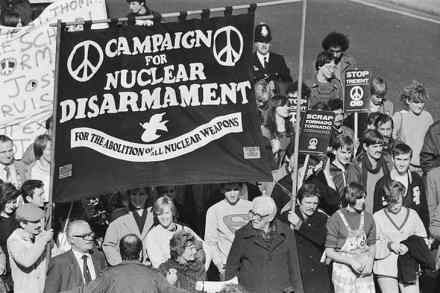
Vladimir Putin’s decision on Sunday to put his ‘deterrence forces’ – code for nuclear weapons – in a high state of readiness revived a fear in me that I haven’t experienced since the fall of the Berlin Wall. As someone who spent his teenage years during the Cold War, the threat of nuclear war was never very far from my mind. Indeed, one of the biggest political battles back then was between unilateralists and multilateralists and I was firmly in the latter camp, even starting a local anti-CND group called ‘A Sensible Approach to Nuclear Questions’. But the two sides were united in their fear of Armageddon, only disagreeing about the best way to avoid it. Peak anxiety for me occurred in 1980.

The end is always nigh

Typically for my generation, I woke repeatedly as a kid with my pyjamas soaked in sweat because I’d had yet another nightmare about nuclear war. While I rarely dream about mushroom clouds any more, a dark cloud of one shape or another has dogged me like a sooty, vaporous stray for my entire life. For my conservative classmates in the mid-1960s, American democracy was on the cusp of being overtaken by communism, even if they weren’t sure what that bogeyman was. Yet don’t imagine liberals like my parents were by contrast keeping sensibly calm and carrying on. The left has manfully merchandised the end of the world since I can remember.

The Big Three who ended the Cold War

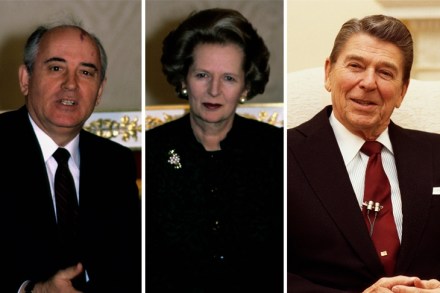
Historians argue endlessly and pointlessly about the extent to which the human factor rather than brute circumstance determines the course of events. History, geography and economic reality always constrain personal freedom of action. But within these limitations the individual can make a decisive difference. Britain’s war would have taken a different turn if Halifax rather than Churchill had become prime minister in May 1940. Archie Brown’s thesis is that the Cold War could have ended quite differently— much later and perhaps much more bloodily — had it not been for the fortuitous combination of Ronald Reagan, Margaret Thatcher and Mikhail Gorbachev.

Will Trump enter the hypersonic nuclear arms race?

From our US edition

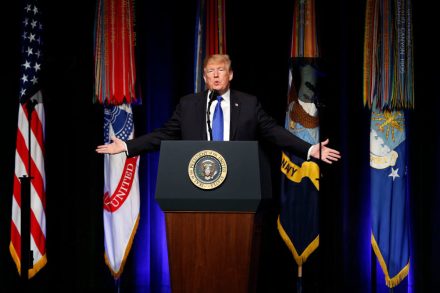
The Pentagon is urgently reviewing just how and when the president might launch nuclear missiles as a dangerous new nuclear arms race breaks out. Hypersonic missiles are capable of flying at around 12,000 miles per hour, or Mach 20. That would reduce the US response time to as little as five minutes — too short for the president to enter the launch codes into the ‘football’ (actually a briefcase) that is never more than a few feet away. Instead, some officials argue that Artificial Intelligence should manage the US response. AI could gather information about launches, likely targets, and the most effective counter-responses — and be empowered to launch nuclear missiles without human intervention.

nuclear arms

It’s time to tell the truth on North Korea

From our US edition

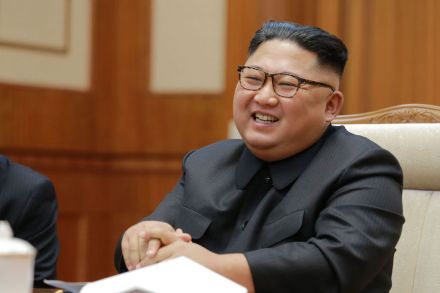
What if the foreign-policy elites in Washington, D.C. could admit the truth when it comes to North Korea? The fact is that there is next to nothing the Trump administration can do to rid the world of this nuclear nightmare unless Kim Jong-un’s regime is willing to deal his weapons away. At the moment, we are nowhere near a deal to denuclearize North Korea. Just trying to even figure out where we are in talks with Pyongyang is confusing enough. Inter-Korean détente is moving forward at a rapid pace. It should be called the Moon Miracle, since South Korea's president has staked his entire legacy on securing peace and deserves much of the credit.

kim jong-un north korea