Northern ireland

Shami Chakrabarti can’t have it both ways on Northern Ireland

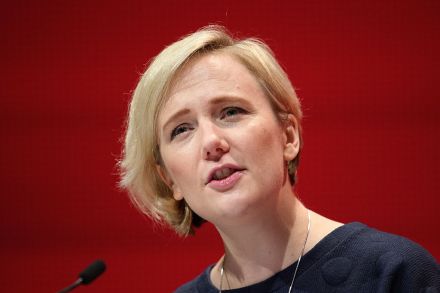
Never one to shy away from a platitude, the shadow attorney general, Shami Chakrabarti, has declared that the PM must reform abortion law in Northern Ireland on the basis that women there “have been let down by privileged women and men for too long” and that, so far as Theresa May is concerned, “the test of  feminists is whether they stick up for all women”. So far as this woman is concerned, I’ve been trying to work out the logic of these observations in terms of the abortion question and failing, so let’s just give up and cut to the chase.
Could direct rule solve Northern Ireland’s political crisis?

Power-sharing talks at Stormont have dramatically collapsed again. This is a shock to many in Northern Ireland, where an apparent thawing in the relationship between the DUP and Sinn Fein led to speculation that the announcement of a deal was imminent. Instead, the stasis continues. Northern Ireland has now been without a functioning government for just over 13 months, since Sinn Fein first plunged Northern Irish politics into limbo by pulling out of their pact with the DUP in January 2017. The reason for their decision to back out of the power sharing agreement was Arlene Foster's apparent complicity – which she has denied – in the botched 'cash for ash' scandal.

Old hat | 25 January 2018

These days, when it comes to people who used to be on the telly, the answer to the classic newspaper question ‘Where are they now?’ tends to be a fairly predictable one: they’re still on the telly — if, that is, you look carefully enough. They’re also quite likely to be travelling abroad with a few of their peers while wearing a large hat. The BBC started the trend — possibly even the genre — with The Real Marigold Hotel. ITV has provided the weirdest example so far, with Gone to Pot, in which the likes of Christopher Biggins and Pat Butcher from EastEnders investigated the legalisation of marijuana in California by smoking bongs and giggling a lot.

The Spectator’s Notes | 7 December 2017

I’m afraid I have a deep faith in the Democratic Unionist Party’s capacity to cede an issue of principle in return for more gold, baubles, Renewable Heat Incentives etc. It may well give in, after receiving some bung, in a few days. But its resistance, at the time of writing, to the idea of ‘regulatory alignment’ with the Republic, seems wholly justified. This is not a pernickety matter solely for the province — it should apply just as much to the entire United Kingdom. If we agree to align trade rules with EU ones (as opposed to each recognising the other’s rules), we are sacrificing the economic point of Brexit, which is competitive advantage.

Lots of Irish questions, but no answers – yet

As Theresa May sits down to lunch with Jean-Claude Juncker to try and persuade the EU Commission to give Britain the green light to talk trade, confusion reigns over what concessions the UK government is making in order to do this. There are reports that a solution to the Irish border has been found.  A draft version is said to promise 'continued regulatory alignment' – if no solutions are found: 'In the absence of agreed solutions the UK will ensure that there continues to be continued regulatory alignment with those rules of the internal market + customs union which, now or in the future, support North South cooperation +protection of the GFA.

What the papers say: The Brexit cynicism is getting predictable

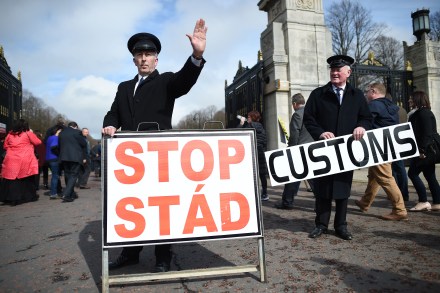
‘Here we go again’, says the Sun, which criticises the ‘chorus of doom-mongers’ who pop up whenever the government proposes a ‘sensible, serious suggestion for moving towards Brexit’. On Tuesday, this reaction was sparked by details setting out plans for a customs union after Brexit. Now, a fresh wave of cynicism has greeted the idea of a ‘frictionless’ border between Northern Ireland and Ireland. “It can’t be done,” they groan,’ says the Sun - expect, according to the paper, it already is. Take the border between Norway and Sweden, for example, which has ‘almost exactly the same arrangement that is being proposed for Ireland’.

The government’s Brexit Irish border plan is lacking in detail

Avoiding a hard border between Ireland and Northern Ireland is the government’s top aim in Brexit talks. Brussels wants much the same: the EU Parliament’s chief Brexit negotiator Guy Verhofstadt has insisted that there should be no return to a fixed border. This is an aspiration shared by the EU, which makes the issue one of its three priorities before Brexit talks can proceed to the next stage. The Tories' new friends-in-government are also agreed - and so, too, is the Irish government. Rarely does Brexit generate such unanimity. So if all sides are agreed, you’d be forgiven for thinking things should be straightforward. Unfortunately not.

A clash of creeds

This is a very modern novel. Terrorist atrocity sits side by side with the familiar and the mundane. Where better for this to happen than in Northern Ireland? At the Day’s End pub ‘two eejits in Halloween masks’ enter the bar; ‘Trick or treat,’ they shout. ‘Fut-fut-fut-fut went the gun.’ A woman screams, ‘then a very fast piece of metal entered the side of her head and she stopped’. Throughout the first half of the book, the horror of the pub massacre alternates with the narration of an ordinary family’s home life.

Why fudging Ireland’s Brexit border issue can only mean Troubles ahead

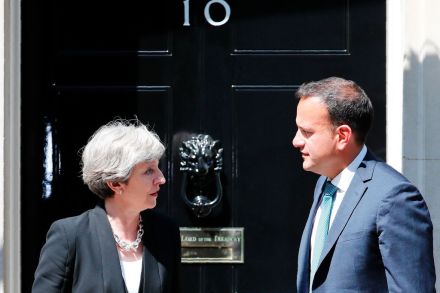
The question of what kind of border after Brexit will exist between Northern Ireland and the Republic will, I predict, become a very thorny one indeed as negotiations crawl into the autumn. Talk of ‘putting the border in the Irish Sea’ — somehow leaving the north inside the EU for customs and immigration purposes, but cut off from European funding — was a red herring that provoked DUP tantrums, but more significant was the weekend outburst from Taoiseach Leo Varadkar. As far as his government is concerned ‘there shouldn’t be an economic border… and we’re not going to help [the British] design some sort of border that we don’t believe should exist in the first place.

Ireland’s Taoiseach talks tough on Brexit

There are three areas on which the EU insists that the Brexit negotiations must make progress on, before proper trade talks can start: the so-called divorce bill, the rights of EU citizens in the UK and the Irish border. Today, the Irish PM said that no progress had been made on this issue, that the Brexiteers had had 14 months to devise a plan and hadn’t come up with anything adequate. Implicit in the Taoiseach’s speech is a threat to block the start of trade talks this autumn. If Dublin doesn’t think any progress had been made on the border question, the European Commission is highly unlikely to recommend to the Council that the EU moves on to the next stage of the negotiations.

Fudging Ireland’s border issue can only mean Troubles ahead

The question of what kind of border after Brexit will exist between Northern Ireland and the Republic will, I predict, become a very thorny one indeed as negotiations crawl into the autumn. Talk of ‘putting the border in the Irish Sea’ — somehow leaving the north inside the EU for customs and immigration purposes, but cut off from European funding — was a red herring that provoked DUP tantrums, but more significant was the weekend outburst from Taoiseach Leo Varadkar. As far as his government is concerned ‘there shouldn’t be an economic border… and we’re not going to help [the British] design some sort of border that we don’t believe should exist in the first place.

Letters | 13 July 2017

Technical education Sir: I am grateful to Robert Tombs for highlighting the baleful use of ‘declinism’ as part of the anti-Brexit campaign and the persistent underestimation of the United Kingdom’s strengths (‘Down with declinism’, 8 July). It is ironic that the heirs of the old 19th-century Liberal party, the Liberal Democrats, are among its principal proponents, for declinism goes back even further than the 1880s cited in his article. Fearful of the advances demonstrated at the Paris International Exposition of 1867 by continental countries in engineering (e.g.

The Spectator Podcast: The myth of British decline

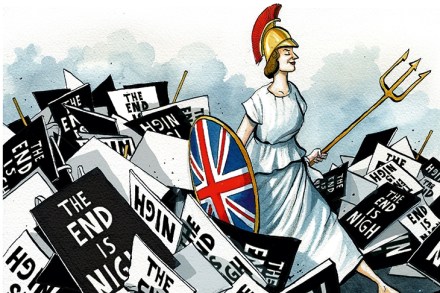
On this week’s episode, we talk about the myth of the British decline, theTwelfth of July parades in Northern Ireland, and the regrettable rise of the man hug. First, Britain seems to be relapsing into another bout of ‘declinism’, writes Professor Robert Tombs in his Spectator cover piece this week. From terror attacks to the Grenfell tower disaster, election upsets to our looming Brexit, the news is being seen by some as a sign of Britain’s downward trajectory in the world. It’s time to snap out of it, says Robert, who joins the podcast along with Fraser Nelson. As Robert writes: "Britain is more secure from major external threat than for half a millennium.

Put out the fires

Few events have appalled London liberals so publicly as the surprise emergence of the ten MPs of the Democratic Unionist Party as a force in UK politics. The metropolitan horror has been given full expression in the Twitter railing against ‘misogynist dinosaur homophobes’ and the press caricatures of DUP politicians as overfed, bowler-hatted Orangemen slyly looting government cash. Words such as ‘vile’ and ‘disgusting’ are flung around exultantly, as all nuance is shed. And beneath this lies an unspoken, potent little thrill: how wonderful, finally, to have a bunch of people whom one can openly despise.

James Brokenshire can achieve a NI deal – if he plays the direct rule card

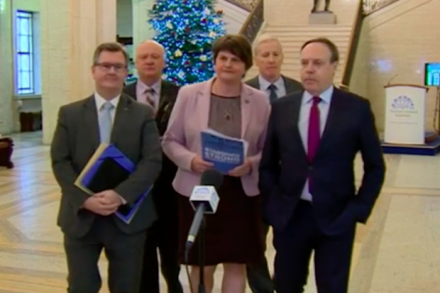
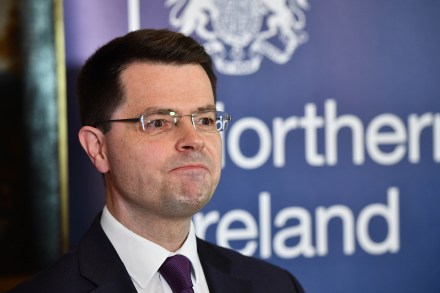
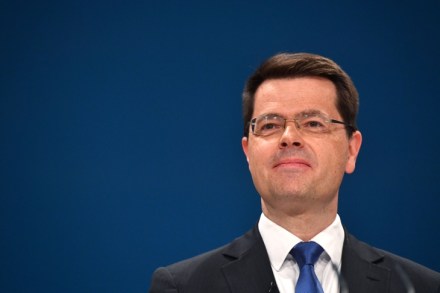
Talks to form a new power sharing executive in Belfast have broken down again.  Largely this is because James Brokenshire, the Northern Ireland Secretary, has been unable to impose a believable deadline after which he would enforce direct rule. This is a particular shame, because shaking the magic money tree in the direction of Northern Ireland could, with some skilful diplomacy, have the effect of resetting Stormont talks. From the collapse of the power sharing executive in January, up until last week's Confidence and Supply Agreement between Arlene Foster's DUP and Theresa May's Conservatives, Sinn Féin briefly held all the cards.

The Government backs down over Queen’s Speech abortion amendment

In the face of a possible rebellion over an amendment to the Queen’s Speech, the Government has backed down. Chancellor Philip Hammond announced this afternoon that women from Northern Ireland will be given the right to an abortion in England on the NHS. This wasn't a change ministers wanted, but for a weak minority Government propped up by the slenderest of margins, this is the new reality. It's unlikely this will be the last time in this Parliament that ministers relent where they would have once stood their ground. Ever since the amendment was tabled by Labour MP Stella Creasy, the Government had looked under pressure. There were reports that as many as 40 Tory MPs could rebel on the issue.

Give the DUP a chance

A political party barely known outside Northern Ireland now holds the balance of power in Parliament. Nobody saw it coming, but then that’s the new catchphrase in politics. So who are the DUP? And do they deserve the pillorying that has been coming their way since the general election catapulted them into the spotlight? I have been watching the party up close for decades. Yet while the DUP isn't always a pretty sight to behold, the party is much more complicated than the hysterical stereotyping makes out. It's true that the DUP has its roots in uncompromising unionism and religion. And for many years it was little more than a one-man’s fan club: the political extension of Ian Paisley’s hardline Free Presbyterian Church.

Why some Tories are deeply worried about the DUP deal

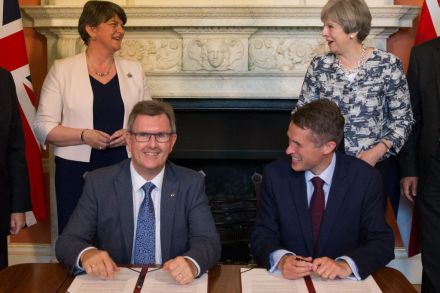
The Tory DUP deal has been signed in Downing Street this morning, the text of it is on the government website and there’ll be a statement in the Commons on it later. This is as formal as a confidence and supply deal can get. So, why were the Tories so keen on such a formal deal? Well, there were three reasons for it. The whips’ office wanted the certainty of a written agreement rather than having to survive hand to mouth; note that the deal was signed by the chief whip not the Prime Minister. The whips’ hope that this certainty will mean both that the government can get its business through and that there won’t be constant speculation about it collapsing.

Is the British government about to be held hostage by head-banging biblical fundamentalists?

Forgive the inflammatory headline, but that's the conclusion that millions of Britons have drawn from media descriptions of the DUP. Mainland commentators seem unable to make any distinction between the Democratic Unionist Party, founded by the late Ian Paisley, and his small Free Presbyterian sect, which is indeed influenced by American fundamentalism. We know the DUP is against abortion and gay marriage. But are its members also creationists who think the world was created 6,000 years ago? In this week's Holy Smoke podcast, Cristina Odone and I talk to Jon Anderson, a Northern Irish writer specialising in religious and political sectarianism. He lays some myths to rest. For example, the DUP is not the main party of the Orange Order.

More money for Northern Ireland? At least the DUP and Sinn Fein can agree on that

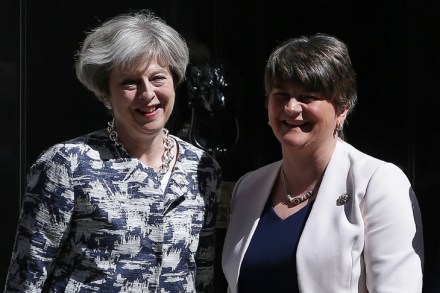
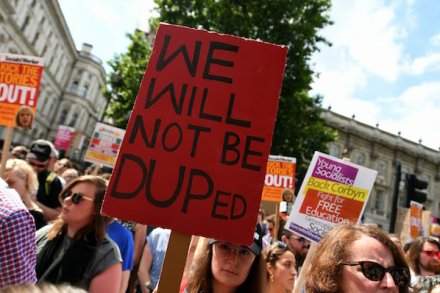
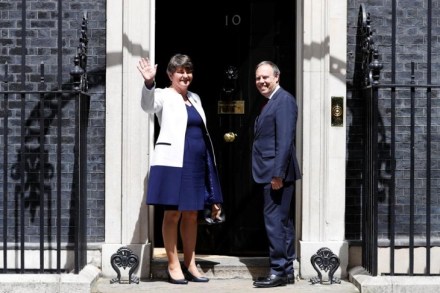
Well, Arlene and Theresa have met for negotiations about the DUP/Tory deal that a million people got so exercised about, they signed an online petition to have it stopped. And you know what? There is no indication, not a whisper, since those talks broke up, that abortion was so much as mentioned; nor indeed gay marriage. Indeed, the whole notion that the DUP might be out to subvert gay marriage in mainland Britain, let alone do anything about the abortion laws (which undeniably need revisiting – tightening), was simply risible.