Siobhan Fenton

Could direct rule solve Northern Ireland’s political crisis?

From our UK edition

Power-sharing talks at Stormont have dramatically collapsed again. This is a shock to many in Northern Ireland, where an apparent thawing in the relationship between the DUP and Sinn Fein led to speculation that the announcement of a deal was imminent. Instead, the stasis continues. Northern Ireland has now been without a functioning government for just over 13 months, since Sinn Fein first plunged Northern Irish politics into limbo by pulling out of their pact with the DUP in January 2017. The reason for their decision to back out of the power sharing agreement was Arlene Foster's apparent complicity – which she has denied – in the botched 'cash for ash' scandal.

Northern Ireland isn’t impressed with Theresa May

From our UK edition

Theresa May has been continuing her UK-wide tour to convince voters in all corners of the country to back the Conservatives. This weekend saw the Tory campaign machine make a whistle stop tour in Belfast. The Prime Minister attended a local agricultural show and talked to farmers and families about why they must support the party. So far, so uncontroversial. All Prime Ministerial candidates seeking election or re-election make the customary stop on the far side of the Irish Sea to make a pitch to Northern Irish voters. This time, however, Theresa May's trip has unleashed anger among both voters and politicians in Northern Ireland. Her attempt to charm locals has backfired spectacularly.

The EU has gifted the Republican cause a blueprint for a united Ireland

From our UK edition

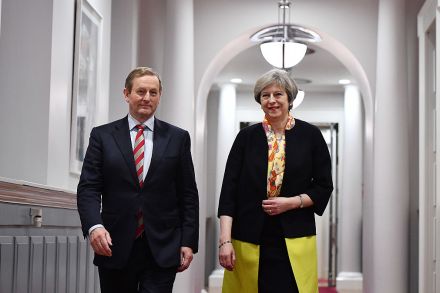
Theresa May's awkward dinner date with Jean-Claude Juncker stole the headlines, but there was another Brexit development that passed with much-less fuss: the European Union's plan for Ireland to reunite after Brexit, which it inserted quietly into its negotiating guidelines. Few in Britain paid much attention to it. Across the Irish Sea, it was a different story. Among Catholic communities, there is growing hope that Brexit could be the issue which finally sees partition end on the island. Yet within Protestant communities, there is a growing fear that the EU is using Brexit as a tool to sneak through Irish reunification. The British government appears to be doing precious little to stop it.

The general election is a disaster for Northern Ireland

From our UK edition

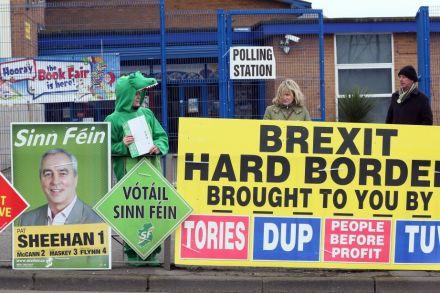
There's little enthusiasm just about anywhere for this summer's snap general election, and no more so than in Northern Ireland where voters' growing apathy is mixed with a feeling of dread. Saying that politics in Northern Ireland is rarely straightforward or smooth is something of an understatement. But the timing of this summer's election could not be worse for the country: the peace process is currently navigating its way perilously through one of its most difficult periods since 1998's Good Friday Agreement. While the stasis which is paralysing Stormont shows no signs of ending: four months on since power-sharing collapsed in the region, the parties are yet to resolve their issues and agree to return to government. Attempts at resolution have had next to no success.

Theresa May is right to be troubled about the prospect of Irish reunification

From our UK edition

Amidst the apparent chaos in the days after the Brexit vote, one important story largely slipped under the radar. Now, the demand issued by Sinn Féin for a border poll on reunification of Ireland is resurfacing. Admittedly, back in June, it was difficult to know how much attention to pay to such a demand. Irish reunification is, after all, the entire purpose of the Irish Republican party. However, in the months since the referendum, the peripheral possibility of Irish reunification is starting to move centre stage. And the old platitude from Sinn Féin is morphing into a growing and credible movement on both sides of the Irish border. But it's not only Sinn Féin who are pushing for Irish reunification in the wake of Brexit.

David Cameron is taking a gamble on the Stormont crisis: will it work?

From our UK edition

Northern Ireland is in crisis - one anyone familiar with politics here will find eerily familiar. The same faces that dominated news bulletins in the 1980s and 1990s are still in place, albeit slightly more wrinkled and weary.  But one striking difference is the response, or lack thereof, from David Cameron.  Northern Irish politicians are used to British Prime Ministers immediately flying into Belfast for crisis talks, to stage joint press conferences side by side and attend photo calls with furrowed brows and concerned looks. Yet Cameron has so far dodged any particular involvement in the talks and bluntly refused to concede to the DUP’s demands to suspend Stormont.