Pádraig Belton

The abortion referendum is Ireland’s Brexit moment

From our UK edition

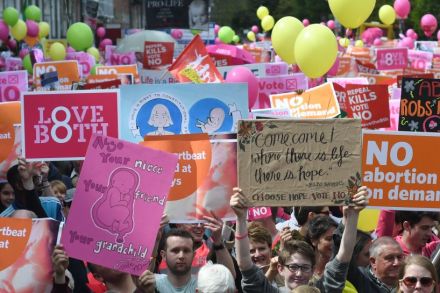
Is the abortion referendum going to be Ireland's Brexit moment? Despite the financial crisis, a clerical scandal and a vote on gay marriage, the country had managed to steer itself relatively harmoniously along. Yet just as the EU referendum brought to the surface deep tensions across Britain, this week's vote is in danger of doing the same to Ireland. From the outside, a decisive vote in favour of repealing the clause in Ireland's constitution that gives the unborn equal rights with the already born might have been just another chapter in Ireland's journey towards European secular modernity. But a fiercely-fought referendum battle has instead weaponised every single divide that was lurking latent in Irish society: rural versus urban, young versus old, rich against poor.
Northern Ireland’s political deadlock is starting to bite

From our UK edition

Brexit is proving such a distraction that few seem to have noticed the creeping start to direct rule in Northern Ireland. While much of the coverage in the newspapers focused on the EU withdrawal bill, the Northern Ireland Budget Act – which shifts Stormont's most important power, the task of setting Northern Ireland's budget, to London – tiptoed its way through parliament this week.  The thing about direct rule is that once you have started, it's hard to stop. It will also do little to heal the country's fractured politics: the DUP will push for more; they will also seek the appointment of direct rule ministers as quickly as possible.

An Irish Sea border would damage British-Irish relations

From our UK edition

Dublin and London had been fairly tight since December 1993 and the Downing Street Declaration—until yesterday morning. The Times led with 'Irish want sea border with UK after Brexit'. The DUP's Sir Jeffrey Donaldson rushed breathlessly on to the Today programme to say there was 'no way' his party would accept it. The notion isn't new.  The idea is that the customs and immigration checks move away from the land border, and are done on ports or planes reaching either island. It pours cold seawater on Downing Street's preferred idea that a 'frictionless border' can just rely on nifty cameras. 'We do not want to pretend ... we can solve the problems of the border on the island of Ireland through technical solutions like cameras and pre-registration and so on.

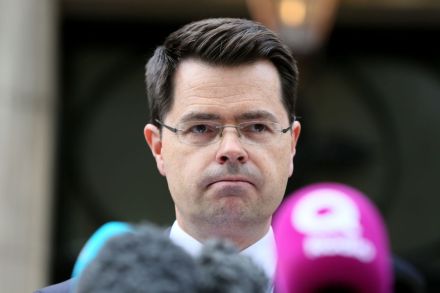
James Brokenshire can achieve a NI deal – if he plays the direct rule card

From our UK edition

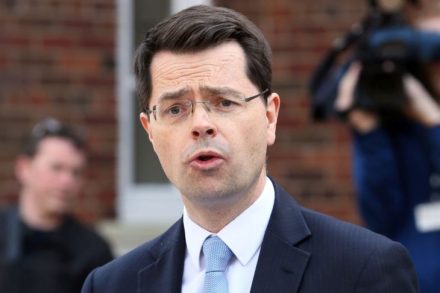
Talks to form a new power sharing executive in Belfast have broken down again.  Largely this is because James Brokenshire, the Northern Ireland Secretary, has been unable to impose a believable deadline after which he would enforce direct rule. This is a particular shame, because shaking the magic money tree in the direction of Northern Ireland could, with some skilful diplomacy, have the effect of resetting Stormont talks. From the collapse of the power sharing executive in January, up until last week's Confidence and Supply Agreement between Arlene Foster's DUP and Theresa May's Conservatives, Sinn Féin briefly held all the cards.

If we’re heading for a hung Parliament, Northern Ireland will prove crucial

From our UK edition

If YouGov's projections come anywhere near to being true and control of the House of Commons teeters on a knife's edge, then suddenly Northern Ireland's 18 MPs go from a curiosity to being right at the heart of parliamentary arithmetic. The DUP holds the largest batch of eight seats - precisely the same as the Lib Dems won in the entire United Kingdom in 2015. They're likely to win a similar number this time around. So what happens if we end up with a hung Parliament? If invited to cooperate with the Tories, the DUP's price will not be extortionate. But it won't be insignificant either. In particular, they will not want investigations of police and military personnel actions during the Troubles - an important issue for Sinn Féin in stalled Stormont talks.

How to write the perfect break-up letter

From our UK edition

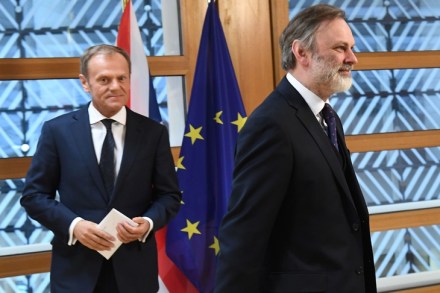
Yesterday, Sir Tim Barrow placed into Donald Tusk's hands the letter giving notice the UK will begin divorce proceedings with the EU. This missive now takes its place among the great relationship-ending letters of history. Today, Downing Street has said that European leaders appreciated the ‘warm, constructive’ tone of the Article 50 letter. But what makes for a good break-up letter?  And when you look at the most memorable break-up letters of history, what do they have in common? Lucy Hume from Debrett's says a relationship-ender should first of all reflect the relationship. 'The letter need not be very long but should be handwritten on writing paper, well-thought-out and appropriate to the relationship,' she says.

James Brokenshire is out of his depth as Northern Ireland Secretary

From our UK edition

There is a saying that whoever the Prime Minister hates, they appoint as Northern Ireland Secretary. James Brokenshire, Theresa May's unlucky pick for the job, had three options yesterday: a new election, direct rule, or a fudge. When the clock struck 4pm, three weeks after Northern Ireland's election, there was only one option: it was always going to be the Irish fudge.  James Brokenshire had tried valiantly to maintain the fiction, which no one believed, that at 4:01pm yesterday he was prepared to fire the starting pistol of Northern Ireland's third assembly election in a year. It wasn't a credible threat, and people in Northern Ireland have a way of telling the one from the other.

Brexit, Ireland and the Trump question

From our UK edition

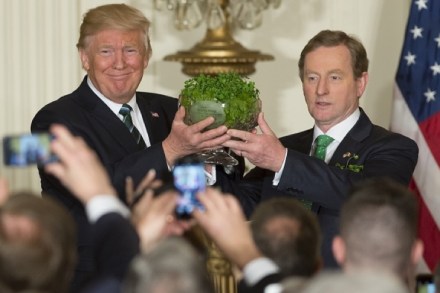
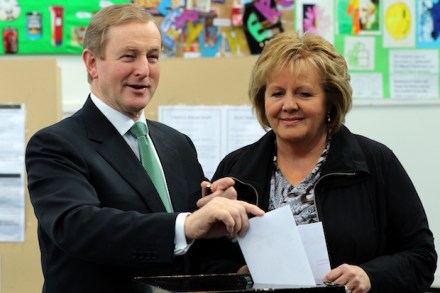
We all have our roles.  In the world order which we inhabit, Ireland has one chief international responsibility: each St Patrick's Day, its Taoiseach (prime minister) sets off to the Oval Office bearing a bowl of shamrocks. Ireland's current Taoiseach, Enda Kenny, has been in the job since March 2011.  In Ireland's last elections, last February, he fell 29 seats short of an overall majority.  From then, he started to face calls to resign.  In February 2017, a scandal broke involving a whistleblower in the Gardaí, Ireland's police.  Kenny survived a confidence vote in February, but barely.

Shamrocks, green beer and leprechauns – the sheer un-Irishness of St Patrick’s Day

From our UK edition

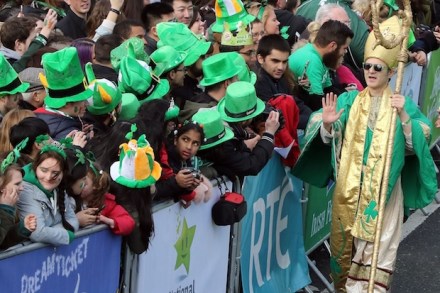
March is the cruellest month if you’re Irish and venture out of Ireland, breeding plastic leprechauns from dead Tesco aisles, mixing green food colouring with American beer, and stirring dull copy from hacks. Come the third week of March, the Huffington Post is telling us how to make green beer – handy for me as I live in Ireland and have never seen it. The Guardian tells us New York’s police eased public drinking and urination laws before St Patrick’s Day. The Wall Street Journal notes the current American craze for leprechaun traps, ‘a tradition that is unknown to many in Ireland.’ Now we have the seeds of #Shamrockgate. From 1901 until last year, a female royal presented shamrock to the Irish Guards.

45.7%: How Northern Ireland lost its Unionist majority, and Sinn Féin regained their mojo

From our UK edition

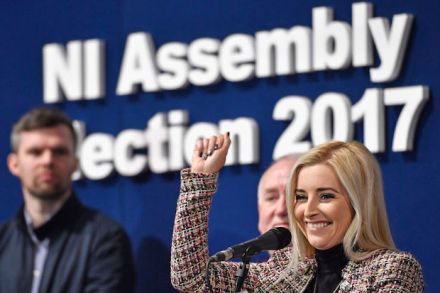
They were the elections you didn't hear about, because the UK press mainly instead covered Bruce Forsyth's chest infection.  But Northern Ireland just woke up to a world where the Unionists' vote share is a princely 45.7%.  It was the highest turnout since 1998 (64.8%), the year of the Good Friday Agreement, that buoyed Sinn Féin to within a pip of the DUP--the latter on 28 seats and 28.1% of first-preference votes, the former on 27 and 27.9%. So the two unionist parties, the DUP and UUP, jointly now have 38 seats in a 90-seat assembly.  While Sinn Féin and the SDLP (after a surprisingly very good election day) have 39.

Northern Ireland’s political crisis could cause Brexit problems

From our UK edition

And so there we have it. Shortly after midday in Stormont, Sinn Féin’s Michelle O’Neill declined to nominate a replacement for Martin McGuinness, causing the collapse of the power-sharing executive after five months shy of a decade.  At 5pm, authority to hold elections passes, under the Northern Ireland Act 1998, to Secretary of State for Northern Ireland James Brokenshire. By custom (though not law) these are held after six weeks. Sometimes the election you get isn’t the one you want.  And Northern Ireland, which last went to the voters all of eight months ago, is now slouching towards snap election mode.

There may be trouble ahead for Northern Ireland

From our UK edition

It now seems obvious that Northern Ireland's power sharing executive has fallen. Because of the way the country's devolved government is set up, when deputy First Minister Martin McGuinness fell on his sword (or semtex) yesterday, the First Minister - Arlene Foster - goes as well. So the two-headed monster tumbles down and Her Majesty's Principal Secretary of State for Northern Ireland, James Brokenshire, takes over until new elections. This is the situation we’re in now. Admittedly it isn’t quite direct rule—the Northern Ireland Assembly hasn’t gone away. But elections to it needn’t be immediate, and they probably won’t be.

Apple’s Irish tax bill is bad news for free-market liberals

From our UK edition

So the European Commission has today released its much-delayed iTax. This time, it’s not an Apple innovation but a ruling ordering Ireland to claw back €13bn in back tax from Apple – a record penalty and one that the company and Ireland have both vowed to appeal. The Commission announced its decision in a typically terse ruling, in which they chuck rotten fruit at Ireland’s low corporate-tax environment. But whilst every one is talking about tax, this fracas between the EC and Ireland over Apple’s bill—what we here locally might call a ballyhoo—actually has less to do with one of the two inevitabilities of life, and much to do with the Commission's Competition Commissioner, Margrethe Vestager.

The Easter Rising centenary shows Ireland more at peace with its past

From our UK edition

Here in Dublin, Ireland is busy marking 100 years since the Easter Rising of 1916. It is being celebrated, but with far less chest-beating and bombast than met the 50th anniversary in 1966.  And this is a good thing entirely. The Rising lasted for six days.  Its leaders seized key buildings around Dublin and proclaimed an Irish Republic.  It started a series of events that led to an independent Irish state in the south, but also to the partition of Ireland and a bloody civil war which claimed between two and three thousand lives. Emblematic of this year’s commemoration was an event on Good Friday, at a Unitarian church on St Stephen’s Green.

Today’s elections show the way towards Ireland’s new politics. But we aren’t there yet

From our UK edition

Dublin Ireland goes to the polls today.   The Google Doodle is up, the shadow of history hovers with the 1916 centenary—and Ireland, caught between the two, stalls halfway through a political software update to becoming 'Ireland Centenary Edition'. Elections are heady things in Ireland these days, on the heels of last year’s Marriage Referendum which saw millennials and returning emigrants registering to vote in droves. Turnout reached 61 per cent last May. In the 2012 and 2013 referenda, it had been 33 and 39 respectively. Ireland, the headquarters of Google and Facebook, has started to morph from the Charles Haughey-era politics of 'Down with this Kind of Thing' to a Hashtag Ireland, with #HomeToVote and #MarRef trending.

Remembering Khaled al-Asaad, the Syrian archaeologist who dared to stand up to Isis

From our UK edition

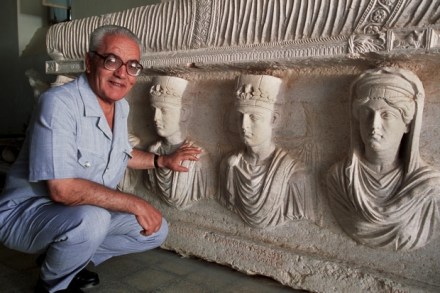
Erudite and bespectacled, he was the sort of Arab the Islamic State loathed. Khaled al-Asaad, an 81-year old archaeologist, was for the past four decades inseparable from Palmyra's ancient ruins. Beheaded in part for his role shielding them from the militants, they strung his headless body up on Graeco-Roman columns he once restored. His remains dangle there still. On the coat-tails of a pornography of violence which saw the immolation of a captured pilot and the sexual enslavement of a captured aid worker before her murder, Isis still found, somehow, a way to shock.

Postcard from Ukraine – meet the artists in exile from the People’s Republic of Donetsk

From our UK edition

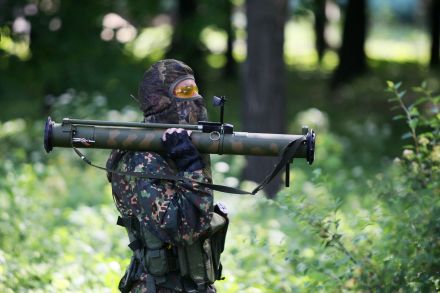
It was Orthodox Trinity Sunday when Luba Michailova received word that separatists would soon occupy the premises of the Donetsk art centre she founded. She was in Kiev at the time, and recalls now that her first response was religious: 'Any difficulties in life you get, it's for your good, and for testing you.' The following morning, at 8 o'clock, several staff were at work cleaning when 15 men in balaclavas appeared, firing Kalashnikovs into the air. Michailova tells me, 'So when it happened, I knew it would happen, but I never thought it would be so painful.' Donetsk now is in the hands of the masked separatists who brought down MH17. But before May, Donetsk boasted TEDxDonetsk talks, literary festivals, residencies, and exhibitions by artists from abroad.