Northern ireland

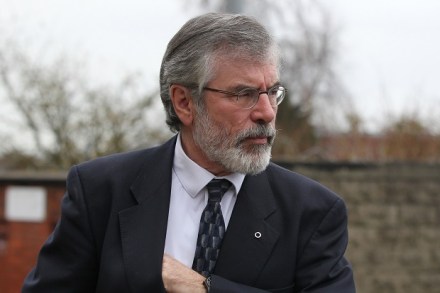
We need to know the truth about Gerry Adams’s alleged involvement in the ‘disappearance’ of Jean McConville

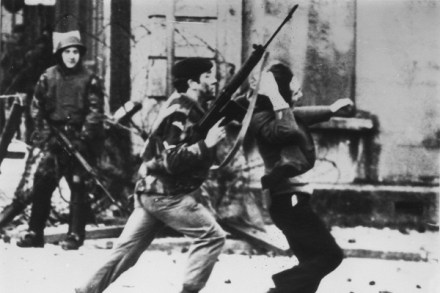
Readers will know that I am interested in the subject of post-Good Friday agreement 'justice' in Northern Ireland. Having been one of the few people to have followed the possibilities of justice over Bloody Sunday, I also recently wrote about the apparently one-sided amnesties which the last Labour government appears to have given to Republicans not convicted of crimes but counted as 'on the run'. It has long been my contention that justice cannot only be applied to one side or one group of people. Investigate the 1st Battalion of the Parachute Regiment for what happened in January 1972 and you have to investigate the leadership of Sinn Fein – IRA for their activities.
Tweeting the Aurora Borealis

Some people have been pointing their cameras at the night sky. The results are rather special: https://twitter.com/AngusMacNeilMP/statuses/439164673230135296 https://twitter.com/Akhan2001/statuses/439155568796651520 https://twitter.com/carlmilner/statuses/439130792414175233 https://twitter.com/weermanrobert/statuses/439143984238428160 https://twitter.com/ObservingSpace/statuses/439136185378553856 https://twitter.com/owenhumphreys1/statuses/439156693822214144 https://twitter.com/mfn1234/statuses/439154169018998784 https://twitter.com/DeffGeff/statuses/439154891882123264 https://twitter.com/orkneyrd/statuses/439159852888498177 https://twitter.com/ObservingSpace/statuses/439155901883097088 https://twitter.

The private sector must be revived in Northern Ireland

One quirk of the welfare reform debate is that many of the reforms won’t automatically apply in one of the parts of the United Kingdom with the worst welfare problems: Ulster. As Owen Paterson, the Northern Ireland Secretary, points out in a speech tonight, ‘Northern Ireland has proportionately one third more households living on out of work benefits as the rest of the UK’. He also notes that 1 in 10 of the population there are on Disability Living Allowance, double the UK average. But the Work Programme doesn’t apply in Northern Ireland and any welfare reform there will have to be done by the Executive. Paterson is now campaigning to make the case to local politicians for reform, for maintaining parity with the rest of the United Kingdom.

The police’s blunder over John Downey is one thing, the government’s cravenness another

So, the IRA terror suspect, John Downey, will now not face a trial for his alleged involvement in the Hyde Park and Regent’s Park bombings of 1982, in which eleven soldiers (as well as seven horses) were murdered by nail bombs. The former Northern Ireland Secretary Peter Hain seems to be delighted about this and expressed his astonishment that Downey had been arrested in the first place. Downey mistakenly received a so-called ‘comfort letter’ as part of the Good Friday Agreement, informing him that he was now effectively immune from prosecution. For what it’s worth, Downey denies the charges. It wasn’t a very good Friday, was it?

The Spectator’s Notes: French presidents used to have a touch of the monarch. Not any more

When I interviewed Valéry Giscard d’Estaing, the former president of France, for my biography of Margaret Thatcher, I asked him why, when she lunched with him at the Elysée Palace for the first time, he had been served before her: she had been offended. M. Giscard explained that no slight had been intended. It was a matter of protocol — the president is the head of state, the British prime minister only the head of government. ‘You must remember,’ he added, ‘that the president is in the line of sovereigns.’ I recalled these words when reading about President Hollande and his amorous adventures in his helmet. To the British, it is a puzzle that French presidents are protected from the media scrutiny we inflict on our own leaders.

Gerry Adams: still a revolting man and still trying to steal Irish history.

I know this is not exactly breaking news but Gerry Adams is a vile man. Since no-one devotes much attention to Northern Ireland these days it is easy to forget this. Easy to file Adams and his Sinn Fein comrades into a musty drawer marked Ancient History. But the past is not another country. In Dublin this week the Smithwick Tribunal's report into alleged Garda collusion with the IRA in the murders of RUC officers Harry Breen and Robert Buchanan in 1989 was finally published. The report confirmed long-held suspicions that the IRA had a mole or, less dramatically, a simple informant inside the Garda station in Dundalk, County Louth.

This is no time to prosecute the perpetrators of ‘Bloody Sunday’

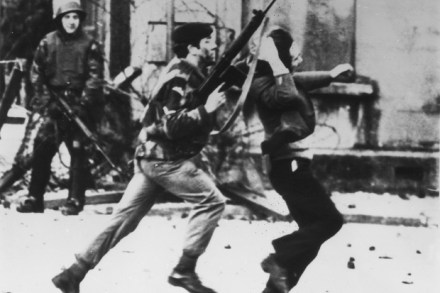
The front-page of yesterday’s Sunday Times carried the news that up to 20 retired members of the British Armed forces are likely to be taken in for questioning in relation to the deaths of 30th January 1972, known as ‘Bloody Sunday’. Some readers will know that I have taken a great interest in this case and have written a book which I don’t think spares many details on what specific soldiers of 1st Battalion of the Parachute Regiment, among others, did that day. In certain cases – including that of at least one soldier who is still alive (‘Soldier F’) – I do not hesitate to call what they did ‘murder’. But the process from here is fraught with difficulty.

The BBC’s bias on abortion in Northern Ireland is breathtaking

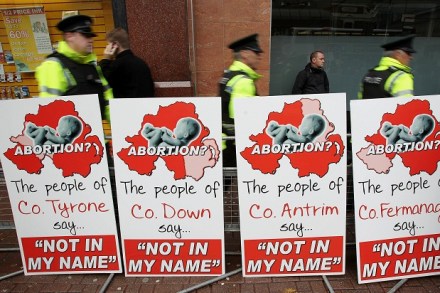
The establishment has a target in its sights; you can always tell from the tone of the Today programme. In this case, it's Northern Ireland’s abortion law. The occasion is the genuinely tragic case of Sarah Ewart, who travelled to Britain this week in order to abort a foetus with the most severe case of spina bifida, which meant it didn’t have a head. She didn’t want to carry the pregnancy to term and Northern Ireland’s abortion laws at present don’t allow for abortions where the foetus does not actually threaten the life of the mother. Not unlike the intention behind the 1967 abortion law here, then, which is meant only to sanction an abortion where the risk to the mental or physical health of the mother is greater than if the pregnancy continued.

Tory MP wins the Game of Thrones

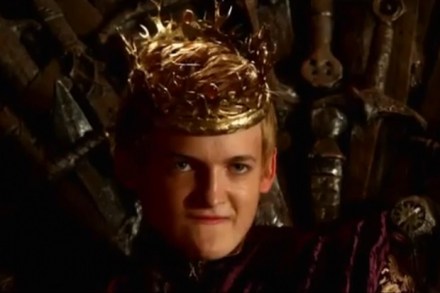
There can only be one winner when you play the Game of Thrones. Any fan will tell you that. The victor, though, always comes as surprise: witness below Tory backwoodsman Alec Shelbrooke resplendent on the Iron Throne. The bombastic MP for Elmet, who is the Parliamentary Private Secretary to the Secretary of State for Northern Ireland, visited the set of the hit HBO series, which is being filmed in Ulster. He's been proudly flashing the picture around the conference bar. It's the closest thing to leadership speculation that I have picked up on, so far.

Must read: Jenny McCartney on Seamus Heaney and Ulster’s divide

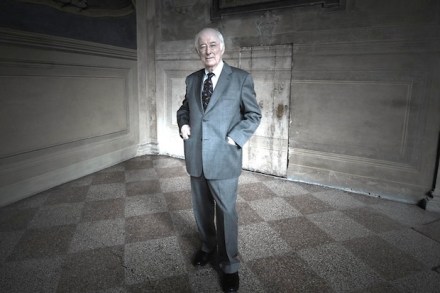
If you haven’t already done so, I urge you to read Jenny McCartney’s piece in this week’s issue of the magazine. Together with Christopher Fletcher’s personal appreciation of Seamus Heaney published here earlier this week, it is among the most original and thoughtful takes on the late Nobel Laureate’s life and work. It’s typical of Jenny’s ability to tease and test details, to coax them to a wider context. And, my, is she readable. The best place to start is at the beginning: ‘The one and only time I met Seamus Heaney, in 2007, he was making tea in the kitchen of his Dublin home when he asked — more modestly regretful than coy — ‘Did you have to do the poems at school?

Seamus Heaney’s poems are for Protestants too

The one and only time I met Seamus Heaney, in 2007, he was making tea in the kitchen of his Dublin home when he asked — more modestly regretful than coy — ‘Did you have to do the poems at school?’ I grew up in Belfast, and certainly we had to do the poems at school. Even in the early 1980s, in a disputatious city that was frequently contemptuous of life but rarely of poetry, it was Heaney whose reputation already seemed cast in bronze. His lines on Northern Ireland defined us internationally, like it or not: it was clear that we had somehow grown someone big, a poetic prize -marrow. At that time, my flicker of vicarious pride was mixed with a sense of being informally exiled from the celebration.

Ulster’s Orangemen show that Britain can do internecine vindictiveness too

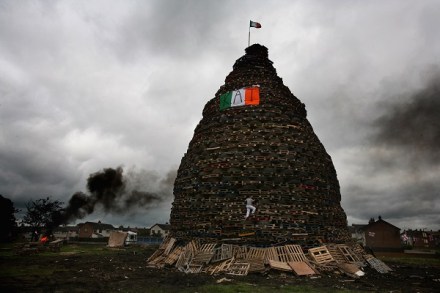
This all looks terribly good fun, don’t you think? Spectacular towers which will make wonderful bonfires: it must have taken them ages. My only caveat is that they are all in Northern Ireland. Is there no enterprising alliance over here which might do something similar to celebrate the glorious military success of King William of Orange? One looks in despair at the Church of England, which would almost certainly cavil at such a celebration – but perhaps some of our more Presbyterian churches might set something up? It is important to remember at a time when there’s all this nastiness going on between the Sonny and Cher Muslims (“I got you babe – boom!”) that we can do this sort of internecine vindictiveness rather well too, on occasion.

After the Brighton bomb

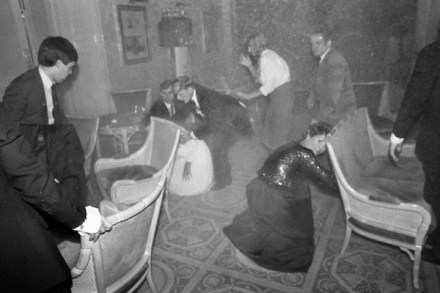
It is worth pointing out yet again that Mrs Thatcher really was very brave last Friday. It would have been no disgrace to her if, once she had realised how narrow had been her escape, she had felt weak and — as did a few of the Tory wives in the Grand Hotel — had sat down and cried. There would have been nothing cowardly in cancelling what remained of the Conference in honour of the dead and injured. But the fact that she did neither of these things and the way that she conducted herself that day confirms that she has an extraordinary amount of that particular kind of courage which rises to an occasion, appearing more magnificent the greater the challenge.

Will David Cameron grant Northern Ireland control of corporation tax? – Spectator Blogs

Monday morning in dreich late October. What more appropriate moment to ponder the questions of corporation tax and Northern Ireland? The question of whether the Northern Ireland Assembly should control the rate of corporation tax payable in the two-thirds of Ulster for which it is responsible won't go away, you know. Nor, despite the fact that the London press has paid little attention to it, is this some local matter of no importance to the rest of the United Kingdom either. On the contrary, David Cameron's decision on this seemingly-arcane or merely local matter is more important than it seems and, in fact, one of the more significant questions demanding his attention right now.

Is Gordon Brown a Scottish Nationalist?

In 1997 the Labour government tampered with the UK constitution. They then vetoed anyone reading the minutes of the cabinet meeting where it was agreed a parliament for Scotland would be implemented. Now Gordon Brown, one of the architects of the Scottish Parliament, is about to start spreading the Scottish nationalist view in a lecture entitled 'Scotland and Britain in 2025' at the Edinburgh International Book Festival today. This raises the question: is Gordon Brown a Scottish nationalist? Kim Howells' 'smoking' gun statement to the McKay Commission on 24 July 2012 revealed that Labour knew they would be creating an unstable UK. He acknowledged that the party knew the West Lothian question could not be answered without establishing an English Parliament.

We can’t just bury Bloody Sunday

I have a piece in today’s Wall Street Journal about the case for prosecuting certain of the Bloody Sunday soldiers. I am aware that it is not a popular argument, and one that most British people tend to shy away from. It also seems to provoke a certain amount of confusion. On a radio programme the other day, discussing potential prosecutions, the interviewer went so far as to ask how or why somebody who is ‘right-wing’ could be making these points. Firstly of course, this is a straightforward category error (‘right-wing’ equals bad and mean and therefore any ‘right-winger’ must be in favour of shooting civilians). Secondly, I think that there is in fact a vital conservative case for carrying this through to the stage of prosecutions.

4 years to bury the ghosts of Bloody Sunday?

It has just been announced that the police are going to launch an investigation into the Bloody Sunday deaths. It comes after the Police Service Northern Ireland and the Public Prosecution service reviewed the evidence of the Saville Inquiry. There will be a lot of comment about this in the coming days, but I think a couple of things are worth noting at the outset. Firstly, there can be no doubt that a number of soldiers deliberately shot and killed innocent people that day. Secondly, there can be no doubt that they then lied and misled an exceedingly long and costly public inquiry set up precisely in order to find the truth of what happened that day. As it happens, the Saville Inquiry provided ample opportunity for people to tell the truth.

A question for Martin McGuinness

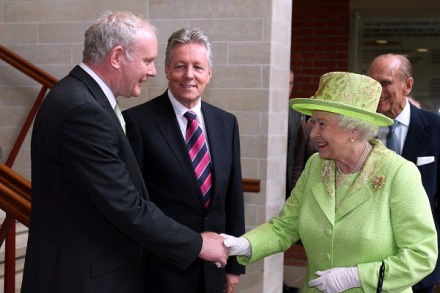
‘God speed’ was apparently what Martin McGuinness said to the Queen when they met a short time ago. I wonder what she, and the Duke of Edinburgh, would have liked to say to him? Of all the things that the Queen should be asked to do in her Jubilee year, perhaps the most cruel has been to expect her to shake the hand of the former IRA commander and now deputy first minister of Northern Ireland. Many people bereaved by the Troubles have made gestures of almost super-human forgiveness, but few can have been so pushed towards doing so. And McGuinness is a particularly difficult case.

Department of Probability: Fornication Desk

We are indebted to Michelle Mulherin, Fine Gael TD for Mayo, for offering this gem during a Dail debate on Ireland's abortion laws: “In an ideal world there would be no unwanted pregnancies and no unwanted babies. But we are far from living in an ideal world,” Deputy Mulherin said. "Abortion as murder, therefore sin, which is the religious argument, is no more sinful, from a scriptural point of view, than all other sins we don’t legislate against, like greed, hate and fornication. The latter, being fornication, I would say, is probably the single most likely cause of unwanted pregnancies in this country.” That "probably" is lovely. Alas, Deputy Mulherin did not tell the Dail what else might cause unwanted pregnancies. Even in Mayo.

Liberal Unionism? In Ulster? Why Not?

On balance, theGood Friday Agreement was (forgive me) a Good Thing. It should be possible to welcome the Agreement yet recognise that it has not delivered everything it promised. Not the least of its troublesome consequences has been the manner in which the centre-ground of Northern Irish politics has been hollowed-out. Time passes, however, and the moment for a viable alternative to the Sinn Fein-DUP double-act cannot, surely, be delayed forever. At least that's what Robin Wilson suggests in the Belfast Telegraph today. This, perhaps unexpectedly, is the time for a New Ulster Unionism: [N]ow the UUP - otherwise on its political death-bed - has a huge choice to make.