Nato

How Trump inadvertently boosted Europe’s defense industry

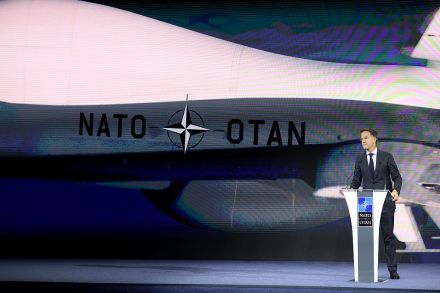
With all the Hollywood drama and heart-pounding music of a Mission: Impossible trailer, NATO screened a short promotional film at its Ankara summit to showcase the military hardware it plans to buy to hit Donald Trump's defense spending target. One of the aircraft featured in the mini-movie was even an A400M – the heavy-lift plane that Tom Cruise clung to the side of in the fifth installment of his action film franchise. When the lights came back up, NATO’s Secretary General, Mark Rutte, shook hands, slapped backs and made clear that NATO had not only chosen to accept Trump’s mission to boost spending, it was now delivering.

Mark Rutte NATO

What Trump and Erdoğan want from each other

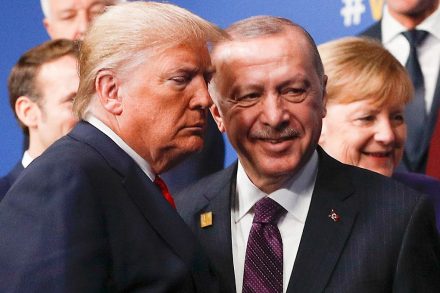
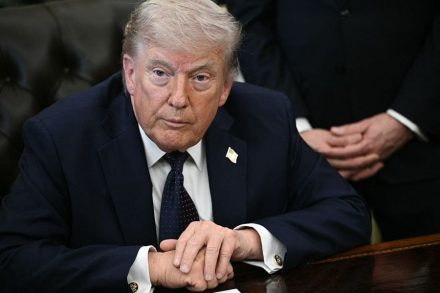
Donald Trump has made it clear that he’s attending this year's NATO summit in Ankara for one reason only: “respect for President Erdoğan.” Trump told NATO’s Secretary General Mark Rutte last month that if it hadn’t been for the veteran Turkish President’s invitation, “I don't think I would have gone to it.” NATO’s summit will, therefore, be dominated by the alliance’s two most militarily powerful and at the same time most problematic members. Trump seems set on pursuing his long-held goal of making Europe pay for its own defense, while Erdoğan is determined to leverage his strategic relationship with the US, Russia and Ukraine to scrap restrictions on Turkish purchases of US military hardware.

erdoğan

What Britain taught us

Being in Britain around the Fourth of July is always an odd experience for an American. It was especially awkward to be at the Alliance for Responsible Citizenship in London a week before the 250th anniversary of US independence. ARC is a British organization whose massive annual conference – about 4,000 people this year – is styled as a kind of counter-Davos, an international gathering of center-right types including a heavy representation of Americans. Given the timing, various speeches by gracious British hosts praising their American guests’ homeland – and by Americans themselves praising the principles of their revolution against the British two and a half centuries ago – were to be expected. But that didn’t diminish the cognitive dissonance.

What Tommy Robinson really sees in Russia

Everyone who is everyone – within a certain political and social fragment – has been in Russia this past week. Conservative American conspiracy theorist Candace Owens; Errol Musk, father of Elon; toxic “manosphere” influencers Andrew and Tristan Tate; and Tommy Robinson, the far-right activist. Robinson told the Guardian that he had traveled to Moscow “to see how this country got itself so well on to the straight and narrow and see the beauty of a civilized society here.” In the process, he was walking a well-trodden path of westerners heading to Russia to see exactly what they want to see. Once it was socialists like Sidney and Beatrice Webb, who found Stalin’s regime “the very opposite of a dictatorship.

Are hostilities in Iran really about to cease?

Donald Trump is trying to wriggle out of his self imposed Strait-jacket. After a renewed round of bombing Iran and bluster about seizing Kharg Island, he has now announced that is all over, including a planned attack tonight: “Based on the fact that discussions with the Islamic Republic of Iran have been brought to the highest level of Iranian leadership and approved, I have, as President of the United States of America, cancelled the scheduled strikes and bombings against Iran this evening.” Is it back to the future again? Or are hostilities really about to cease? Any cessation will incense the war hawks in Washington who helped propel Trump into this misbegotten conflict in the first place.

donald trump peace foreign policy cease iran

The President is winning the geopolitical battle with China

Almost all media commentators seem convinced that Donald Trump’s foreign policy in his second term is a disaster. He is bogged down in Iran, snookered in Ukraine, his tariff agenda has failed and he has alienated his NATO allies. But this consensus has been too hastily formed. Looking at the bigger global picture, Trump’s foreign policy has been a spectacular success. Take the western hemisphere. We have the so-called “Donroe Doctrine,” the updated version of the 19th-century Monroe Doctrine.

Trump’s NATO troop reduction isn’t Europe’s biggest problem

Before Donald Trump returned to the White House last year, there were many commentators who sought to sanitize the President. Take him seriously but not literally, they said. Some hinted that his cruder and wilder hyperbole was not the ignorant, boorish reflex it seemed but a shrewd and daring negotiating tactic in Trump’s beloved "art of the deal." It has been reported that the United States is planning to announce a reduction in the number of troops it will make available to NATO in Europe. America is planning to shrink its commitment to the NATO Force model, under which troops "carry out the alliance’s operations, missions and other activities during peacetime.

nato

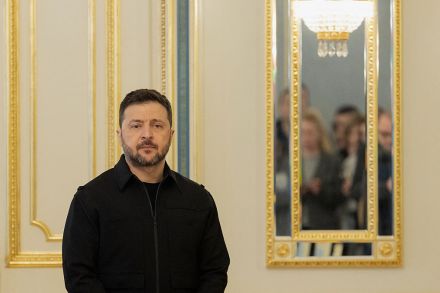
The tide has turned in Ukraine

The long war in Ukraine has morphed into a new and decisive phase, one that could lead to Ukraine’s upset victory over its much larger, more aggressive neighbor. The global consequences of Russia’s loss – and Vladimir Putin’s humiliation – would be enormous. What is this new phase? Is there really evidence the tide has turned in Ukraine’s favor? To sort out the answers and understand what’s new about the war’s current phase, we need to do a brief tour of the three phases that preceded it. The first phase began well over a decade ago, in February 2014, when Barack Obama was president. Ukraine fatefully signaled it wanted much stronger ties with Europe and the United States, not Russia, at the very moment US deterrence was weak.

Zelensky

Trump’s missile cut has left Germany exposed

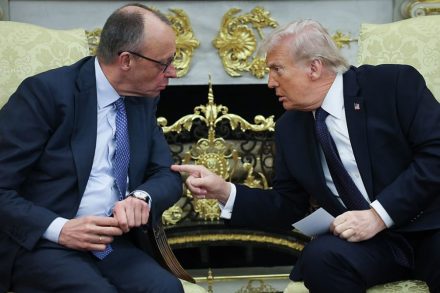
It has been a choppy 12 months for transatlantic relations since Friedrich Merz was sworn in as chancellor of Germany a year ago today. Fittingly, he is marking one year in office by dealing with the fallout of a spat with Donald Trump which has resulted in very real consequences for German – and potentially European – defense. On Friday, the Pentagon announced that 5,000 American troops would be withdrawn from German soil over the coming six to 12 months. Additionally, contrary to an agreement struck between Merz’s predecessor Olaf Scholz and Joe Biden, no new intermediate-range missiles would be stationed in Germany in the immediate future.

germany

The contempt Trump feels for his NATO allies is mutual

The war in Iran has revealed plenty about America’s ability to inflict damage on its enemies, Tehran’s capacity to resist pressure and Washington’s broader tendency to get itself stuck in the Middle East – a region several US presidents planned to extricate from. The conflict has been paused since April 7 due to a ceasefire that Trump extended earlier in the week. But it is nonetheless revealing a gradual systemic shift in the so-called international order that has been bubbling beneath the surface for years. The movable object is none other than the transatlantic alliance which, through NATO, has bound the United States and most of Europe into a single security construct.

NATO

Is Rachel Reeves blocking defence spending because of ‘gender parity’?

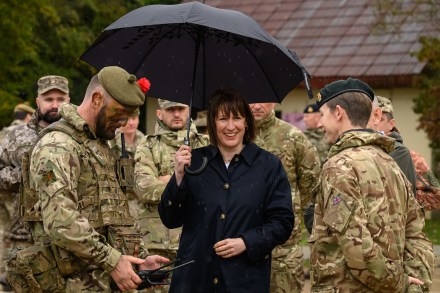
When John Healey was asked, on stage at the London Defence Conference, whether the armed forces were ‘ready’ for war, the Defence Secretary replied: ‘Yes.’ One of those present says: ‘That was greeted with near incredulity in the room.’ Another attendee compared Healey’s plight to someone ‘playing French cricket’, with critics from all sides hurling balls at his ankles while he tried to bat them away. ‘You can’t score any runs in French cricket.’ George Robertson, Healey’s most respected Labour predecessor and a former secretary general of Nato, was not present; he was in Scotland celebrating his 80th birthday. But he returned to give a withering interview to the FT and a speech.

Are the Treasury & the MOD at war?

From our UK edition

11 min listen

George Robertson (pictured), a former defence secretary and former NATO secretary-general, has accused the government of 'corrosive complacency' towards defence, which puts the UK 'in peril'. This is all the more stinging because the Labour peer was one of the authors of the government's Strategic Defence Review – and that makes two of the three who have since criticised it. How much trouble does this spell for Starmer? And is this just the latest battle in the ongoing war between His Majesty's Treasury and the Ministry of Defence? Megan McElroy speaks to James Heale and Lucy Fisher, Whitehall editor of the financial times and who broke the story. Produced by Patrick Gibbons and Megan McElroy.

Are the Treasury & the MOD at war?

What Trump gets wrong about NATO

The idea that the United States has been swindled by its NATO allies is not new. Robert Gates, in his valedictory address as secretary of defense in June 2011, warned bluntly that future American leaders might not consider the return on defense investment in Europe worthwhile. He spoke of a "two-tiered alliance… Between those willing and able to pay the price and bear the burdens of alliance commitments, and those who enjoy the benefits of NATO membership… but don’t want to share the risks and the costs." Gates was no populist. He was a career intelligence officer and establishment Republican, and his warning carried real weight precisely because it came from inside the institutional consensus rather than against it.

NATO

Will Trump really obliterate Iran on Tuesday?

Was Donald Trump’s profane and threatening tweet, which included an F-bomb and an allusion to Iran’s leaders as "crazy bastards," on Easter Sunday itself a bunch of BS? Trump is riding high after the daring rescue of an American airman from Iran, but its leadership doesn’t appear to be overly impressed by his tweet threatening a major attack on Tuesday if the Strait of Hormuz is not reopened. On Saturday, Iran’s military leadership indicated that it had no intention of complying with Trump’s demands, dismissing his vow to destroy its infrastructure as a "helpless, nervous, unbalanced and stupid action.

Trump

This is what Trump means by ‘victory’ in Iran

President Trump has now told us something very important about the war with Iran. Ponder his address to the nation this week and you discover how he defines victory. Nothing that happens from here on out will change that. As Trump sees it, he is the winner, having achieved all his goals. He has accomplished regime change in Iran by eliminating the men who led the regime when the war started. America has so damaged the country’s military infrastructure that it will not be able to produce or deliver a nuclear weapon for at least a decade, by which time it will be up to a future American president to take the needed action. So, no need to cart away or destroy Iran’s enriched uranium.

iran

Will Trump pull the US out of NATO?

From our UK edition

15 min listen

Donald Trump has said he is 'strongly considering' pulling the US out of NATO, in comments made to the Telegraph – and it doesn't appear to be an April Fool. This isn't the first time he has rallied against the Alliance so should the UK take him seriously? Plus – what is Keir Starmer's strategy? – as he tries to balance a testing transatlantic relationship with pursuing closer relations with the EU. Patrick Gibbons speaks to Tim Shipman and James Heale. Produced by Patrick Gibbons.

Will Trump pull the US out of NATO?

Will NATO regret snubbing Donald Trump?

On April 4, NATO will be 77 years old. The chance that America will be counted among the celebrants when the birthday celebrations roll around is somewhere between nil and zero. President Trump had long predicted that if America needed help, NATO would not come to its aid, even though, as he sees it, the United States has spent billions of dollars over decades defending Europe from Russian aggression. And when America did need help in the war against Iran – a few mine sweepers, please, sirs – the answer "no" came back in several languages.

Should NATO help America defend the Strait of Hormuz?

As soon as Operation Epic Fury, America’s latest campaign against the Islamic Republic of Iran, got underway on the last day of February, political, military and economic minds around the world should have turned their attention to the Strait of Hormuz. The waterway provided the only shipping route from the Persian Gulf to the Gulf of Oman and the open seas beyond. That has long made the strait the dagger Iran holds at the throat of the world. At its narrowest, it is less than 25 miles across, and Iran controls the northern shore; to the south is the Musandam Peninsula, shared by the United Arab Emirates and an exclave of Oman.

NATO STRAIT

‘More than half our squad were executed’: Inside Russia’s rotten army

The Russians are on the warpath – and Europe is Vladimir Putin’s next target. That was British Prime Minister Keir Starmer’s alarming claim at the Munich Security Conference in February. Britons "must be ready to fight, to do whatever it takes to protect our people, our values, and our way of life," Starmer warned. Britain and Germany’s top military commanders delivered the same message in a recent article. Russia’s military posture "has shifted decisively westward," wrote Air Chief Marshal Sir Richard Knighton and General Carsten Breuer. Soon the Kremlin "may be emboldened to extend its aggression beyond Ukraine." Really? According to much western coverage in mainstream and social media, the Russian army is crumbling, corrupt and inept.

No, Zelensky: World War Three hasn’t started

Ukrainian President Volodymyr Zelensky says that World War Three has already started. Speaking to the BBC on the eve of the fourth anniversary of the Russian invasion, it’s understandable why he would want to take this line, but he's wrong. What is striking about Putin is the lack of a messianic ideology On an emotional level, Zelensky has seen millions of his citizens flee within and out of his country, its cities and infrastructure shattered and Vladimir Putin's propagandists denounce him variously as a Nazi apologist, drug addict and western puppet. Of course he will frame this in the most apocalyptic of terms. More to the point, Ukraine is now dependent on European aid. It is European money that keeps the government solvent, and arms the troops.

ukraine zelensky