Nato

Europe learns the facts of MAGA life

Panic, even hysteria, has swept Europe. Its leaders realize that in their case Trump should be taken literally as well as seriously, and he seems prepared to trade the transatlantic alliance for détente with Russia. Eight decades of good times for the continent might be coming to a dramatic end. Trump demonstrated contempt for Europe during his first term; however, his top aides moderated his antagonism, carrying on policy as normal. While out of office he evidently decided never again. Today he is firmly driving American foreign policy. As ever, Trump’s tactics are often dubious, even counterproductive. However, only shock treatment is likely to cause Europe to take its own defense seriously.

europe

Donald Trump speaks his ‘Truth’ about Ukraine in attack on Zelensky

Negotiating peace can be delicate business. Often it requires a steady hand, a strong sense of compassion and inexhaustible patience. As Senator George J. Mitchell, a leading architect of the Northern Ireland peace process, once wrote, "In order to understand what another person is saying, you must assume it is true and try to imagine what it might be true of." Cockburn was reminded of Mitchell's sage words when he read the president's Truth Social post about Volodymyr Zelensky on Wednesday afternoon, which he republishes in full below: Think of it, a modestly successful comedian, Volodymyr Zelenskyy, talked the United States of America into spending $350 Billion Dollars, to go into a War that couldn’t be won, that never had to start, but a War that he, without the U.S.

donald trump zelensky

The utterly idiotic reaction to the Trump-Putin phone call

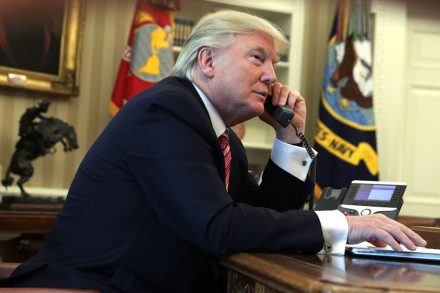
President Donald Trump called Russian president Vladimir Putin yesterday and discussed various topics, including the war in Ukraine, for an hour and a half. According to Trump, the two agreed to begin negotiations on ending the three year-long conflict immediately and even set up preliminary talks about traveling to one another’s capitals. Shortly after the call with Putin, Trump dialed Ukrainian president Volodymyr Zelensky for yet another conversation that reportedly went ”very well.” Trump’s call with Zelensky, of course, wasn’t the controversial part. Nobody had a problem with it. The dialogue with Putin, however, was apparently blasphemy, akin to violating all of the Ten Commandments on the same day.

call

Biden bids an ominous farewell to a falling America

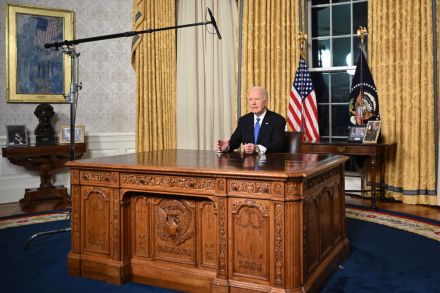
President Joe Biden delivered his farewell address last night in the Oval Office. While he started with strong patriotic themes, he ended by warning the country of some “things that give me great concern.” Biden declared that America is an oligarchy now. Cockburn thought it was turning into a dictatorship? He can’t keep track. Overall, though, he thought Biden’s speech presented an idealistic view of America. It featured inspiring snatches, with stories about the Statue of Liberty and references to the words of the Declaration of Independence and Constitution, saying America is “a nation holding the torch of the most powerful idea ever in the history of the world. That all of us are created equal.

biden farewell

Ukraine’s Nato fantasy

From our UK edition

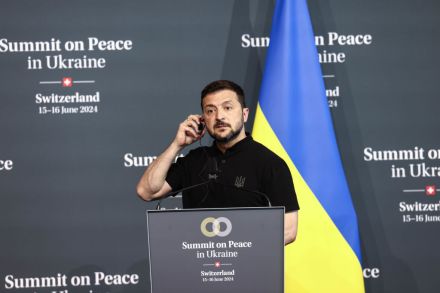
Ukraine’s President Zelensky was in Downing Street last week – as well as Paris, Rome, Berlin and Dubrovnik – asking for Nato membership. In every city, he heard the same ‘not yet’ as he’d received in Washington last month. Some of Kyiv’s western allies believe membership is the only way to guarantee Ukraine’s independence. Russia has never attacked a Nato country, because of the Article 5 guarantee that an attack against one is an attack against all. Therefore, Ukraine will never be safe from Russia unless it joins. The US government wants to avoid the war that Ukrainian membership would oblige it to fight But there’s a fundamental flaw to this logic: Ukraine cannot join Nato in the foreseeable future.

100 Days of Starmer: the verdict

From our UK edition

25 min listen

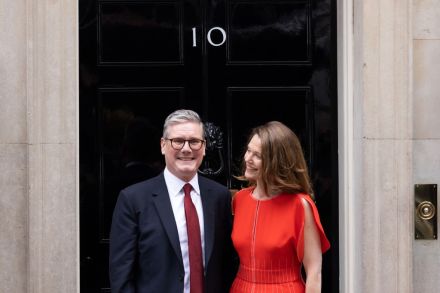
Today marks Labour’s 100th day in office. But they are unlikely to be popping champagne corks in Downing Street – even if Lord Alli offered to pay for the Dom Pérignon. This has been a disheartening time for the government and those who wished it well. The promise of dramatic change has been overshadowed by a series of errors, misjudgments and scandals that one would associate more with an administration in its dying days than a government enjoying a fresh mandate, a massive majority and an absent opposition. Former shadow culture secretary Thangam Debbonaire and former deputy prime minister Thérèse Coffey join The Spectator's Katy Balls to discuss what went wrong and – if we think hard enough – what went right?  Produced by Natasha Feroze and Oscar Edmondson.

Slating Nato won’t help Donald Trump

From our UK edition

Reacting to Volodymyr Zelensky’s visit to Scranton, Pennsylvania, earlier this week, Donald Trump reiterated his long-standing ambition to bring Russia’s war in Ukraine to a quick negotiated settlement instead of continuing with open-ended military support to Kyiv. If he wins the election, Trump said, ‘the first thing I’m gonna do is call up Zelensky and call up President Putin and I’m gonna say, “You gotta make a deal, this is crazy”.’ Trump is often seen as mercurial and unpredictable – an impression he revels in – but his desire to solve conflicts with real estate-like deals forms a consistent pattern of his foreign policy.

It’s time to let Ukraine join Nato

From our UK edition

Kyiv The young amputee had a question. We were sitting once again in the rehab centre in Kyiv, and I was looking at the same sort of injuries I saw last year: the missing limbs, the cranial scars, the withered hands and feet that no longer obeyed their owners’ commands. The difference was that Vladimir Putin’s carnage had been inflicted on a new group of Ukrainians – noticeably younger than last year’s victims, and now including a woman. Once again, I shook their hands (where possible) and put my arms around them, and did my best to be reassuring to all, including the young man on the bed, who had lost his left leg up to the hip. ‘When are you going to let us use the Storm Shadow?’ he asked – amid a general murmur of agreement.

The end of the Orbán era

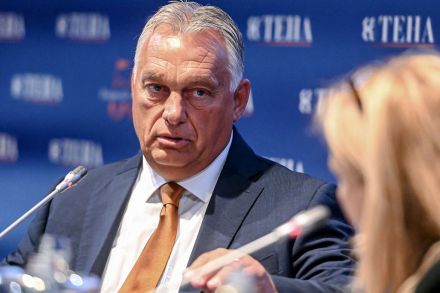
Over the headline “Peace Mission,” a recent cover from the conservative Hungarian periodical Mandiner shows an awkwardly photoshopped Viktor Orbán mediating between a bemused-looking Vladimir Putin and a grim Volodymyr Zelensky. Behind Orbán, a map of the world connects Kyiv, Moscow, Beijing, Washington and Budapest. One of these capitals, as they say, is not like the others. Even before Ukraine’s Kursk offensive, the chances of Orbán’s July trips to Kyiv and Moscow producing a peace settlement were slim. The Mandiner cover, however, is a revealing window into the mindset of Orbán’s conservative fans. The idea of a Hungarian prime minister mediating between squabbling great powers is both attractive and plausible to many of Orbán’s fervent supporters.

Orbán

Biden stumbles through solo press conference

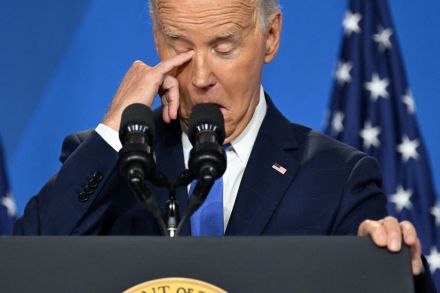
If you were expecting a Benjamin Button-style de-aging of President Joe Biden at tonight's NATO press conference after he recovered from the cold and jet lag he claims led to his disastrous debate performance, well... Biden is still Biden. His voice still sounds old and whispery. That being said, when he finally did step onto the press conference stage, he had an air of confidence that was not present during the debate two weeks ago. There were quite a few complications leading up to actually starting the press conference. The White House originally scheduled it for 5:30, but bumped it back to 6:30. The streaming started then, but the conference didn’t actually begin until almost an entire hour after 6:30.

biden

Has Nato been a success for Starmer?

From our UK edition

18 min listen

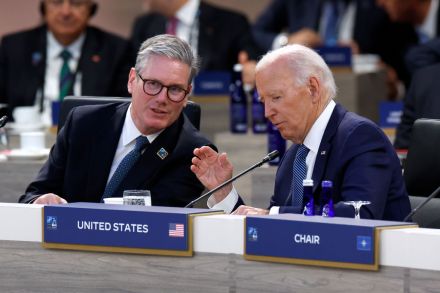
Keir Starmer is on his first big diplomatic trip to Washington, attending the Nato summit. He has called on member countries to increase defence spending, had a meeting with Volodymyr Zelensky, and enjoyed a dinner with Joe Biden - all in his first week of the job. How is the trip going, are there any tensions arising, and has it been a success for the new PM?  Oscar Edmondson discusses with James Heale and Sophia Gaston, head of foreign policy at Policy Exchange.

Inside the debate over Ukraine joining NATO

NATO’s summit in Washington, DC will be full of pomp and circumstance. The gathering, from July 9-11, is intended in part to celebrate the Alliance’s seventy-fifth anniversary, a symbolic and emotional event for the leaders in attendance. You can expect the red carpet to cover the entire city. Dozens of speeches will be given about how NATO is the oldest and most successful military alliance in history and why the bloc remains a crucial check on Russian expansionism. Some will even claim matter-of-factly that NATO enlargement over the last twenty-five years — NATO has doubled its membership during that period of time — was sound policy and had nothing to do with Russia’s decision-making calculus on Ukraine.

nato

Is Europe ready for Trump 2.0?

The 2024 presidential race between Joe Biden and Donald Trump is a dead heat. At most, a few percentage points separate them in the polls. Thousands of miles away, however, European leaders are operating as if Trump has already won, not wanting to be caught flat-footed yet again. When Trump defeated Hillary Clinton in 2016, European officials scrambled to establish contacts with the incoming administration. This time, the same wonks are proactively reaching out to Trump-friendly lawmakers and think-tankers, not only to understand what Trump’s foreign policy would look like in a second term but to press their own priorities. The Europeans, of course, are right to be worried.

Trump

China’s vendetta against Nato

From our UK edition

46 min listen

Last week, President Xi Jinping visited Serbia. An unexpected destination, you might think, but in fact the links between Beijing and Belgrade go back decades. One event, in particular, has linked the two countries – and became a seminal moment in how the Chinese remember their history. In 1999, the Chinese embassy in Belgrade was bombed by US-led Nato forces. Three Chinese nationals died. An accident, the Americans insisted, but few Chinese believed it then, and few do today. The event is still remembered in China, but now, little talked about in the West. Xi’s visit was timed to the 25th anniversary of the bombing itself.

The cost of European peace

From our UK edition

After six months of delay, the US Senate has finally passed a $60 billion foreign-aid package which will send urgently needed ammunition and military equipment to Ukrainian soldiers. It may well be the last such cheque to be signed in Washington. Donald Trump is favourite to be the next president of the United States and the senators closest to his brand of ‘America First’ politics, J.D. Vance of Ohio and Josh Hawley of Missouri, led the opposition to the Ukraine package. Their argument, crudely put, is that Europe should bankroll its own defence. The American money confirmed this week gives Europe about a year to adjust to this new reality and prepare for it. A generation had grown up believing that peace and democracy were the natural order of things.

Modern-day slavery in Mauritania

In April 1864, the US Senate passed a bill that set in motion what would become the Thirteenth Amendment to the Constitution. Slavery was to be abolished. Seven months later, Union forces would burn Atlanta to the ground, a year after Lincoln’s address at Gettysburg marked the battle that began the South’s collapse and the April 1865 surrender of General Robert E. Lee and his Confederate army. The Civil War remains the bloodiest and most divisive conflict in American history with at least a million dead, including soldiers and civilians from both sides. You might think that given American history, if slavery had an in-your-face visibility anywhere on the planet, Congress would call for intervention by the UN, perhaps threaten to send in the Marines. Think again.

Mauritania

Resisting the escalation in Ukraine

The drums of war are reverberating across Eastern Europe. Every geopolitical decision made by global powers carries immense weight. Amid the fear of growing conflict, one figure has emerged, wielding a sharp tongue and a pointed finger, challenging hesitant American lawmakers to bolster Ukraine’s defense against Russian aggression. Polish foreign minister Radek Sikorski has embarked on a media offensive, chastising Republicans for their reluctance to green-light the Biden administration’s proposed $60 billion military aid package for Ukraine. Despite his purported noble objectives, Sikorski’s appeal deserves closer examination.

ukraine

Pope Francis’s Ukraine war faux-pas

If you didn’t know any better, you might think that Pope Francis was no longer welcome in Ukraine. His recent interview with a Swiss broadcaster, excerpts of which were released over the weekend, has caused a whirlwind of disappointment and anger in Ukrainian policy circles as well as with some of Ukraine’s staunchest supporters in the West. The subject of derision: whether Ukraine should do a little less fighting and a lot more talking. Asked to comment about the debate between those who seek a negotiated end to Russia’s two-year-long war in Ukraine and those who oppose such a stance, Pope Francis chose the side of dialogue.

pope francis

Russia will not attack Nato

From our UK edition

There is a lot of war fever about. In January, Grant Shapps, Britain’s tiggerish defence secretary, said the UK was in a ‘pre-war’ period. The West’s adversaries in China, Russia, Iran and North Korea are mobilising, he said. Not wanting to be outdone, Shapps’s Labour shadow John Healey wrote in the Daily Telegraph: ‘If Putin wins, he will not stop at Ukraine.’ Timescales for when this conflict will come vary. Shapps said it could come within the next five years, whereas the estimates of European politicians range from three to eight years. Nato’s top military official warned that Europeans must be ready for a conflict with Russia within two decades. An Estonian military officer told Sky News that war with Russia was a matter of ‘when, not if.

Air Force employee catfished into sharing military secrets

In what may be the most obvious catfishing scam of all time, a contractor for the Air Force was caught sharing military secrets with an individual posing as a Ukrainian woman on a foreign dating app.   David Franklin Slater, a retired Army lieutenant colonel who was serving as a US Air Force civilian employee at the time of the catfishing, was arrested Saturday on three charges of conspiracy and disclosing national defense information.  Slater held a top-secret security clearance from August 2021 until April 2022 which gave him access to briefings about the Russo-Ukraine War.

air force catfished