Military

The Afghan asylum leak cover-up saved lives

The United Kingdom’s immigration system is broken. Tens of thousands have entered the country who should not, and the bureaucracy which processes asylum cases is a creaking wreck. Those who do deserve a safe welcome are left in legal limbo for months, if not years. And yet the Home Office, which is responsible for this chaos, is not even the department in government with the most inefficient and unaccountable bureaucracy. That hard-fought distinction belongs to the Ministry of Defence, which combines profligacy in procurement with an inability to give armed forces families homes that meet even the most basic standards of decency.
We should rejoice in Trump’s military parade

From our US edition

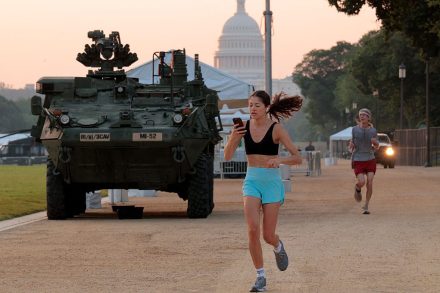
Today, you can choose to follow your inner adolescent and search for one of the Soros-funded “No Kings” protests cropping up wherever the number of Democrats is high and the collective IQ is low. Alternatively, you can pop down to the draining swamp of Washington, DC and watch the United States Army commemorate its 250th anniversary with a snazzy military parade among patriotically inclined Americans.If you think I have loaded the dice somewhat with charged rhetoric, you’re right. The whole “No Kings” wheeze is just anxious left-wing grandstanding that is as desperate as it is ineffectual. There is no Saint George Floyd around to act as a pretext this time.I have no doubt that those protests will be lavishly covered by the Irrelevant Media Complex.

Parade

The frightening advance of China’s military capabilities

From our US edition

“The number (of kills) could have been higher. We showed restraint.” – Pakistan’s Air Vice Marshal Aurangzeb Ahmed “Godzilla 3? Godzilla 3? ... Explosion in Air.” – Indian Air Force flight radio “China’s hypersonic missiles could destroy US aircraft carriers in just 20 minutes.” – US Defense Secretary Pete Hegseth Historians of the future will need a word or phrase to describe the shock and the disorienting anxiety the West will feel in the coming months as it realizes that China has caught up with – even surpassed it – in technological capability. We could call these “DeepSeek” moments, named after the recent jolt to the western psyche caused by the astonishing capabilities of Chinese artificial intelligence.

China

Germany’s Bundeswehr bears no resemblance to an actual army

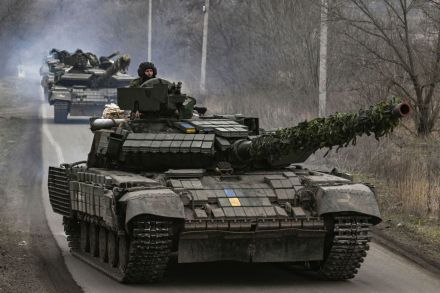
Confusion abounded this week when the new German Chancellor Friedrich Merz said that Ukraine could use western missiles to hit targets deep within Russia. ‘There are no more range limitations for weapons delivered to Ukraine. Neither from the Brits, nor the French, nor from us. Not from the Americans either,’ he said. The problem was twofold. Firstly, that is not the official policy of western allies. Secondly, Germany has not provided Ukraine with any long-range missiles. Partly that is a political choice by Germany, but there is also the fact of the inherent weakness of the Bundeswehr itself. Merz’s new government has recognised the limited nature of his military, vowing to build ‘the strongest conventional army in Europe’.

The BBC’s war on the SAS

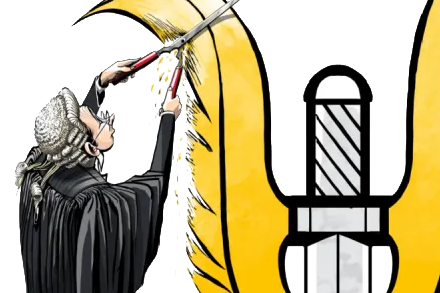
The SAS is under fire, not from terrorists or insurgents, but from ill-informed commentators and our state broadcaster. Our Special Forces are globally respected, they have been a vital part of Britain’s national security capability for nearly 80 years and they run enormous risks so that we might all be kept safe. Nevertheless, an exercise in making sure that they, like all who serve the Crown, are held properly to account risks being used by the ignorant, the sensationalist and the malicious to undermine the regiment and weaken our security.

Donald Trump needs a history lesson

President Donald Trump has again demonstrated his less than impressive grasp of history with a statement on his Truth Social site on the 80th anniversary of VE Day – the end of the Second World War in Europe – claiming that the US ‘did more than any other country by far’ to win the global conflict. In terms of cold statistics, it was the Soviet Union that did most to defeat Nazi Germany, suffering the colossal loss of 24 million military and civilian lives before the Red Army entered the ruins of Berlin to end the Third Reich. The US lost a total of 418,500 dead in fighting Japan and Germany after Hitler unwisely declared war on America following his Japanese ally’s attack on Pearl Harbor in December 1941.

Letters: Where to find Britain’s best dripping

Open arms Sir: The latest magazine (29 March) has two references to American military capabilities, from Rod Liddle and Francis Pike. Mr Liddle suggests that the prevalent attitude over there is that we ‘Yerpeans’ should have contributed more to the recent strike on Yemen (‘America first, Europe last’). He may not have known it was RAF tankers which enabled the US fast jets to attack. (This also escaped the Signal group chat.) Mr Pike suggests that the US navy’s carriers are suddenly vulnerable to modern weapons (‘Carriers of bad news’). As an excellent historian, he will concede that commentators have been writing off naval carriers’ effectiveness for decades. He is right to say that the Americans will have to evolve new technologies to defend their ships.

Is Simon Heffer a security threat?

Airport security was much on my mind last Friday afternoon. I had been due to fly from Heathrow to Zurich that morning, but the substation fire meant a switch to an afternoon departure from London City Airport. City is a business-oriented operation in every respect and one of its many efficient features is a baggage-checking regime that does not require you to separate your 100ml bottles of shampoo and shaving foam into a plastic ziplock bag. The X-ray machine and associated sensors are supposed to penetrate your luggage and identify anything dangerous with scientific precision. My heart sank when my carry-on bag was shunted off the conveyor belt and a security operative summoned me over to explain myself.

Letters: American support to Europe has come at a cost

Rules Britannia Sir: Your rules for national survival in the realist world which we are now entering (‘Get real’, 22 February) make sense. However, they do not go far enough. Rule 1 (enhancing our military lethality) rightly identifies the need for better trained and equipped personnel, but it does not include the need to regain military mass in numbers of troops and battle-winning equipment. A fifth rule, covering the need to make durable alliances with friendly countries – essential for survival in a volatile multipolar world – could also usefully be added.

The great betrayal of the SAS

We should all feel scared to our bones about the persecution of the SAS, soldiers harried through the courts for jobs they did many decades ago. It’s not that the SAS should be allowed to behave like trigger-happy psychos, but as Paul Wood wrote in this magazine before Christmas, Special Forces are now being hounded and punished for simply following orders and conducting operations. And what will we soft sofa-sitters do when no one wants to be a soldier any more? Wood described in particular the plight of 12 soldiers of a Specialist Military Unit (SMU) deployed in Ireland in February 1992 to apprehend a gang of IRA terrorists – the East Tyrone brigade of the Provisional IRA (PIRA).

Britain isn’t ready for space and AI warfare

How safe will this country be under Labour? The Strategic Defence Review (SDR) is supposed to provide the answers. It hasn’t been published yet, but may already be out of date. It’s expected to make the case for defence spending to rise from 2.3 per cent of GDP to 2.5 per cent – but that won’t be enough for Donald Trump, who has asked allies to devote 5 per cent of their national wealth to the military. And it’s not only what we spend but how we spend it that the government are struggling to get right. The upcoming SDR will be the fourth review in a decade. On past showing, it will very probably fail to focus on the right questions, let alone give the right answers, on how to rebuild Britain’s military.

‘Blood! Blood! Blood!’: the Battle of Fallujah twenty years on

From our US edition

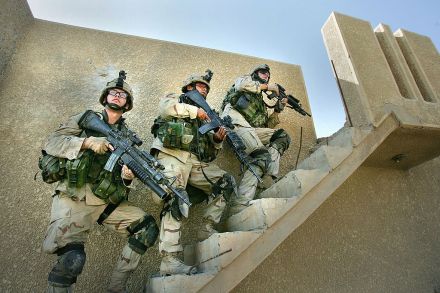
The National Museum of the Marine Corps has built a replica of a street in Fallujah, the Iraqi city that American forces half-destroyed in order to save it, in a battle twenty years ago next month. The exhibit promises visitors an “interactive experience that puts them in the boots of a Marine as he kicks down the door of a suspected insurgent stronghold.” If you have a games console, you can play Six Days in Fallujah, a video game where you take the role of a Marine who narrates the action of a firefight that really happened. Fallujah has become a symbol of gritty heroism and sacrifice — or for critics of the Iraq war, occupation and war crimes. Either way, the battle is deeply lodged in the popular imagination.

Fallujah

Tim Walz’s military crime is all in the cover-up

From our US edition

There’s an unmistakable aura if you’ve ever been to any of the 172 VA medical centers run by the Veterans Health Administration. It’s a quiet somberness — near reverence — that demands attention and respect. Many veterans are elderly, and they glide through the hallways in wheelchairs pushed by volunteers. They often wear jackets with American flags and service branch patches that look oversized on their age-shrunken frames. But from under their hats, almost always in caps of the conflict and associated service ribbon, their eyes reflect a knowledge of human nature that goes along with the horrors of war. They aren’t asked to explain their service; you can see it in their faces. At the VA Medical Center in Minneapolis, this is a common scene.

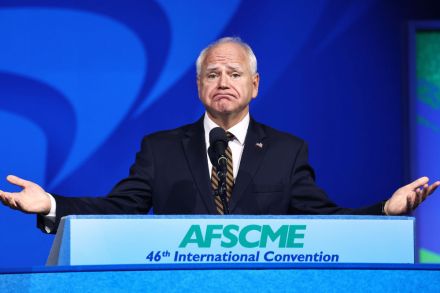
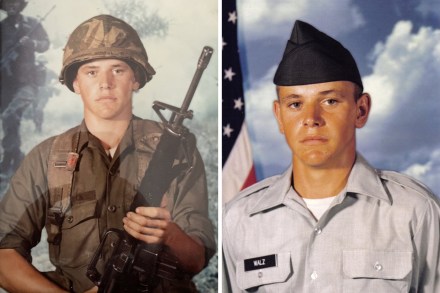
Tim Walz has played fast and loose with his military service record

From our US edition

In an era of declining trust, the military retains widespread public confidence — 61 percent as of a Gallup poll this year. Large majorities of Americans look up to those who wore the uniform and associate serving in the military with positive stereotypes like self-discipline, loyalty and responsibility. Politicians and our political system? Not so much. Only 26 percent of Americans have confidence in the presidency, and confidence in Congress stands at 9 percent. It’s no wonder that both parties recruit military veterans to run for office, hoping that the halo from their service will soften the sharp edges of political reality and garner crossover appeal come election day.

tim walz service

A superbly written and insightful account of the contemporary American military

From our US edition

Four-star Marine General Kenneth “Frank” McKenzie headed US Central Command — CENTCOM, covering the Middle East — from spring 2019 until spring 2022. It was an eventful, and stressful, three years: taking out long-time Islamic State head Abu Bakr al-Baghdadi in 2019, then notorious Iranian Quds Force commander Qasem Soleimani in early 2020 and overseeing the disastrous final withdrawal from Afghanistan in 2021. Prior to CENTCOM, McKenzie had spent four years in two top-level Joint Chiefs staff posts, and before that he served multiple tours of duty on the ground in Afghanistan. As a younger officer he had been in the Pentagon on September 11, 2001, when American Airlines Flight 77 hit; he was commissioned in the Marine Corps right out of the Citadel in 1979.

McKenzie

Lessons from costly wars past

From our US edition

Money is often a substitute for strategy in US foreign policy. We spent $2 trillion in Afghanistan, only to lose the country the minute our troops began to pull out. How much will it realistically cost, then, to beat Russia in Ukraine? Will the next $100 or $200 billion do the trick? This is not a question that supporters of war-spending ask themselves. As in Afghanistan, spending is a way to defer thinking about actually winning — or facing the serious possibility of losing. Our aid buys delay, not results. Ironically, while the specter of World War Two is invoked every time there’s a conflict, our experience then teaches the same lesson as recent attempts to purchase victory.

wars

Why the post-Cold War era is far from over

From our US edition

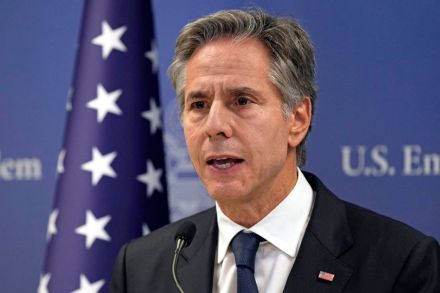
In various speeches this year, secretary of state Antony Blinken has declared that “the post-Cold War era is over.” The announcement passes all but unnoticed, eclipsed as it is by crises, such as war in Ukraine and the Middle East, that make Blinken’s point in a starker way. Not so long ago, it was taken for granted that the fall of the Berlin Wall in 1989 had inaugurated a new age. Now, if Blinken is correct, the lifespan of that age hardly exceeds the duration of Tom Brady’s career as a star quarterback. By 1989, the United States had ascended to the status of sole remaining superpower. No challenges to its global primacy — political, military, economic or cultural — were visible anywhere on the horizon.

post-Cold War era

Why Taiwan’s defense is in the American national interest

From our US edition

Just 38 percent of Americans “support deploying US troops to defend Taiwan from a military attack by China” according to a Reuters/Ipsos released this week, with 42 percent opposing and 20 percent unsure. Vivek Ramaswamy, among the top contenders for the 2024 GOP nomination, also recently said that the US should only defend Taiwan until “we have semiconductor independence.” Add to this the Biden administration’s unwillingness to spend what is needed to build up the Taiwanese military and its failure to adequately support Ukraine — and anyone who values a safe, free, prosperous and stable world should be concerned. Because defending Taiwan from a revanchist, imperialist and brutal Chinese Communist Party is at the heart of America’s national interest.

taiwan

Exclusive: How Covid protocol disrupted the Afghanistan withdrawal

From our US edition

The Biden administration’s Covid obsession interfered with the execution of the Afghanistan evacuation, just as it had with Special Immigrant Visa applicants’ evacuation planning. The administration’s Covid vaccination requirements deprived critical units of key personnel. The problem was especially acute for the Marines in 2/1. From April to October 2021, the battalion rotated in as the combat arms unit of the Special Purpose Marine Air-Ground Task Force — Crisis Response — Central Command (SPMAGTF-CR-CC). In classic military fashion, the task force has an eleven-word name but a straightforward mission: part of the battalion safeguards embassies in the region, and the other part serves as the region-wide “Oh, shit!” response team.

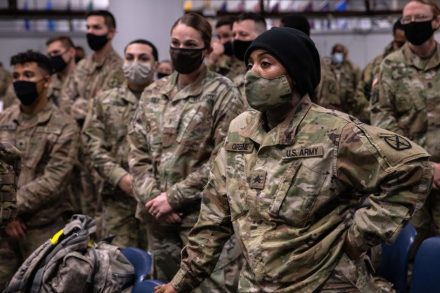
U.S. Army soldiers are briefed on COVID-19 quarantine procedures after returning home from a 9-month deployment to Afghanistan on December 10, 2020 (Photo by John Moore/Getty Images)

The advent of AI-piloted planes

From our US edition

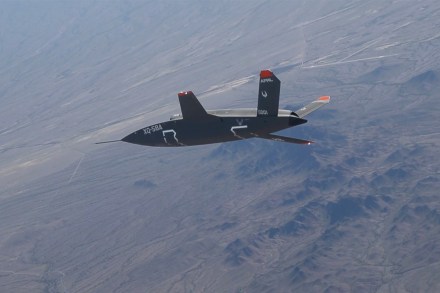
The US Air Force conducted the first flight test of the XQ-58A Valkyrie drone, from Kratos Defense and Security Solutions, piloted by artificial intelligence, on July 25. The test was part of a years-long effort headed up by the Air Force Research Lab designed to integrate advanced technology into the Air Force’s arsenal. The lessons learned and data gathered from the test will be applied to the Collaborative Combat Aircraft program, which seeks to procure an unmanned combat drone capable of working — collaborating — with manned systems, like a traditional fighter jet.  Bringing AI into the fold offers numerous benefits to the modern warfighter.

The Kratos XQ-58 Valkyrie ai drones