Military

South Sudan set for difficult independence

Today, voters in the southern part of Sudan head to the polls in a referendum which will determine whether they should form their own state or remain part of Sudan, Africa's largest country. Secession – the most likely outcome of the referendum, and called for in the 2005 peace agreement that ended 21 years of civil war between the country's north and south – would mean that the government in Khartoum could lose not only territory, but also over 80 percent of the revenues it receives from oil exportation, as most of the oil is located in the would-be state of South Sudan. As a result, many fear that bloodshed will follow the poll.

At war with the Greeks

America’s love of the ancient republics has had military consequences in the present If you’re 40 or older and I ask you to think back to the worst moments of your life as a schoolchild, memory will probably take you straight to Latin class. Remember how it was taught by a wizened old beak in a faded gown, who favoured merciless drilling, responded to grammatical errors with a rap of the cane, and squeezed the fun out of even the most heroic Roman tales? Latin has largely disappeared from English schools and I dare say that 19 out of every 20 among you don’t miss it. By contrast, it is thriving on the other side of the Atlantic. Eager young teachers offer Greek and Latin classes in a growing number of schools, public and private.

Help for Helmand

With 2011 promising to be another difficult year in Afghanistan, my friend Alex Strick van Linschoten – a noted scholar of the region – has decided to do something to help. He is organising to get some charcoal to refugee families from Helmand, who have fled the fighting between NATO and the Taliban and now live at a makeshift refugee camp just outside Kabul City. Like millions of refugees, the people at the camp have seen things they will rarely forget: "The sight of a woman’s hair entangled in the mulberry branches, her legs strewn far away in the dirt. Or the sounds they heard as they hid in an underground hole, counting the bombs to pass the time, praying the American troops would leave.

Obama STARTs anew

Barack Obama has had a great couple of weeks. First DADT was repealed and then START was ratified by the Senate, safeguarding a major Obama foreign policy initiative In truth, both issues are peripheral to voter concerns. To them, the jobless recovery is what matters. New figures show that the unemployment rate in the US has jumped to a seven-month high of 9.8 per cent. Nor did the White House get all it wanted from Congress recently. As the Senate was debating DADT, the House of Representatives killed a provision in a defence bill to transfer detainees from Guantanamo to the US. But in politics having momentum - the Big Mo - is one of the most important, if intangible, factors. Recently, Obama could not even find Lil' Mo, Big Mo's smaller brother.

Gay America rejoices

This week will give Barack Obama's liberal credentials a significant boost. On December 18th, the Senate had a  successful cloture vote in favour of a bill to repeal "Don't ask, don't tell". DADT as it is commonly known restricts the US military from trying to discover or reveal closeted gay, lesbian, and bisexual service members, while it bars those who are openly gay, lesbian, or bisexual from military service. The bill has now passed in both Houses of Congress and it only awaits President Obama's signature. As my friend R.

What is the MoD for?

Yesterday, Liam Fox vowed to install a tougher procurement system in the Ministry of Defence and appointed the bureaucracy-busting Bernard Grey as Chief of Defence Materiel. The Defence Secretary said that it is important to start from first principles if reform is to take place. The ministry, he said, "exists to provide the Armed Forces with what they need". But is that right? The MoD exists, first, to maintain civilian and democratic control of the armed forces; and, second, to support effective operations. Supporting the military is a corollary of the second task, but not the same thing. In desiring to reform the MoD and cut costs, there is a real risk the government loses some of the capabilities the department needs to deliver its core tasks.

Time for jaw-jaw

Today I joined number of leading Afghan experts, from Ahmed Rashid to Gilles Dorronsoro, in calling on President Obama to change the American strategy in Afghanistan. Based on our work in and on Afghanistan, we wanted to make a number of points just as the White House begins reviewing its strategy: First, that the cost of the war is now over $120 billion per year for the United States alone. This is unsustainable in the long run. Second, despite these huge costs, the situation on the ground is much worse than a year ago because the Taliban insurgency has made progress across the country. The military campaign is suppressing, locally and temporarily, the symptoms of the disease, but fails to offer a long-term cure.

Time for an Afghan Inquiry

The Iraq Inquiry had been conspicuously silent, but now John Chilcot's team has called Tony Blair to give evidence again. It's expected that our former PM will make the trip to the Queen Elizabeth II centre early next year. That would push the expected deadline for the inquiry's work finishing – at the end of this year – into 2011. Few people, however, expect the inquiry to say anything novel or get Tony Blair to say anything different than before. Its well-phrased final report may change policy in the margins – but in the security establishment there is little question of what needs doing.

Wiki-danger

Now the Wikileaks are beginning to become dangerous. Before, the leaks contained high-level tittle-tattle, confirmation of existing analyses and embarrassingly accurate portraits of world leaders. I still thought it wrong to regurgitate this data, as it will lead to more secrecy, bilateral problems and potentially even conflicts – the things that Julian Assange claims he is seeking to avoid. Yet I told NPR that the idea of prosecuting the Wikileaks founder for treason was far-fetched; he is not a US citizen and it was not clear to me what kind of charges could be brought against him in the US courts. Now, however, with the publication of data which will be useful background reading for any would-be terrorist, the situation has changed.

Some perspective on the Helmand Wikileaks

Today's Wikileaks will make uncomfortable reading for all parts of the British defence establishment – ministers, both old and new, and the senior military leadership. As a senior military officer told me, "this isn't going to be good." The diplomatic cables reveal that US officials and President Hamid Karzai at some point thought that British forces had bitten of more in Helmand than they could chew. The US NATO commander, General Dan McNeill, is quoted as saying three years ago that British forces have made a mess of Helmand. This is backed up by a comment, more than a year later, suggesting that President Karzai also agreed that British forces were "not up to the task of securing Helmand" without US assistance. Cue headlines of British military failure.

Pakistan’s double game comes under the spotlight once again

The leak that keeps on leaking has one or two embarrassing titbits about our domestic policymakers this morning. Yet far more noteworthy are the documents on Pakistan. While they don't tell us too much that is surprising – being mostly about the duplicitous game that country is playing with the West – they do highlight some potentially worrying trends. Chief among them is the growing influence of General Ashfaq Pervez Kiyani, the head of Pakistan's army. His name is littered generously throughout the US briefings, and it is often connected with dangerous conspiracy and double-dealing. One document, for instance, suggests that Kiyani was prepared to overthrow the Pakistani President, Asif Zardari, last year.

The strange case of Turkey, Islamic history and V.S. Naipaul

Nobel laureate V.S. Naipaul has pulled out of the European Writers’ Parliament in Istanbul, following pressure from Turkish writers who felt ‘uneasy’ about comments he had made about Islam in 2001. Naipaul compared Islam to colonialism, arguing that both had had ‘a calamitous effect on converted peoples. To be converted you have to destroy your past, destroy your history. You have to stamp on it, you have to say 'my ancestral culture does not exist, it doesn't matter.’ Naipaul’s comments concern the factual context of Islam’s expansion between the 7th and 17th centuries, hence the comparison with colonialism.

Obama stands firm on Korea

There is no diplomacy with maniacs. North Korea has been the grip of one or another lunatic for 60 years; with the succession still unsettled, Pyongyang is now a salon for the insane. The escalation of posturing, violence and the nuclear programme is a brazenly mad strategy to bribe other countries in exchange for good behaviour; it’s piratical. The world’s geopolitics may be changing, but the US President remains supreme among leaders. Yesterday, Iain Martin argued that Barack Obama had to make a strong and unequivocal statement about the situation, at least to encourage China to reprimand its errant ally. The President did so.

The mad hermit strikes

North Korea has again put itself at the centre of international relations. As the US pushed for a start to six-party talks, Pyongyang lifted the veil on a hitherto secret uranium-enrichment facility and launched an artillery barrage on a South Korean island,  injuring four soldiers, and damaging several buildings. The South Korean military scrambled fighter jets and returned fire and the situations remains tense. Conflict with nuclear-armed North Korea has intensified in recent years. North Korea launched nuclear and missile tests last year and sank a South Korean warship in March this year, killing 46 sailors. But the first ground-to-ground assault across the DMZ represents a new escalation in the decades-long, but usually non-violent conflict.

There was more to Blair than a winning smile

Following Sir Christopher Meyer's review of George Bush's Decision Points, here is the other half of the double act. The closest I’ve come to meeting Tony Blair was knocking into Michael Sheen on the street. I got no closer reading Blair’s memoir, most of which is beyond parody. Cherie Booth QC is a strong armed nocturnal adventuress; Anji Hunter is a bountiful babe; and Mr Blair is a would-be Casanova with a taste for premonitions and Schindler’s List. You barely notice New Labour’s reform programme under the torrent of erratic writing and bizarre digressions.

Neo-isolationism is NATO’s greatest enemy

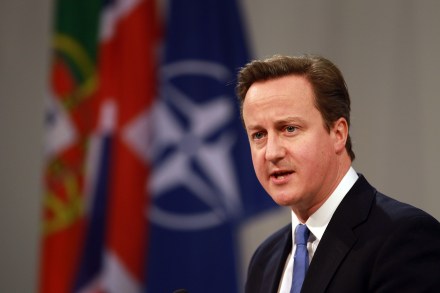
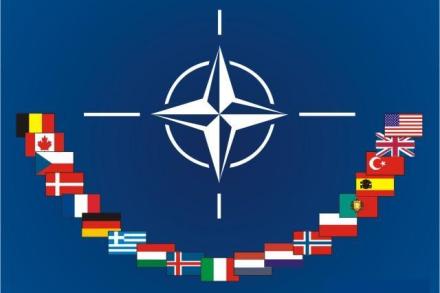
As NATO leaders gather for a key summit in Lisbon, expect the newspapers to be full of the usual “why bother” commentary. NATO, they will argue, was founded for a different age and is not relevant for dealing with today’s threats – from cyber-attacks to nuclear non-proliferation. It is even struggling to deal with older threats, such as the Taliban insurgency. Most Europeans do not seem to mind. They feel safer than at any time before and worry predominantly about post-material threats, not conventional attack, as a think tank report showed recently. As a result, Europeans are set to spend less on defence. Germany expert Hans Kundnani has an excellent piece on Berlin’s anti-militarism over on ECFR’s new blog.

A 2015 Afghan exit will be tricky

William Hague told the Foreign Affairs Select Committee that British combat troops will leave Afghanistan in 2015 - even if parts of the country remain violent. Speaking to a number of senior military officers and civilians who have recently returned from Kabul and Helmand, I have come away with the clear sense – whisper it – that the tactical tide is in fact turning against the Taliban insurgency but that a number of facts will complicate further progress. First, the next few months in Helmand may unfortunately be quite bloody.

Richards: we’re in it for the long haul

General Sir David Richards does like thinking in decades, doesn't he? A year or so ago, he was warning us that "the whole process [in Afghanistan] might take as long as 30 to 40 years." Today, in interview with the Sunday Telegraph, he says that the wider battle against al-Qaeda could last around 30 years. In both cases, he deserves our attention. To hear the head of our military suggest that the West's current conflicts will stretch across generations is sobering, to say the least. More noteworthy, though, is Richards' claim that a "clear cut victory" over Islamist terror is "unnecessary and would never be achieved" – but that we can "contain it to the point that our lives and our children's lives are led securely.

Saluting the fallen in Afghanistan

It is to be hoped that Prince William’s visit to Afghanistan for Remembrance Sunday was a morale boost to the troops out there, a reminder that the nation appreciates their courage and salutes their dedication to duty. It was a gesture—but a worthwhile and important one. The idea for Prince William to spend Remembrance Sunday in Afghanistan was Liam Fox’s. Fox was keen to have senior representation in theatre to show the troops that they were not a forgotten army and the whole visit was arranged several months ago. Fox and the Prince flew out to Afghanistan on a scheduled military cargo flight yesterday morning. They was nothing grand about the trip, they bedded down around freight boxes and replacement equipment that is heading out to the front line.

From the archives: The end of the First World War

A blast of celebration – and of reflection – from The Spectator, written after the armistice in 1918. There is more than a touch of foresight in the warning that, "True peace and valid reconstruction demand … as much time, renunciation and self-sacrifice as the winning of the war." Thanks be to God, The Spectator, 16 November, 1918 The thought that has filled the mind of the nation on Monday, and has possessed it ever since, is the thought, Thanks be to God. Under a thousand names and forms, consciously and unconsciously, realised fully or only half realised, this it is that has given unity to the nation and made the moment mighty. Not to have recorded this fact, and to have left unsaid what we have just said, would have been impossible.