Military

Entente très cordiale

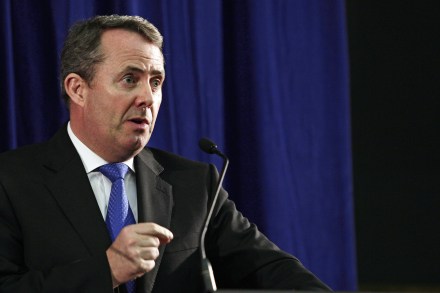
When it comes to pomp, Britain and France are still superpowers. The entente très cordiale has brought out all the plumage of 400 years of professional soldiering – bearskins, ostrich feathers, mink, gold leaf, thorough-bred horses, billowing capes and vibrant shades of scarlet and blue. Waterloo must have been a hell of a fashion show, before the guns inaugurated spectacle of a different kind.    As Liam Fox explained on the Today programme, this agreement enables two ailing but still ambitious powers to project force overseas beyond their specific territorial interests. They will share aircraft carrier capabilities, nuclear research secrets, and a pool of elite combat forces to be deployed

From the archives: The Cuban Missile Crisis

48 years ago this week, the Cuban Missile Crisis came to an end. Here are the two Spectator leading articles that bookended our coverage of those thirteen momentous days in October: Trial of strength, The Spectator, 26 October, 1962 The West faces a grave situation. It would be absurd to think that the showdown on Cuba is only a Soviet-American affair. Rather it is the testing-ground of the determination of the freedom-loving peoples to defend themselves – one selected by Russia with a view to causing as much confusion as possible in the countries of the Atlantic Alliance and the uncommitted States. We notice one crucial point at once. The

What Fox can learn from IDS

The Ministry of Defence’s -7.5 percent budget settlement is a better deal than it appeared the MoD would get back in the summer. Tim Montgomerie hails it as a triumph for Fox and his full-on campaign against the deeper cuts that the Treasury wanted. But No 10 is keen for it not to been seen like this. They don’t want ministers to think next time round that the way to get a good deal is to kick up a fuss and enlist the papers on your behalf. There is so much anger with Fox in Downing Street, even those who are usually sympatheticto him are exasperated with him at the moment, that

Plugging the leak

So did Liam Fox leak the letter? Only if he is suicidal. He’s been around long enough (having been a frontbencher from the Major years onwards) to know how the game works. Briefing journalists is one thing, leaking a private letter is utterly counterproductive. It will make it harder for him to get the settlement he wants, and it will damage him by making him look as if he were responsible for it. I gather that the MoD is in a state of terror right now, with phone records and emails being trawled to find the guilty party. And whoever did this has such a crude understanding of media spin

Liam Fox does a David Miliband

At least the political fates have a sense of humour. No sooner had David Miliband’s frustration screamed into view last night, than the Tories were hit by a story that was similar in several regards: the leaked Liam Fox letter, expressing his anger over spending cuts. Here are a handful of those similarities: 1) Leakage. David Miliband’s words for Harriet Harman were meant to be for their ears only, but the TV cameras picked them up. Similarly, Fox’s letter was meant to be between him and the PM – but now it’s splashed across the front page of the Telegraph. The only difference is that the Fox letter has been

What you need to know ahead of the Spending Review: making the right defence cuts

This is the latest in our series of posts on the Spending Review with Reform. A list of previous posts can be found here. The debate on the defence budget has become one of the most fiercely contested in recent days.  Over the weekend, editorials in both The Times and The Daily Telegraph agreed that defence was different because it wasn’t just a matter of cuts in the short term, it was also a matter of the UK’s strategic defence needs for years ahead.  Building on a report by the House of Commons Defence Select Committee, they raised concerns that the Government is forcing through the Strategic Defence and Security

Liam Fox rows back on carrier sharing

For a while then, it looked as though Britain and France really were going to share aircraft carriers as a mesure d’austérité. But, today, Liam Fox seems to have put a block on the idea, describing it in Paris as “utterly unrealistic”. He did, though, add that we could pool some of our transport planes and helicopters with the French (which sounds like the military equivalent of hitching a lift, if we happen to be going in the same direction). And Fox’s spokesman has since said that there still might be “strategic co-operation across the maritime domain,” whatever that means. So some sort of link-up with the French should be

A totemic austerity measure

As austerity measures go, the plan to share aircraft carriers with France is totemic stuff. Not only could it save the Exchequer a heap of cash – by reducing the need for two replacement carriers – but it also says a lot about how our government wants to operate in the world: multilaterally, flexibly and, perhaps, with less emphasis on military force. Divvying up one’s navy with another country does not suggest a strident foreign policy. Indeed, future operations would have to be planned and conducted with the aid of phonecalls to Paris. Of course, this will likely be a controversial move. There are issues of national sovereignty at play

In praise of British ingenuity

Two spitfires have just flown over our offices at The Spectator, to commemorate the Battle of Britain. The aircraft are deservedly iconic, but it’s a bit of shame that over the years they’ve eclipsed the de Havilland Mosquito in the public memory. They were developed too late for the Battle itself, but were incredible aircraft when they were deployed. And, crucially, privately-developed. In 1937, the British had only 46 bombers where the Germans had about 800 – and the speed at which the RAF developed was extraordinary. The battle of Britain exposed the weaknesses in the Luftwaffe – and Nazi procurement policy. Hitler relied on a vast, unwieldy bureaucracy to

Remembering the few

Today is the 70th anniversary of Winston Churchill’s ‘Few’ speech. Here’s how the Spectator reviewed it at the time: Mr Churchill looks ahead, The Spectator, 23 August 1940 Mr Churchill surpassed even his own masterpieces of lucid and spirited exposition in his speech on Tuesday, in which he surveyed the first year of the war and the last exciting days of victory in the air and looked fearlessly into the future. During the previous fortnight, and especially during the previous week, the nation had become aware of the fact that the intensified air attack was part of that onslaught on Britain whose approach was trumpeted in Germany. It might be

Mud, blood and jungle rot

The Matterhorn, at 14,679 feet in the Alps, is said to be very difficult to climb. It is an apt military designation for a (fictional) jungle peak that United States Marines were ordered to assault, abandon and assault once more, against fierce opposition, to establish an artillery base near the North Vietnamese border during the Vietnam war. Matterhorn is also a suitable title for a formidable epic novel, which is arduous reading but well worth taking on, especially if there is any need for further testimony that war is a criminal waste of time, money and men. About 60,000 Americans died in Vietnam to prove the point. It is being

The coalition needs to think harder about renewing Trident

What do we have here, then? Another public disagreement between Downing Street and Liam Fox? Certainly looks that way, as George Osborne assures an interviewer in India that the entire cost of Trident should be borne by the Ministry of Defence’s budget. As the Telegraph reminds us, Fox suggests that the running costs of Trident should be part of the MoD’s responsibilities (as they are currently), but the approximate £20 billion capital cost of renewing the nuclear deterrent should be paid for by central government. In his words, on Marr a couple of weeks ago: “To take the capital cost would make it very difficult to maintain what we are

Pakistan's double game in Afghanistan

So what is Pakistan up to? Cameron has a point: it is playing a dangerous double game which I once outlined in a piece. But in today’s Spectator, it is all spelled out by a writer who is – in my view – the best authority on this mess and by some margin. Ahmed Rashid, whose book Descent into Chaos is the definitive work on the Afghan war, explains that Karzai has effectively switched sides – he’s given up on Nato (as, it seems, has Cameron) and now wants Pakistan to preside over talks with the Taliban: ” A few months ago Hamid Karzai would have been thrilled to have

Self-interested Britain

Liam Fox is in the most invidious position. It is hard enough to secure significant budget cuts against vested interests that maintain anti-competitive procurement; and being at war deepens the task. Cuts of 10 to 20 percent must be made but at the same time Fox acknowledges, in an interview with the Telegraph, that: ‘We have to keep sufficient land forces to hold territory if required, we have got to maintain enough maritime power and we have got to maintain air power to maintain air superiority.’ Like all defence secretaries, Fox is trying to contain the warring service chiefs, their temperaments exacerbated by the coming cuts. Fox is even handed.

The RAF is in danger of being destroyed on the ground

Liam Fox is anticipating the Strategic Defence Review, preparing the services for what will be extremely bad news. Britain will not engage in large scale operations in the immediate future. The Telegraph reports that officials intend to reduce the number of strike aircraft, warships and tanks. Future strategic emphasis will be on maximising firepower and range and minimising direct and associated costs. The service arms have mobilised their writers to prepare a defence. The Times have hosted a set-to between Air-Vice Marshall Tony Mason and Major General Julian Thompson. Mason’s argument is simple: warfare is determined by air superiority. He writes: ‘Since Dunkirk, British Armed Forces have usually fought beneath

Mitchell's right move

Andrew Mitchell’s decision to prioritise Afghanistan in the development budget is sensible. It demonstrates that Mitchell, a former soldier, understands that the Britain’s overseas aid needs to be in support of Britain’s foreign policy objectives. The Observer reports that Mitchell will announce a 40 percent increase in the Afghan aid budget. This will be paid for both by the increase in development spending and by reducing aid to countries in Eastern Europe and Latin America. I also understand that Mitchell has been emphasising to his department that it needs to work better with the military. For too long, there has been a culture at DFID that has seen it as

Concentration not capitulation

There is a difference between a withdrawal and a retreat. Through no fault of its own, the British army was defeated in Basra and retreated. British troops will withdraw from Sangin in October to be re-deployed to bolster Britain’s main presence in central Afghanistan. Any attempt to present this decision as politically motivated, heralding the start of a British retreat from Afghanistan, should be rejected. British forces have not ‘lost’ in Sangin, or been deemed too ‘soft’ for the task. This is a military decision, inaugurating the surge’s next phase. The logic is flawless. Troops in Helmand have been spread to thin; the Americans and British are concentrating their forces

Might and wrong

‘Was all this the realisation of our war aims?’, Malcolm Muggeridge asked as he surveyed the desolation of Berlin in May 1945. ‘Was all this the realisation of our war aims?’, Malcolm Muggeridge asked as he surveyed the desolation of Berlin in May 1945. ‘Did it really represent the triumph of good over evil?’ All wars pose moral dilemmas for those who fight them, and the Second World War more acutely than most. How many allied lives was it legitimate to risk in pursuit of victory, even over an enemy of unspeakable wickedness? How many enemies was it legitimate to kill? Is the question even worth asking? This admirable book

Afghan manoeuvres

Ming Campbell’s comments today show that some Liberal Democrats do believe in Fox hunting. Responding to Fox’s speech in Washington yesterday and his remark that Britain would be among the last to leave Afghanistan, Campbell told the Daily Politics that the “intervention was unhelpful, indeed the government thought it was unhelpful.” “It would have been better if these remarks had not been made.” Dr Fox’s allies are less than pleased by Ming’s grandstanding. They take the not unreasonable view that the Secretary of State for Defence has every right to express his views on a war that this country is fighting without being second guessed by a backbencher from the

A new foreign policy?

An inventive article from Ben Brogan this morning, arguing that a new vigorously Tory foreign policy is emerging. I can be a little slow sometimes, but I haven’t noticed anything new or Tory about Britain’s foreign policy. Brogan records that the Prime Minister has let it be known that British troops will withdraw from Afghanistan by 2015. Cameron said nothing of the sort; he said he wanted British troops out of Afghanistan by 2015, something quite different. Contrary to expectations, relations with Europe are flourishing under the coalition, as pragmatic government has superseded bellicose opposition. William Hague hopes to influence the EU closely. In a speech today, he will attempt