Marriage

His muse and anchor

Misery memoirs are in vogue. There is much misery in this harrowing account of married life with John Bellany (1942–2013) CBE, RA, Hon RSA — to 20th- century Scottish art what his hero and acquaintance Hugh MacDiarmid was to Scottish poetry — but its inspiring message is that love conquers all. Helen Bellany is not a ‘quitter’, and her story triumphantly confirms it. It is a long book but does not drag. The past is so alive to her it seems only natural when she lapses into the present tense. She is a highlander from Golspie in ‘timeless and silent’ Sutherland, and the poetry of her descriptions encourages a visit


I used to think I was smarter than my wife. Not anymore

According to new research published in Advances in Physiology Education, men tend to significantly overestimate their own intelligence whereas women only marginally overestimate theirs. The architect of this study, Katelyn Cooper, a doctoral student at Arizona State University, believes this helps explain why fewer women embark on PhDs in the life sciences and why there are fewer tenured female professors in STEM fields. She also thinks it partly explains why women are less likely to rise to the top of their chosen professions. I’m not so sure about that, but first a mea culpa. I used to think I was smarter than my wife. However, after being married to Caroline

Bermuda's gay marriage row shows the liberal-left's disdain for democracy

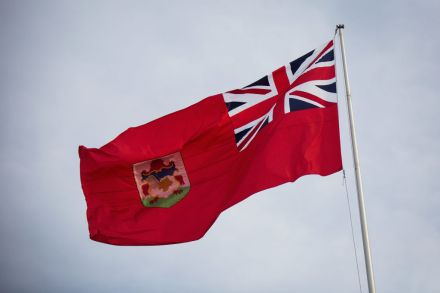
The Labour benches and the pages of the Guardian are not normally places one would go for a defence of Empire – until, that is, comes along an opportunity to further a popular liberal cause in a British overseas territory. Then, otherwise liberal-minded folk, who would normally be falling over themselves to apologise for the evils of the British Empire, bizarrely come over all neo-colonial – demanding that the Government lords it over the untrustworthy natives and imposes direct rule from Westminster. This week, the Bermudan government overturned a ruling made by the island’s supreme court introducing gay marriage. The government’s decision was in response to a referendum on the

Love becomes a duty

The story, as it emerges, feels both familiar and inevitable. A bored 19-year-old student, on his university holidays in mid-century Metroland, joins the local tennis club, where he dismisses all the girls his age as wholesome ‘Carolines’ but falls for Mrs Susan Macleod, a spirited, sarcastic woman in her forties. Paul shocks the village by taking her for drives (both are soon barred from the tennis club) and then starts taking her to bed in her marital home. Here he manages to become a familiar presence. Though Susan’s husband mocks Paul as her ‘fancy boy’, he also teaches him to do the crossword and only occasionally lashes out at him

New year, new partner?

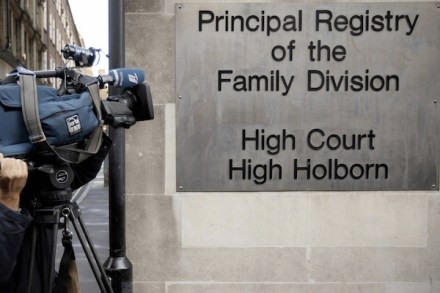
There is no doubt about it, getting a divorce is an expensive business. The average cost, according to Aviva’s Family Finances report, is £14,500 – which includes legal fees, child custody costs and changing homes. The report highlights how the cost of divorce has spiralled a further 17% since 2014 when divorces in the UK cost, on average, £12,432. It doesn’t stop there. There are also relocation costs. Those wanting to buy a new property have to spend an extra £144,600, or £35,000 in order to rent somewhere. Most people  going through a divorce don’t have money to burn – unless of course you are Ant McPartlin of Ant and

The Spectator Podcast: For richer, for poorer

On this week’s episode we’ll be discussing whether marriage is becoming an elite institution. We’ll also be wondering if the Tory glass is half full or half empty, and lamenting the loss of Britain’s tiny train lines. First up: is marriage becoming the preserve of the rich? In this week’s magazine, Ed West asks whether Prince Harry’s presumably lavish nuptials will be the latest signal that marriage is becoming an increasingly rarefied institution. What can be done to reverse this slump? And ought we to be worrying about traditional unions in the 21st Century? To discuss, we were joined on the podcast by Frank Young, Head of the Family Policy

The marriage gap

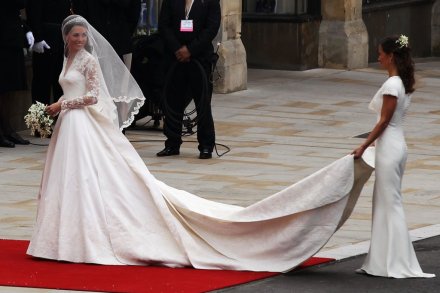
Whatever their views about the monarchy, most people will warm to the news of Prince Harry and Meghan Markle’s engagement. Sentimental as it sounds, I was surprised by how much I enjoyed the last royal wedding and how happy I felt for Prince William and Kate Middleton, as she was then. It was one of those rare events when you felt lucky to live in a good country with a bright future. A marriage is, after all, the ultimate statement of confidence in the future — and God knows, we could all do with that right now. Marriage is not easy and never has been, as Harry will know from

However you look at it, divorce is a disaster

I went to Relate once, the counselling service formerly known as the National Marriage Guidance Council. I wasn’t married at the time — this was about 25 years ago — but in a long-term relationship. Or at least it was long-term for me at the time. My girlfriend went with me and I rather hoped they might say to her: ‘Stop shagging that man called Raymond, you little whore.’ But they didn’t at all. They kind of noted the existence of Raymond in what seemed to be a slightly approving manner, and suggested it was probably for the best if we all moved on, separately, away from each other. Relate

Dear Mary | 16 November 2017

Q. My husband, who used to be away on business most of the time, now works from home and has become bossy and dictatorial. He spends a good deal of his day advising me how the house could be better run. This is bringing tensions into our previously harmonious relationship. How can I put a stop to his interference in a delicate way without him feeling that I’ve ceased to respect his opinions? PS: the house already runs like clockwork. — Name and address withheld A. Why not act daft and agree with your husband that, since you seem to be less efficient than him, he should direct the running

Problems of her own

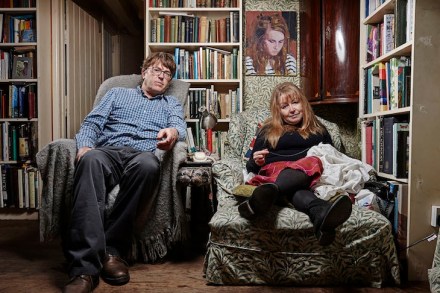
If you don’t yet watch Gogglebox on Channel 4, start doing so now. Far from making you despise our couch-potato nation, it will make you feel great affection for it. Sprawled on L-shaped sofas with comfort cushions or slobbering dogs on their tummies, or sitting side by side on armchairs with a vase of carnations on a doily between them, the programme’s chosen telly-watchers make what must be the most unselfconscious, and therefore genuine, remarks spoken by anyone on air. There’s no doubt in my mind that Giles and Mary are the most watchable of all the watchers. ‘Meanwhile, in Wiltshire…’ says the narrator, and you glimpse a thatched cottage,

Who is Sylvia – what is she?

In May 1956, three months after meeting Ted Hughes, one before they will marry, Sylvia Plath writes to her mother Aurelia about the talented man she has fallen in love with: ‘He will start some portraits of me! A combination of both witch and ghost, perhaps.’ Because of Hughes’s editing and writing of her work, a combination of witch and ghost is precisely how we know her, and he strongly encouraged the idea that the version of Plath he offered was the ‘real one’, a core of personality born in an inevitably fatal struggle narrated through the Ariel poems. Ariel, in his view, was her only true work. ‘All her

A civil answer to the marriage question

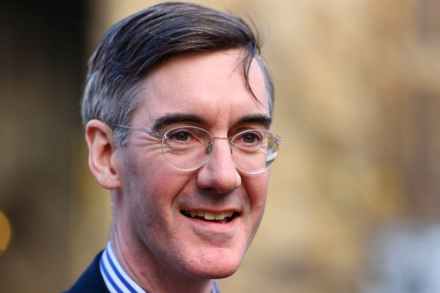
There was a bit of a kerfuffle last week regarding Jacob Rees-Mogg’s view on same-sex marriage. He is opposed but effectively said that it wasn’t up to him to decide: ‘I take the teachings of the Catholic Church seriously. Marriage is a sacrament and the decision of what is a sacrament lies with the Church not with Parliament.’ And yet, marriage is, self-evidently, defined by Parliament. It has a precise definition in law and that definition has been extended to include people in homosexual relationships. It has been extended to permit people who have been previously married and divorced to re-marry, despite religious objections. It is also restricted to people over

Mysticism and metamorphosis

‘I frankly hate Descartes,’ states a character in Nicole Krauss’s new novel, Forest Dark: ‘The more he talks about following a straight line out of the forest, the more appealing it sounds to me to get lost in that forest …’ Like the author, this character is called Nicole, lives in Brooklyn, and is a writer and mother. Struggling with her work and her marriage, life is indeed a ‘forest dark’, and we follow her through the tangle of it. Interleaved with Nicole’s half of the novel, is Jules Epstein’s — a bombastic, wealthy, older New York Jew, who we meet when the ‘strong weather of being Epstein no longer

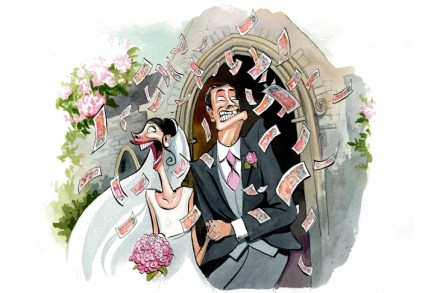
If it feels like you're spending a fortune on going to weddings, you probably are

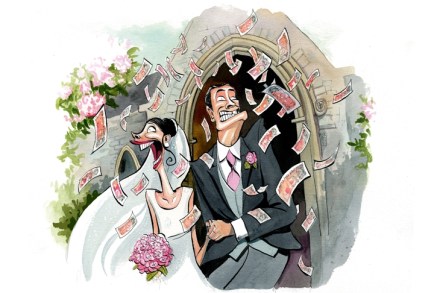
As happens every bank holiday, the roads were chock-a-block this weekend with people on the move – many of them heading off to weddings at opposite ends of the country. It can sometimes feel as though weddings cost a fortune; and that’s just going to them, not even having one of your own. Perhaps the reason it feels like they cost an awful lot, though, is because they do tend to be quite expensive for wedding guests. Of course, it’s lovely to be invited to a wedding, and perhaps even the engagements drinks and hen or stag do as well. But the price does tend to hit your wallet quite

Whatever happened to Alice?

In 1987, the art of opera changed decisively. John Adams’s opera Nixon in China was so unlike the usual run of new operas in its concept that many people, on first hearing about it, assumed it had to be a joke of some sort. Turning the preposterous and reviled figures of Richard and Pat Nixon and Henry Kissinger into operatic heroes — they were all still alive in 1987 — seemed preposterously at odds with the dignity of the form. It was entirely serious. Though the concept was in part that of Peter Sellars, the opera director, the exquisite refinement of treatment was that of the librettist, Alice Goodman. Unlike

Books Podcast: Is monogamy dead?

This week’s Books Podcast is all about love. Can we have too much of it? How long does it last? And is the hot new thing, polyamory, the solution to al our problems? I’m joined by the writer and comedian Rosie Wilby — author of the new book Is Monogamy Dead? — to discuss the future of relationships, the advantages and disadvantages of gay marriage, and how she got over her ex-girlfriend… You can listen to our conversation here: And do subscribe on iTunes for a new podcast every Thursday.

Tricky, and slightly sicky

The Big Sick is a rom-com that’s smarter than most rom-coms, which isn’t saying much, admittedly. It stars a Muslim man from a Pakistani background as the romantic lead, which has to be all to the good, and one character does pinpoint exactly what’s wrong with the internet: ‘You go online and they hate Forrest Gump… best fucking movie ever!’ (So true.) But at two hours it is overlong — Christopher Nolan had evacuated Dunkirk in that time, let’s remember — and it does leave a bad taste in the mouth. (Big sick, bad taste. Although, in fact, it’s not that kind of sick. This film may have the worst

Amsterdam Notebook

When my husband and I arrived in our adored Amsterdam on a sun-drenched schoolday afternoon — less than an hour in the air, first row on the plane, merry but not messy — we seemed all set for a brilliant time. We’re both Brexiteers and ever since Freedom Day we’ve been especially keen on European city breaks, such visits now having the pleasing feeling of a romance whose days are numbered, and from which one would be wise to squeeze the sweetness while one may. After checking in to the hallucinogenically gorgeous W Hotel, I was struck by one of the most enchanting of emotions the non-needy can experience; of

A barren prospect

In many ways this is a very old-fashioned novel. Jerome is 53, and a lacklustre professor at Columbia; his wife, Sylvie, 35, is a former topless dancer and aspiring film-maker. Sylvie has a dog but wants a baby. Together they will cross the former Soviet bloc looking for a child of their own, despite Sylvie having already had three abortions: Romania is their chosen finale, where, of course, orphans are two-a-penny. There is much to admire in it; but the clever bits aren’t funny and the funny bits aren’t clever. The novel is littered with references to continental theorists. Blanchot, Lefebvre, Baudrillard, Deleuze, Guattari, Lacan all show up — poor

Barometer | 27 April 2017

Pippa goes public Church of England lawyers ruled that the public must be allowed to attend the wedding of Pippa Middleton at St Mark’s Church, Englefield, Berkshire on 20 May. Other rulings that could put the dampers on your celebrity wedding: — Marriages are public services. All parishioners, and possibly all members of the public, must be let in ‘unless a genuine question of safety or security arises’. — It is not legally clear whether marriage services can be ticketed, but if they are then they must be publicised. — No video can be produced without the consent of the organist. Time off Jeremy Corbyn wants another four public holidays.