Marriage

A mother-daughter love story

From our UK edition

In Splinters, the American novelist and essayist Leslie Jamison leaves behind the issue of her addiction and recovery – the subject of her previous memoir, The Recovering (2018) – and takes us through her pregnancy, experience of childbirth, marriage, divorce and post-separation dating life. Each stage of her journey is related with the author’s trademark love of the telling detail: On the postpartum ward my window ledge filled up with snacks from friends: graham crackers, cashews, cheddar cheese, coconut water, oranges with tiny green leaves. Someone hands her a form to fill out. ‘Did I want bone broth?’ We can assume she does, as bone broth appears later on. Much of Splinters recounts her marriage to the author Charles Bock – referred to throughout as ‘C’.

No one could match Tess, to Thomas Hardy’s dismay

From our UK edition

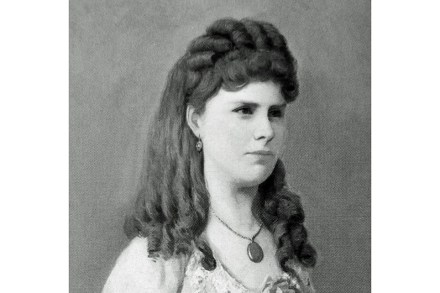
In her disillusioned later years Thomas Hardy’s first wife, Emma, bitterly reflected: ‘He understands only the women he invents – the others not at all.’ In Hardy Women, Paula Byrne sets out to recover the stories of the women in his life ‘who did not have a voice and who were often deliberately omitted from Hardy’s self-ghosted autobiography’, in order to reveal that ‘the magnificent fictional women he invented would not have been possible without the hardship and hardiness of the real ones who shaped his passions and his imagination’.

Newlywed dining around the world

Nick and I were married on February 4, 2023, and spent our first Valentine’s Day at Le Grand Colbert in Paris. There, we had oysters and Champagne, lobster, scallops with a side of mashed potatoes (naturally) and profiteroles for dessert. This year, we’ll be at a wedding on our anniversary, and Valentine’s Day coincides with Ash Wednesday, a day of fasting and abstinence from meat for us Catholics. So I’ll be attempting a romantic homemade meal to celebrate both occasions on the unremarkable second Saturday of the month. Looking through my phone, confronting my strange habit of taking pictures of memorable meals, I was reminded that our first year of marriage has involved a lot of hosting, dining out and dining in. In March, my in-laws visited us in New York City over the St.

dining

A strong whiff of goodbyes: The Pole and Other Stories, by J.M. Coetzee, reviewed

From our UK edition

New books by, articles about or Sasquatch-like sightings of J.M. Coetzee routinely send me back to that infamous YouTube clip of Geoff Dyer face-planting while being introduced by Coetzee at the Adelaide Book Festival – an episode often cited as evidence that the Nobel Laureate has no sense of humour. The garlanded ex-South African’s work is famously as dry as the Karoo, and Coetzee himself has been accused of having only ever laughed once. But a smile is visible in ‘The Pole’, the longest story in this collection. Beatriz, in her late forties, is an educated Spanish woman, ‘a good person’ in a ‘civilised’ (read dormant) marriage, involved in organising things like highbrow concerts but otherwise not taken seriously.

How to date a widower

From our UK edition

When is it acceptable to consider dating a widower? How do you know if they are still grieving and not ready to move on? According to statistics, men die earlier than women, so I was surprised this year to meet several whose wives had died before them. Divorced since the early 1990s, I had no intention of remarrying, but thought of striking up some sort of liaison with a widower. I had heard of women behaving in a desperate and undignified way, charging round with casseroles I had rejected two non-widowers, whom my grandmother would have described as ‘cast-offs’, meaning exes one mustn’t go back to.

I’m living in my very own hell’s kitchen

From our UK edition

According to a friend who sold a successful consulting business a few years ago, the problem with employing middle-class Britons, unlike Americans, is that there’s a summit to their ambitions. Once they’ve earned enough money to trade in their BMW for a Porsche, install a new kitchen and create an attic room with a dormer window, they start taking it easy. ‘Those are the only three things they really want,’ he says. As a freelance journalist, I’ve abandoned all hope of owning a Porsche or getting the attic done. But after living in the same house in Acton for 15 years, I’m finally remodelling the kitchen. Or rather Caroline is.

‘We are stuck like chicken feathers to tar’: Elizabeth Taylor’s description of the fabled romance

From our UK edition

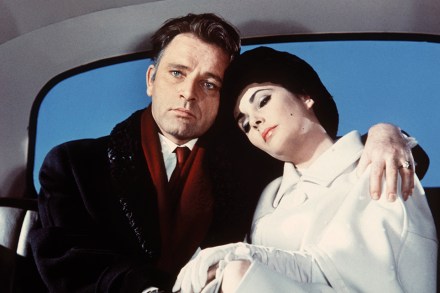
‘To begin at the beginning,’ intones Richard Burton with a voice like warm treacle at the start of the 1971 film Under Milk Wood. It’s hard to imagine an actor more obviously influenced by his own beginnings. The epigraph to this double biography is ‘The damp, dark prison of eternal love’, a line borrowed from Quentin Crisp. And if that’s an accurate assessment of Burton’s on-off-on-again relationship with the actress Elizabeth Taylor, it’s an even better summary of his childhood in Wales. Born Richard Walter Jenkins to a barmaid mother and a coal miner father (a ‘12-pints-a-day man’ who sometimes disappeared for weeks on end to drink and gamble), as a teenager he attempted a fresh start by moving in with a teacher named Philip Burton.

I’M MARRIED!

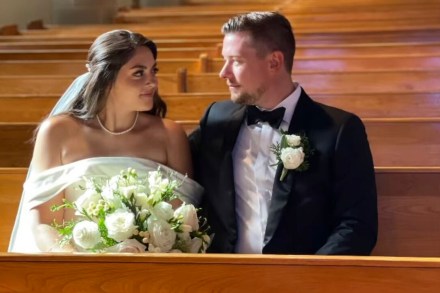
Peep the new byline! I got married on Saturday and have decided to take my husband’s last name, which is nice because hopefully now there will be no confusion about how to pronounce Athey (for those who always wondered, it has a long “a” sound, but I wasn’t really in the business of correcting people). My husband (still weird to write!) and I first met on a dating app about two and a half years ago. On our first date, when I found out that he was raised Southern Baptist, I warned that I only intended to get married in the Catholic Church. We got engaged last September, my husband converted to Catholicism at this year’s Easter Vigil, and we got married on October 7.

amber duke jonathan married

Never the doctor, always the nurse: the fate of women in post-war Britain

From our UK edition

For fans of Ysenda Maxtone Graham’s unique blend of high comedy and shrewd social observation, a new book is cause to leap on to the nearest chair and emit several loud shrieks. Jobs for the Girls is the third in the author’s trilogy on ‘lost worlds of Britain’. These are recent, touchable lost worlds, she stresses in her introduction, ‘still in living memory’, as recalled vividly – and often hilariously – by people who were there in her earlier books, Terms and Conditions, about life in girls’ boarding schools, and British Summertime Begins, on what children from all walks of life got up to in the school holidays. Jobs for the Girls picks up where they left off, with Maxtone Graham’s antennae homing in on early adulthood.

Why do women cheaters get a pass?

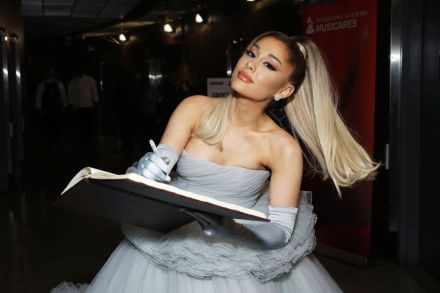
The entertainment world has been in shock the past couple of weeks because Ariana Grande, the pop artist behind the song “break up with your girlfriend, i’m bored,” stole another woman’s husband.  And once again, the mainstream media is on a mission to convince us that we’re not allowed to blame women when they get involved in extramarital affairs.  Grande, a Grammy award-winning singer and former Nickelodeon actress, has reportedly been dating her co-star in the upcoming Wicked movie adaptation. The only problem is that both Grande and the co-star, Ethan Slater, are married.  It’s a classic on-set Hollywood drama (even though the movie is filming in England).

Date to marry, not to have fun

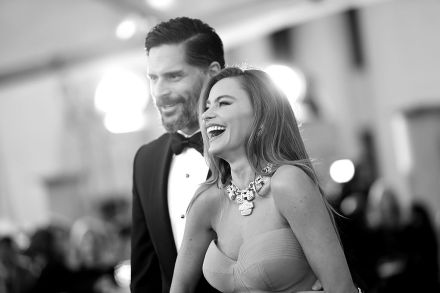
When I was fresh out of college, a week before I started my first job, I had my first grown-up relationship. I met him on JDate, a Jewish dating app. He was a nice guy a few years older than me, living near Georgetown with a few roommates. We texted for a few days before he proposed a crazy first date: an overnight trip to Atlantic City with his friends. There was no hotel stay — we were going to pull an all-nighter driving there and back in twenty-four hours. With a healthy sense of adventure and perhaps a slight death wish, I said yes. We had an epic time and began a fast and furious relationship for the next few months.  While we had a lot of fun together, it became clear pretty quickly that we were very different people.

date marry sofia vergara

Tales of the unexpected: The Complete Short Stories, by Patrick O’Brian, reviewed

From our UK edition

The publishers of this handsome volume hint at high adventure – and period adventure at that. In the blot left by an antique quill pen swirls a breaking wave. Ah, the high seas! And here we are again with Aubrey and Maturin picking weevils out of ship’s biscuits and foiling Napoleon’s naval plans. So I had better warn readers that this isn’t really representative. The first story in the collection, ‘The Return’, is about a man returning to childhood haunts and fishing for trout. The second, ‘The Last Pool’, is different in that this time the fish are salmon (although the protagonist starts out looking for trout).

Picture study: Second Self, by Chloë Ashby, reviewed

From our UK edition

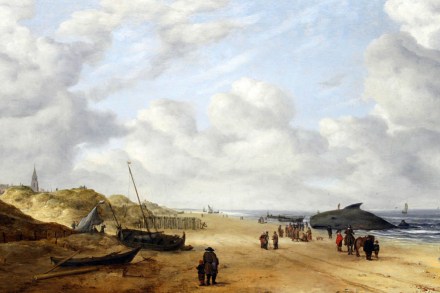
Having established a name for herself as a talented art critic for the national press, Chloë Ashby employs her expertise with illuminating effect in her fiction. In her first novel, Wet Paint, she used the uncomfortable gaze of the barmaid in Manet’s ‘A Bar at the Folies-Bergère’ to explore how her protagonist sees and is seen. In her new novel, Second Self, the central painting is ‘View of Scheveningen Sands’ by Hendrick van Anthonissen, which again becomes an insightful parallel to the protagonist’s life. Cathy, 35, an art conservationist, is happily married to Noah, 11 years her senior, an academic and authority on international relations.

How China’s mail-order brides are taking back control

From our UK edition

36 min listen

The mail-order bride industry is booming – but today's international dating doesn't look as it used to. It turns out that it’s not so much young and uneducated Chinese women looking to marry out of the country anymore, and more middle aged and financially well off divorcees, looking for something different. The mail order bride industry is changing as the women involved are becoming more empowered with their growing wealth – and more demanding. On this episode, I speak to sociologist Monica Liu, whose new book, Seeking Western Men, is all about these changing dynamics of race, class, gender and, ultimately, power. She writes about the book in an article for Sixth Tone.

Rupert Murdoch to marry his fifth wife

King Rupert has met his Catherine Howard. That's right: at the tender age of ninety-two, media mogul Rupert Murdoch is set to marry for the fifth time.  The announcement came in the Murdoch-owned New York Post, where Rupert claimed that he “was very nervous. I dreaded falling in love, but I knew this would be my last. I am happy.”  On Saint Patrick’s Day, and less than one year after his divorce to Jerry Hall, he proposed to his sixty-six-year-old partner Ann Lesley Smith, an American journalist who is getting married for the third time. “We both look forward to spending the second half of our lives together,” Murdoch said. Cockburn loves the optimism. Smith said, “It’s a gift from God for both of us. We met last September.

rupert murdoch

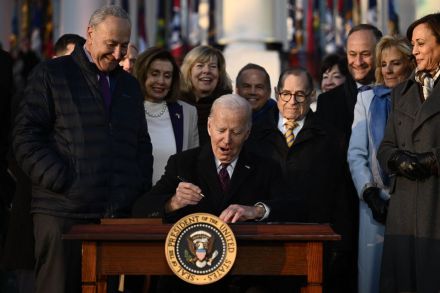
Gay marriage has nothing to do with Drag Queen Story Hour

The main reason why I lined up in the pouring rain to vote for Bill Clinton in 1992 was that he’d campaigned as a gay-friendly candidate. It wasn’t just his promise to allow gays to serve openly in the military. It was that he talked about gays as if we were human beings and not demons — fully equal to our heterosexual brothers and sisters. Back then, for gay Americans, every new election cycle meant one thing for sure: we’d have to gird ourselves for a fresh round of gay-bashing by presidential hopefuls. Clinton seemed to promise a new era in politics, when our very existence would no longer be an issue. Well, Clinton won the election. And four years later he signed the Defense of Marriage Act, or DOMA. “Defense” as in defense from us.

gay

Why are wives still taking their husbands’ last names?

“Why don’t more men take their wives’ last names?” asked the Washington Post in a recent piece about a Maine husband who took his wife’s name. And why is it less common for a woman to keep her existing last name, which accounted for only about 20 percent of marrying women in 2015? Amazingly, even in our progressive era, women are still choosing to assume the names of their husbands. It’s obvious what side WaPo comes down on. Their article quotes an author who labels women taking their husbands' last names “bizarre and anachronistic.” It quotes the mother of another husband who took his wife's name, praising her son’s decision for “subvert[ing] the dominant paradigm.

The lonely passions of Emily Hale and Mary Trevelyan

From our UK edition

This year marks the centenary of the publication of The Waste Land, the poem that made T.S. Eliot famous. His story is familiar and yet still surprising. What is well known: Ezra Pound whipped The Waste Land into shape, it was published in The Dial and then The Criterion, and it was quickly recognised as a poem of great importance. Eliot emerged as the poet of his age and his views on the ‘impersonality’ of poetry would dominate the next several decades of poetry and criticism. What is less well known is how Eliot’s work was shaped and influenced by a few key women. This dynamic is what Lyndall Gordon’s The Hyacinth Girl and Mary Trevelyan and Erica Wagner’s Mary & Mr Eliot set out to explore. Gordon has written about Eliot before.

Richard E. Grant’s tribute to his wife leaves us shattered for his loss

From our UK edition

Richard E. Grant pulls off a feat here. The title is twee but the content isn’t. With unselfpitying dash the actor-writer recounts caring for his wife, the dialect coach Joan Washington, through lung cancer last year (‘Living grief. Raw. Savage.’). He thoughtfully interleaves the heartbreak with glitzy showbiz recollections which help keep our peckers up, so we ricochet through time, from the Golden Globes to the Royal Marsden, from sedative injections to Star Wars. It’s an unusual structure, but it works – so, to use one of the author’s expressions, ‘Why bloody notsky?’ Grant’s daily diary-keeping is what makes the book.

Ian McEwan’s capacity for reinvention is astonishing

From our UK edition

McEwanesque. What would that even mean? The dark psychological instability of The Comfort of Strangers and Enduring Love? The gleeful comedy of Solar and Nutshell? The smart social realism of Saturday and The Children Act? The metafictional games of Atonement and Sweet Tooth? Ian McEwan’s brilliant capacity for reinvention is a hallmark of his literary career. It’s simpler to say what McEwanesque is not: baggy, meandering, plotless, long. Yet all of these adjectives could be applied to his surprising new novel, Lessons. This cradle-to-grave (well, seven-ish to seventy-something) narrative concerns the life and times of Roland Baines, born, like McEwan, in 1948. Roland shares more than just a birth date with his author.