London

Dear Mary: how can I prevent my daughter from getting ‘tweakments’?

From our UK edition

Q. My husband has been appointed to a post in Wales and we as a family have moved here for the foreseeable future. My daughter, who is 15, is very happy at her day school but there is a pervasive culture of ‘tweakments’ there and I am worried the pressure to begin having Botox, fillers etc will be too strong for her to resist when it kicks in. We cannot afford to send her away to school. Help! How we can prevent her from ruining her lovely young looks? – S.C., Cardiff A. Simply buy a copy of your local newspaper and put a Post-It note onto every page featuring a story about a local woman. You can then draw to your husband’s attention (with your daughter in the room) the fact that every single one of these local women looks identical, i.e.

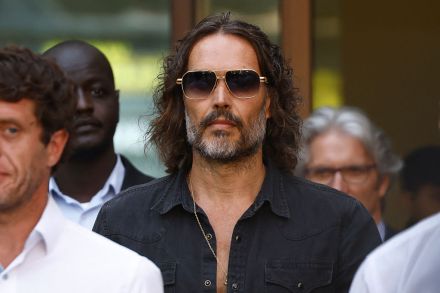
Russell Brand is everything that is wrong with the world

There are few stranger public careers than that of Russell Brand, the former "comedian" turned MAGA cheerleader-in-chief. He has given an interview to Tucker Carlson, another figure who has been on his own peculiar journey, and has announced his intention of running for Mayor of London in 2028, on a vaguely defined but somehow sinister platform that includes "pragmatic" democracy for "people who live in London, who love London." He is the strutting, peacocking representation of all that is wrong in contemporary society Brand has railed against most of Sadiq Khan’s innovations, asking: "Do you want ULEZ cameras? Do you want congestion charges? Do you want this type of policing where people are arrested for Facebook posts? Do you want us to focus on contemporary rape gangs?

russell brand

Letters: what vegetarians get wrong

From our UK edition

Flat broke Sir: John Power’s article on the property squeeze (‘Flatlined’, 18 April) identifies a symptom of a deeper problem, the overregulation of property. Buyers are deterred by spiralling service charges, which are themselves driven by layers of legislation, insurance premium hikes and rocketing labour costs. Those still willing to take the plunge are then hit by a tax system that actively discourages transactions. In the absence of buy-to-let demand, it is no surprise values are dropping. The solution is obvious. Stamp duty, with its crude cliff edges, freezes activity and distorts prices. A landlord or renovator can face £20,000 or more in tax on an entirely ordinary flat, a deterrent by design. This is not a plea for higher prices.

Is a ‘link-up’ a modern ‘flash mob?’

The public disturbances in south London, achieved by social media link-ups, have their precedents. “You can imagine what an exhilarating week this has been,” wrote Harold Nicolson in 1945, “the surrounding of Berlin; the link-up with the Russian armies.” Link-up, first recorded from 1945 by the Oxford English Dictionary, has since been applied chiefly to military connection and that of spacecraft. On the same day as the first Clapham disturbance, three “flash mobs” were honestly busy in Slough High Street, doing little dances and holding up placards calling for the place to be named UK Town of Culture 2028. This outbreak belonged to a slightly old-fashioned trend that began in 2003 for crowds suddenly to materialize to do something attention-seeking.

link-up
schiaparelli

The art of Schiaparelli

It’s a great shame that Elsa Schiaparelli is less widely known than her rival Chanel. Perhaps that’s down to how difficult her name is to pronounce. Is it “shap,” “skap” or “skyap”? Tristram Hunt, director of the V&A, answers with a quip from Schiaparelli herself: “No one knows how to say it, but everyone knows what it means.” The V&A’s new exhibition Schiaparelli: Fashion Becomes Art traces the web of influences around one of the great couture houses of the 20th century. Like Coco Chanel (I hate to compare them), Elsa Schiaparelli created clothes for the modern, independent woman – it is now conventional to say so, but they “pushed boundaries.

The fate of the British teenager who posed as a Russian oligarch’s son

This story is little more than a brutal anecdote, which Patrick Radden Keefe has chosen to tell at excessive length. It has the kind of fact-checked gravity that indicates a star American journalist bent on perpetrating an entire book. (“Built in 1923 and originally known as the Empire Stadium, Wembley was the most iconic sporting ground in Britain.”) But it occurred to me more than once as I read it that it has the hallmarks of a particularly black London comedy by Charles Dickens or Ben Jonson or Joe Orton. A violent knave, his activities previously limited to cheating the police, murdering his equally appalling criminal rivals, doing underhand deals and ripping off the rich, acquires an associate.

zac brettler russian london

Flat out: the property squeeze crushing the young

From our UK edition

Last month, a new account called London Price Drop appeared on X. It has already gained more than 14,000 followers simply by posting screenshots from Rightmove, which illustrate how properties in the capital are falling sharply in value. One of these is a leasehold flat in Shepherd’s Bush purchased for £425,000 in 2017, before being re-listed for £395,000 in May 2024, and eventually sold for £325,000 last August. Adjusted for inflation, that represents a real terms loss of close to £250,000. The London Price Drop account is so popular because it contradicts an assumption that many in Britain hold dear. Young or old, owner or renter, almost all of us believe that buying property is the route to wealth, and that house prices, in the long run, always go up.

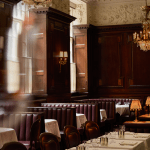
‘An adequate meal for a Cornish giant’: Brasserie Angelica reviewed

From our UK edition

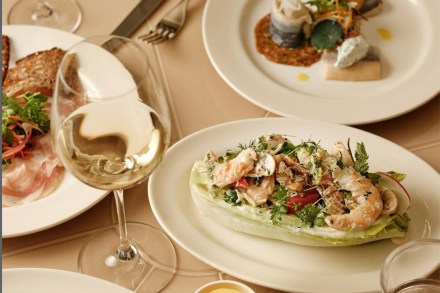
Brasserie Angelica is the – is the word signature? – restaurant inside the Newman, Fitzrovia, a new hotel that has landed in the capital like a spaceship containing aliens who are into menswear. I don’t mind buildings that look like they don’t belong. Fitzrovia is charming because it feels like remnants left by other places. We have too much Edwardiana already: in the Aldwych– formerly the best surviving medieval part of London after the Great Fire – I feel like I am stomping through cakes of stone. The Newman is a wail in glass and brick on a quiet lane near Gower Street. There are pale awnings, brass fittings and uplighting: Manhattan in its last boom. It is attached to a Victorian house renovated to the standards of a grouter with OCD.

Why the keffiyeh classes have forgiven Kanye West

And there you have it. Britain is a country where a musician who says "Heil Hitler" gets to headline festivals while a musician who plays with a Jew from Israel gets canceled. Threaten to go "death con 3 on Jewish people" and you’ll be grand. Jam with a Jewish person and you’re toast. Selling T-shirts adorned with the swastika? No problem. Doing a duet with someone from the Jewish state? Don’t even think about it. In the eyes of the keffiyeh-smothered windbags of the cultural elite, praising the Nazi monster who exterminated millions of Jews is a more forgivable moral error than hanging out with a Jew from Israel That was my first thought upon reading that Kanye West will headline all three nights of the Wireless festival in London's Finsbury Park in July.

kanye west

In days of war, we need trifles: Mezzogiorno reviewed

From our UK edition

Mezzogiorno is a very serious, golden Italian restaurant inside the Corinthia London Hotel on Northumberland Avenue. Restaurants are increasingly gold these days, as if for a crocodile of Scrooge McDucks trooping through the wreckage of liberalism looking for money, nuts and guns. It follows the trajectory of my beloved Raffles at the OWO [Old War Office] round the corner. What was once a Ministry of Defence building – though formerly a hotel – is now a (quite good) pizza joint. When the time comes, I hope the drones know. Ignore the lie that gold restaurants serve tiny portions for tiny people. These are vast Mezzogiorno is by the gifted Francesco Mazzei, previously of Sartoria in Savile Row. Here, because this is an age in denial about hierarchy– ha!

The perils of London: a beginner’s guide

From our UK edition

An interesting new perspective on London is doing the rounds. Our capital city is being advertised as a paradise. London, it seems, is suddenly a place where every building is a Wren, where every sunset is a Turner, where every neighbourhood is Notting Hill. The sentiment has even got a name – ‘Londonmaxxing’. It’s been invented by tech accounts on X who got excited by the long queues at AI events run by Vercel earlier this month. There has also been speculation that a disgruntled-with-Trump Anthropic could move to London. As much as I love London, like any true sceptical Londoner, I suspect bollocks. Look at the map by our resident artist J.G. Fox. Anyone considering the move should in fact be sniffer dog-aware of a multiplicity of perils.

I’m sick of London’s food scene

From our UK edition

Do you remember the Cereal Killer Café? The year was 2014: a time of sleeveless plaid shirts, Mr Pringle moustaches, man buns and undercuts. This was the era of proto vapes and misplaced millennial hope, of the indie band Vampire Weekend and trilby hats mistaken for fedoras. When the Cereal Killer Café opened in Brick Lane that year to sell cereal and milk for stupid prices, it signalled the acme of hyper-gentrification and the ‘peak’ east London aesthetic. Many of us saw its pandemic-related closure in 2020 as a sign that sanity had returned to the capital’s restaurant scene. We were wrong. The Cereal Killer Café might be gone but the public’s credulity for overpriced Instagrammable restaurants is piping hot.

My burning ambition for my old school

From our UK edition

Every boy longs to see his school burn down and for me the dream came true twice. In February 1977, I was walking to Sunday Mass when I spotted a cluster of teachers at the school gates. The old Victorian hall had caught fire overnight and collapsed. I couldn’t believe it. This was my personal Towering Inferno and I’d missed the whole thing. In my mind’s eye I could see it all: the leaping flames, the burning joists, the black columns of ash rising over south London, and the thunderous roar as the roof crashed to the ground. Nothing was left but a few pathetic wisps of smoke rising from a pile of charred beams. The teachers were standing around looking shocked and miserable – as if mourning the death of a pet rabbit. Why so glum?

Green surge: could Labour lose London?

From our UK edition

15 min listen

Deputy political editor James Heale and deputy editor of The House magazine Sienna Rodgers join Patrick Gibbons to discuss the challenge the Greens pose to Labour in London. James's political column this week explains how the shockwaves of the Gorton and Denton by-election have reached the capital. Could Labour's 'strongest heartland' fall to the Greens through their coalition of 'urban professionals, young Muslims and the economically disaffected'? Plus: as Sienna reveals Zack Polanski's podcast tastes – in an exclusive interview for The House's cover (out Monday) – we extend an interview to the Green Party leader to join us on Coffee House Shots. Produced by Patrick Gibbons.

Green surge: could Labour lose London?

Food for adults remembering childhood: Dover Street Counter reviewed

From our UK edition

Dover Street Counter is the tiny sister of The Dover, a very good restaurant on – who knew? – Dover Street, Mayfair. This is the site of P.G. Wodehouse’s fictional Drones Club, if following Wodehouse’s paths is your way of coping, and there is nothing wrong with that. There are some bad restaurants in Mayfair now, with slutty Roman gods and monumental Caesar salads; passive-aggressive tributes to Elizabeth II in bad cake, and enslaved fish staring at sex workers with the mute anguish of recognition. This is better. Good restaurants have the gift of suppressing fear, and this is one such The Dover is delivered by professionals for adults – that is, people who do not put intimacy on expenses, and who can recognise neo-Stalinist soft furnishings when they see them.

My mother has become a hostile stranger

"Do you know who I am?" said the voice belonging to the lady who used to be my mother, crossly, at the end of the phone line. The truthful answer is no. Since the dementia took hold, a hostile stranger who doesn’t think much of me inhabits my mother’s mind and body. A hostile stranger who doesn’t think much of me inhabits my mother’s mind and body No matter what I do, no matter how many times I ring or visit her, this person who used to be my mother is always cross and disappointed. "Oh, you’re alive are you!" the strange voice barks, before asking me what I’m up to, with a sarcastic edge. Whatever I tell her I’m doing, even if I say I’m lying down with a headache, she snaps back: "That’s nice for you. You enjoy!

Why are adults buying so many children’s toys?

On the fourth floor of Selfridges, in London, is the children’s toy department. Most of the vast space is given over to soft toys – mounds of synthetic fur, thousands of little beady eyes – and when I visited last Saturday afternoon the customers were almost all adults. I spent two hours there, standing by a tower of little Paddington bears, watching the shoppers in the queue for the register, and it was eye-opening. Almost no one was buying for a child. I saw two Chinese women with white toy lambs, a 17-year-old boy with a dragon, what looked like drug dealers waiting in line for Pokémon cards, and a genuinely troubling number of sad-looking women in their mid-twenties clutching long-eared toy bunnies made by a company called Jellycat.

Like dining with Elrond in Rivendell: Corenucopia reviewed

From our UK edition

Corenucopia by Clare Smyth is in Belgravia, amid a line of interior-design shops, and it is prettier than all of them. It is a female paradise on the ground floor of a mansion block, dedicated to art nouveau and ‘comfort’ food. There are plaster tree branches peeking from the walls and the menu script looks elvish. It is rare that whimsy does not make me kick things, and few things are more whimsical than plaster forests, but Smyth, also of the three-Michelin-starred Core, is one of the great cooks working now. From her, whimsy is merely voice; or, rather, I forgive her. We eat malted sourdough with Ampersand butter and wild venison salami. Both are glorious There is a sanity to this restaurant, even if it is gilded for native Belgravia blondes.

The battle for Britain’s oldest Indian restaurant

From our UK edition

There are relatively few restaurants in London – or anywhere else, for that matter – that have made it to their centenary. There are even fewer that have been threatened with the closure of their premises in the precise year they are going to turn 100. And there are practically none so popular that news of their possible eviction has resulted in a petition with tens of thousands of signatures – which will be sent to the King in the hope he can reverse what would be a heritage-threatening disaster for one of the capital’s most historic establishments.  Such is the recent story of Veeraswamy, the country’s oldest Indian restaurant which was founded in March 1926 and has been a haunt of the beau-monde and demi-monde ever since.

Beloved by Chinese tourists – and the Labour party: Phoenix Palace reviewed

From our UK edition

The exterior of the Phoenix Palace is cream with golden letters like the napkin and the Laffer curve, and it is squeezed below an Art Deco mansion block in Baker Street. The street is self-effacing, stuck between the Marylebone Road and the Sherlock Holmes museum, which exists because London is, among other things, morbid. The cuisine is Cantonese. Understatement is a feint here, though; the Phoenix Palace is famous, and always on the best dim sum lists. It is beloved by Chinese tourists and students, and, weirdly, the Labour party, whose grandees smile uneasily from photographs, like hostages to the economy, and rice. The food comes near instantly.