London

How to drink like you’re at the Savoy – from your sofa

From our UK edition

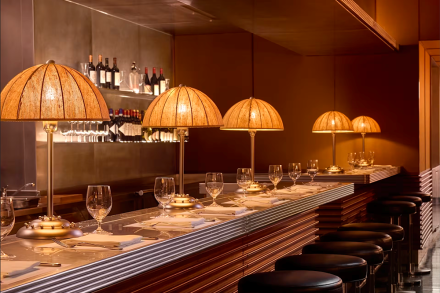
There are two great American bars in London. One is perfect to escape the winter chill, the other to embrace summer sun. In winter, the American Bar at the Savoy – London’s oldest surviving cocktail bar – is ideal. There is a reason why this warm and welcoming spot has courted popularity for so long and is considered the spiritual home of modern mixology, at least in this country. In the summer months, head for the American Bar at the Stafford. There you can enjoy the large terrace just a stone’s throw from St James’s Street, where similarly skilled bar staff are able to mix up pretty much anything one desires. You know you’re in a great American bar when the bartenders are able to sling together on-menu or off-menu mixes while maintaining good conversation.

Hell is a dog café

From our UK edition

The dog café had a pretty pink sign describing its many services and I stood outside it mesmerised as I realised what it was. This was not a café where dogs were allowed. This was a café for dogs. I peeked inside and there were dog baskets for the customers to lounge in as they drank their puppuccinos. There are so many things about Britain that are too subtle for me when I re-enter the atmosphere as an expat My friend and I were on our way to dinner on the Fulham Road and we ended up standing by this café as I stared with my mouth open and asked her repeatedly how this could be. There are so many things about Britain that are too subtle for me now when I re-enter the atmosphere as an expat.

The true villains of our TV crime dramas? The creators

Idly watching the first episode of a TV crime drama series recently, I found myself in a slightly troubled frame of mind. We were already 35 minutes in and no probable villain had shown their face. We had seen black people, Chinese people, lesbians, the disabled, the impoverished and powerless, Muslims, the young and idealistic… yikes, I thought to myself, it simply can’t be any of them, can it? Surely not. And then, as if the scriptwriter had heard my private worries, for lo, a very rich, marble-mouthed white woman emerged and was shown being beastly to some young and idealistic people and I thought: bingo! We have our villain. There is no need to watch the remaining five episodes. She did it, the rich cow. The only slight surprise is that it was a woman rather than a bloke.

The mindfulness behind the cooking of Buddhist nun Jeong Kwan

I am somewhat allergic to food nomenclature: zero-waste, plant-based, seasonal, small plates, “live cultures,” foraged, farm-to-fork. It’s not that these are inherently off-putting concepts, but I associate them with “foodie” fads, gimmicks and big egos. All of those trendy labels could apply to the food cooked by the “philosopher chef,” a Buddhist nun called Venerable Jeong Kwan, plus you could throw in a dash of mindfulness and eastern spirituality for good measure. Yet Kwan, who is venerated by Le Bernardin’s Eric Ripert and Noma’s René Redzepi, and has featured in an episode of Chef’s Table, is the furthest thing from an ego-chef.

Behind Wes Anderson’s infamous sensibility

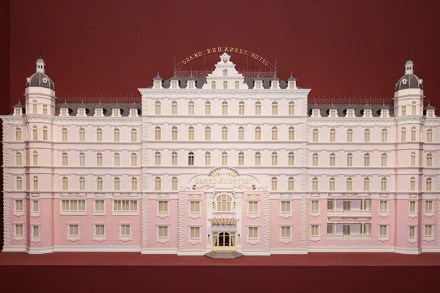
Woody Allen once sardonically described the fans of his films as being divided between those who liked the “early, funny ones” and the later, darker pictures. Much the same might be said of another famous WA: Wes Anderson, who has established himself as one of American cinema’s most significant auteurs despite no longer living in the country – he hops between England and France. Like most auteurs, his films are more succèss d’estime than they are succèss de box office, but he has the cream of Hollywood lining up to work with him and commands respect among actors young and old. Anderson is rightly celebrated – or castigated – as a visual stylist, but he has enormous flair as a screenwriter Anderson’s visual sensibility is infamous.

A restaurant so perfect I hesitated to review it

From our UK edition

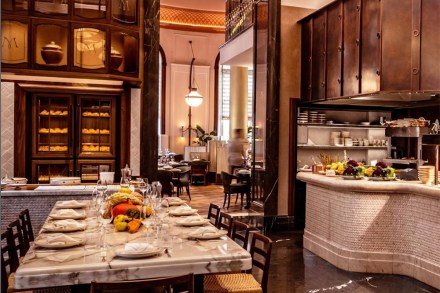
Sometimes you find it, H.G. Wells’s door in the wall, but to tapas: a restaurant so perfect you hesitate to review it. Each critic kills the thing she loves, because to love it is to change it. But I can’t just review palaces for psychotics containing lamps that should not exist, comforting though the idiocies of the very rich are. So here is a review of 28 Church Row, Hampstead. I will try not to make it read like a Hampstead novel about the unreliability of memory, but I might forget to do this. Church Row is the prettiest street in Hampstead: a ragtag of Georgian houses beloved by television stars who wake up one day, understand they are vulgar and buy a house that isn’t. I can’t afford one, but I saved a man from death in Church Row once, which is unusual for this column.

Scott’s vs Mayfair

From our UK edition

Kingsley Amis was obsessed with Scott’s on Mount Street, Mayfair, and he knew a lot about food. He ate himself to death. In his unwise James Bond continuation novel Colonel Sun – Ian Fleming also loved Scott’s – Amis had Bond ponder that ‘every meal taken in those severe but comfortable panelled rooms [is] a tiny victory over the new hateful London of steel and glass matchbox architecture’. Bond then presumably dropped his knickers, because there is as much projection in Amis and Fleming as there is in this column. Even so, I know how they feel about Scott’s. Mayfair is now the UAE with democracy and rain. It is gold and pink for toddler princes, and Scott’s, which is the colour of a Barbour, remains a tiny victory in brown. Of course Amis loved it.

Heroes have faults too

From our UK edition

The chief function of the prime minister is to take the blame, and Sir Keir Starmer can no more escape this rule than his predecessors did. Having met him occasionally when he was my local MP, before he moved from Kentish Town to Downing Street, I feel a twinge of sympathy with him. He took trouble with unimportant people, could not have been more genial when I bumped into him at the Pineapple, his local pub, and on one occasion even asked if I could explain the attraction of Boris Johnson and Jacob Rees-Mogg. I feared this task would be beyond my powers of exposition, and perhaps also his powers of comprehension, so changed the subject. But in those days Sir Keir had a sincerity which disarmed criticism. This is no longer the case.

Christmas in Los Angeles and London

“Never again!” I sigh every January 6, as I pack away the abundance of Christmas decorations lovingly collected over the decades. “It’s too much!” I moan to Percy. “Let’s go to a hot island next year and get away from it all…” But I never do, because I just love Christmas. Every year in early November I eagerly unpack multiple boxes tenderly packed two years earlier because we like to spend Christmas in London one year and in LA the next, as we love both cities. I have quite a lot of extended family in each, so we know that celebrating in either one will be very “happy families.” But it’s the run-ups to Christmas in each city that are quite different. In the US, everyone celebrates Thanksgiving, which comes at the end of November.

LA lacks London’s Christmas spirit

From our UK edition

‘Never again!’ I sigh every 6 January, as I pack away the abundance of Christmas decorations and baubles lovingly collected over the decades. ‘It’s too much!’ I moan to Percy. ‘Let’s go to a hot island next year and get away from it all…’ But I never do, because I just love Christmas. Every year in early November I eagerly unpack multiple boxes tenderly packed two years earlier, and the reason is because we like to spend Christmas in London one year and in LA the next, as we love both cities. I have quite a lot of extended family in each, so we know that celebrating in either one will be very ‘happy families’. But it’s the run-ups to Christmas in each city that are quite different. In the US, everyone celebrates Thanksgiving, which comes at the end of November.

Yes, Europe’s civilization is being erased

Last week the Trump administration expressed its fear that Europe faces "civilizational erasure." Its concern was articulated in a 33-page National Security Strategy that outlined Donald Trump’s world view and how America will respond economically and militarily. The sentence that caused the most reaction on the other side of the pond was the assertion that, if current trends continue, Europe will be "unrecognizable in 20 years or less." Those trends are mass immigration and what conservative French commentators call the "Islamification" of Europe. If Europe doesn’t address these trends, the Trump administration predicts the continent’s "civilizational erasure.

The Sloane Ranger is in dire straits

From our UK edition

Every few years, an obituary for the Sloane Ranger appears. In 2015, the Telegraph proclaimed their death. In 2022, Peter York himself, co-author of The Official Sloane Ranger Handbook, wrote a devastating piece in the Oldie on the ‘End of the Sloane Age’. In it, he cast existential doubt on the species altogether: ‘By 2021, there seemed to be every possible shade of Sloane around in London. But were they really Sloanes at all? It looked as if the only way for a Sloane to succeed was to UnSloane themselves.’  You might think that if York himself had called time, then the death knell must have well and truly sounded. But no.

A right royal travesty: Lilibet’s reviewed

From our UK edition

Elizabeth II was a god and a commodity: now she is gone it is time for posthumous exploitation. Lilibet’s is a restaurant named for her childhood nickname at 17 Bruton Street, Mayfair, on the site of the house where she was born. It was inevitable that Elizabeth II would eventually get a personal restaurant. Princess Diana ate in the Café Diana – English breakfasts and kebabs – on the Bayswater Road and George VI is the inspiration for the superb Guinea Grill – mostly sausages, or rather it is the sausages I remember – near Lilibet’s. Because that is what the British do to our monarchs and their intimates. We eat them and call it love.

Are America’s women heading for the exit?

Life is apparently so disagreeable in Donald Trump’s America that 40 percent of women aged between 15 and 44 want to leave. That is four times higher than the 10 percent who wanted to quit the US in 2014. According to Gallup, which conducted the poll, nearly half the nation’s younger women have “lost faith in America’s institutions.” This disenchantment accelerated after the Supreme Court’s 2022 decision to overturn Roe v. Wade, which enshrined the constitutional right to abortion. Younger American men are bearing up better. Only 19 percent share women’s distaste for the Donald, a 21 percent differential which is the largest recorded by Gallup since it began asking the question in 2007.

Women

A transatlantic party route

Breaker Media, which has established itself as one of New York City’s foremost bean-spillers, hosted its first shindig at the West Village’s Super Burrito. Exuberant Aussie founder Lachlan Cartwright, an unashamedly old-school hack with a business card wedged in the brim of his fedora, mounted the bar and gave an impassioned speech: “I might as well have called this Broken Media because it’s almost broken me! But I’m having the time of my life.” So too were the guests as they guzzled martinis and snagged cigarettes from bowls on the tables. During one cig break, I had my fortune read by one of the party’s hired psychics. She said all the right things – “born under a lucky star, many children etc.

transatlantic

Sir Anthony Hopkins, outsider actor

Yes, Sir Anthony Hopkins did have a life before The Silence of the Lambs. And after it, too. But most casual moviegoers would be hard pressed to add too many other entries to his filmography. Like his most famous screen creation, the cannibalistic serial killer Hannibal Lecter, Hopkins has always been something of a study in contrasts. As an actor, he sits in the middle of the Venn diagram where the mainstream and the fringe overlap, seemingly as happy to mug his way through the Transformers franchise as to direct and star in a project like 1996’s August, a drily worthy adaptation of Uncle Vanya that barely registered on the sordidly commercial level.

Anthony Hopkins

Monet’s Venetian moment

If you crave art that will envelop you, book a ticket, pronto, to Monet and Venice at the Brooklyn Museum. Enveloppe was the term the French impressionist artist Claude Monet (1840-1926) used to describe the “beauty of the air around” the objects and landscapes he painted. “Other painters paint a bridge, a house, a boat… I want to paint the air in which the bridge, the house, and the boat are to be found – the beauty of the air around them, and that is nothing less than the impossible,” he said.

Monet

The strange death of England

Whatever happened to Britain, or the UK, or England, or whatever they're calling it? We can't even agree on what it's called. But what happened to England, the England that, if you're over 50, you grew up learning about, the England that controlled the world, the England that ran the largest empire in human history at the end of World War One?  Britain, which is an island in a pretty inhospitable climate, controlled literally a quarter of the Earth's surface – and not controlled in the way the United States controls the rest of the world with an implied threat or with economic ties through trade, but with administrators and people sitting at desks with eyeshades, counting things.

‘The food is not the point here’: Carbone reviewed

From our UK edition

People say that Carbone is Jay Gatsby’s restaurant – Gatsby being the metaphor for moneyed doomed youth – but it is something more awful and, because people are asleep, no London restaurant has been this fashionable since the Chiltern Firehouse a decade ago. It lives in the basement of the former American embassy in Grosvenor Square, which is now the Chancery Rosewood Hotel. I thought this building would smell of fear, of why-can’t-I-have-a-visa-please? The truth is that it does, but that fear is now a commodity: you can be the person saying no-visa-for-you. (‘Uniquely yours,’ says the advertising copy. It means it.

How America fell in love with the G&T

The gin and tonic has had quite the journey. From humble beginnings protecting British explorers against malaria, it has become the country’s favorite cocktail. Abroad, Italians grown tired of spritzes now opt for it come aperitivo hour. The Japanese bow before it. The world stumbles after it. Yet there is one land the G&T has been slow to conquer: America, the land of vodka sodas and zero-calorie seltzers. In recent years that has begun to change. While overall consumption of spirits is down, sales of gin in the US are on the rise and expected to grow some 6.5 percent a year for the rest of this decade. Craft distilleries are in the vanguard: in California, gin is infused with citrus and coastal herbs. In the South, it might be perfumed with watermelon rind or magnolia blossoms.

g&t