London

The £10 pint explains the rise of Reform

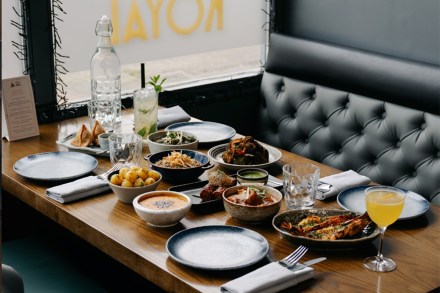
I bought my first pint of bitter, in a pub in Slough, in 1972. It cost 12 pence. The Bank of England inflation calculator tells me that is the equivalent of £1.45 today. Yet a pint now sells for £10 in London. What went wrong? Many factors, of which the first was Britain’s entry into the EEC on January 1, 1973. We were eventually made to "harmonize" our alcohol duties with our partners, leading to a drop in the duty on wine and a rise in that on beer, to reflect French cultural preferences. The most recent shock has been Rachel Reeves’s attack on small businesses with employer NI rises, punitive workers’ rights, ever-higher minimum wage etc. In the 1970s, the price of a pint, like the cost of a packet of cigarettes, was a major issue of concern in each year’s Budget.

pint

Did ‘millions’ attend Tommy Robinson’s Unite the Kingdom rally?

The Metropolitan Police were braced for one of the "busiest days for policing in London in recent years" on Saturday, with both a Unite the Kingdom rally organized by Tommy Robinson and a pro-Palestinian Nakba day rally taking place. Some 4,000 officers were deployed, along with helicopters, drones, Sandcat armored vehicles, dogs, horses and live facial recognition systems. The last Unite the Kingdom rally, in September, drew a crowd of 150,000 according to the police, three times what the Met expected – and organizers said this one would be "the biggest patriotic rally to grace this planet." Addressing the crowd at the event, Robinson said "we are here in our millions" and that attendees were at the "biggest event in British history.

rally

The Golders Green atrocity is the final straw

It is undeniable now: war has been declared on British Jews. A fascistic crusade is being waged against our Jewish compatriots. The anti-Semitic atrocity in Golders Green today is further brutish proof of this unsettling fact. We’ve had fire bombings at synagogues, the murder of Jews in Manchester on Yom Kippur, and now this frenzied knifing of Jews in London. There can be no more equivocating – this is a moral emergency. The most sickening thing about today’s knife pogrom is that it was entirely predictable The scenes from Golders Green are truly grim. Video clips show the suspect wielding his knife with demented fury at two visibly Jewish men.

golders green

Russell Brand is everything that is wrong with the world

There are few stranger public careers than that of Russell Brand, the former "comedian" turned MAGA cheerleader-in-chief. He has given an interview to Tucker Carlson, another figure who has been on his own peculiar journey, and has announced his intention of running for Mayor of London in 2028, on a vaguely defined but somehow sinister platform that includes "pragmatic" democracy for "people who live in London, who love London." He is the strutting, peacocking representation of all that is wrong in contemporary society Brand has railed against most of Sadiq Khan’s innovations, asking: "Do you want ULEZ cameras? Do you want congestion charges? Do you want this type of policing where people are arrested for Facebook posts? Do you want us to focus on contemporary rape gangs?

russell brand

Is a ‘link-up’ a modern ‘flash mob?’

The public disturbances in south London, achieved by social media link-ups, have their precedents. “You can imagine what an exhilarating week this has been,” wrote Harold Nicolson in 1945, “the surrounding of Berlin; the link-up with the Russian armies.” Link-up, first recorded from 1945 by the Oxford English Dictionary, has since been applied chiefly to military connection and that of spacecraft. On the same day as the first Clapham disturbance, three “flash mobs” were honestly busy in Slough High Street, doing little dances and holding up placards calling for the place to be named UK Town of Culture 2028. This outbreak belonged to a slightly old-fashioned trend that began in 2003 for crowds suddenly to materialize to do something attention-seeking.

link-up
schiaparelli

The art of Schiaparelli

It’s a great shame that Elsa Schiaparelli is less widely known than her rival Chanel. Perhaps that’s down to how difficult her name is to pronounce. Is it “shap,” “skap” or “skyap”? Tristram Hunt, director of the V&A, answers with a quip from Schiaparelli herself: “No one knows how to say it, but everyone knows what it means.” The V&A’s new exhibition Schiaparelli: Fashion Becomes Art traces the web of influences around one of the great couture houses of the 20th century. Like Coco Chanel (I hate to compare them), Elsa Schiaparelli created clothes for the modern, independent woman – it is now conventional to say so, but they “pushed boundaries.

The fate of the British teenager who posed as a Russian oligarch’s son

This story is little more than a brutal anecdote, which Patrick Radden Keefe has chosen to tell at excessive length. It has the kind of fact-checked gravity that indicates a star American journalist bent on perpetrating an entire book. (“Built in 1923 and originally known as the Empire Stadium, Wembley was the most iconic sporting ground in Britain.”) But it occurred to me more than once as I read it that it has the hallmarks of a particularly black London comedy by Charles Dickens or Ben Jonson or Joe Orton. A violent knave, his activities previously limited to cheating the police, murdering his equally appalling criminal rivals, doing underhand deals and ripping off the rich, acquires an associate.

zac brettler russian london

Why the keffiyeh classes have forgiven Kanye West

And there you have it. Britain is a country where a musician who says "Heil Hitler" gets to headline festivals while a musician who plays with a Jew from Israel gets canceled. Threaten to go "death con 3 on Jewish people" and you’ll be grand. Jam with a Jewish person and you’re toast. Selling T-shirts adorned with the swastika? No problem. Doing a duet with someone from the Jewish state? Don’t even think about it. In the eyes of the keffiyeh-smothered windbags of the cultural elite, praising the Nazi monster who exterminated millions of Jews is a more forgivable moral error than hanging out with a Jew from Israel That was my first thought upon reading that Kanye West will headline all three nights of the Wireless festival in London's Finsbury Park in July.

kanye west

Why are adults buying so many children’s toys?

On the fourth floor of Selfridges, in London, is the children’s toy department. Most of the vast space is given over to soft toys – mounds of synthetic fur, thousands of little beady eyes – and when I visited last Saturday afternoon the customers were almost all adults. I spent two hours there, standing by a tower of little Paddington bears, watching the shoppers in the queue for the register, and it was eye-opening. Almost no one was buying for a child. I saw two Chinese women with white toy lambs, a 17-year-old boy with a dragon, what looked like drug dealers waiting in line for Pokémon cards, and a genuinely troubling number of sad-looking women in their mid-twenties clutching long-eared toy bunnies made by a company called Jellycat.

The true villains of our TV crime dramas? The creators

Idly watching the first episode of a TV crime drama series recently, I found myself in a slightly troubled frame of mind. We were already 35 minutes in and no probable villain had shown their face. We had seen black people, Chinese people, lesbians, the disabled, the impoverished and powerless, Muslims, the young and idealistic… yikes, I thought to myself, it simply can’t be any of them, can it? Surely not. And then, as if the scriptwriter had heard my private worries, for lo, a very rich, marble-mouthed white woman emerged and was shown being beastly to some young and idealistic people and I thought: bingo! We have our villain. There is no need to watch the remaining five episodes. She did it, the rich cow. The only slight surprise is that it was a woman rather than a bloke.

The mindfulness behind the cooking of Buddhist nun Jeong Kwan

I am somewhat allergic to food nomenclature: zero-waste, plant-based, seasonal, small plates, “live cultures,” foraged, farm-to-fork. It’s not that these are inherently off-putting concepts, but I associate them with “foodie” fads, gimmicks and big egos. All of those trendy labels could apply to the food cooked by the “philosopher chef,” a Buddhist nun called Venerable Jeong Kwan, plus you could throw in a dash of mindfulness and eastern spirituality for good measure. Yet Kwan, who is venerated by Le Bernardin’s Eric Ripert and Noma’s René Redzepi, and has featured in an episode of Chef’s Table, is the furthest thing from an ego-chef.

Behind Wes Anderson’s infamous sensibility

Woody Allen once sardonically described the fans of his films as being divided between those who liked the “early, funny ones” and the later, darker pictures. Much the same might be said of another famous WA: Wes Anderson, who has established himself as one of American cinema’s most significant auteurs despite no longer living in the country – he hops between England and France. Like most auteurs, his films are more succèss d’estime than they are succèss de box office, but he has the cream of Hollywood lining up to work with him and commands respect among actors young and old. Anderson is rightly celebrated – or castigated – as a visual stylist, but he has enormous flair as a screenwriter Anderson’s visual sensibility is infamous.

Christmas in Los Angeles and London

“Never again!” I sigh every January 6, as I pack away the abundance of Christmas decorations lovingly collected over the decades. “It’s too much!” I moan to Percy. “Let’s go to a hot island next year and get away from it all…” But I never do, because I just love Christmas. Every year in early November I eagerly unpack multiple boxes tenderly packed two years earlier because we like to spend Christmas in London one year and in LA the next, as we love both cities. I have quite a lot of extended family in each, so we know that celebrating in either one will be very “happy families.” But it’s the run-ups to Christmas in each city that are quite different. In the US, everyone celebrates Thanksgiving, which comes at the end of November.

Yes, Europe’s civilization is being erased

Last week the Trump administration expressed its fear that Europe faces "civilizational erasure." Its concern was articulated in a 33-page National Security Strategy that outlined Donald Trump’s world view and how America will respond economically and militarily. The sentence that caused the most reaction on the other side of the pond was the assertion that, if current trends continue, Europe will be "unrecognizable in 20 years or less." Those trends are mass immigration and what conservative French commentators call the "Islamification" of Europe. If Europe doesn’t address these trends, the Trump administration predicts the continent’s "civilizational erasure.

Are America’s women heading for the exit?

Life is apparently so disagreeable in Donald Trump’s America that 40 percent of women aged between 15 and 44 want to leave. That is four times higher than the 10 percent who wanted to quit the US in 2014. According to Gallup, which conducted the poll, nearly half the nation’s younger women have “lost faith in America’s institutions.” This disenchantment accelerated after the Supreme Court’s 2022 decision to overturn Roe v. Wade, which enshrined the constitutional right to abortion. Younger American men are bearing up better. Only 19 percent share women’s distaste for the Donald, a 21 percent differential which is the largest recorded by Gallup since it began asking the question in 2007.

Women

A transatlantic party route

Breaker Media, which has established itself as one of New York City’s foremost bean-spillers, hosted its first shindig at the West Village’s Super Burrito. Exuberant Aussie founder Lachlan Cartwright, an unashamedly old-school hack with a business card wedged in the brim of his fedora, mounted the bar and gave an impassioned speech: “I might as well have called this Broken Media because it’s almost broken me! But I’m having the time of my life.” So too were the guests as they guzzled martinis and snagged cigarettes from bowls on the tables. During one cig break, I had my fortune read by one of the party’s hired psychics. She said all the right things – “born under a lucky star, many children etc.

transatlantic

Sir Anthony Hopkins, outsider actor

Yes, Sir Anthony Hopkins did have a life before The Silence of the Lambs. And after it, too. But most casual moviegoers would be hard pressed to add too many other entries to his filmography. Like his most famous screen creation, the cannibalistic serial killer Hannibal Lecter, Hopkins has always been something of a study in contrasts. As an actor, he sits in the middle of the Venn diagram where the mainstream and the fringe overlap, seemingly as happy to mug his way through the Transformers franchise as to direct and star in a project like 1996’s August, a drily worthy adaptation of Uncle Vanya that barely registered on the sordidly commercial level.

Anthony Hopkins

Monet’s Venetian moment

If you crave art that will envelop you, book a ticket, pronto, to Monet and Venice at the Brooklyn Museum. Enveloppe was the term the French impressionist artist Claude Monet (1840-1926) used to describe the “beauty of the air around” the objects and landscapes he painted. “Other painters paint a bridge, a house, a boat… I want to paint the air in which the bridge, the house, and the boat are to be found – the beauty of the air around them, and that is nothing less than the impossible,” he said.

Monet

The strange death of England

Whatever happened to Britain, or the UK, or England, or whatever they're calling it? We can't even agree on what it's called. But what happened to England, the England that, if you're over 50, you grew up learning about, the England that controlled the world, the England that ran the largest empire in human history at the end of World War One?  Britain, which is an island in a pretty inhospitable climate, controlled literally a quarter of the Earth's surface – and not controlled in the way the United States controls the rest of the world with an implied threat or with economic ties through trade, but with administrators and people sitting at desks with eyeshades, counting things.

How America fell in love with the G&T

The gin and tonic has had quite the journey. From humble beginnings protecting British explorers against malaria, it has become the country’s favorite cocktail. Abroad, Italians grown tired of spritzes now opt for it come aperitivo hour. The Japanese bow before it. The world stumbles after it. Yet there is one land the G&T has been slow to conquer: America, the land of vodka sodas and zero-calorie seltzers. In recent years that has begun to change. While overall consumption of spirits is down, sales of gin in the US are on the rise and expected to grow some 6.5 percent a year for the rest of this decade. Craft distilleries are in the vanguard: in California, gin is infused with citrus and coastal herbs. In the South, it might be perfumed with watermelon rind or magnolia blossoms.

g&t