Lockdown

Strangely absorbing: the first lockdown dramas reviewed

High Tide got there first. The East Anglian theatre company has produced a series of lockdown mini-dramas, Love in the Time of Corona, made up of five filmed reflections on self-isolation. ‘Rainbows’ by Morgan Lloyd Malcolm is narrated by a woman on the edge teaching her kids to decorate the windows with coloured paints. ‘Child Two is crying and Child One is giving me the finger.’ Outside, as she takes a photograph, she suffers an anxiety attack. ‘The gurgling panic in the base of my gut, the pain in my chest. Not virus, all fear.’ She decides to flee. But will her children survive without her? Convincingly performed by Katie Lyons, this is a simple, well-made tale with a dilemma, a turning point and a resolution.


Dear Mary: How do I get out of bossy chain emails?

Q. Each day while working from home, I have at least one hour-long meeting via Zoom. One of my colleagues has a dodgy internet connection and has become a terrible menace as we all politely sit through minutes of unpleasant white noise while she tries to communicate her thoughts. The meeting chair never seems to take a hard line on this; do you have any advice? — M.C., Fosbury, Wilts A. You would do well to join the Zoom meeting via a computer rather than your phone. Zoom will highlight the person who is speaking at any one time, so when the offender’s name comes up on the screen, you can turn to some ironing or an unfinished watercolour you prepared earlier.

Why I joined the Jehovah’s Witnesses

The toad who lives at the bottom of the garden in the pile of bricks beneath the potting table was very happy with his new plunge pool. I made it on a particularly slow afternoon when I had run out of ideas for things to do. It was either make a toad Jacuzzi or darn socks, so naturally Mr Toad lucked out. Before that, I tidied the cellar, going through all the laundry bags full of horse tackle. I sorted and bagged rugs, cleaned and polished bridles, reorganised my ever-burgeoning collection of multicoloured lead ropes, overreach boots and numnahs, and even sorted out all the saddle soaps and boot polishes. From the back windows of the houses around me drifted the urgent sounds of people working from home, barking instructions such as, ‘Listen, guys, we need to nail this issue!

I have herd immunity

I am a type. I don’t like groups. I maintain few memberships. I question and resist authority, especially enforcement of rules for the rules’ sake. I’m leery of orthodoxy. I hold back from shared cultural enthusiasms. Everyone’s met such obstreperous specimens — the original self-isolators — and some readers out there are just like me. We’re irksome in emergencies, when the police want the crowd to evacuate and we insist on knowing why. We sometimes spite our own faces; many of us still haven’t seen Hamilton (and now we can’t). We don’t joyously belt out national anthems, and recently, to popular disgust, many of us curmudgeons don’t lean out our windows every Thursday at 8 p.m. to clap for the NHS.

The keys to ending lockdown – introverts and brown M&M’s

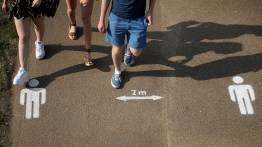
Once we’ve flattened the curve of infection with mass self-isolation, the next debate will concern how to soften the restrictions on movement and work without causing a second wave of the pandemic. Behavioural science, abused as it has been to date, may be useful in formulating the new rules for social behaviour. That’s because it is no good simply to come up with rules which are optimal in epidemiological terms: such rules might well be too complicated for people to follow, and impossible to encode in habits or social norms. Instead you need cautious rules-of-thumb which are both simple and visible. For rules to work, it helps if it is immediately apparent when someone is breaking them.

The joy of short stories in these taxing times

From time to time, usually when things are quiet, the government brings on the dancing girls. David Cameron made Carol Vorderman the celebrity Head of Maths, Prue Leith was wheeled out to revolutionise hospital catering (again), and Mary Portas was to breathe life, excitement and renewed prosperity into our dying high streets. Nothing ever happens, of course, but perhaps Covid-19 does present a real opportunity. In the past 20 years I have watched several small towns change radically. Shops selling things people actually needed — meat, fish, fruit and veg, bread and butter, ironmongery, postal and banking services — have closed.

The lie of the land: we’re not all in this together

There’s a friend of mine who likes to torture me occasionally. ‘I really don’t like to tell you this,’ she trills, ‘but I’m looking out on to a field of daffodils. In the hedge just outside the kitchen window there’s a blue tit nesting.’ If she wants to go for a walk, she heads into the woodland behind the house. She’s in her oather home in Wales (normal residence: Fulham) and rather fancies staying there, having got the hang of the whole working-from-home thing. Another friend, who’s getting on a bit, is in her other home (this isn’t just a holiday cottage, but a proper estate that they’ve had for years) in Cornwall (normal residence: Chelsea). She called the other day when it was hot.

How to scale a mountain without leaving home

In January a friend visited me at my home in Colombo, and I promised him that we would climb Adam’s Peak. That plan was scotched when, days before he landed, I went down with dengue fever. But I’d done Adam’s Peak before (twice, actually), and there would always be another chance to do it, right? Things changed. When lockdown came to Sri Lanka, I found I was already bored and irritable in the first week. Then I saw a cheery Facebook post about some chap called David Sharp who used his time in isolation to calculate how many stairs he would have to climb in his home to ‘top’ the various mountains of the British Isles. Virtual mountaineering, if you will. Well, I thought, why don’t I do the same with Adam’s Peak?

Domestic abuse sufferers are the hidden victims of lockdown

For years, ministers from successive governments have conducted drills for all kinds of pandemic scenarios. But they never imagined a lockdown. It’s a new tool, and its implications — and side effects — have never been properly tested. So no one really thought about the effect it would have on something like domestic abuse. Before the lockdown, it was estimated that two women a week were killed by their current or former partners. But that was when they could move freely. Now, opportunities for escape are scarce. The only time a victim is alone is when their abuser goes to the shop, or if they’re allowed out for exercise.

A first-hand account of a racehorse trainer’s battle for survival

Sport may well be ‘the great triviality’ as Timeform founder Phil Bull once put it, and racing as trivial as any. But many thousands of jobs depend on it. To get an idea of the impact the pandemic is having on the 550 licensed training yards in Britain, I called up my friend Simon Dow at his Epsom yard. Back at Clear Height stables, where he has had his greatest successes with horses such as Young Ern and Chief’s Song, Simon has around 30 horses. Typically, the first thoughts of this articulate workaholic were with those living in the London tower blocks visible on clear days from the Epsom gallops. ‘We have to remember how lucky we are by comparison. We have so much freedom.

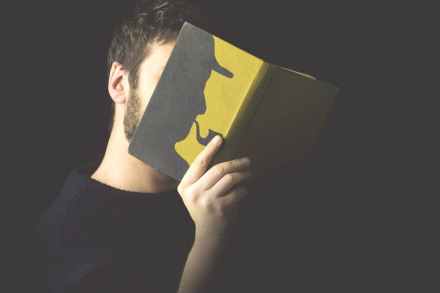
The best crime novels to read during lockdown

For those with work to do and kids to homeschool, the idea that you might have lots more time on your hands amid the coronavirus lockdown probably seems like a bad joke. But for those who have a bit of extra reading time to make the most of, here are five crime fiction series to help pass the lockdown hours: The LA Quartet, James Ellroy James Ellroy L.A. Confidential (Cornerstone) James Ellroy is well deserving of his status as the pre-eminent crime fiction writer of our times, and for those yet to discover the demonic delights of his oeuvre, the original ‘LA Quartet’ is definitely the place to start.

Where is the vigorous debate about our response to Covid?

After a career as a scientist and clinical academic, I have been struck by how often they (we!) have very complicated and exceedingly well-reasoned ways of getting things quite wrong. That’s why I have always thought it best for the recommendations of experts to have ‘advisory’ status only. Experts’ roles are to examine the minutiae of a small subject area – with a view to gaining or advancing understanding. It is the job of our politicians and civil servants to develop appropriate policies.  Experts can be guilty of being monomaniacs, interested only in the thing they are studying. That’s understandable, of course, because many of these things are hard to comprehend.

Easter Sunday puts the trade-offs of the lockdown into perspective

Perhaps today, more so than any day before it, we understand the trade-offs of this lockdown. An Easter Sunday that would normally be spent with loved ones will be spent by many people alone. Churches are a no-go zone. Friends who live down the street feel miles away. Family traditions and big meals are, at best, shared together on video apps – for others, they’re on hold until next year. These are the harsh realities of the lockdown, designed to slow the spread of a deadly pandemic. But the vast majority of us understand why it’s so important to stay inside right now – and are willing to keep doing so.

I’m recovering – but I glimpsed the coronavirus cliff edge

So I’ve had the virus. Or rather, I think I have. Ordinary mortals can no longer get tested by the NHS unless they’re admitted to hospital and I was nowhere near that point. I self-diagnosed, based on having some of the symptoms, and took to my bed. Needless to say, Caroline is convinced the whole thing was a sham to avoid doing the housework, which has increased exponentially during lockdown thanks to four kids and no cleaner. Now that I’m out of bed she’s exacting sweet revenge. I first developed a temperature on Tuesday 24 March, along with chills, a headache, a blocked-up nose and fatigue. A tickle at the back of my throat, but no persistent dry cough, so perhaps it was just seasonal influenza.

Dear Mary: How can I self-isolate without people bothering me on Zoom?

Q. Caught in Switzerland as the ski resort shut down around my ears, and feeling like a walking health hazard, I returned to Somerset to begin splendid isolation days before it became fashionable or mandatory. I’ve been getting loads of jobs done, and the dog is happier than ever, but my peace is being perforated by London friends — the sort who associate solitude with boredom — inviting me to virtual dinner parties on Zoom at a set time with the inescapable tagline ‘we know that you have no other engagements’. After a busy day out in the garden, all I want to do is settle by the log burner with a sausage supper and catch up on MasterChef.

The online museums you’ll never want to leave

‘We don’t talk about the war.’ Yet those of my generation and older reference it daily. The coronavirus is an unseen enemy but for every-one not in military service, so were our past enemies — Germany, Italy, Japan, Russia — invisible mainly because the mainland was never physically invaded by any of them, so the only sightings were on the newsreels. All we can see of the virus is that horrible furry ball with round-ended spikes sticking out of it, which is what it looks like under a microscope, but this is still a war, the same as any other. We were not actually quarantined then but travel was both difficult and discouraged, and fierce men on posters asked: ‘Is your journey really necessary?

My Japanese toilet has made me a lockdown hero

Compared with every other household chore, progress in bum-wiping has been glacially slow. It’s only in living memory that schools and institutions stopped using something called Izal, a box of medicated toilet wipes similar in texture to greaseproof paper, and thus spectacularly ill-suited to its purpose. It was characteristic of the Britain of my childhood, where things were made gratuitously unpleasant on purpose, since to do anything nice was seen as effeminate. The Muslim world is far ahead of us here. In most Islamic countries a toilet cubicle comes with a bum gun — a kind of handheld spray. Yet in the supposedly enlightened Anglophone world we think dry paper is fine.

Raab stands in for Boris – but he can’t take the biggest decision of all

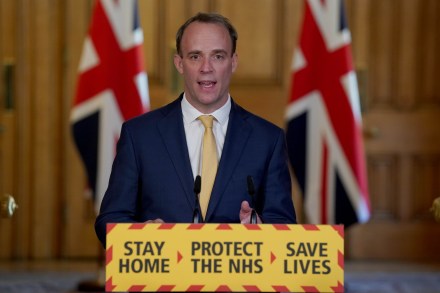
Dominic Raab is a lawyer, not a doctor, by temperament as well as training. He is not a politician who talks about his feelings much. This made it all the more striking to hear him talking about Boris Johnson as a ‘friend’, and his hopes for his recovery. The reassuring news is that Boris Johnson’s condition is stable and he hasn’t required a ventilator. Raab faced a barrage of questions about how him deputising for Boris Johnson will actually work Understandably, Raab faced a barrage of questions about how him deputising for Boris Johnson will actually work. Raab emphasised Cabinet collective responsibility and how they were implementing the plans that Boris Johnson had already set out.

A note to fellow lockdown lethargics

Strange times, these. Dull and unsettling in equal measure. Much of life feels as though it is stuck in some interminable holding pattern, waiting for permission to land and move on. The days drag, even for those of us accustomed to working from home. But the city is a dreary place, for now, stripped of most of its conveniences and opportunities.  Worse still, there are professional problems. This is a game in which you’re always supposed to have a view and the hotter it is the better. Incentives favour certainty; if in doubt double down on your lack of doubt. Bets should not be hedged; everything is a triumph or a disaster and we ricochet from one to the other unencumbered by a moment’s self-reflection. At least, sometimes that seems to be the way the game is played.