Lockdown

The lost boys of Covid

From our US edition

Millions of American children are about to enter their fourth year of Covid-impacted schooling. In vast swaths of the United States, a child now entering second grade has never had anything resembling a normal school experience. No child entering kindergarten has a memory of life before the pandemic. A rising junior in high school has never had a normal high school experience. Over two years into the pandemic, we know that the effects of “long Covid” are basically nonexistent in kids. Following the release of a study published in the Lancet, Alasdair Munro, a pediatric infectious disease specialist in the United Kingdom, tweeted, “A new, large study on long covid in children using Danish registry data has some very reassuring findings.
school

How to not argue at the dinner table

From our US edition

Family dinners, like almost every area of American life, have become a subject of fierce politicization recently. In the years following Trump’s election in 2016, readers of elite progressive outlets were treated to a long parade of thinkpieces urging Americans, in the words of a 2019 Atlantic essay from Ibram X. Kendi, “to liberate our relatives from their abusive relationship with Trump’s alternative reality.” “This Thanksgiving, It’s Time to Take on Your Conservative Relatives,” declared a headline in the Nation. Molly Jong-Fast called on readers to “Deprogram your relatives this Thanksgiving.” A 2017 GQ article was perhaps bluntest of all: “It’s Your Civic Duty to Ruin Thanksgiving by Bringing Up Trump.

family

Bloated waffle: Jitney at the Old Vic reviewed

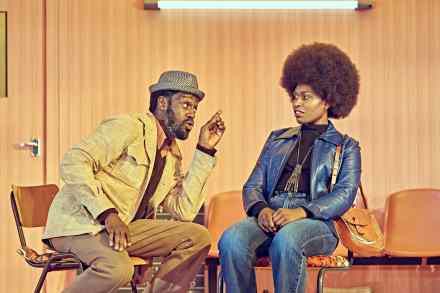
The Old Vic’s new show, Jitney, has a mystifying YouTube advert which gives no information about the play or the characters. If the producers paid for the marketing themselves, they’d do a better job. https://www.youtube.com/watch?v=4AZK_C3lqsM The advert fails even to mention that ‘Jitney’ is Pittsburgh slang for ‘taxi’ and that the action is set in a cab firm in the 1970s. The boss, Becker, is a growling despot who dominates his crew of uppity young drivers by glaring at them psychotically. The prattling cabbies hang around the office gossiping about casual sex and petty crime. Or they ogle porno magazines. Or they show off their bedroom technique by thrusting their pelvises towards the viewers in row A.

Sheila Hancock takes pride in her irascibility

This book begins with Sheila Hancock wondering why she is being offered a damehood. I must say I slightly wondered too, but it seems that most actresses become dames if they live long enough: vide Joan Collins, Penelope Keith, Joanna Lumley etc. And Hancock, as well as acting and making brilliant appearances on Radio 4’s Just a Minute, also does lots of charity work. She considers refusing the honour because ‘it’s hardly in keeping with my Quaker belief in equality’, but decides ‘no, it would be dreadfully rude and ungracious’. Anyway, she admires the Queen, and also Prince Charles, who left flowers and a handwritten note on her doorstep when her husband John Thaw died in 2002. So Dame Sheila it is.

Welcome to the age of post-Covid nihilism

Washington, DC Amid the recent orgy of violence across America, it was the carjackings that finally got me. Lost amid all the mass shootings and gang slayings of late has been another wave of crime: vehicle thefts. In Washington DC, carjackings in 2021 were up by a third over 2019, while in nearby Alexandria a motorist made national news after he shot two boys at a gas station who were trying to lift his car. In Chicago, 1,900 vehicles were jacked just last year, which is eye-wateringly high even by that city’s grim standards. There is an inhumanity at work in this country that’s as stark as anything I’ve seen in my lifetime These thefts are almost all committed by teens, often at gunpoint.

Canceled for Covid

From our US edition

No one is getting canceled, we’re told. There’s no such thing as “cancel culture.” It’s just consequence culture. People say racist, sexist, mean things and so they deserve to be fired from their jobs, stripped of their standing in society, shunned by their friends. Should Hitler have been able to keep his job after publishing Mein Kampf, huh? If only life were that simple. But mob rule is, by definition, imprecise. The people who get canceled aren’t really Hitler, of course. And somehow, actual criminals find themselves forgiven far sooner than regular folk who say something out of step with the narrow set of guidelines proffered by the worst, wokest people in society. Still, there’s something different about the people canceled for their Covid views.

covid

Boris Johnson’s guilt

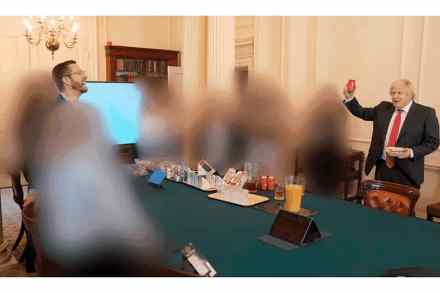
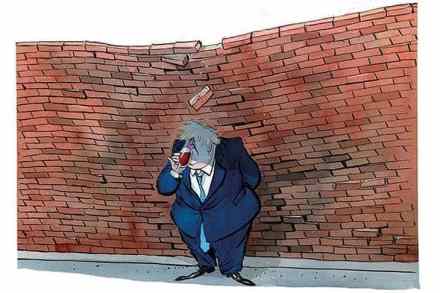
An ability to survive narrow scrapes has been one of Boris Johnson’s defining qualities. The pictures of Downing Street’s lockdown social events included in the Sue Gray report were so dull as to be almost exculpatory: staid gatherings of half a dozen people around a long table with sandwiches still in their boxes, apple juice poured into a whisky glass. Far worse happened in No. 10 but Gray did not publish those photos or look into (for example) the ‘Abba’ party in the No. 10 flat, saying she felt it inappropriate to do so while police were investigating. Luckily for Johnson. The more damaging material came from the emails intercepted, with No.

The Met’s partygate investigation was worth the cost

In many ways, it has been absurd to have police spend months (and £460,000) investigating birthday cakes, glasses of wine and garden parties. Lord Finkelstein, the Tory peer and commentator at the Times, has come out against it (‘Playing politics is no business of the police’) and the front page of yesterday’s Daily Mail lambasts the cost. I respectfully disagree. If partygate focuses political minds on the wisdom of lockdown rules, it’s well worth it. Keir Starmer and Danny Finkelstein both voted for Boris Johnson’s lockdown laws. If they now find the laws objectionable if used to investigate past offences by politicians: good.

From snowball fights to delivering birthday cards: Britain’s 136,000 lockdown penalty charges

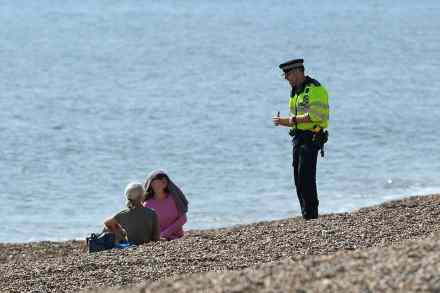
While Boris Johnson and Keir Starmer await the police’s judgment, there has been no end to the fines issued to others caught by their lockdown rules. At last count, some 136,000 fixed penalty notices had been issued in Britain. Durham police – a fairly easygoing force by Covid standards – have handed out just 1,090. Is it a bit mean to fine someone for having had a glass of wine or a beer at work? Perhaps. But no more so than the fines still being issued under the lockdown rules that Johnson and Starmer both voted through. A student in Leeds was fined £10,000 for organising a snowball fight. A beggar was fined £434 for having his cap out at King’s Cross station.

The truth about Britain’s Covid deaths

There has been a considerable hoo-hah in the press about the recent World Health Organisation report estimating Covid-related deaths internationally during the pandemic. The measurement chosen has been ‘excess deaths’ – the difference between the number who died during the pandemic and the number who, on average, died in the same place before the pandemic struck. This has enabled us to compare the British figures with excess deaths across the rest of Europe per 100,000 of the population; and it appears we’re not, after all, at the top of the death-league, but near the middle. Though its methodology has attracted serious criticism, I was struck by the report.

Male friendship is in crisis

Most of my women friends work hard to keep ancient friendships alive; the seasonal lunches, shopping trips and afternoon teas are observed as scrupulously as the feasts of the liturgical calendar. ‘Friends make all the difference in life,’ my mother used to say. In her late eighties, she would defy the wobbles of Parkinson’s and haul herself on to a bus for the all-important ‘Tea with Daisy’, inscribed with a shaky hand in her diary. My sister was the same. In September last year she marched her girlfriends off to Whitby for a week of what I assume was slightly manufactured jollity (she was dying of cancer), but you’d never tell from looking at the photographs.

Why Boris Johnson should not resign over partygate

Afew weeks ago it seemed that the issue of Downing Street parties over lockdown had been usurped by a more serious matter: what to do about the invasion by a nuclear power of a neighbouring European state. But now partygate is back, fuelled by the news that the Metropolitan Police has issued 20 fixed penalty notices and may announce another tranche of fines at a later date. Some of the heat has left the whole affair. Several of the letters written to Sir Graham Brady, chairman of the 1922 Committee, demanding a Conservative leadership election were withdrawn at the beginning of the war in Ukraine. The leader of the Scottish Conservatives has withdrawn his own call for the Prime Minister to resign. Nevertheless, partygate continues to present an acute difficulty for Boris Johnson.

As Shanghai locks down, China is facing its greatest Covid crisis yet

The coronavirus is spreading through Hong Kong, Shenzhen and other cities in China like a bush fire; tens of millions of Chinese have been ordered to stay at home yet again. Shanghai, a city of 26 million souls, has been split in two. Those on the eastern side of the Huangpu River will be locked down until Friday, their west bank neighbours from the start of April.   It won’t work. Like a new Mercedes, the BA.2 model of the omicron variant of the Sars-CoV-2 virus is faster, quieter and 30 per cent more prolific. There is no chance of stopping it with lockdowns, mass testing or social distancing – even in Xi Jinping’s China.

Covid is rising again. Should we worry?

For some time now, Covid has been rising in Scotland - there are now more Scots in hospital with Covid than at any time throughout the winter. A freak, or a sign of what’s to come nationally? The ONS survey answers that question today, confirming that Covid cases are rising nationally: some 4 per cent of England’s population, it says, would test positive. In Northern Ireland it’s closer to 8 per cent and in Scotland 5.7 per cent. Have waning vaccines created space for another wave - and do we need to worry? Just as Gauteng and South Africa then Lambeth and London were the early warning signs for Omicron’s rise and speedy peak, so seems to be Scotland now. The ONS survey have shown cases rising there for weeks and it’s been puzzling scientists.

Abolishing Covid restrictions now is bold, brave – and necessary

Shortly after Covid emerged, our civil liberties were suspended. The government took control of when and for how long we could leave our houses, and children’s right to classroom education was abolished. The idea was that lockdown would prevent catastrophic loss of life and the collapse of the NHS. But when that was no longer a serious prospect, the justification for restrictions vanished. The big question was whether governments would hold on to the emergency powers anyway — with identity cards, testing regimes and ‘no-jab, no-job’ policies. In Britain, the answer is — thankfully — now clear. We have become, along with Denmark, the first country to draw a line underneath the pandemic and return government to its proper relationship with the public.

The art of the Covid protest song

From our US edition

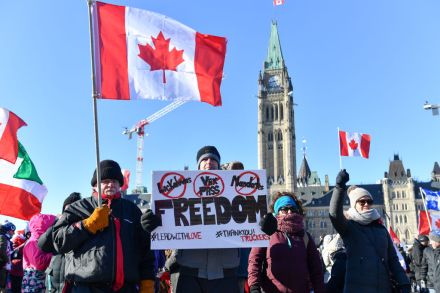
On February 14, Prime Minister Justin Trudeau issued an edict granting himself emergency powers to rule Canada by martial law with the intent of making all those trucks back up. He wants to confiscate them along with freezing truckers’ bank accounts. His soldiery is not altogether with him. Ottawa’s chief of police, Peter Sloly, abruptly resigned. Things aren’t looking bright for North America’s newest autocracy. But, OK.  Let’s back up. On December 18, 2020 a French musician known as HK (Kaddour Hadadi) and his group the Saltimbanks released on video a song titled “Danser encore” (“Dancing Again”).

protest song

End of the road for malicious lockdowns

From our US edition

Is a modicum of sanity about to reassert itself regarding the Wuhan Flu? Are the people finally exhausted by their panic over the Fauci-altered coronavirus? Remember those little bulletins that Mike Pence carried around, enjoining us all to to take “fifteen days to stop the spread”? I think we’re at about day 750 now. New York restaurants and many cultural emporia demand that you produce your papiers (it sounds better in German) — identification plus an image attesting to your “vaccination status” — in order to enter. Some are even requiring proof that you’ve had a “booster” jab. Pfizer likes that.

Two years on, what’s the evidence for lockdown?

Did lockdowns save lives? We will never have a definitive answer to this vital question because it was impossible to conduct controlled experiments — we don’t have two identical countries, one where lockdown was imposed and one where it wasn’t. Nor is it easy to compare similar countries, for the simple reason that every country in the world — bar Comoros in the Indian Ocean — reacted to Covid by introducing at least one non-pharmaceutical intervention (NPI) by the end of March 2020. There was no clear link between lockdown stringency and fewer deaths in the spring of 2020, A team from Johns Hopkins University has, however, assessed the many (albeit flawed) studies into whether lockdown works — a ‘meta-analysis’.

The real problem with the BBC’s partygate coverage

As a journalist, it’s never a comfortable feeling when the news organisation you work for becomes the story. But with No. 10 desperate to throw some ‘red meat’ to the green benches — to take the spotlight off the rotting carcass of ‘partygate’ — it was inevitable that the BBC would end up being fed through the mincer this week. The Culture Secretary, Nadine Dorries, lit the touch-paper by announcing on social media (where else?) that the latest BBC licence fee announcement would ‘be the last’, adding with provocative hyperbole that ‘the days of the elderly being threatened with prison sentences and bailiffs knocking on doors’ were over.

We must never abandon children during lockdown again

Schools are far more than mere exam factories. Across the UK, teachers in 32,000 schools and colleges care for children on over half the days in any given year. Or we did until the lockdown in March 2020. Since then, children have missed the best part of two full terms. And while they were out of our sight, some were at risk. Six year-old Arthur Labinjo-Hughes, for example, may have been rescued from the terrible abuse he suffered had his teachers been able to see him every day. But while most children have returned to class now that Covid restrictions are ending, some are still absent. News of anecdotal cases circulate within the profession. A colleague tells me that two sisters in her school never returned.