Lockdown

The death of the phone call

From our US edition

Scientifically, the jury is still out on whether women are better multitaskers than men. A 2013 study suggested that women do, in fact, outperform men, while a 2019 German study found no demonstrable differences between the sexes. In my entirely unscientific opinion, I think the stereotype is real. Women are engaged in all kinds of things at the same time. At any given moment, I’m engrossed in my work while also contemplating the contents of my freezer, making a mental note to order more diapers, and simultaneously clipping my daughter’s toenails. A New York Times piece on why women do the household worrying described a woman’s mental load as a “combination of anxiety and planning that is part of parenting.

zoom
sex

Life after sex

From our US edition

Sex is everywhere in America, except in the bedroom — or anywhere else you’d like to have it. This has been going on so long that it’s got a name: in a 2017 article for the Atlantic, Kate Julian called it the “sex recession.” The research she cites found that “American adults had sex about nine fewer times per year in the early 2010s compared to the late 1990s.” Nine times fewer a year might not seem so bad, but every other marker of sexual activity was also down. A 2018 study in the Journal of the American Medical Association found that sexual activity had dropped among men between eighteen and thirty-five and women between twenty-four and thirty-five. Young people were having fewer sexual interactions and also fewer partners.

How men’s wardrobes prove constraints can be good for us

One thing that surprised every-one during lockdown was how many people derived unexpected pleasure from living under imposed restrictions. Can people become happier when temporarily prevented from doing things they would normally do? Almost certainly. Sometimes such circumstances force us to try something new which we subsequently prefer; at other times we enjoy having an external excuse not to do things we don’t want to do at all. There is an episode of Curb Your Enthusiasm where Larry gleefully realises that his mother’s death provides him with a reason to cancel all his upcoming engagements.

Why lockdown sceptics like me lost the argument

I’m optimistic that the government won’t implement ‘Plan B’, let alone impose another lockdown — but not because sceptics like me have won the argument. Why do I say that? Because the public debate is about whether another lockdown is necessary, with the participants on both sides taking it for granted that non-pharmaceutical interventions are an effective way of suppressing infections. For at least a year, sceptics have been arguing that these don’t work, pointing to numerous research studies showing that the rise and fall of infections in different regions of the world has no correlation with stay-at-home orders, mask mandates, business and school closures, etc. But this argument has fallen on deaf ears.

The staggering cost of ‘Plan B’

Finally, the government is modelling the cost (and benefits) of lockdown restrictions. The introduction of vaccine passports, mandatory face masks and work-from-home advice would cost between £11 billion and £18 billion according to a leaked assessment of the so-called ‘Plan B’. And while all this may reduce the spread of the virus at large events by as much as 45 per cent, only a small part (between 2 and 13 per cent) of Covid transmission takes place in such venues — so the extra restrictions would, at most, cut levels of the virus by 5 per cent nationally. The document has been leaked to the Politico website and assumes ‘Plan B’ will last until March next year. The biggest financial hit comes from home working.

Why did we decide that Covid was over?

Look, I don’t know much epidemiology. Can’t pretend to. So what follows is, necessarily, a personal finger to the wind. But perhaps it chimes with your experience.  First time round — back in the days when we were all huddled indoors, leaving the house only to stand on the doorstep of a Thursday night to bang pans with a wooden spoon, or making solo expeditions to a denuded supermarket where we do-si-dohed around each-other in the aisles… yes, back in those days, I didn’t know very many people who got Covid. Acquaintances, the odd friend. Some scary stories. Some scarier statistics. But not so many ‘rona stricken friends. Could we inch towards herd immunity down a road scattered with corpses rather than heaped with them?

Americans, London needs you

From our US edition

‘Nobody wants to admit it, but London was boring even before the pandemic — and it’s still boring now!’ I said. We were at a London drinks party. The guy retaliated with a smirk and that old Dr Johnson line, ‘He who is tired of London, is tired of life.’ ‘No,’ I said, ‘I’m not tired of life — I’m tired of people who always quote Dr Johnson when you make some slightly disparaging remark about London!’ I dislike that Dr Johnson quote because it assumes that you can’t be genuinely tired of London; your discontent must be due to your own boring, miserable life and not because London has become an overpriced, culturally exhausted and soulless city — which it has.

London

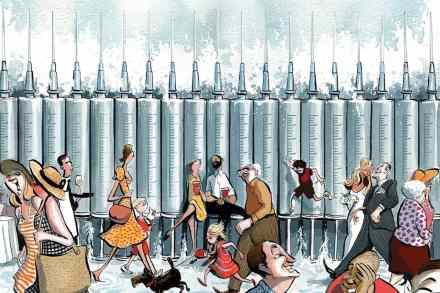
Can booster shots help Britain avoid another lockdown?

For weeks now, ministers have been getting increasingly frustrated by the Joint Committee on Vaccination and Immunisation's failure (JCVI) to back a wide-ranging programme of booster shots. Today it has finally recommended a third dose for everyone in clinical groups one to nine, which is, essentially, everyone over 50. Sajid Javid, the Health Secretary, has already accepted the recommendation and the programme will begin next week. Will this be enough to prevent the need for another lockdown? The booster programme should prevent the waning immunity problem, which was one of the reasons why Israel was hit by an unexpected fourth wave. The government is relying very heavily on boosters to avoid more restrictive measures this winter.

Sunday shows round-up: ‘I’m not anticipating any more lockdowns’ says Javid

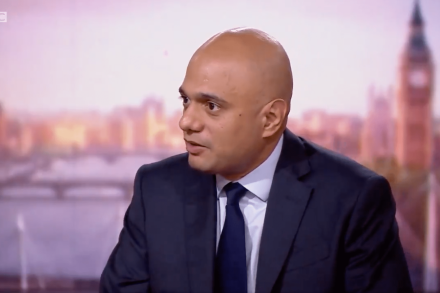
Sajid Javid – I’m not anticipating any more lockdowns The Health Secretary was the main guest of the day on BBC One’s Andrew Marr show, hosted this morning by Nick Robinson. Robinson asked Javid about the likelihood that Christmas could be threatened once again by lockdown. Javid responded by saying that it was highly unlikely that the UK would see itself in a similar position to last year, even with an expected surge of the virus over this winter: https://twitter.com/BBCPolitics/status/1436977708823629824?ref_src=twsrc%5Etfw SJ: I’m not anticipating any more lockdowns… I just don't see how we get to another lockdown.

Covid pingdemic takes its toll on Britain’s economic bounce-back

The arrival of ‘freedom day’ on 19 July enabled people to return to concerts, festivals, and ditch social distancing, but these rediscovered freedoms did not revive the economy. The ONS said this morning that growth was just 0.1 per cent in July, far lower than the consensus forecast. It was particularly disappointing given the growth seen in the locked-down months of June (one per cent) and May (0.6 per cent). The Pingdemic – and concerns about the Delta variant – cancelled out any animal spirits around reopening. August’s GDP boost is going to need to be much stronger for the more bullish forecasts to pan out Nightclubs reopened and the entertainment sector was up nine per cent, but the end of stamp duty hit real estate.

The emergency is over. Now the government must relinquish its emergency powers

For 18 months, the government has held power over us as never before in peacetime. The emergency powers granted by parliament in March last year can cancel our events, separate families and send us back into our homes. The argument for giving politicians this kind of control was that leaders needed to make huge decisions at short notice because an invisible enemy was surging through Britain and posed a deadly threat to our elderly and vulnerable. There was no time for proper democratic debate or scrutiny. That emergency has passed, but the government wishes to keep the powers. What’s the case for doing so? Vaccines have significantly weakened the link between Covid infections and severe illness.

Why Gove’s night on the dance floor is good news

I was pleased to see pictures of Michael Gove at a nightclub in Aberdeen last weekend. According to press reports, he barrelled into a pub in the city centre at around 1.15 a.m. on Sunday, and when last orders were called he was persuaded by fellow revellers to accompany them to a nightclub called Pipe, where he spent the next hour dancing energetically to loud music. ‘I am almost sure he was by himself,’ said Emma Lament, a singer who had performed an acoustic set earlier in the pub and revealed a ‘merry’ Mr Gove had ‘rocked up’ before closing time. ‘He really was enjoying himself. I don’t think he left the dance floor the whole time I was there.

Zero-Covid is wishful thinking if Australia wants to rejoin the world

As former Australian foreign minister and High Commissioner to the UK Alexander Downer wrote in last week’s magazine, almost all Australian states, like neighbouring New Zealand, are determined to eliminate Covid-19 at all costs. At the beginning of this year, Australia seemingly had defeated Covid. Total numbers of people infected, out of 25 million, were in the few thousands, with related deaths in the hundreds (mostly in care homes). Even now, with a major Delta variant outbreak across our two biggest states, New South Wales and Victoria, less than a thousand Australians have died from or with Covid, almost all elderly or people with other health complications.

Homeric levels of misery: Paradise, at the Olivier Theatre, reviewed

The National Theatre has given Sophocles’s Philoctetes a makeover and a new title, Paradise. This must be ironic because the location is hell on earth. The action starts in a dirt circle sprawling with smashed military gear where a group of plump female vagrants are waking up in a clutch of filthy old tents. They’re living on a Caribbean island which also houses a prison for migrants. In a nearby cave dwells an exiled Homeric archer, Philoctetes, who survives by eating squirrels which he kills with his handmade bow. A committed anti-vegan, Philoctetes shuns the plentiful rice, garlic and mangos that grow naturally in the tropics. Enter two British soldiers in contemporary battle fatigues, who want to track Philoctetes down. The Brits are called Odysseus and Neoptolemus.

The blind spot in the SNP’s ‘war on drink’

Scotland’s grim reputation for abnormally high drug fatalities has become embedded in the public consciousness over the past year. The fact that fake benzodiazepines (‘street valium’) can be procured for 50p a pill on the streets of Dundee and Glasgow is now common knowledge, as is Scotland’s unenviable place at the top of Europe’s drug deaths league table. However, belated attention to this crisis should not allow signs of another to slip below the radar. New figures from National Records of Scotland (NRS) show a 17 per cent surge in alcohol-specific deaths between 2019 and 2020, a rise from 1,020 to 1,190 in the space of 12 months, what NRS terms ‘a marked increase’.

Will Covid turn into the common cold?

Many experts and modellers thought that the 19 July reopening would be a disaster. So far, that has not been the case. Daily case numbers actually started falling within days after 19 July, although that was far too soon to have been caused by anything to do with ‘freedom day’. The question now is how the pandemic will play out for the rest of this year and the next? In trying to understand this, we need to understand some important things about the biology of coronaviruses and their interaction with their hosts: us. Sars-CoV-2, the virus that causes Covid, is not going away. Like other coronaviruses, it will likely infect us all repeatedly throughout the rest of our lives, probably about once every five years.

A lament for Washington DC (no, seriously)

From our US edition

Washington DC — I’ll try not to overstate things here — does not have a stellar reputation. Most Americans regard it as corrupt, alien, taking in an exorbitant amount of their taxpayer money and blowing it on stupid wars and bureaucratic boondoggles. DC is the Swamp, a fetid hothouse of buzzing lobbyists and special interests. It’s the Deep State, where well-oiled gears interlock and turn towards ever more self-enrichment and self-preservation. The reality has always been a bit sadder. Washington is more pseudo-expertise than evil genius, more $3 Coors until closing than three-martini lunch.

washington dc

The dangers of post-Covid isolationism

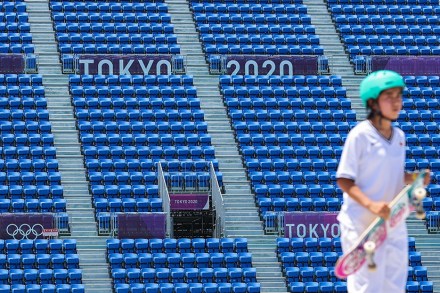
There is something bizarre about a sporting event designed to bring people and nations together but from which spectators have been excluded. Most foreigners are currently forbidden from setting foot inside Japan, let alone inside the Olympic stadium. In many senses, Tokyo 2020 — which like the Uefa Euros retains its original name, despite a year’s delay — encompasses the worst of our pandemic-ridden world: the global elite can attend while the rest of us have to settle for watching it on TV. Yet a successful Olympics — even a week in, it looks as if the Tokyo Games will be judged a kind of success — could provide the impetus the world needs to re-establish normal working relations.

How Australia was caught in lockdown limbo

Sajid Javid’s deleted weekend tweet about Britain ‘learning to live with, rather than cower from Covid’ upset just about everyone – from frontline NHS workers to Covid-19 victims’ groups. But Javid could actually have been talking about Australians. While the UK’s Freedom Day went ahead despite 40,000 people testing positive for Covid daily, over half of Australia’s population has been cowering under lockdowns imposed by their state governments, while the other half are exhorted to treat their locked down fellow Australians as pariahs. For what? Yesterday, Australia’s health department reported just 157 positive cases in the previous 24 hours, mostly in the Greater Sydney area.

Sajid Javid: My isolation diary

You always remember when a prime minister calls you to ask you to take on a new role, and you remember the reaction of your loved ones, too. My mum was delighted — like many Asian mothers she wanted at least one of her five sons to be a doctor and she was thrilled that I would be, as she put it, ‘working in healthcare’ after all these years. My wife was concerned about the pressures of the role and what it might mean for our family. And my daughter was worried that I might not look the pinnacle of health walking through the famous Downing Street door, due to my limp after an unfortunate slip during ‘walk your children to school week’.