Labour party

Podcast special: Jeremy Corbyn's conference speech

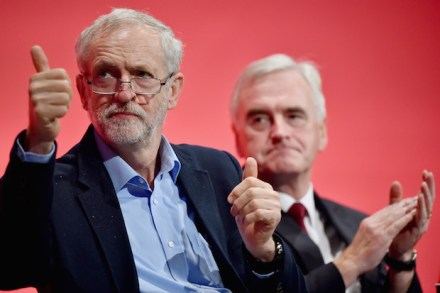
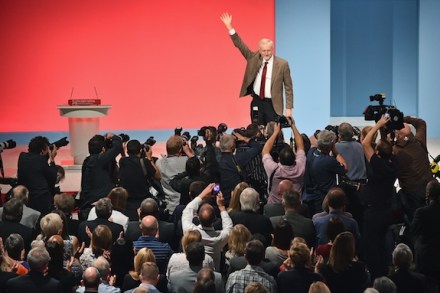
Jeremy Corbyn has just delivered his first conference speech as Labour leader. Fraser Nelson, James Forsyth, Isabel Hardman and I discuss the address in this View from 22 special — looking at his delivery, the reaction in the hall, who it was meant to appeal to and whether it will change Corbyn’s standing with the general public. You can subscribe to the View from 22 through iTunes and have it delivered to your computer every week, or you can use the player below:

Jeremy Corbyn can't blame the 'commentariat' for public opinion

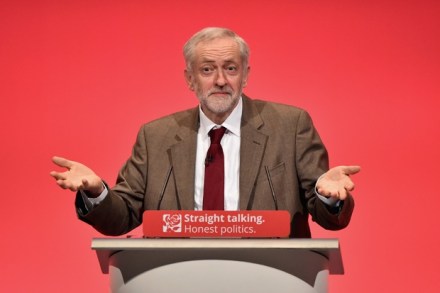
Jeremy Corbyn’s Labour party conference speech started pretty well, with him poking fun at the newspapers’ more apocalyptic predictions of what would happen should he become Prime Minister. He teased the Daily Mail for a story saying that he once welcomed the prospect of an asteroid hitting the earth.* And then, a wee joke. ‘It’s not the kind of policy I’d want this party to adopt without a full debate in conference.’ Everyone, even the press, had a laugh at the press. They were probably even laughing in Iran, where the state broadcaster was showing his speech. But then Corbyn had to go and spoil it all by denouncing the ‘commentariat’. Again. ‘No one, not me as leader,

Chuka his toys out of the pram? Umunna misses Corbyn's speech

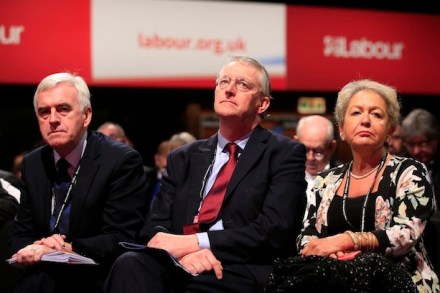
As Jeremy Corbyn made his speech to conference, Labour’s new frontbench did their best to put on a united front on the front row. As for the frontbenchers of Labour’s past? Well, it could hardly be described as a show of solidarity. Both Chuka Umunna and Tristram Hunt were nowhere to be seen at the speech, with ITV’s Chris Ship reporting that they had already left Brighton on a train: Somewhere between Brighton & London Victoria stations is a train carriage with @ChukaUmunna @TristramHuntMP & @MaryCreaghMP escaping #Lab15— Chris Ship (@chrisshipitv) September 29, 2015 While Hunt did at least tweet supportive messages to Corbyn during the speech, Umunna has maintained a radio silence. On top of failing to

Jeremy Corbyn's speech to Labour conference - full audio and full text

Jeremy Corbyn has just finished delivering his speech at Labour’s annual conference. The audio can be listened to here: Friends, thank you so much for that incredible welcome and Rohit, thank you so much for that incredible welcome. Rohit, thank you so much for the way you introduced me and the way our family and you have contributed so much to our community. That was absolutely brilliant. Thank you very much. I am truly delighted to be invited to make this speech today, because for the past two weeks, as you’ve probably known I’ve had a very easy, relaxing time. Hardly anything of any importance at all has happened to me.

Jeremy Corbyn’s conference speech challenge

Jeremy Corbyn has, so far, had a reasonably good conference. Nothing has gone noticeably wrong. There have been no stand-up rows, no fights in the fringes, no heckling in the hall. And the atmosphere has been far better than Labour’s awful autumn conference last year, where everyone was full of gloom when the party was a few points ahead in the polls. But the Labour conference was still going to plan at this point last year, albeit in a moribund way. Ed Miliband hadn’t delivered his speech yet, and he therefore hadn’t forgotten to mention the deficit (the speech was poor, too, but the overall quality was quickly eclipsed by

Lisa Nandy's workmanlike speech is indicative of Labour's talent problem

Lisa Nandy’s first conference speech as shadow energy and climate change secretary was solid and cordially received, if a little uninspiring. The MP for Wigan is one to watch in Jeremy Corbyn’s shadow cabinet because she is frequently cited as a handover candidate — someone Corbyn could pass the leadership to before the 2020 election. Nandy’s announcement that Labour won’t seek to nationalise the Big Six energy companies is an example of how she is helping to detoxify Team Corbyn and assuage the fears of voters who think the new leadership is too left wing (it’s also yet another u-turn after Nato, Trident, EU membership): ‘Jeremy and I don’t want to nationalise energy. We want to do something

Maria Eagle: I wouldn't have resigned over Trident vote

The Labour party may have avoided a divisive vote on Trident this week, but that doesn’t mean that it can always avoid working out whether it should have a new position. Last night Maria Eagle, the Shadow Defence Secretary, told a fringe that though she had made her mind in 2007 that she was in favour of the renewal of the nuclear deterrent, she wouldn’t have resigned had there been a vote that called for Trident to be scrapped at this conference. She said she’d reminded Corbyn when he offered her the job that she was pro-Trident, saying ‘I thought I need to make sure he remembers what my position

Jeremy Corbyn: I love this country

A set of headlines about a political party leader declaring that he loves his country might, in less unsettled times, be considered a sign that news desks have given up and are going to report all instances of dogs biting men. But in the man-bites-dog-world in which Jeremy Corbyn has just been elected Labour leader and John McDonnell appointed his Shadow Chancellor, it’s news. It’s also the first set of reasonably good headlines for the new leader, which is in part because his media team is working much better with the media now. (though you can’t win ’em all) Corbyn is expected to say: ‘These values are what I was

Jess Phillips takes on George Galloway over Brighton beach incident: 'he does struggle with women's voices'

Although Labour conference has so far been a rather tame affair, Jess Phillips can at least be relied upon to spice up proceedings. The outspoken Labour MP is developing a reputation for being a bit of a rebel after she made the news earlier this month for telling Diane Abbott to ‘f— off‘. Now she has a new target in her sights. Phillips says that she confronted George Galloway, who was expelled from the Labour party in 2003, on the beach in Brighton yesterday. She says she decided to tell Galloway — who was previously criticised by anti-rape campaigners for comments suggesting sexual assault charges facing Julian Assange were nothing more than

Labour conference is surprisingly even-tempered. Why?

Why does Labour conference feel so even-tempered so far? In previous years the answer would be that it has been stage-managed to the hilt and all frontbenchers programmed with the lines to take. But this year the party’s conference strapline is ‘Straight talking. Honest politics’ and frontbenchers aren’t being sent daily lines to take, so even if they wanted to be on message, they couldn’t be. Of course, those frontbenchers are enjoying telling fringes that they take one view while their leader takes another, but what’s still remarkable about this conference is how good natured all the fringe meetings have been after a vicious leadership contest. Those running were abused

Dan Jarvis’s only conference appearance is pleasant, but devoid of policy detail

In Brighton, eyes are on two rising stars who are tipped to replace Jeremy Corbyn. The first is Keir Starmer, the former Director of Public Prosecutions, who is popping up at several fringe events about the future of the party. The second is Dan Jarvis, the former shadow justice minister, who made his only appearance at a Huffington Post fringe event this afternoon. Jarvis revealed that running for the Labour leadership this time around was ‘never on the table’ and Jeremy Corbyn did not offer him a job (contrary to previous reports) in his shadow cabinet — even though he turned it down. Just like the other moderates who have spoken at

John McDonnell makes peace with Peter Mandelson

Yesterday Michael Meacher wrote on his personal blog that it was time to expel Lord Mandelson from Labour. His sin? Badmouthing Jeremy Corbyn. Meacher, who is one of Corbyn’s key backers, claims that Mandelson should be punished for speaking ill of Corbyn. So who better to fight Meacher’s corner than John McDonnell? The shadow chancellor, who previously described Mandy’possibly the most divisive figure in Labour’s recent history’, bumped in to Mandelson this afternoon at Tory conference. However rather than scrap, Channel 4’s Michael Crick claims that McDonnell assured Mandy he would not be expelled from Labour: John McDonnell assures Peter Mandelson - with a little help from C4News - that he

Watch: Tristram Hunt and Ian Lavery shows who is up and down in Labour

As the first day of Labour’s conference came to a close, LabourList hosted a ‘winning again’ rally in a dark corner of the Grand Hotel. A bunch of Labour speakers, including Eddie Izzard and Owen Jones, spoke about the party’s general election defeat and the glorious rise of Jeremy Corbyn. The two most contrasting speakers were Tristram Hunt, the former shadow education secretary, and Ian Lavery, the former NUM chief and shadow trade unions minister. The contrasting receptions Hunt and Lavery received shows which direction the party is heading. Hunt, one of the most prominent modernisers who is popping up at fringe events all over Brighton, was cheered and booed for a joke about

Len McCluskey uses Tory rebel David Davis to attack trade union bill

The Labour conference is currently debating a motion on the Trade Union Bill, which Shadow Business Secretary Angela Eagle made clear in her speech that the party will oppose. It gave Len McCluskey a chance to give his traditional pre-Shadow Chancellor conference speech, though this year the Unite leader didn’t need to include any pleas to the Labour leadership to listen to him. Instead, he focused all the fire of his typically impassioned and forceful speech on the Tories. He suggested that the legislation curbing the powers of trade unions and their abilities to strike was more fitting for a fascist government. The Tories will be quite used to his

McDonnell: I can both oppose and support Heathrow expansion

Is the Labour party right to be so worried that Jeremy Corbyn is its leader and John McDonnell is its Shadow Chancellor? Neither of them seem to be putting much effort into pushing the policies that have upset their colleagues the most. The Labour party will maintain its position on Trident after constituency party delegates decided not to debate the matter this week. Jeremy Corbyn is quite happy for his colleagues to take a different view on this issue, too. Similarly, on Heathrow, both Corbyn and McDonnell are opposed to expansion of the airport, but today the Shadow Chancellor told the Press Association that he might take one position as

Labour conference: John McDonnell sticks to boring

The most remarkable thing about John McDonnell’s Labour conference speech was that he was delivering it at all. The new Shadow Chancellor was clearly trying to assuage fears about him by being as boring (something he’d promised) and mild as possible, announcing reviews headed by big names such as Bob Kerslake of the operation of the Treasury and and an Economic Advisory Committee that includes Thomas Piketty and Joseph Stigltiz. Reviews and committees mean you don’t have to announce as many policies, which is handy if you’re trying not to rock the boat too much early on. But to be fair to McDonnell, it’s also what all mainstream politicians do

Shadow Cabinet keeps business as usual at Labour conference

So far at this Labour conference, most of the fireworks have been on the Blairite side of the party, with figures such as Chuka Umunna, Ivan Lewis, Liz Kendall and John Woodcock making their displeasure known at events last night. But when it comes to Jeremy Corbyn’s frontbench, and some of the issues on which Corbyn himself has strong and controversial views, the conference has seemed surprisingly well-behaved: so far, at least. The party’s frontbenchers are almost continuing as though nothing has changed: last night at a schools fringe Lucy Powell set out an education policy that sounded roughly familiar to the one the last party leadership pursued: no support

John McDonnell tries to get voters to trust him and his party on the economy

The Shadow Chancellor’s speech at Labour conference has always been the second biggest slot after the leader. But in a sense John McDonnell’s speech today, just before lunch, is the most important slot of the whole conference because he is talking about the policy area that did the most to put voters off Labour in May. A review by Jon Cruddas found that voters were well-aware of Labour’s anti-austerity message, and that they didn’t like it, even though all the retail offers on energy bills and so on were popular. But McDonnell believes that voters need to be told of the dangers of austerity, which they haven’t, and then they