Labour party

Is it time to ban second jobs for MPs? 

There are some genres of newspaper story that never die. Among them are sightings of Lord Lucan, public moralists discovered in adultery – and foolish MPs being caught out offering themselves for hire to undercover hacks. A fine example of the third of these broke yesterday thanks to the situationist campaigning group Led By Donkeys, who started out as Brexit-bashers but have expanded their remit to the broad-brush embarrassment of MPs. You’d think, by now, that senior MPs would be a bit more on the qui vive for this sort of thing. But no: they never learn.

Starmer wants to steal crime from the Tories

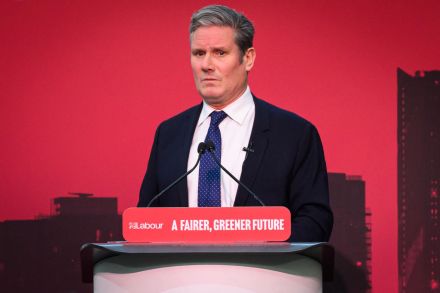
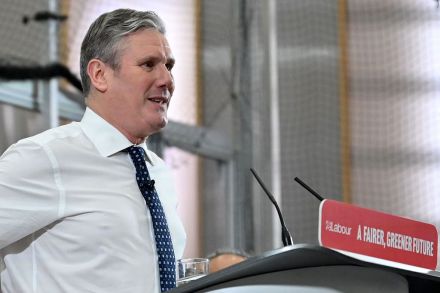
It's tempting to see Keir Starmer as a political wind-up merchant given the number of times he likes to quote people who annoy his own activists. Recently he adopted the ‘take back control’ slogan and today he approvingly quoted Margaret Thatcher. Hell, the man has even praised Tony Blair.  Labour sees an opportunity in the rising salience of crime among voters The Thatcher quote today was in a speech about crime. The Labour leader told his audience in Stoke that: ‘The rule of law is the foundation for everything. Margaret Thatcher called it the “first duty of government” – and she was right.’ He later accused the Tories of having ‘thrown in the towel’ as he promised, like Blair in the 1990s, to make Labour tough on crime.

Is Labour saying anything new on childcare?

17 min listen

The shadow education secretary Bridget Phillipson is giving a speech to centre-right think tank Onward today, all about childcare. But is the party actually saying anything new on the issue? Cindy Yu talks to Katy Balls and the FT's Stephen Bush. Produced by Cindy Yu.

Will the SNP’s chaotic leadership race ease Starmer’s path to Downing Street?

Nicola Sturgeon’s shock resignation has left Labour feeling hopeful. Might this be their chance to make significant gains north of the border at the next general election? Even before the First Minister’s unexpected announcement, the Scottish Labour party was already running at 29 per cent in polls of Westminster vote intentions, 10 points up on its tally in 2019. Instead of being in third place (and 26 points behind the SNP), it now occupied second place – ahead of the Conservatives and only 14 points behind the SNP. True, at that level of support the party might still gain no more than half a dozen seats at the expense of the SNP. However, any further significant narrowing of the nationalists’ lead would start to reap a richer reward.

Was there anything Labour about Labour’s five missions?

10 min listen

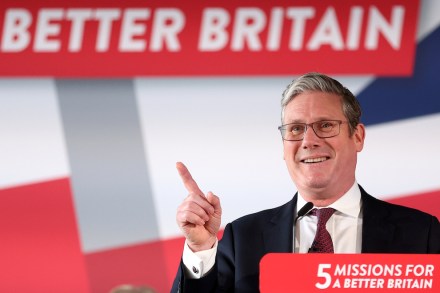
Keir Starmer has set out Labour's five missions for government in a speech today, but was there anything Labour about them? Cindy Yu talks to Katy Balls and Isabel Hardman about where this speech leaves the Labour party's chances to win the next election. Also on the podcast: the government's plan to cut the asylum backlog. Produced by Cindy Yu.

Can Keir Starmer be trusted?

12 min listen

In today's Prime Minister's Questions, Rishi Sunak went heavy on accusations that Keir Starmer cannot be trusted, having flip-flopped on various policy positions throughout his time in politics – 'he is not just for the free movement of people; he also has the free movement of principles'. On the podcast, Katy Balls discusses with Fraser Nelson and Isabel Hardman whether that's such a bad thing. Produced by Cindy Yu.

Rishi Sunak should welcome lively MPs, not shun them

Rishi Sunak has a rebel problem: we already know that. He's got factions of Tory MPs prepared to vote against the government on a range of issues, and the Prime Minister knows that on each issue, there are different rebels, rather than just one easy-to-identify awkward squad. Even when he is, as Katy explains in the magazine this week, focusing on issues that unite the party rather than reforms that will provoke some rebels such as planning reform, he still has trouble on his hands.  The current trouble comes in the form of the Online Safety Bill, which has a phalanx of Conservatives prepared to vote against their party whip in order to toughen up the legislation.

Keir Starmer is learning to love controversy

For a politician who has set much store by being pretty boring, Keir Starmer seems to be enjoying his current provocative spell. His desire to shake up the 'nonsense' bureaucracy in the NHS makes the Sunday Telegraph splash and was a key feature of his interview this morning with Laura Kuenssberg. He argued that 'the reason I want to reform the NHS is I want to preserve it' and 'I think if we don't reform the health service it will be in managed decline'.  https://www.youtube.com/watch?

Sunday shows round-up: Starmer challenged on whether voters can trust him

Keir Starmer – Ditched campaign promises ‘represented my values’ It was the Labour leader’s turn to face off against Laura Kuenssberg this morning. With Starmer currently in a commanding position, and the favourite to become the next prime minister, Kuenssberg looked back to the 2020 leadership contest to succeed Jeremy Corbyn. She asked him to explain why a significant number of campaign pledges had since fallen by the wayside: https://www.youtube.com/watch?v=_AyVMe016L8 16 is too young to change gender Kuenssberg also inquired as to Starmer’s position on the thorny issue of gender self-identification.

Starmer is plotting mischief over the Northern Ireland Protocol

Speaking in Belfast this morning, Keir Starmer offered ‘political cover’ to the Prime Minister over any change to the Northern Ireland Protocol. A new deal with the EU is thought to be imminent – and Labour sees the chance for mischief. Starmer said it is ‘time to put Northern Ireland above a Brexit purity cult’ and that ‘we can find ways to remove the majority of checks’ through new solutions, adding that ‘there are legitimate problems with the Protocol and these must be recognised in any negotiations’. Starmer’s speech is well-timed His comments are a recognition of the Protocol’s relevance over the next few months.

The chart that will decide Rishi Sunak’s fate

After his five key pledges speech this week, one can only conclude that Rishi Sunak must have been shown the chart.  The chart in question crops up in a regular update that polling firm YouGov puts out on the key political issues, as seen by various segments of the electorate. It measures the priorities of those who voted Conservative in 2019 and therefore have it within their collective power – and potential inclination – to grant the party yet another term in office. And it has told a consistent story for the past two years. The three biggest issues for voters – miles ahead of anything else – are the state of the economy, immigration and asylum, and healthcare.

Keir Starmer promises to take back control

Keir Starmer’s new year speech was better than Rishi Sunak’s. It’s easier to give a speech about fixing problems when you’re in opposition and someone else has caused them. But it was just more interesting than what the Prime Minister had to say yesterday. There was the politically audacious decision to pick up Vote Leave’s ‘take back control’ mantra, not just as a slogan but also in the form of a ‘Take Back Control Bill’ which will devolve new powers to local communities and give them the right to request more authority from central government.

Why Labour think they’ve rumbled Rishi

Labour’s leaders do not rate Rishi Sunak. I don’t mean by this that they think his policies range from the wrongheaded to the disastrous – we can take these opposition criticisms as a given. I mean that as professional politicians they look at the Prime Minister and see a rank amateur. 'He’s rubbish,' a member of the shadow cabinet told me. 'I mean' he continued bursting into derisory laughter during his speech yesterday, 'what the hell was that maths thing about?' In case you missed it, from the morning papers through to lunchtime on Wednesday, the PM’s New Year message was that he wanted children to study maths until they were 18.

Things can always get worse

As I was saying, way back in July, it is hard to love the Conservative party. Every time it tries to navigate another bend in the road it ends up causing a disaster even its most ardent critics could not have foreseen. ‘Things can’t get any worse,’ said rebels in the party while Boris Johnson was still PM, before the summer. Then we were introduced to Liz Truss. Now, within weeks of her taking office, you can hear members of the parliamentary party saying with vigour: ‘She has to go.’ At which point I feel the country wanting to place our collective heads in our hands, yell and walk away. Does anyone have time for all this? Does the Conservative party just plan to hold endless leadership contests in perpetuity while the country looks on?

I feel sorry for Kwasi Kwarteng

In Singapore last week, I was asked: do ministers just come in, reach for the dumbest available policy and go ahead without asking anyone what the consequences will be? I explained the mindset. They do not ask because they do not want to hear the reply. In their minds, they are up against old thinking that just wants to keep Britain on the same declinist path – or ‘cycle of stagnation’ as Kwasi Kwarteng described the record of his Tory predecessors – and if you want to break new ground, don’t ask the people who will always say no. This is what Labour’s far-left Bennite wing think. Labour ministers didn’t try proper socialism because they were cowed by a combination of ‘experts’, the civil service and the City establishment.

‘We’re so close’: there’s a cautious optimism at Labour conference

When Liz Truss scheduled her mini-Budget for the Friday before Labour conference, there was concern in Keir Starmer’s office. After months of meticulous planning, Starmer’s team feared the new Tory government would use their event to upstage his and distract from the party’s annual gathering in Liverpool. They were right to think that Kwasi Kwarteng’s statement would dominate the headlines; what they didn’t realise was that this would work entirely to their advantage. The market chaos provided the perfect backdrop to Labour conference: it reinforced a belief that, after 12 years in the cold, Labour is finally on the cusp of power. They can now present the Tories as the dangerous, slightly mad radicals and pitch themselves as the sensible option.

Rupa Huq and the politics of prejudice

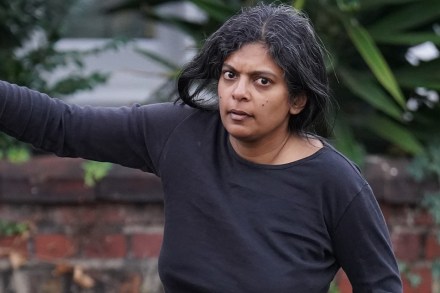
The Labour party’s contribution to the national debate this week has included the idea that someone can be ‘superficially’ black. Rupa Huq, a Labour MP, used this phrase to describe Chancellor Kwasi Kwarteng. ‘If you hear him on the Today programme,’ she said, ‘you wouldn’t know he’s black.’ It was a daft yet revealing comment. In her moment of unintended (and perhaps career-destroying) candour, Huq exposed a prejudice that remains pervasive in British politics. Any such suggestion is, of course, racist, and Labour could not deny it. Huq has been suspended. But she was articulating an attitude that has become widespread. She probably thought that her comments were uncontroversial for the audience at a Labour party conference debate.

Portrait of the week: Chancellor unveils his unBudget, Hilary Mantel dies and corgi prices soar

Home Kwasi Kwarteng, the Chancellor of the Exchequer, presented a far-reaching ‘fiscal event’ (ineligible to be called a Budget), said to have cut more tax than any measure since 1972. The markets’ immediate response was to sell pounds, and sterling fell to $1.07 (though the euro also continued in its own decline against the dollar and the Chinese yuan fell sharply). The Treasury defensively said it would publish proposals for dealing with its debt and the Bank of England said it would buy government bonds to help ‘restore orderly market conditions’. The IMF spoke out, inviting the government to ‘re-evaluate’ its tax changes.

Streeting and Phillipson shine on the last day

Wednesday morning at Labour conference is back to being the graveyard shift, with the delegates who are still there nursing hangovers and sharing videos of the speakers on the stage doing karaoke the night before. But this morning's session covered two of the most important public services from two of the party's rising stars – Wes Streeting and Bridget Phillipson. Streeting was in the gravest of the graveyard slots this morning Streeting is everywhere (including in the karaoke videos), and some of his colleagues are a bit irritated that he seems to have been anointed as the next Labour leader. Phillipson, though, is the one to watch because she unnerves the Conservatives and is applauded for being tough in her education brief.

After Boris: what will politics look like?

Boris Johnson has so dominated politics for the past few years that it is hard to imagine things without him. His premiership, though relatively brief, has been both eventful and consequential. With him in Downing Street, there was a constant – and exhausting – sense of drama, with frequent cast changes and plot twists. But next week Johnson’s run as Prime Minister will come to an end. Of course, he will not disappear entirely. There will be speeches and memoirs and his comments are bound to attract attention, which will make his successor nervous. Johnson, as previous Tory leaders will attest, knows how to disrupt the news agenda. Already he is trying out ways to avoid answering the question of whether he thinks a comeback is possible or not.