Labour party

Labour writes to Cabinet Secretary about details of Patrick Rock’s arrest

So it looks as though Labour is going to go for Number 10 over Patrick Rock's arrest. Shadow Cabinet Office Minister Jon Ashworth has written to Cabinet Secretary Jeremy Heywood with the following questions about the case: Dear Sir Jeremy, I am writing to you about the arrest last month of the Prime Minister's senior adviser, Patrick Rock, on allegations concerning child abuse images. On the substance of the allegations themselves, I recognise that Mr Rock has not been charged with any offence, and it is vitally important that the police investigation is able to take its course and that no potential future trial is prejudiced.

Wales is a nightmare vision of Ed Miliband’s Britain

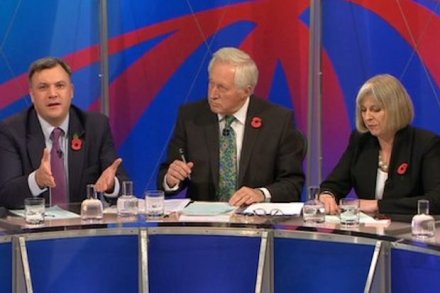
If politics was science, you would call Wales the ‘control’ group, for public service reform. Here is a country where Labour are the only game in town and a socialist philosophy which places a monopolistic state provider at the centre of health care and education reigns supreme – yes, even more supreme than the pupils and patients this system is designed to serve. In fact, in devolved Wales, Labour are running the public services as Ed Milliband would like to see them; a Labourite utopia of State supremacy, with none of the so-called evils of alternative providers getting in the way of the tight grip of the State. So how is this socialist utopia going, then? If a recent Question Time from Newport is anything to go by, not so good.

Does Tristram Hunt think that choice in education should be only for the rich?

At last - Labour has made its intentions over education clear. Throughout his interview on the Sunday Politics today, Tristram Hunt showed that Labour has switched allegiances to adults, not the pupils. On the side of institutions, not those who use them. Although the shadow education secretary stated he ‘doesn’t want to waste political energy on undoing reforms that, in certain situations, build rather successfully on Labour party policy’, he confirmed his party would not sanction any more free schools: 'I was in Stroud on Thursday and plans there for a big new style of school in an area where you’ve got surplus places threatened to destroy the viability of small local rural schools.

Lord Owen’s backing for Labour reforms rounds off good weekend for Miliband

Lord Owen's announcement that he backs Ed Miliband's union reforms and is donating £7,500 to the party rounds off a good weekend for the Labour leader. Owen quit the party in 1981 to set up the SDP, but last night announced that he wanted to support Labour campaigns to reverse the 2012 Health and Social Care Act. He said: 'This is a brave and bold reform by Ed Miliband and one I strenuously argued for as a Labour MP at the special conference on Saturday, 25 January 1981. This very desirable change, nevertheless, threatens to weaken Labour's financial support at a critical time when I and many others are hoping to see the Party produce a plan for Government from May of next year to rescue our NHS.

Labour kindly highlights Waitrose’s free coffee scheme

At least when the Conservatives blathered on about chocolate oranges, they had the excuse that Britain was feeling pretty good about itself. Today, the party that brought you the cost-of-gymming crisis has taken up a new campaign which just shows how noble and powerful opposition can be. It's already being branded Labour's CostaCoffeeCrisis, but it involves an attack on Waitrose for the heinous crime of offering its customers free coffee. The FT's Jim Pickard has the story that Labour shadow communities minister Andy Sawford has written to every MP with a local Waitrose asking them to campaign against the offer (which is available through the myWaitrose loyalty scheme, something many people didn't know about until Labour helpfully pointed it out).

Is Labour aiming for victory, or just the largest party, in 2015?

You won't catch Ed Miliband or David Cameron admitting that their best hope of governing after 2015 is in a coalition or a minority government. But what if their party machines have already decided that this is what's going to happen anyway? There are secret discussions within the Labour party about scaling back the number of 'target seats' (the seats that it will pour the most resources into in order to win - full list here) from the official list of 106 to 80, or even just 60, which means that some in Labour think it is better to aim to be the largest party rather than out-and-out victory. I explain why party officials think this is wise and what Ed Miliband could do to stop it in my Telegraph column today.

Welcome to the age of four-party politics

[audioplayer src="http://traffic.libsyn.com/spectator/TheViewFrom22_27_February_2014_v4.mp3" title="James Forsyth and Isabel Hardman on why the two party political system is dying" startat=1207] Listen [/audioplayer]Two things will make the next general election campaign quite unlike any previous election in this country. The first is that we now have four-party politics right across Britain. In Scotland and Wales, the nationalist parties have been a political force for a generation. But the big change is in England, where Ukip is emerging as a fourth force. Second, the campaign will be haunted by the spectre of another hung parliament. The question of what happens if no party wins an overall majority will be asked time and time again by an impatient media.

I’m scared to admit to being a Tory in today’s C of E

[audioplayer src="http://traffic.libsyn.com/spectator/TheViewFrom22_27_February_2014_v4.mp3" title="Ed West discusses political bias in the church" startat=640] Listen [/audioplayer]I am training for ordained ministry at a Church of England theological college. I am a trainee vicar, if you will. I am also a Conservative, which puts me in an extremely small minority and quite a tricky position. At my college, there are approximately 60 ordinands in full-time residential training. Of those 60, there are no more than three or four who would describe themselves as Conservative and the overwhelming majority would call themselves (proudly) socialist. There is also a sizable minority of Marxists.

Harriet Harman’s messy war with the Mail

Go to war with the Daily Mail at your peril: Ed Miliband did it over its 'the man who hated Britain' column and now perhaps the Labour party is seeing the revenge for that with the paper's ongoing insistence that Harriet Harman apologise for the National Council for Civil Liberties' links to the Paedophile Information Exchange in the 1970s. Harman, though, is going to war with the Mail again, and her supporters in the press are arguing that the paper is on thin moral ground here. Harman's messy handling of the story has kept it going as much as anything else. She gave a forceful interview to Newsnight yesterday in which she insisted that she had nothing to apologise for, then 12 hours later suggested that the links between NCCL and PIE were 'regrettable'.

When is a scandal not a scandal?

When it involves metropolitan left-wingers, says the Daily Mail. For a week, it has been exposing how Harriet Harman and Patricia Hewitt – or “Hat and Pat” as the London left of the early 1980s knew them – committed the National Council for Civil Liberties to the cause of helping the Paedophile Information Exchange. The Mail showed that while at the NCCL (now Liberty) * Hewitt described PIE in glowing terms as ‘a campaigning/counselling group for adults attracted to children’; * The NCCL lobbied Parliament for the age of sexual consent to be cut to ten – if the child consented and ‘understood the nature of the act’.

Ed Miliband: Children behave better than MPs at PMQs

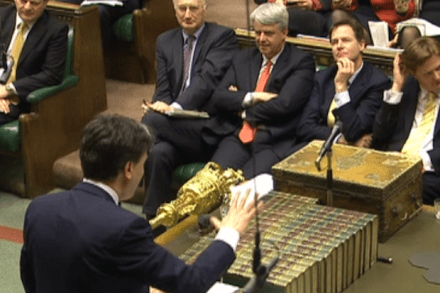
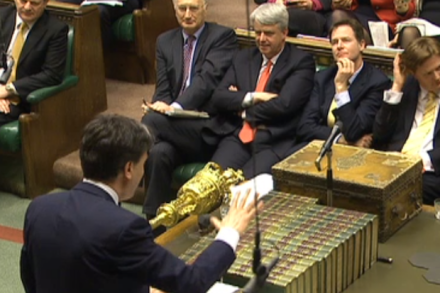
A rite of passage for any Opposition leader these days is to promise to make politics more decent and connected to people's lives. One recent Opposition leader said this, for example: 'And we need to change, and we will change, the way we behave. I'm fed up with the Punch and Judy politics of Westminster, the name calling, backbiting, point scoring, finger pointing.' David Cameron, who said this in his leadership acceptance speech in 2005, now has a team of MPs who help heckle Labour in the Commons during Prime Minister's Questions. This was mainly in response to Labour being much better at heckling, with Ed Balls gesticulating and sledging away on the front bench, and Michael Dugher and Sadiq Khan doing similar dirty work on the steps on the Labour side of the house.

Food banks: What would Labour do?

Was the church right to intervene in the debate about food banks and benefit cuts? I argue in my Telegraph column today that it was - but that the way the 27 bishops (more have since spoken out to support the letter to the Mirror - and Justin Welby has agreed with their argument that benefit cuts are pushing up food bank demand) intervened says a number of interesting things about the Church of England today. But there is another interesting question worth asking, which is not what would Jesus do but what would Labour do? As I explained earlier in the week, the party finds these attacks from church leaders very useful at the moment as it feeds into the Opposition narrative about government failure. But how will Labour deal with food banks if it is elected into government in 2015?

The church is better at the welfare business than the state

Today I have a piece in the Times (£ obviously, you know that) about the power of the Christian Left, following the Anglican bishops’ letter in the Daily Mirror; the Spectator’s Isabel Hardman goes into detail in the Telegraph about how her congregation did a better job of caring for the poor than the state did. That is what’s at the heart of the argument for Christian conservatism. State spending is effective when there is acute, widespread poverty, but once a country rises above a certain income there are diminishing returns, because the causes are less likely to be wider social and environmental forces. This is a good, or at any rate conservative, argument for spending on overseas aid, where the money really can make a huge difference.

I’m a Liberal Democrat… get me out of here!

It seems the launch of the new Liberal Democrat website is not going very well. Apparently the party of tuition fees and Nick Clegg is 'untrusted'. 'What should you do?', it asks. Lib Dem HQ will be hoping most people do not click 'Get me out of here!' come 2015. With their recent overtures to Labour, those that do vote yellow should certainly 'understand the risks'.

The Coalition mating game

There are ornately-feathered birds in New Guinea that have less bizarre mating rituals than Labour and the Lib Dems. The two parties need to show that it isn't impossible to work with one another in a future coalition while also keeping their own supporters reassured that they're not desperately keen to jump into a bed with another party that activists find themselves embroiled in dirty by-election and local fights with. Hence the weird back-and-forth dances and plenty of displays of aggression that we've seen over the past couple of months. So Ed Balls in January suggested Nick Clegg's head would not be the price of a Coalition after all with the Lib Dems and was immediately slapped down by Clegg.

Where would Ed Miliband’s first New Town go?

Ed Miliband has been singing the praises of New Towns in tonight's Standard, saying a Labour government would use these developments to help solve London's housing crisis. He writes: 'A key plank will be creating new towns in sustainable locations where people want to live, just like earlier generations did in places such as Stevenage and Milton Keynes. Labour will kick-start the next generation of new towns and garden cities around the capital to ease the pressure on London.' Although he doesn't say it, it's a reasonably safe bet that the Labour leader is thinking of Ebbsfleet when he talks about a sustainable location where people want to live. That's where Lord Adonis, who is leading Labour's growth review, has set his sights for a new development.

Ed Miliband and the state

Ed Miliband is delivering the Hugo Young lecture tonight, and will focus on 'people-powered public services'. All the briefing so far sets it out to be one of those 'intellectual underpinnings' speeches, rather than something that sets the world on fire (although Miliband does, to his credit, have a habit of pulling impressive speeches out of the bag when we're not expecting it, or boring us all to tears when we've been told to expect something major). The central premise of it is set out in his Guardian article (and for more background, do read Rafael Behr's piece on this): it's about people having more power over their lives. He writes: 'Indeed, it is about much more than the individual acting as a consumer.

Labour’s internal reforms will have consequences

[audioplayer src="http://traffic.libsyn.com/spectator/TheViewFrom22_6_February_2014_v4.mp3" title="James Forsyth and Marcus Roberts discuss Labour's election strategy" startat=702] Listen [/audioplayer]At the end of last year, there was an expectation that Labour’s internal reforms would be one of the big themes of the first quarter of the year. But this week, Labour’s National Executive Committee voted through the changes by the comfortable margin of 28 to 2 and with remarkably little dissent. The absence of a public row over the issue makes it tempting to think that the changes don’t amount to much. But this would be wrong. Labour is going to scrap its current electoral-college split between MPs, the Unions and members and replace it with a one member one vote system.

With friends like these the Union has no need for enemies

[audioplayer src='http://traffic.libsyn.com/spectator/TheViewFrom22_6_February_2014_v4.mp3' title='Alex Massie and Matthew Parris discuss why the Union is in peril' startat=55] Listen[/audioplayer]In the cover story for this week's edition of the magazine (subscribe, by the way!) I write that "The battle for Britain is being conducted on a wavelength which unionist politicians in London struggle to pick up." As if to prove my point, consider this story from today's Financial Times in which it is revealed that government ministers in London have been pressuring defence companies to "highlight potential job losses and disruption if Scotland splits from the UK".

The Tories haven’t been installing their people in quangos – but they should have

The accusation that the Tories have been installing their people in public appointments should evoke only a hollow laugh. They have been comatose on the subject. One of the greatest skills of New Labour was putting its allies in positions of control across the public sector. A great many are still there, and yet the Tories wonder why their efforts at reform are frustrated. Maggie Atkinson, for example, was imposed by Ed Balls, when in office, as Children’s Commissioner, against the recommendation of the relevant selection committee. She lingers on in her useless post. Lord Smith, the former Labour cabinet minister who has been flooding the Somerset levels, is still at the Environment Agency.