Labour party

Ed Miliband is better placed than the Tories to follow Roosevelt

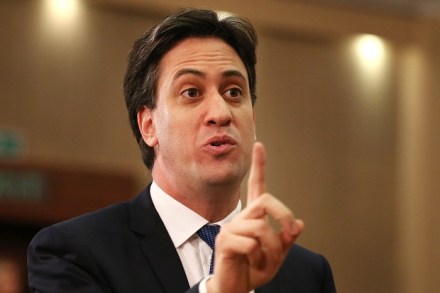
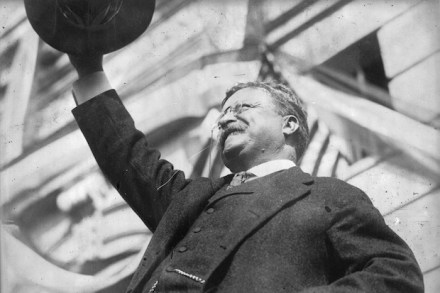
On Friday, Ed Miliband pledged to introduce greater competition in our banking market. Last September, he pledged to freeze energy prices for 20 months while our broken energy market is reset to expand competition and consumer choice. Reforming broken markets to increase competition and address the long-term sources of our cost-of-living crisis might seem an unusual theme for Labour to champion. In fact it is an approach that has learnt from a progressive conservative tradition, one that understands the importance of reform to ensure that markets remain open and competitive. Noone understood this idea better than the American President Theodore Roosevelt – a passionate believer in free enterprise, and a tenacious advocate of market reform.

Ed Miliband’s tricky second album

Ed Miliband has spent the past few months celebrating the success of his conference pledge to freeze energy prices. He was so pleased with the disruption that this caused that he referenced it in his speech on banking reform today. He is right to be pleased with that pledge. It was a hit. It's just that today's speech, built up by the Miliband camp as the sequel to the price freeze, was the political equivalent of a difficult second album. You could see what he was trying to do. Sections of the speech were straight from the Obama playbook, just as his conference speech was, with appeals such as 'Britain can do better than this' and lines such as 'we believe we can tip the balance away from struggle and towards hope'. But the playbook lines weren't played very well.

Ed Miliband’s ‘One Nation Economy’ speech: full text and audio

listen to ‘Ed Miliband's ‘One Nation Economy’ banking reform speech’ on Audioboo Today I want to tell you what the next election is about for Labour. It is about those families who work all the hours that God sends and don’t feel they get anything back. It is about the people who go to bed anxious about how they’re going to pay their bills. It is about the parents who turn to each other each night and ask what life their sons and daughters are going to have in the future. It is about those just starting out who can’t imagine they will ever afford a home of their own. It is about the most vulnerable in our country who feel they are just being tossed aside.

Miliband’s big speech challenge isn’t Mark Carney

Even though Labour is quite clearly rather peeved by George Osborne's minimum wage announcement, it is, in one way, a compliment to Ed Miliband that the Chancellor felt it strategically important to try to sabotage the Labour leader's speech on banking, which he will deliver shortly. The Conservatives are aware that even if Miliband has a knack of coming up with policies that sound potty, he also has a knack of framing them in a way that disrupts the political debate. Thus a pledge by a party leader in the autumn to control prices in a market where he has no control of worldwide wholesale markets still managed to cause significant trouble.

Osborne backs minimum wage hike as fundamental to a ‘recovery for all’

George Osborne’s decision to back an above inflation increase in the national minimum wage is his most politically significant decision since his decision to cut the 50p rate. It also makes that decision far less harmful politically. Reducing the top rate of tax might have been the right thing to do economically but it hurt the Tories politically. It enabled Labour to claim that this was a government for the rich and that the recovery was only benefitting the few. By contrast, this decision allows the Tories to emphasise that, in Osborne’s phrase, this is ‘a recovery for all.’ There will be those on the dry right who don’t like this policy. They’ll argue that it’ll cost jobs.

Owen Jones’s letter to Ukip voters exposes the Left’s blind spot

I try to avoid mentioning Owen Jones because he already gets so much attention from people on the Right, including quite a lot of abuse on t’internet; the poor man’s probably blocked more people than have followed me. But his letter to Ukip voters in today’s Independent interested me as a study in what Jonathan Haidt described as the Left’s blind spot. Owen’s argument is that Ukip supporters have Left-wing views on the economy and therefore should desert former City trader Nigel Farage and join him in voting for a socialist party.

Labour’s poll woes as economy grows

Is the improving economy harming Labour’s standing? According to a new Guardian/ICM survey out today, Labour is still ahead of the Conservatives by three points — but the gap is slowly shrinking. Since the last ICM poll in December, Labour’s lead has dropped to just three points, down from an eight point lead in November: Today’s poll also looks at how assured people are feeling about their own financial position and their ‘ability to keep up with the cost of living’. 52 per cent now feel confident about the state of their personal finances — the highest level since October 2010.

Will peers decide to #LetBritainDecide?

The first week back in January is always a miserable one. Commuters stare miserably out of rain-streaked train windows contemplating the end of the festive season. More couples turn to divorce or relationship counselling than at any other time of the year. George Osborne did try his best to cheer us all up on Monday by merrily announcing that he'll need to cut a further £25bn from public spending in the next parliament, but we need something more than that in the worst week of the year. Which is why it is so cheering that #LetBritainDecide is back in Parliament today. Yes, now it's the chance of peers to discuss that wonderful Wharton Bill, the private members' bill for an EU referendum in 2017.

The Duck House is the best show in the West End

It’s taken me a few months to catch up with the political farce The Duck House. Then again, it’s taken The Duck House a few years to catch up with the expenses scandal that it mocks. The story is set in the half-forgotten era of 2009. Robert Houston, a glib New Labour high-flier, is planning to defect to the Conservatives on the eve of the general election. His scheme, which is a little hard to decipher, is to stand for the Tories in his safe Labour seat and to persuade his Labour supporters to join him in a mass conversion to Conservatism. Having pulled off this piece of electoral magic, he expects to land a plum job in the cabinet as soon as Cameron is returned to power.

What will 2015’s broken promises be?

Ed Balls' softer language about Nick Clegg might be an inevitable repositioning of the Labour party in the run-up to another hung parliament in 2015, or it might be the shadow chancellor trying to get ahead of the game after the end to his 2013 was rather bruising. But it is worth mulling the sorts of things that, aside from personalities, the two parties could struggle with. One is the language that those at the top have used about Labour wrecking the recovery. At the 2013 Lib Dem autumn conference, Nick Clegg said: 'Labour would wreck the recovery. The Conservatives would give us the wrong kind of recovery.' Some Labour figures such as Lord Adonis felt this was unfair on Labour: wrecking the recovery is far worse than swerving off balance, surely?

The question on immigration that Labour must answer before 2015

We don't quite know what Ed Miliband would really do about a lot of things just yet: this is the year when he plans (and desperately needs) to set that out so Labour isn't just an Opposition that complains about things being expensive but a party that voters can imagine governing. But it's significant that one of the policy areas where Miliband has felt it is important to get a lot of detail out pretty early is immigration. He, and everyone around him, is acutely aware that though their personal instincts might be to argue for the benefits of mass immigration to this country, the voters, rightly or wrongly, aren't quite so keen. I look at the party's new tough stance on immigration for the politics column in this week's Spectator.

Podcast: the fantasy Pope Francis, Labour’s immigration nightmares and the Profumo affair

Is our perception of Pope Francis simply an invention of the liberal media? On this week’s View from 22 podcast, The Catholic Herald’s Luke Coppen and Freddy Gray discuss how the world has fallen in love with this ‘Fantasy Francis’, what might happen if the real Francis (whoever he may be') is discovered and why he’s replaced Obama as a leftie pinup. Demos’ David Goodhart, The Spectator's Isabel Hardman and Tim Finch from the IPPR also discuss Labour’s immigration nightmares. Is the party in a more difficult position than the Conservatives? And has Ed Miliband apologised enough for the mistakes they made?

The SNP school Labour in politics. Again.

Alex Salmond might not wish to be compared to Gordon Brown but there is one sense in which the two dominant Scottish political personalities of the age are more alike than either would care to acknowledge: they each love a good dividing line. In Edinburgh yesterday Salmond announced that all pupils in their first three years of primary school would henceforth be entitled to a free school lunch. This, he claimed, would save parents £330 a year per child. A useful benefit for those parents whose offspring do not currently qualify for free meals; a means of ending, the First Minister suggested, the stigma presently endured by those children who do rely on free meals. Labour voted against the proposal. Cue much celebration in Natland. Another dividing line has been established.

A look at Labour’s London line-up

The open primary to choose the 2016 Labour candidate for London Mayor is a dot on horizon; but speculation is underway. Mr Steerpike has been reading the form. Tessa Jowell, the former Olympics minister and outgoing MP for Dulwich, had a busy festive period: turning on the waterworks and displaying signs of Tourettes in this Guardian interview. Here is what she said in response to a question about those pressmen who say that her estrangement from her husband David Mills during his run-in with the Italian courts was manufactured: ‘Frankly, you know, those arseholes are so fucking rancid that I just hope every morning they wake up and think: 'I'm ashamed of the job I do.

Struggling with your New Year’s Resolution already? It’s all David Cameron’s fault.

Ed Miliband did vow to 'relentlessly' focus on the cost of living crisis facing hardworking families up and down the country (hopefully someone will develop a shorthand outline for this rather lengthy saying to save the pens of journalists who have to write it down repeatedly at launch events over the next 12 months) in 2014. So we should have expected this relentless focus to see Miliband's shadow ministers pointing angrily at every expensive thing that they can find, regardless of whether it's particularly heart-rending. Today we heard Luciana Berger thundering that David Cameron is so evil that he's putting people off their new year's resolutions.

The ugly, cynical EU immigration debate

Tristram Hunt, Shadow Education Secretary, is an intelligent and articulate individual but like everyone in politics, has the handicap of having to square his views with the record and policies of his own party. His interesting interview with the Fabian Review is a case in point. He attributes some of the education failures of white boys -- the new educational underclass -- in British schools to the influx of large numbers of East European immigrants in areas like Kent and East Anglia. His remedy for the problem is benign, namely, to educate indigenous youth to the standards needed by employers, so as to outflank the competition, and to focus on vocational skills in a way that Labour didn't do in power. So far, so dandy.

In praise of Eric Joyce

Yes, Eric Joyce, the MP for Falkirk until the next election, has issues. Yes, his copy book is well blotted. He has a conviction for assault which scarcely reflects splendidly upon him (even if many members of the public themselves wouldn't mind sticking-the-heid on any number of MPs) and in his dozen or so years in Westminster he has made energetic use of his parliamentary allowances. Yes, yes, yes. But I have some time for almost anyone declared "unfit to stand for the Labour party". It's a kind of character reference. Moreover and despite his troubles, Joyce possesses many of the qualities we should desire in our parliamentary representatives. Chief of these, intelligence and an independent spirit. He may be mistaken on many issues but that's not the point.

The Labour split on planning and housebuilding

Ed Miliband's housebuilding announcement today is rather a re-heated announcement of his conference pledges on housing. Eric Pickles has already set out on Coffee House his belief that these new ideas are 'more of the same high-tax and top-down policies that led to their housing boom and bust'. The announcement certainly allows for a bit of a knockabout between the two parties, neither of which has much to boast about when it comes to housing, but there's one point that's worth noting about the Labour leader's announcement today.

Joy to the world | 12 December 2013

Pessimism sells. It shifts books and newspapers, sends ratings soaring. It fills lecture halls, wins research grants, makes political careers. We are fed this constant diet of doom, predicting anything from meteorological Armageddon to a tyranny of austerity, and so it is little wonder that we tend to miss the bigger story. A cold, dispassionate look at the facts reveals that we are living in a golden era. and that, if you use objective measures, 2013 has been the best year in human history. As a public service - and one which is rarely provided in broadcast or print - The Spectator will below provide evidence for these assertions. We can start from crude figures: $73.5 trillion, the world’s economic output this year.

George Osborne thickens his welfare dividing lines

We already knew that welfare would be a key dividing line for George Osborne at the next election. He set up the dividing lines in the emergency budget and comprehensive spending review in 2010, and they have largely stuck, which is a testament to the Chancellor's skill as a strategist. But at today's Treasury Select Committee, Osborne thickened those dividing lines with Labour by saying that the welfare budget must take another billions of pounds' worth of cuts. It was the language that Osborne used, as much as anything else, that revealed how the 2015 debate will pan out. He said: 'My view is that welfare expenditure cannot be excluded from the difficult decisions that need to be made.