King charles

King Charles’s cancer and the future

From our US edition

On September 23, 1951, King George VI was operated on for cancer. It was a grueling, dangerous procedure, conducted at Buckingham Palace by Clement Price Thomas, a leading chest surgeon. The king, unsurprisingly, was miserable at the idea, saying, “if it’s going to help me get well again, I don’t mind, but the very idea of the surgeon’s knife again is hell.” Yet he was kept unaware of the seriousness of his illness, instead being informed that the cause of his health problem was nothing more urgent than obstruction in one of his bronchial tubes, which would require a “resection” of the lung, and that it would cure the “pneumonitis” that he believed he was suffering from.
Charles

Why we need an Elizabeth and Philip museum

Driving up Royal Deeside last weekend, I spotted a harvest under way on that magical Hobbit-esque green/gold/purple hillscape. It all came flooding back. One year on from the death of Elizabeth II, it’s the sight of the tractors lined up next to the A93 which remains among the most enduring images. It wasn’t just that they all had their shovels dipped in tribute, like the dockers’ cranes saluting the Havengore as it carried Churchill down the Thames in 1965. It was the fact that they were all spotless. At the busiest time of the year in this lush agricultural belt of Aberdeenshire, farmers had paused their harvesting, taken their machines out of the fields and given them a very thorough hosing down before lining up for hours to salute the late Queen.

The art of the pocket square

When imagining a monarch’s wardrobe, what comes to mind? With the late Queen, it was bold-coloured dresses (as she famously said, ‘I have to be seen to be believed’), elaborate hats, silk headscarves and those black Launer handbags. Our new King is no less a style icon. For him it’s well-tailored double-breasted suits from Anderson & Sheppard (probably well-worn, for His Majesty is a great advocate of make do and mend – the suit he wore to Harry and Meghan’s wedding was 34 years old), Turnbull & Asser shirts, hats from Lock & Co. and probably the odd tartan kilt. But it is his collection of pocket squares that I would be most interested to see if ever allowed a peek into the King’s cupboard.

King Charles and the implications of oaths

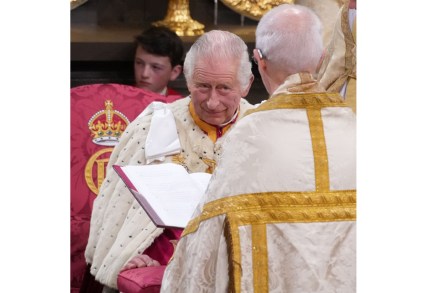
After much debate it was decided that the people would not be ordered to reciprocate the King’s oath of allegiance. This was wise. As ancient Greeks knew, oaths have serious implications. For them, to take an oath was in effect ‘to invoke powers greater than oneself to uphold the truth of a declaration, by putting a curse upon oneself if it was false’. The Trojan war – the subject of the West’s first work of literature – happened only because Tyndareos, stepfather of Helen, compelled all her Greek suitors, on oath, to go to war on anyone who seduced her from her husband – which the Trojan Paris proceeded to do. Betraying that oath (Achilles was too young to swear it) would have meant divine punishment in the future. But the practice was open to abuse.

The shame of the coronation arrests

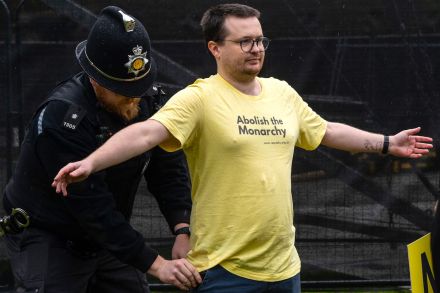
What century is this? I ask because today, in London, peaceful protesters have been handcuffed and arrested for daring to express disapproval of King Charles. For daring to believe Britain should be a republic, not a constitutional monarchy. This is a grotesque assault on freedom. It is borderline medieval. No one’s feelings, not even the King’s, should ever trump the people’s right to freely express their beliefs in public. ‘Give me the liberty to know, to utter, and to argue freely according to conscience, above all liberties’ The footage coming out of Trafalgar Square shames Britain. We’ve seen protesters in ‘Not My King’ t-shirts being arrested. Cops apparently seized hundreds of placards.

God save our Islamophilic King

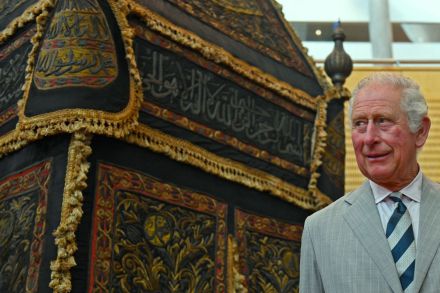
Britain today celebrates the crowning of a new king, but the coronation will be watched and celebrated by millions across the Commonwealth. To an extent that is often not appreciated abroad, the Queen – who was Defender of the Faith – was revered by her subjects of all faiths. In our often sectarian world, she exerted a unifying force: one that her son recognised and exemplifies. King Charles is deeply informed of Muslim beliefs, culture and mores Muslims in Britain and the world over will recognise, in King Charles, a monarch who is deeply Islamophilic. He has spoken about his attempts to learn Arabic in order to understand the Quran in its original script.

The battle to restore Britain’s hedgerows

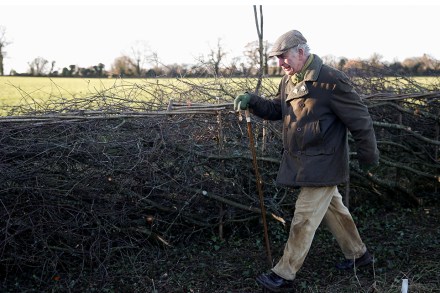
‘I don’t know if hedgelaying is a dying art. But there’s a lot of old hedgelayers that are dying,’ says David Whitaker to chuckles from some of his fellow craftsmen. The occasion is the annual hedgelaying championship, organised by the National Hedgelaying Society, of which Whitaker is secretary. In a good year, the event draws around 100 competitors and a few curious spectators to a marquee in a muddy field in Hampshire. Britain’s oldest hedge dates back to the Bronze Age. Thousands of miles of hedgerow were laid in the late 1700s after the Enclosures Act carved up the countryside.

In praise of minor royals

On a scaffold hung with black cloth, on a freezing January day in 1649, the instinct for sumptuousness died in these islands. It was killed alongside Charles I, kingly excess and belief in divine right and, with intermittent exceptions, has never recovered. And so when, time and again since September, we’ve heard about our new King’s plans for downsizing the monarchy, the bulk of the population has calmly nodded its assent. Trim, slim, streamline, skimp. Time to dispense with peripheral royal family members! Farewell to the jostling chorus line of the Buckingham Palace balcony of yesteryear, all oversized hats, Ruritanian frippery and excitable small children! Away with the hangers-on!

Donald Trump to publish 1995 letter from King Charles

From our US edition

Donald Trump is set to publish a letter from then-Prince Charles, without the British monarch's permission. The letter from the now-King will form part of a book coming out Tuesday called Letters to Trump, which features celebrities and other people who have written to the former president during his life. The correspondence is said to range from President Richard Nixon to Alec Baldwin. Perhaps they bonded over lawsuits? Charles purportedly wrote to Trump in 1995 to thank him for offering an honorary membership to his Mar-a-Lago resort in Florida. A nice gesture, but King Charles isn’t a golfer. Maybe it’s something to do with those hands.

charles

How King Charles saved Cornwall

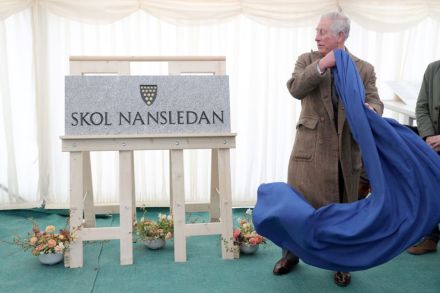
I’m a 30th generation Cornishman. I’m so Cornish my mum can make Cornish pasties blindfolded, my maternal grandmother was employed aged nine to break rocks in a Cornish tin mine (she was a ‘bal maiden’), and my second cousins founded Cornish Solidarity, which is the very-lightly-armed wing of Mebyon Kernow (the Cornish Plaid Cymru). Nonetheless my visits to the county are infrequent, probably because I am not overly fond of rain.  However, on my most recent visit I noticed that something in Cornwall has changed.

We don’t need a ‘diverse’ coronation

Refugees and the NHS, we are told, will be at the heart of King Charles’s ‘diverse’ coronation in May. You’d think that a thousand-year-old institution tasked with steering clear of controversy might seek to avoid such hot potatoes. But there is nothing unexpected about this royal foray into politics. LGBTQ+ groups will perform at ‘a star-studded concert at Windsor Castle’ as part of the celebrations marking His Majesty’s accession to the throne. A royal source told the Daily Telegraph the coronation ‘needed to be “majestic” but “inclusive” to reflect a diverse modern Britain’.  Unfortunately, this sounds like another example of the utterly banal EDI (equality, diversity, inclusion) events we’ve become used to in Britain.

A united royal Christmas… without Meghan and Harry

From our US edition

It was no surprise that Prince Harry and Meghan were absent from Britain's royal Christmas celebrations at Sandringham after their recent outbursts. Their Netflix documentary cemented what we already knew: there is no going back. Instead, the pair opted for a Californian Christmas. Away from the pomp and pageantry of the royal family’s traditions, the day was described as low-key, choosing to spend their days playing games like "pin the tail on the Catherine" and throwing darts at King Charles’s face. I’m kidding, they’re far too mature for that. In Britain, we saw a family in unity. Even Prince Andrew attended the Christmas Day church service at St. Mary Magdalene and, somehow, was received well by crowds.

king charles royal

The power of the royal Christmas message

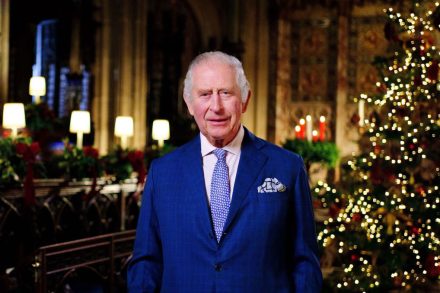
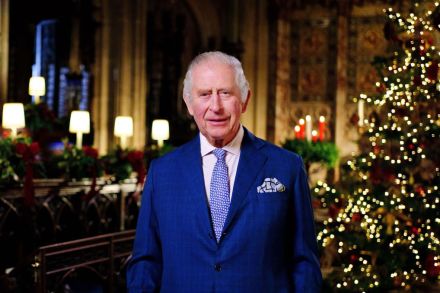
Today, shortly before 3 p.m., there will be a collective heave as backsides – weighed down from turkey and roast potatoes – are prised from dining chairs and plonked on to sofas to tune into the King’s speech. So I very much hope. For the royal Christmas broadcast is important, and this year’s of course marks a new era. This afternoon our televisions will bring us not only the first Christmas message from the new King, but indeed the first from any King. For while the tradition of the Christmas message began in 1932 under King George V, the first Christmas broadcast to be televised was not until 1957, and that of course was by Queen Elizabeth II.

The King’s speech

Is King Charles safe?

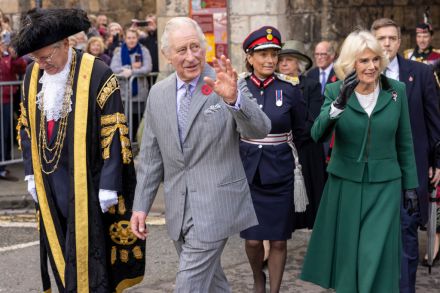
The news that his security experts are conducting an urgent review of the King’s safety during his expected traditional Christmas Day walkabout near his Norfolk home, Sandringham – where he will be accompanied by his wife – is sad but scarcely surprising. Already in his short reign there have been two disturbing incidents: eggs were thrown at Charles during royal visits to York and Lincoln. Fortunately, the perpetrators missed both times. But, given the tendency for copycat behaviour among the more moronic of the monarch’s subjects, the danger that an egg thrower may score a hit next time is obviously high.

The case against a stripped-back coronation

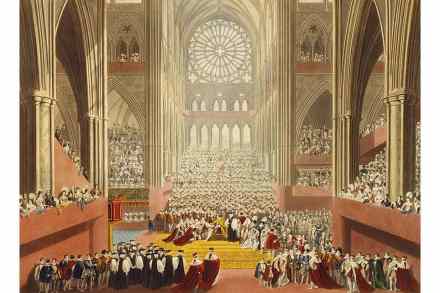
The last King Charles was crowned in 1661. Samuel Pepys attended the ceremony. He was captivated by ‘the sight of all these glorious things… sure never to see the like again in this world’. He later became so merry, he told his diary, that ‘my head began to turne and I to vomitt…Thus did the day end, with joy everywhere’. We live in a more decorous age, but I think Pepys imbibed the right spirit. The coming coronation of King Charles III should be joyful too. The paradox is that joy will not be achieved unless the ceremony is solemn and magnificent. Early signs give slight cause for concern. On Tuesday last week, the coronation was announced for 6 May, half the traditional time gap.

Nobody wanted Liz Truss

One of the most important ingredients in the oil used to anoint King Charles during his coronation is becoming a bit of an issue – and it may give us a signal as to what sort of monarchy lies in wait for us. Aside from cinnamon and ambergris, the oil also includes musk from the Ethiopian civet cat, obtained through what protestors suggest is a cruel process. The oversized weasel is constrained in a tight cage made of twigs and its bum is forced out of a hole at the back of a cage, whereupon skilled Ethiopian musk gatherers squeeze the animal’s perineal glands, reaping a rich harvest of noisome oil and making the civet cat wish that it had been born in, say, Denmark.

Battles royal: how Charles has influenced British architecture

It is the evening of 30 May 1984. The country’s leading architects have assembled at Hampton Court to celebrate the 150th anniversary of the body that represents their interests, the RIBA. It is a sea of black polo necks, masculine chit-chat and clinked glasses. Given that the ‘R’ in RIBA stands for ‘Royal’ – albeit an honour actually awarded by William IV in 1837, three years after the Institute of British Architects’ founding – it is perhaps no surprise that a royal has been drafted in to politely murmur some congratulations over dinner. Yet what happened next was most certainly not expected.

Why Charles is the King of Savile Row

No one who has watched the events of the past ten days could doubt the King’s commitment to his late mother – or to his people. But I think another of Charles III’s commitments is also becoming apparent: one to British tailoring. From his black-braided morning suit when he addressed the Houses of Parliament at Westminster Hall to the ceremonial Air Marshal’s uniform he wore to process the Queen’s coffin from Buckingham Palace to her lying-in-state, His Majesty has been nothing less than impeccably attired at every turn. Perhaps it shouldn’t be surprising that we’ve got probably the best-dressed head of state in the world. As Prince of Wales, Charles had long flown the flag for British style.

What Charles shouldn’t do

One of the most regrettable trends of the past few decades is the creep of politics into every aspect of our public life. Institutions tasked with preserving our heritage, such as Tate Britain, Kew Gardens and the National Trust, are busy holding themselves to account for their historic links to slavery and colonialism, while the police, the civil service and the Church of England have embraced the mantra of equity, diversity and inclusion. The people in charge of these organisations – liberal, urban, highly educated – don’t think of these values as politically contentious, while those of us who don’t fall into those categories – probably the majority of the population – cannot help but feel alienated and disenfranchised.

The Queen’s act of Union

In death, as in life, Elizabeth II has been a unifying force for her country. For all the political rancour of recent years, this week has revealed a country at ease with itself. People of all political persuasions have come together to show their respect – in Scotland just as much as in England. It has been a reminder of what a force for good a monarch can be when he or she devotes their life to service. After the Queen’s coffin was transferred from Balmoral Castle to Holyroodhouse, up the Royal Mile to St Giles’ Cathedral, members of the public lined up to see it as it lay in state. Nicola Sturgeon was as effusive in her tributes as any Westminster politician. The new King was heard by the Scottish parliament with respect.