Kabul

‘Kind of funny’: former House staffer rejects Foreign Affairs Committee’s defense of Afghanistan investigation

From our US edition

A senior investigator who resigned from the House Foreign Affairs Committee last week is hitting back at the committee’s attempts to defend its investigation into the United States’s military withdrawal from Afghanistan. Jerry Dunleavy, a former Washington Examiner reporter who wrote a book about the fall of Kabul in the summer of 2021, joined the Foreign Affairs Committee at the behest of senior staff about a year ago. In his resignation letter that was made public last week, Dunleavy accused the committee and Chairman Michael McCaul of not running a serious investigation into the Biden administration’s withdrawal from the twenty-year war in Afghanistan.
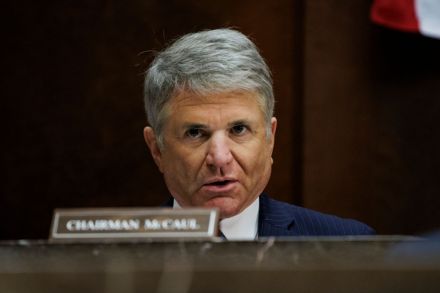
Committee Chairman Michael McCaul (R-TX) speaks during a House Committee on Foreign Affairs hearing (Photo by Samuel Corum/Getty Images)
press

Biden’s press conference was a feast of disinformation

From our US edition

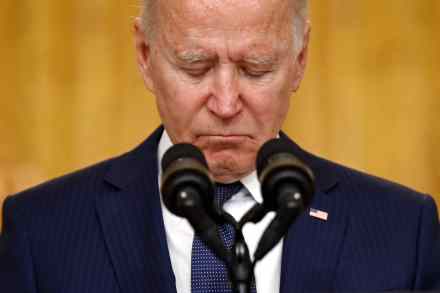
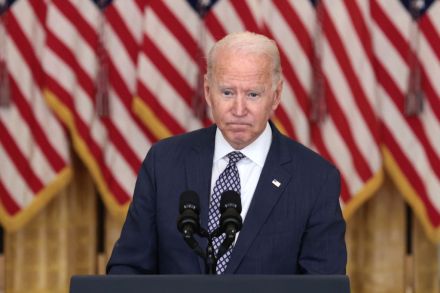
Joe Biden emerged from his cave, saw his shadow, and told us there will be three more years of winter. That winter, descending on America’s position in the world, was on public view at Biden’s Friday press conference about Afghanistan. Standing behind him was the Vice President, the secretary of defense, the secretary of state and the national security adviser, a stark contrast to the sad photo of Biden alone on a video call from Camp David with those advisers. Why have them stand there, mute? To convey to the public that the administration was united...and to convey to his advisers that they were all on this sinking ship together.

‘My kid’s name resonated in that body’: Steve Nikoui’s first interview after State of the Union outburst

From our US edition

Steve Nikoui’s son, Lance Corporal Kareem Nikoui, was killed alongside twelve other American service-members outside of Abbey Gate at the Kabul Airport during the Biden administration's hasty exit of Afghanistan in August 2021. That's why Nikoui's outburst, “Do you remember Abbey Gate,” interrupted the president’s State of the Union address on Thursday, roughly fifty-one minutes through the speech. Nikoui was escorted out, arrested, placed in handcuffs and charged with a misdemeanor that could see him in jail for up to ninety days. “I remember what set me off," Nikoui told The Spectator Friday night, in his first interview since his arrest. "When he was talking about kids, in one moment, they're glorifying these abortions...

nikoui

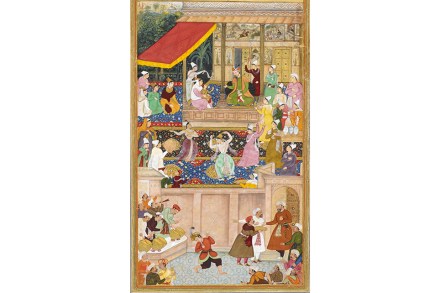
The remarkable Princess Gulbadan, flower of the Mughal court

In 1587, the Mughal Emperor Akbar, himself illiterate but with grand vision and even greater ambition, commanded his courtier Abu’l-Fazl to write an official history of his reign and dynasty. An order went around Akbar’s court that anyone who was ‘gifted with the talent for writing history’ should put pen to paper and record the events that had shaped their times. Unusually for a male-dominated society, this included the emperor’s aunt. The 64-year-old Princess Gulbadan was well placed to provide a first-hand description of the creation and consolidation of the Mughal empire, for she was the beloved daughter of the Emperor Babur, who founded the dynasty, and the half-sister of Akbar’s father, Humayun.

Inside the Biden administration’s indifference towards rescuing Americans from Afghanistan

From our US edition

At the time of the Afghanistan withdrawal, Biden administration officials said behind closed doors that secretary of state Antony Blinken and national security advisor Jake Sullivan “don’t give a fuck” about rescuing Americans from the clutches of the Taliban. The admission came on a late August 2021 phone call held between the Department of Defense and congressional Democrats, based on The Spectator’s review of contemporaneous text messages. During the conversation, a Pentagon official acknowledged in response to frustration from Democrats that two of the senior-most officials working on the evacuation — Blinken and Sullivan — were indifferent to the plight of their fellow Americans.

afghanistan kabul

The Democratic Party goes alpha

From our US edition

Is the Democratic Party trying to be more masculine? An eagle-eyed political observer pointed out recently that the DNC’s official logo has mysteriously changed color without any public fanfare. The logo, which features a “D” inside of a circle, used to be a sky blue. At some point in 2022, the “D” went quite a few shades darker to a royal blue. You can spot the difference in this side-by-side: A graphic design expert tells Cockburn that the change might have been an attempt to make the party’s colors better match its newfound lip service to the working class under Biden. Alternatively, they may be trying to cash in on those “dark Brandon” memes! A tale of two Naomis There are few things more annoying than being mistaken for someone else.

joe biden

Seeking accountability for Afghanistan with the Gold Star families

From our US edition

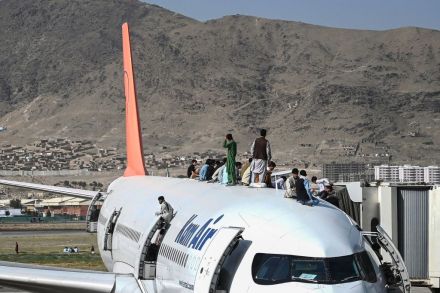
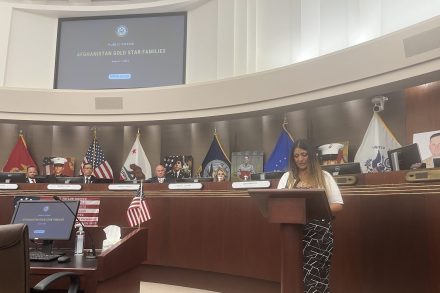
Escondido, California “I will fight till my last breath to get the truth,” said Coral Briseño, the mother of Humberto Sanchez, who was killed in Afghanistan during the Biden administration’s chaotic withdrawal. Her son told her that if he didn’t come back, he wanted her to tell his story.  Briseño and her fellow Gold Star family members had their first opportunity to address the nation in a hearing that was aired live on Fox News — but completely absent from CNN, ABC, NBC and CBS.  The field hearing marked the first time the group of parents addressed the public as one. The chaotic exit from Kabul, marred by suicide bombings and people falling off of planes, was praised by everyone from the president to his top military brass as historically successful.

gold star afghanistan

Afghan leaders say country is a terror haven

From our US edition

The Biden administration is using every tool at its disposal to paint a rosy picture of Afghanistan as a terrorist-free state as the two-year anniversary of its disastrous withdrawal approaches. But a coalition of Afghan generals, diplomats and civil servants is writing to Congress to explain that in reality, “today’s Afghanistan under the Taliban and their al-Qaeda allies, is again the greatest terrorist safe haven in the world.

afghan taliban

John Kirby’s Clean-Up on Aisle Kabul

From our US edition

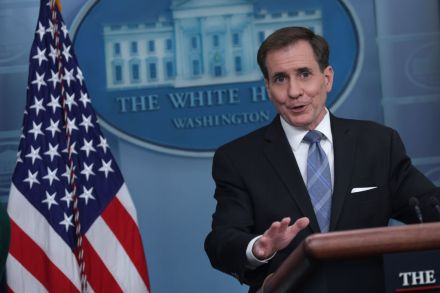
I almost feel sorry for John Kirby, the National Security Council spokesman tasked with tidying up after the icky messes deposited about the landscape by Joe Biden.  Let me emphasize the adverb “almost.” Kirby’s job is unenviable. Basically he has to lie and pretend that his boss and that excruciating, illiterate muppet of a press secretary, Karine Jean-Pierre, make sense. It’s always a horrible goulash that Kirby has to contend with. He has my sympathy for that.  But yesterday, when Kirby stood before the press to answer questions about the administration’s report on Ameirca’s humiliating flight from Afghanistan in August 2021, his performance was not just cringe-making. It was infuriating.

john kirby afghanistan

The Taliban’s rough year in power

From our US edition

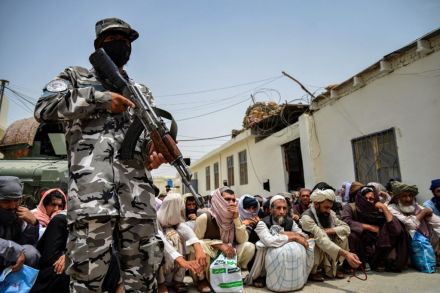
Next month will mark the first anniversary of the Taliban’s second stint in power in Afghanistan after a twenty-year insurgency against the US-backed government. In August 2021, Taliban fighters, flush with captured American military equipment and the jubilation of victory, were openly walking the streets of Kabul. While the disgraced Afghan president, Ashraf Ghani, was preparing for a life of exile in the United Arab Emirates, Taliban officials were converting his offices into their headquarters. The Taliban’s first year in power, however, hasn’t been pretty. The group has quickly come to understand that administering a poor and faction-prone country is a lot more difficult than taking up arms against a deeply unpopular, corrupt, foreign-dependent government.

The Taliban’s Afghanistan quagmire

From our US edition

Hibatullah Akhundzada is a secretive man who is only occasionally heard and seldom seen. But on May 1, the Taliban’s supreme leader was delivering a sermon in Kandahar’s central mosque, bragging about his organization’s supposed successes. “Congratulations on this victory, freedom and success,” said the reclusive Akhundzada, surrounded by armed bodyguards. Nine months after the Taliban captured Afghanistan and forced the hapless Ashraf Ghani to flee the country in a helicopter, its chief official remains content with relishing the past. But truth be told, the Taliban has nothing to brag about.

Operation Save Big Dog and the real scandal of Boris’s leadership

There is a theory which states the primary reason for Boris Johnson’s political longevity is that there are simply so many scandals that the latest infidelity drives the last one from public consciousness before it really has time to sink in. 'Who paid for his wallpaper? Meal delivery? He had a party while forcing the country into social isolation and atomisation? How many parties— what do you mean the police are investigating him?' At this point, it seems like the revelation most likely to do him in will be the discovery that, at some point in the last two years, Boris Johnson sat quietly in a room and diligently worked through an afternoon without once breaking from his papers to do something outrageous.

The Foreign Office isn’t fit for purpose

Now that the dust from the choppers has settled, we are left with two abiding images of the West’s adventure in Afghanistan. The first is an American Chinook hovering over its embassy, rescuing staff in a botched evacuation. This debacle unfolded just weeks after president Biden promised the world there would be no parallel with the fall of Saigon, and 'no circumstance where you see people being lifted off the roof of an embassy'. The second is a plane taking off from Kabul laden with 150 pets. The general success of the war in Afghanistan never came down to British policy. It’s for Washington’s post-mortem to confront the difficult truths about the limits of military power in the pursuit of political objectives.

Paying the price for Obama’s drone war

From our US edition

It was nearly six years ago on October 3 that the Médecins Sans Frontières hospital near Kunduz, Afghanistan, was hit by US airstrikes. The bombings occurred 'repeatedly and precisely' and for more than 30 minutes afterwards, hospital officials frantically called Afghan and American military officials. In the end, the hospital — which was caring for Afghans wounded in the ongoing war — was partially destroyed and 22 civilians and medical workers lay dead. The timeline afterward went something like this: the Pentagon acknowledged there may have been collateral damage to a nearby medical facility during a fight with Taliban insurgents. A day later, officials said the US had fired on insurgents who were engaging with Afghan military in 'the vicinity' of the hospital.

price obama drone war

Life under the Taliban’s charm offensive

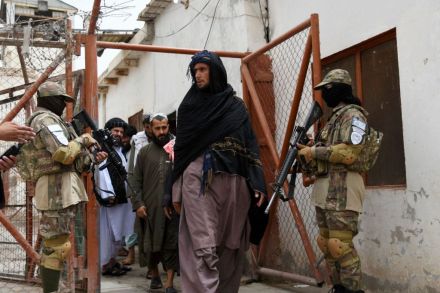
The Taliban Cultural Commission sounds a contradiction in terms but for all foreign journalists it’s the first stop in the new Afghanistan. There, in a dusty office on the first floor of the old Ministry of Information, I was handed a letter which allowed me to go anywhere in the country, except Kabul airport or military installations. In a neighbouring office I met Anamullah Samangani, a Taliban commander from the northern province of Samangan. He’s an Uzbek, resplendent in crisp white shalwar kameez, black waistcoat and black and white silk turban. He told me he has read one of my books. ‘Do you feel safe in Kabul, have you had any difficulties?’ he asked. He assured me that the new Taliban just want to be friends.

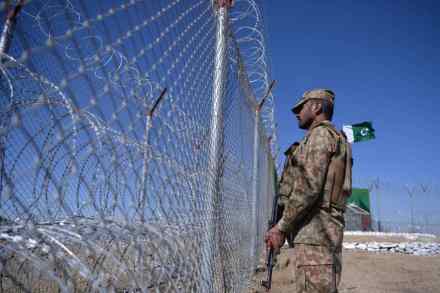
Pakistan is relishing its role as kingmaker in Afghanistan

The details of engagements involving the head of MI6 are, unsurprisingly, usually kept secret. But not so Richard Moore's meeting with the head of the Pakistani army, General Qamar Javed Bajwa. Officers from Britain's intelligence service are also said to have met the Taliban, both in Kabul and Qatar. How do we know? Because hours after Moore met Bajwa, the news was plastered all over Pakistani media, much to the dismay and horror of British officials. Pakistani leaders have spent much of the past fortnight basking in the Taliban’s triumph. Imran Khan lauded the Taliban for breaking the ‘shackles of slavery’.

The descent of Afghanistan

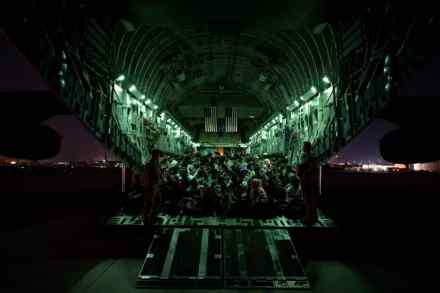
The bomb attacks at Kabul airport were what US and allied commanders overseeing the mass evacuation had most feared. In so far as they could be, they were prepared. They had, it appears, received very specific intelligence — perhaps based on a trial run by the bombers — that such attacks were in the offing. They warned people to stay away from the airport. Guards were doubtless on extra-high alert. And yet the perpetrators got through. More than 60 civilians were killed along with 13 US marines. Dozens more were injured and taken to already overburdened hospitals in Kabul. The carnage of 26 August was the costliest day in the last stages of the West’s Afghan war.

The terrible cost of the tragedy at Kabul airport

America’s frantic, confused exit from Afghanistan was a humiliating shambles even before Thursday's terrorist attack. Now, it is something much worse. It is a deadly tragedy, leaving victims dead and injured and trapping thousands of Americans and friendly Afghans in a lethal environment, where terrorists roam free. There will be a huge political price to pay for this disaster, and President Biden will pay it. This deadly fiasco didn’t just happen on his watch. It happened because of his decisions, a series of fundamentally bad ones, taken by the President himself.

What will happen to those left in Kabul?

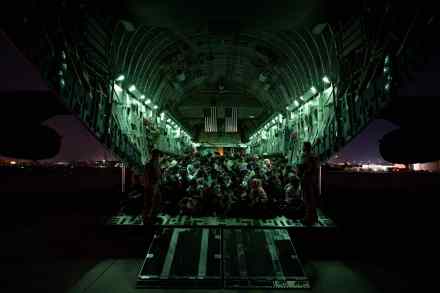
The Afghan evacuation is feared to be entering its final hours, and with it a new desperation is building among people trying to get out of the country and those helping them. On the ground, troops are warning that Kabul airport could be overrun by people who are ineligible to leave but desperate to do so nonetheless. Embassy workers are trying to process visas, ministers are being bombarded with requests to look at cases where vulnerable Afghans have been overlooked or cannot make it to the airport safely.

My love for old Kabul

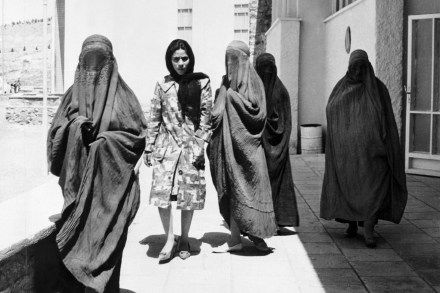
They say the city you most fondly remember is the one you grew up in. In my case that’s Kabul. I spent my formative years in the Afghan capital in the mid-1960s. It was a very different time and Afghanistan a very different country. But the Kabul that’s imprinted on my mind belongs to that decade. It was a happy city. No other description does it justice. Of course, it was poor, conservative and hierarchical but people were always smiling. They were warm, welcoming, courteous and generous. This was most obvious in their attitude to children. Everyone called me ‘bacho’. When Mummy took me out, shopkeepers would slip Hershey’s chocolates or spearmint gum into my hands and then seal my lips with their fingers.