Jazz

Like much jazz, it might have benefited from being less solemn: BBC4’s Ronnie’s reviewed

Ronnie’s: Ronnie Scott and His World-Famous Jazz Club was like the TV equivalent of an authorised biography: impressively thorough, often illuminating, certainly long — and perhaps a bit too reverent for its own good. The programme began with some of today’s jazz musicians testifying to just how great the club is. From there, we cut to the story of Scott himself, with his Jewish East End background and his early love of the saxophone. By 16, he was accomplished enough to cross the frontier from East End to West, and played in various swing bands. But then he and his fellow 1940s hipsters discovered bebop, a reaction against commercialised swing that preferred its audiences to listen earnestly rather than merely dance.

A gripping portrait: Billie reviewed

This documentary about Billie Holiday is transfixing. Not just because it’s about Billie Holiday — I am not into jazz yet her version of ‘Strange Fruit’ is obviously incredible — but for the previously unheard audio tapes recorded by Linda Lipnack Kuehl in the 1970s with the people who knew her. This includes, for instance, Billie’s cousin, John Fagan, who chucklingly says he pimped her out as a child — ‘girls started young’ — and that women who ‘step out of line’ like to be knocked about and are proud of having a black eye as it shows ‘someone loves them’.

Booker prized

From our US edition

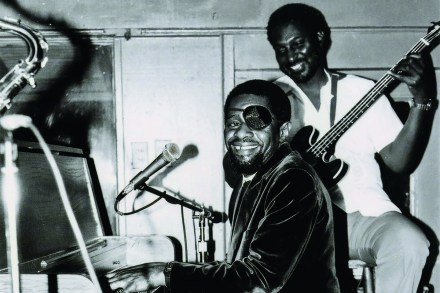
Dr John called James Booker ‘the best black, gay, one-eyed pianist New Orleans has ever produced’. Booker died in 1983, aged 43, ruined by drugs, drink and madness, and attended by legends of delinquency lurid even for a New Orleans piano ‘professor’. Though he had appeared on plenty of other people’s records and stages, Booker had recorded only three studio albums in his lifetime. Classified, recorded in October 1982 and now re-released on vinyl, was the last of them. It might not be the best of them, but it shows why Booker was one of the greats. The studio was booked for three days, but Booker had a breakdown the week before and couldn’t get a good take down in the first two days.

booker

The dazzling, devious, doomed sound of James Booker

Dr John called James Booker ‘the best black, gay, one-eyed junkie piano genius New Orleans has ever produced’. Booker died in 1983 at 43, ruined by drugs, drink and madness. Though he appeared on plenty of other people’s records and stages — Dr John, Aretha Franklin, B.B. King — Booker recorded only three studio albums in his lifetime. Classified, recorded in October 1982 and now re-released on vinyl, was the last of them. It might not be the best of them, but it shows why Booker was one of the greats. The studio was booked for three days, but Booker had a breakdown the week before and couldn’t get a good take in the first two days. He revived on the third and recorded Classified in four hours.

Count my blessings

From our US edition

I have to laugh when I read about my Baby Boom cohort’s memories of savoring rock ’n’ roll behind the backs of disapproving elders. I had no such problem. I wasn’t especially taken with the new sounds of the Fifties: I was six years old when Elvis Presley debuted on the Ed Sullivan Show. I thought he was vaguely comical. In any case, my parents had resolutely high-minded middlebrow taste in such things, wavering somewhere between Dvorak, Lawrence Welk and Mozart. Rock ’n’ roll was simply out of the question. Everything else heard in the household — country and folk music, in particular, which my elder siblings’ favored — was tolerated to some degree, but my own secret musical vice was not.

count basie

Salvant grace

From our US edition

Jazz has traditionally been a male preserve — all 15 of the Jazz at Lincoln Center Orchestra are men — but jazz singing is the exception. Later this year, Netflix will release Ma Rainey’s Black Bottom, based on the superb play by August Wilson and starring Chadwick Boseman and Viola Davis. If the movie adheres to the spirit of the play and its subject (Rainey, the ‘Mother of the Blues’, sang frankly sexual songs in a moaning style), it is sure to ignite a fresh interest in her tempestuous life and career. The imperious Rainey wasn’t simply a gifted singer, but also an astute talent-spotter.

salvant

Taylor Swift is fascinating – but you really wouldn’t want to be her

There had been some question about whether Taylor Swift’s Netflix special would actually appear. Last year it seemed that the ownership of her old songs by her previous record label would scupper it. But no, Ms Swift is not to be resisted, and lo, Miss Americana is available right now on Netflix, one of its two big music documentaries for the spring. Many older men seem to have a visceral distaste for Ms Swift. If you share that distaste, then I’m sorry, it’s your loss, because she’s a fascinating figure (who has also made three truly terrific albums in Fearless, Red and 1989), and Miss Americana is well worth watching.

Tenor badness

From our US edition

In Stephen Spielberg’s 2004 comedy The Terminal, Viktor Navorski (Tom Hanks) is a native of Krakozhia, a small eastern European country engulfed in civil war. When Navorski lands at JFK, he discovers that his passport is invalid as America does not recognize Krakozhia’s new regime. He’s stuck in the airport for months and unable to accomplish his mission: completing his father’s quest to obtain the autographs of all 57 musicians in Art Kane’s 1958 photograph ‘A Great Day in Harlem’, a who’s who of jazz greats (including Count Basie, Coleman Hawkins, Dizzy Gillespie and Thelonious Monk), captured on East 126th Street in daylight without their instruments.

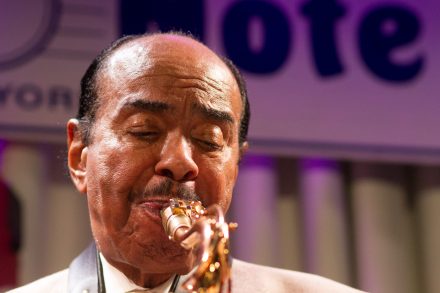
benny golson

Vive la Left Bank libération!

We all have our favourite period of Parisian history, be it the Revolution, the Belle Époque or the swinging 1960s (the cool French version, with Jean-Paul Belmondo and Françoise Hardy). Agnès Poirier, the author of this kaleidoscopic cultural history, certainly has hers: the turbulent 1940s, which saw the French capital endure the hardships of Nazi occupation before throwing off this yoke and embracing freedom in every aspect — sexual, political and intellectual.Leading the way was that maligned couple, Jean-Paul Sartre, the philosopher, political activist and father of existentialism, and Simone de Beauvoir, the brilliant pioneer feminist, who was his life partner, if often errant lover.

Vive la libération!

We all have our favourite period of Parisian history, be it the Revolution, the Belle Époque or the swinging 1960s (the cool French version, with Jean-Paul Belmondo and Françoise Hardy). Agnès Poirier, the author of this kaleidoscopic cultural history, certainly has hers: the turbulent 1940s, which saw the French capital endure the hardships of Nazi occupation before throwing off this yoke and embracing freedom in every aspect — sexual, political and intellectual. Leading the way was that maligned couple, Jean-Paul Sartre, the philosopher, political activist and father of existentialism, and Simone de Beauvoir, the brilliant pioneer feminist, who was his life partner, if often errant lover.

The real McCoy

From our US edition

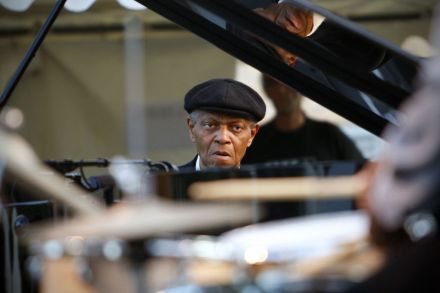
‘My current pianist, McCoy Tyner, holds down the harmonies, and that allows me to forget them,’ John Coltrane said in an interview in 1961. ‘He’s sort of the one who gives me wings and lets me take off from the ground from time to time.’ Tyner, who died on Friday at the age of 82, will be remembered for his crucial role supporting John Coltrane during some of the legendary saxophonist’s most creative years. But on the occasion of Tyner’s death it’s also worth recognizing that ‘the Real McCoy’ had a penetrating voice and lasting influence all his own.A son of west Philadelphia born in 1938, Tyner was encouraged by supportive parents and was playing piano by 13.

mccoy tyner

The good boy of jazz: Dave Brubeck’s time has come round at last

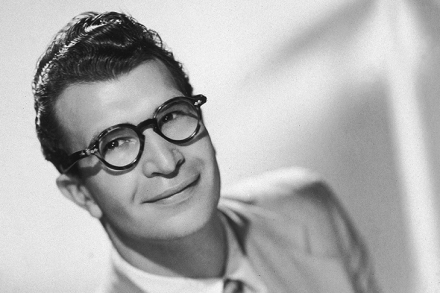
On 8 November 1954, Dave Brubeck’s portrait appeared on the cover of Time magazine, accompanied by the words ‘The Joints are Really Flipping’. Inside, the pianist and leader of his own jazz quartet was variously described as ‘a wigging cat with a far-out wail’ and ‘way out on Cloud 7’, who when at college chatted up his future wife Iola with the immortal philosophical enquiry: ‘Tell me about this Plato cat.’ Yet Brubeck’s life and habits were far from the archetypal drug-fuelled, self-destructive behaviour the public had sometimes been led to expect from best-selling memoirs of that world, such as Mezz Mezzrow’s hugely entertaining sustained exercise in jive-speak, Really the Blues (1946).

Cyrus the Great

From our US edition

This article is in The Spectator’s February 2020 US edition. Subscribe here. Washington, DC has a proud jazz history: the birthplace of Duke Ellington where he made his first arrangements as a highs-chooler; the home of U Street, where joints like the Crystal Caverns and the Howard Theatre hosted Louis Armstrong, Billie Holiday and Count Basie. Today, jazz holds out in a few spots on U Street and in select clubs such as Blues Alley. A relative latecomer, founded in 1965 near M Street in the heart of hoity-toity Georgetown, Blues Alley touts itself as ‘the nation’s premier jazz and supper club’. Despite a menu featuring such delicacies as ‘McCoy Tyner’s Blackened Catfish’, the supper part can safely be labeled as hearty, but no more.

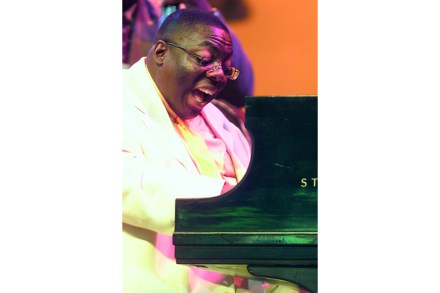
cyrus chestnut

The soft power of Italian jazz

From our US edition

This article is in The Spectator’s January 2020 US edition. Subscribe here.New York City The singer and saxophonist Ray Gelato opens his set at Birdland with a cover of ‘That’s Amore’. But this isn’t the sleepy send-up of Neapolitan street waltzes that Dean Martin recorded in 1953. Gelato raises the tempo and swings it four to the bar. As he sprints his way through the verses, Philadelphia’s City Rhythm Orchestra drives the pace, piano, bass and drums holding down the shuffle while the four-piece horn section plays call-and-response to each other and his vocals. It’s the start of a fun, high- energy set, the two hours of which feel as if they pass in half the time. You don’t tap your feet to this music: you stomp.

italian jazz

Brazilian wax

From our US edition

This article is in The Spectator’s November 2019 US edition. Subscribe here. When Brazilian president Jair Bolsonaro spoke at the United Nations General Assembly in late September, he depicted Brazil as a victim of colonialism. ‘The United Nations has played a fundamental role in the suppression of colonialism,’ he said, ‘and we cannot allow this mentality to return to these rooms and corridors at any pretext. We cannot forget that the world needs to be fed.’ Foreign countries, Bolsonaro alleged, have ‘an interest in keeping indigenous people living like cave men’.

brazilian

A great time in the Faddisphere

From our US edition

This article is in The Spectator’s inaugural US edition. Subscribe here to get yours. It’s easy enough to write an elegy for the jazz world, a tale of decline and fall, from towering heights to epigones plying their trade in the shadows of the giants. But like most such stories, lachrymose in spirit if not intent, it obscures as much as it reveals. No doubt many of the great clubs that existed in the Fifties and Sixties have faded away, but since the Eighties there has been a distinct revival of more traditional forms of jazz.

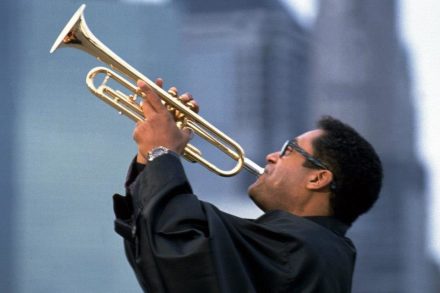
faddisphere jon faddis

British jazz

Jazz died in 1959. At least, that’s what New Orleans trumpeter Nicholas Payton wrote in 2011 as part of a series of tweets that riled jazz lovers the world over. It later transpired that he meant jazz the word (which, he reckoned, was ‘a label forced upon musicians’) rather than jazz the genre. Semantics aside, Payton struck a chord. He fired up what many people for many decades have assumed to be an ever-shrinking band of jazz aficionados. In fact, there has been an increasingly cool end to the jazz catalogue in America for at least the past 20 years. Pianist Robert Glasper and saxophonist Kamasi Washington are two figureheads of this stateside jazz renaissance, which is characterised by a liberal use of synthesisers and drum machines.

Jazz is dominated by men. So what?

I’d recommend any aspiring writer to marry a jazz drummer. It’s done wonders for my powers of concentration. If I can write while my husband is practising rolls, or rehearsing with his quartet loudly enough that I don’t know why they didn’t just set up in my study, or worst of all tuning his drums (Bam. Bam. Bam. ‘Nooooo!’ Bam. Bam. Bam. ‘Nooooo!’), then I could knock off novels amid shock and awe in 2003 Iraq. As part-requirement, part-perquisite, over the years I’ve attended a range of jazz clubs, festivals, and concerts. So I can testify: the musicians are nearly all men. Jazz and jazz education make up a small world, but gender disparity has become a mighty tempest in this teacup.

Days of frantic strumming

‘It was easy, it was cheap, go and do it,’ sang the Desperate Bicycles on their self-funded debut single in 1977, summing up the punk belief that you didn’t have to be the world’s best musician before getting up on stage or making a record. Twenty years earlier, a previous generation learned a similar message from the skiffle explosion, which put guitars in the hands of many future members of the key British rock groups of the Sixties. It therefore seems appropriate that a musician first inspired by seeing The Clash has eventually written a book about skiffle.

All that jazz | 2 March 2017

It’s every impresario’s dream. Buy a little off-West End venue to try out stuff for fun. Andrew Lloyd Webber has snaffled up the St James Theatre (rebranded The Other Palace), which he intends to run as a warm-up track for new musicals. First off the blocks The Wild Party, a New York import set in the 1920s. We meet a couple of vaudeville veterans, Queenie and Burrs, whose romance has hit the rocks. To rekindle the flame they invite everyone they know around for a party. Hang on. A party? Booze, drugs, flirtation, seduction: the recipe for destroying a romance, not salvaging it. But never mind. The guests have started to arrive, direct from the Scott and Zelda Tribute Society. Everyone is talented, sophisticated and glamorously tragic.