Jazz

The perfect jazz song to play at your funeral

The prospect of the new Paul McCartney album does not set my pulses racing, still less that of the Beatles museum on Savile Row that’s opening next year. If I walk into a shop and hear a Beatles track playing, I might walk straight out again, because I know the song too well and resent being held in its grip for three minutes. The Rolling Stones also have a record in the pipeline. I used to love the Stones and probably would again if I revisited them after being denied access to their music for 20 years, but for now, they’re a cultural incubus, like Harry Potter. As for new stuff by new people, I’ve lost the thread.

The indomitable spirit of the Wigmore Hall

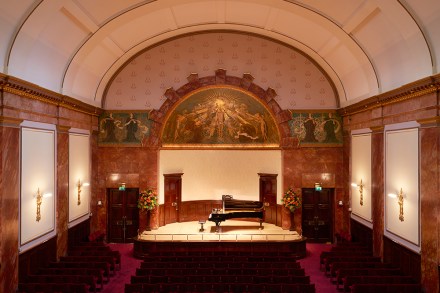
If you’ve ever strolled to the Wallace Collection or hurried to an appointment in Harley Street, fled an overcrowded Selfridges or sat on a sunny bench in Cavendish Square Gardens, you’ll probably have walked past the Wigmore Hall. It’s easy to miss – a wrought-iron canopy and a small mosaic embedded in the pavement the only signage. But this ‘modest building tucked away behind a busy London shopping street’ contains multitudes. Now celebrating its 125th birthday, it has been variously described as ‘London’s most sumptuous temple of music’ and the symptom of a ‘faded, bombed-out world’; ‘a place where it was possible to experience the exotic, unfamiliar and bizarre’ and one filled with ‘too many dull concerts and too many indifferent debut pianists’.

‘Doomer jazz’ and the strange afterlife of Taxi Driver

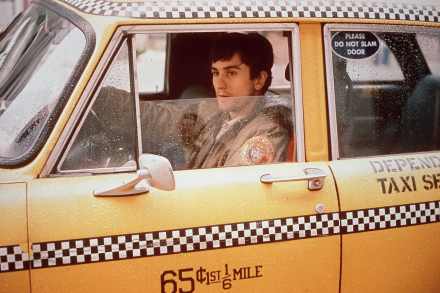
Bernard Herrmann died 50 years ago this month. He only just lived long enough to complete the suite of instrumental jazz that’s now regarded as not only his finest work across many decades as a movie composer, but one of the greatest celluloid soundtracks of all time. There are very few movies which you can honestly state simply wouldn’t have got out of the traps were it not for the soundtrack. Taxi Driver is one of them. There’s more than enough available film critic geekery about Martin Scorsese and Robert De Niro’s finest hour to plough through already. But the curious afterlife of the Taxi Driver soundtrack was something I had no idea about until a recent Spotify sleuthing session. You’ve heard the main siren call theme of the movie.

Lives upended: TonyInterruptor, by Nicola Barker, reviewed

‘Is it any good?’ a friend asked when he saw I was reading this book. ‘Yes,’ I said, ‘but it’s full of wankers.’ By that stage I was only up to page 24, but the remaining 184 pages did nothing to fundamentally alter my view. There is nothing intrinsically wrong with this. The works of, say, Geoffrey Chaucer and Jane Austen, not to mention thousands of others, would be considerably poorer if all the tiresome people were filtered out. But it does make it hard to read TonyInterruptor for more than 30 pages at a stretch. One has to pinch the bridge of the nose and go for a little walk.

How the railways shaped modern culture

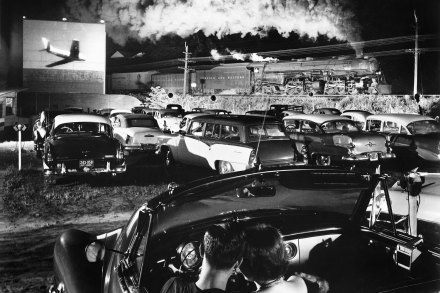
Cue track seven of Frank Sinatra’s 1957 album Only the Lonely and you can hear Ol’ Blue Eyes pretending to be a train. It’s not that he’s a railway enthusiast (though Sinatra, like many musicians, was an enthusiastic collector of model trains). No, it’s written into the words and music of Harold Arlen and Johnny Mercer’s song ‘Blues in the Night’: ‘Now the rain’s a-fallin’, hear the train a-callin’ “whoo-ee”.’ And so Sinatra sings it, just as Ella Fitzgerald, Peggy Lee and Louis Armstrong sang it. It’s an American classic, defined by the sounds that permeate the soul of American popular music: the sounds of the railway.

How I fell for 78s

I recently made a programme about the British jazz pioneer Arthur Briggs. Yes, I know. Arthur who? The much-missed Jeremy Clarke told me: ‘If only he’d been called Arthur “Big-Boy” Briggs or “Honeydripper” Briggs, maybe things would have turned out differently.’ As it was, his name always suggested a painter-decorator from Edwardian Brixton rather than one of the hottest cornetists on the prewar jazz scene. Briggs was a Caribbean child of empire who, as a teenager, fell in with makers of the new music in New York, then after the first world war helped bring jazz across to Europe.

Keith Jarrett’s accidental masterpiece

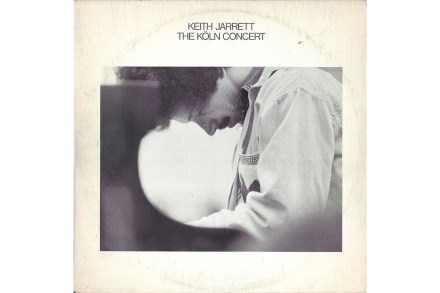
Shortly before midnight on the evening of Friday 24 January 1975, at Cologne Opera House on the banks of the Rhine, a wiry 29-year-old from Pennsylvania walked onto the stage in front of a crowd of 1,400 people and began to play the piano, alone. The 50th anniversary of what followed is being celebrated with a number of events and documentaries across the world this week. A recording of Keith Jarrett’s performance that night, released on 30 November 1975, went on to become the best-selling solo piano record of all time. The record was produced by ECM (Edition of Contemporary Music), a prog jazz label that was at its peak in the mid-1970s, with The Köln Concert its crowning achievement.

The golden days of Greenwich Village

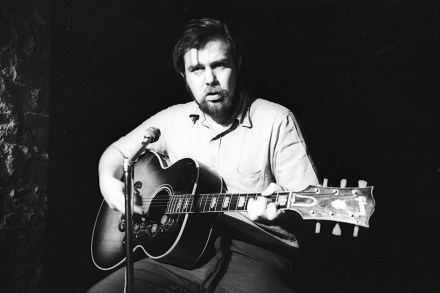
This multitudinous chronicle is not the story of the folk music revival. Rather, it’s not only the story of the folk scene in Greenwich Village from the late 1950s through the early 1980s. Ambitiously, sometimes overwhelmingly, but always fascinatingly, David Browne – a senior editor at Rolling Stone – composes his book of interconnected stories stemming from jazz, blues, folk, folk-rock and all the complementing, competing musical genres that could define what’s been played in the basement nightclubs and coffee houses in this small area of New York City since the early 20th century. He takes his title from the talkin’ blues, the direct ancestor of rap, and he is, like the writers of those blues, a born storyteller.

The late Quincy Jones, a man of many talents

From our US edition

The death of Quincy Jones, at the considerable age of ninety-one, represents not just the passing of a great American musical icon, but the departure of a truly remarkable man from the stage. The winner of an astounding twenty-eight Grammy awards, he excelled in so many different areas of music — from record production and film soundtrack composition to big band jazz and multi-instrumental playing — that it would not have been particularly surprising to discover that he had written operas or symphonies on his days off.

quincy jones

The stark, frugal world of Piet Mondrian

In September 1940 the Dutch abstract artist Piet Mondrian arrived in New York, a refugee from war and the London Blitz. He was 68, a well known figure in modern art circles in Europe but as yet little appreciated on the other side of the Atlantic. His visas, his travel and his accommodation had been sorted out for him by well-wishers in Britain and he was welcomed in America by Harry Holtzman, an artist some 40 years his junior. On the evening of his arrival, Holtzman entertained the stiff, fastidious, well-dressed Mondrian to dinner in his apartment and introduced him, via the phonograph, to boogie-woogie. He recalled: Mondrian’s response was immediate, he clapped his hands together with obvious pleasure. He sat in complete absorption to the music, saying, ‘Enormous! Enormous!

Bud Powell should be a household name

From our US edition

Late one January night in 1945, a young black man stumbled drunkenly toward Broad Street Station in Philadelphia. He was exhausted after playing a long set in a grotty club half a mile away. The naturally nervous musician often used alcohol to settle his unbearable over-excitements and debilitating despairs. On this occasion he had one too many. His awkward gait caught the attention of two policemen. They went to shoo him away, but instead of escorting him peacefully along, something about the twenty-year-old vexed the pair and they began to bash him about the head repeatedly with their truncheons. When the seriousness of his injuries became apparent, after he’d been slung into a frozen cell, he was taken to a hospital to recuperate.

Powell

Hard to love – but Shirley Manson is terrific: Garbage, at Usher Hall, reviewed

There’s nothing quite like the drama of a prodigal’s return. ‘I’ve been singing in this venue since I was ten years old,’ announces Shirley Manson, staring down nearly half a century of personal history at Edinburgh’s ornate Usher Hall. The fact that Garbage’s lead singer made the United States her primary residence many years ago lends this homecoming concert added potency. There are shout-outs to her dad, a ‘Happy Birthday’ serenade for her sister and what looks like a tear or two at the start of the encore. A ‘badass’ attitude is so sleekly applied it seems like a Che Guevara T-shirt in the racks at M&S For all the sentiment, it was obvious that Manson was right to leave not just Edinburgh, but the UK.

The mutilation of Radio 3

On Saturday 12 December 1964, Harold Wilson addressed his first Labour party conference as prime minister, George Harrison was photographed with his new girlfriend in the Bahamas, Pope Paul VI told Catholics they could drink alcohol ‘in moderation’ before Midnight Mass and, according to the Mirror, ‘two strip-tease girls fought in the nude in their dressing room after finishing their fan dance at a night club’. The station has become little more than a Spotify playlist interrupted by the disc-jockey burbling It was also the day that Record Review arrived in its Saturday morning slot on the BBC’s Third Programme, now Radio 3. And there it remained.

An unvarnished insight into the mind of Sonny Rollins

From our US edition

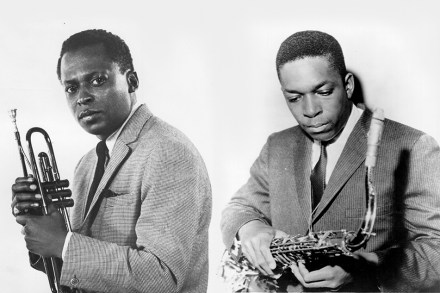
In the mid-1950s, alongside his close friend and intimate confidant John Coltrane, the revered saxophonist Sonny Rollins completely revolutionized notions about how the tenor saxophone could function within modern jazz. In landmark albums like Freedom Suite, Way Out West and Tenor Madness, Rollins pushed the art of melodic improvisation to transcendent new heights, his charismatic sound, his snaking melodies and his rhythmic liquidity ringing the changes as surely as Louis Armstrong had done thirty years earlier. And like Louis, and later Miles Davis, there came a point where Rollins wrestled free of the jazz aficionado’s gaze to become admired by a more general audience.

rollins
Holiday

A look into Billie Holiday’s final year

From our US edition

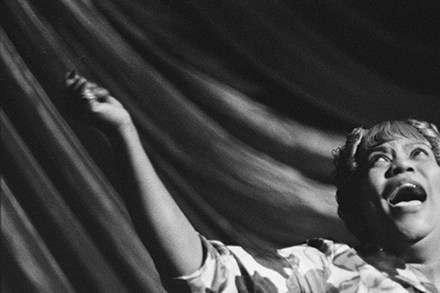
If ever a singer were difficult to pin down, it was Billie Holiday (1915-59), whose harrowing life story was first told in an unreliable memoir published just three years before her death. With Lady Sings the Blues, the jazz legend known for her emotional honesty not only allowed herself to be misrepresented (after all, she wasn’t even a blues singer), but actively participated in fabricating the fake stories which proliferated through the book. Some of these — such as a misstatement of her place of birth — are still repeated to this day. Two decades after the publication of Lady Sings the Blues a steady stream of more accurate biographies began to appear.

The Spectator’s Music of the Year 2023

From our US edition

Teresa Mull, assistant editor A Cat in the Rain by the Turnpike Troubadours The Turnpike Troubadours are back with a new album that sounds a lot like their old ones, which is why I like it so much. A Cat in the Rain has been heralded as “a triumphant comeback,” and indeed, as a fan who’s followed (or tried to, anyway) the Red Dirt band’s ongoing drama, I was surprised and delighted to welcome the return of Evan Felker’s rustic voice singing some fresh, but still familiar-feeling, songs. The lyrics have a gentler, humbler feel to them — overcoming alcoholism by laboring on a cattle ranch and rekindling with the wife you divorced to produce two kids will do that to a man, apparently.

turnpike troubadours music

It was midnight in a field in Wales and I was lying face down in six inches of mud: Green Man Festival reviewed

I love Green Man. The smallish festival is the second most beautiful site I’ve ever visited (after G Fest, which is situated on a beach in a fjord in the Faroe Islands). Nestled in a valley between the mountains of the Brecon Beacons, it has great bills, it’s impeccably organised and I feel nourished by it. But, in the interests of being honest about festivals for those who have never been, I should also confess that this year it supplied the single most miserable experience of my music-watching life. It was midnight, in a field in Wales, and I was lying face down in six inches of mud Friday was the kind of day Noah might have felt a little discombobulated by. It began raining before dawn and it never let up. Come nightfall, the wind picked up too.

Uneasy listening: Kathryn Joseph, at Summerhall, reviewed

I have always been fascinated by artists who bounce between tonal extremes when performing, particularly the ones who serve their songs sad and their stagecraft salty. Adele, for example, fills the space between each plushily upholstered soul-baring ballad by transforming into a saucy end-of-pier variety act, coo-cooing at the crowd and cursing like a squaddie. John Lennon gurned and clowned his way through the Beatles’ concerts, subverting the naked suicidal plea of ‘Help!’ in the process. John Martyn would belch and joust in mock-Cockney at the conclusion of a particularly sensitive piece. Jackie Leven punctuated songs of immense pain and sadness with eye-watering stories of defecating in alleyways and getting blootered with the Dalai Lama’s bodyguard.

A visit to Louis Armstrong’s old home

From our US edition

The New York Times recently started a new series about introducing a friend to jazz in five minutes with a tribute to Duke Ellington. In many ways, Ellington is a sound choice. He was the bandleader par excellence, a brilliantly inventive composer who formed much of the modern jazz vocabulary. But matters can’t rest there. In any assessment of jazz’s founding fathers, Louis Armstrong has to stand as the most influential figure. Both his trumpet and voice are simply inimitable. A recent visit to his modest home, which is now a museum, during a trip to New York with my family offered a reminder of the magnetic attraction Armstrong continues to exert.

armstrong

Ian McEwan’s capacity for reinvention is astonishing

McEwanesque. What would that even mean? The dark psychological instability of The Comfort of Strangers and Enduring Love? The gleeful comedy of Solar and Nutshell? The smart social realism of Saturday and The Children Act? The metafictional games of Atonement and Sweet Tooth? Ian McEwan’s brilliant capacity for reinvention is a hallmark of his literary career. It’s simpler to say what McEwanesque is not: baggy, meandering, plotless, long. Yet all of these adjectives could be applied to his surprising new novel, Lessons. This cradle-to-grave (well, seven-ish to seventy-something) narrative concerns the life and times of Roland Baines, born, like McEwan, in 1948. Roland shares more than just a birth date with his author.