The prospect of the new Paul McCartney album does not set my pulses racing, still less that of the Beatles museum on Savile Row that’s opening next year. If I walk into a shop and hear a Beatles track playing, I might walk straight out again, because I know the song too well and resent being held in its grip for three minutes. The Rolling Stones also have a record in the pipeline. I used to love the Stones and probably would again if I revisited them after being denied access to their music for 20 years, but for now, they’re a cultural incubus, like Harry Potter. As for new stuff by new people, I’ve lost the thread. The last time I was really enthused by a pop record was about ten years ago when I heard what turned out to be ‘An Awesome Wave’ by Alt-J playing in a north London pub.
In that same pub, I recently said to some friends – most of whom would have taken the NME every week in the late 1970s – ‘I’m trying to get into jazz.’
‘We all are,’ came the baleful reply.
‘It’s more dignified,’ I said, ‘more age appropriate. I don’t want to be one of those old guys who has “Stairway to Heaven” played at his funeral.’
Everybody nodded in theoretical, but not very enthusiastic, agreement.
I had previously kept quiet about my jazz journey (notice I don’t say ‘Jazz Odyssey’ – the name of the project that signified Spinal Tap’s midlife crisis). It’s been slow progress. When I was 18, I borrowed The Black Saint and the Sinner Lady by Charles Mingus from the music section of York Library. (I think you had to submit for inspection the needle of your record player before you were given a ticket.) I found it propulsive and highly melodic, and it remains my favourite jazz record, but it didn’t push me into the genre – too much competition from dynamic new wave pop: Talking Heads, Television, Pere Ubu, etc.
About 15 years later, the journey resumed when I was waiting for a film to start in Muswell Hill Odeon. I was the only person in the auditorium; the screen curtains were closed and bathed in red light. Music was playing, unrelated to the forthcoming feature. It seemed redolent of tense stand-offs in hot dusty landscapes, and I projected my own imaginary film on to the curtains: a compelling spaghetti western. I quit the auditorium and knocked on the door of the projection room to ask what the music was. ‘Sketches of Spain by Miles Davis,’ the bemused projectionist told me. I snaffled up Miles Davis quite quickly – well, the melodic and accessible (partly because slow) records of his ‘cool jazz’ period anyway. Those records, especially Kind of Blue, are the standard side order of jazz for many rock and pop fans.
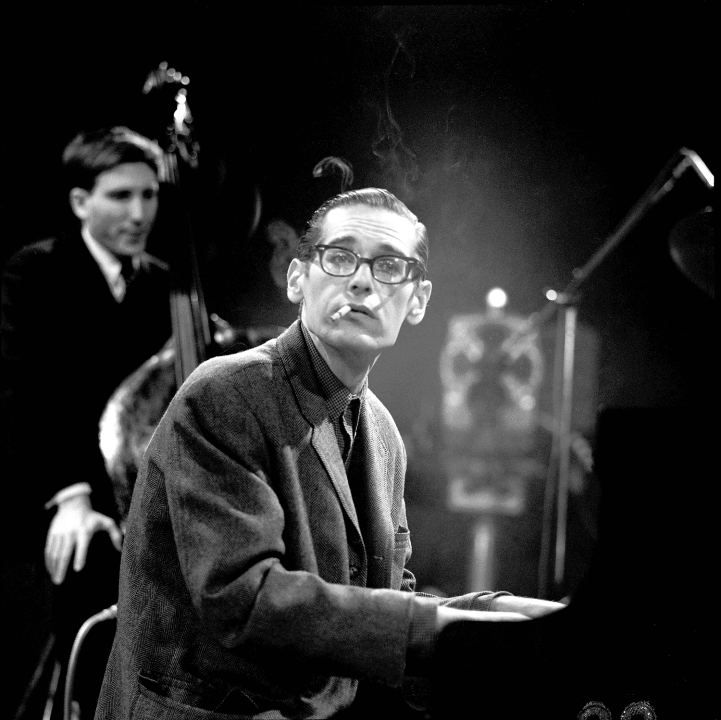
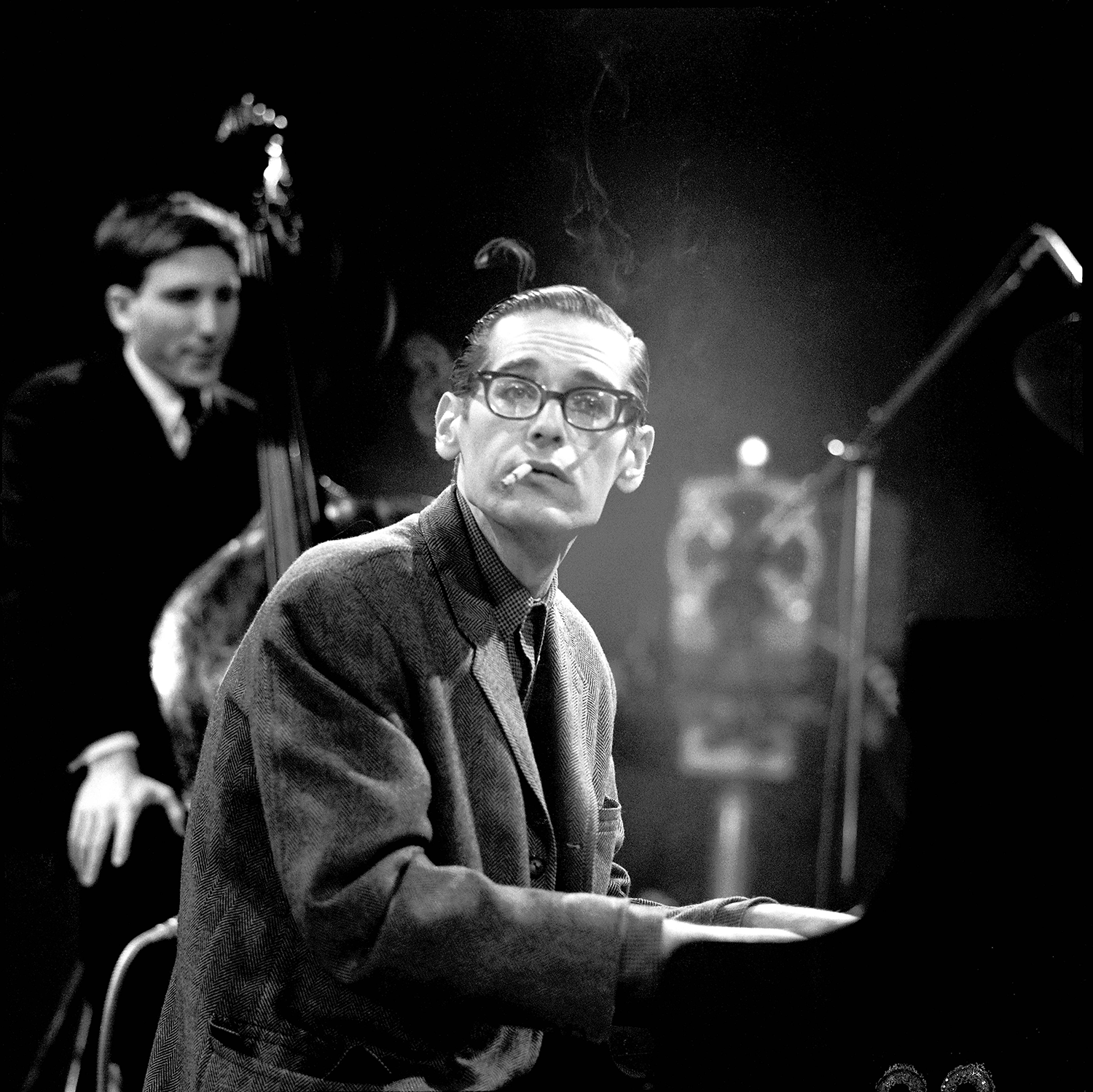
A friend I used to actually play pop music with (I’m a basic guitarist) liked the jazz pianist Bill Evans. When we were winding down from our own primitive attempts, he’d play Evans records as a sort of palate cleanser – usually Sunday at the Village Vanguard. I found Evans’s music shimmeringly pretty when he stated the theme of a piece – the ‘head’ to use the jazz terminology – but then he and his quartet lost me when they went into their improvisations, and this was (and is) my usual problem with jazz.
To appreciate music, I need to know it well enough to predict the changes, which is perhaps a conditioning from pop. It follows that I prefer jazz on record to live jazz. I’ve had a couple of incredibly boring evenings at Ronnie Scott’s. There’s a bogus air about some live jazz. The musicians play their solos, and they do indeed seem to be flying solo and not taking the audience along with them. People applaud because the player has finished the solo, rather than because they’ve understood it.
Jazz is complicated, and in the mid-century period I’ve lighted on, laid-back cool jazz coexisted with more demanding post-bop and free jazz, as played by people like Wayne Shorter, Eric Dolphy, John Coltrane. There’s an iconoclasm and elitism about this music that presumably owes a lot to race discrimination in America, but I’m not qualified to go down that fraught path. (The trumpeter Wynton Marsalis once defused a potentially tense discussion of jazz and race by saying, ‘Your chance of playing like Charlie Parker is zero, whether you’re white or black.’)
One thing I do like at a jazz gig is watching and listening to the drummer. The light, swinging jazz beat – ding-ding-a-ding-ding-a-ding – has come to seem more sophisticated to me than the plodding four-on-the-floor of pop or rock (which Captain Beefheart called ‘the baby beat’ for its lulling simplicity). I was first persuaded of this not by any music but by watching on YouTube an interview with Bill Evans, in which he compared jazz with rock. ‘The jazz thing,’ he said in his hypnotic, hipster tones, ‘it’s a little more liquid, and maybe a little more sophisticated craft-wise, and even feeling-wise.’ He credited rock with having ‘taught the kids where the beat is,’ but, having discovered it, ‘the thing is to feel it and to do something a little less obvious with it.’
After hearing that interview, I went back to Sunday at the Village Vanguard and, after about a dozen listens, I broke through; I got it, and it lived up to Evans’s rhetoric, the music unwinding with a kaleidoscopic logic, and held by a pulse, albeit not one, as he put it, ‘being constantly pounded’.
I don’t want to be one of those old guys who has ‘Stairway to Heaven’ played at his funeral
I began to take on other records, mainly from the ‘Core Collection’ of the Penguin Guide to Jazz. I remember walking through the West End while listening to Out to Lunch! by Eric Dolphy on headphones. In Piccadilly Circus, it began to rain, but I kept my headphones on, forcing the music into my brain. At the time, I didn’t think this had worked. Out to Lunch! still sounded scrambled, Dolphy’s clarinet playing wilfully distorted and aggressive. But when I went back to the record a few weeks later, it suddenly sounded sweet and – the crucial test – I wanted to turn it up.
But that had taken about 20 hours of listening. There are more than 200 records in the ‘Core Collection’, and 200 times 20 is… a lot. This is one of the reservations I have about my journey. Another is the question of whether I’m under the tyranny of ‘cool’. I’m more likely to tell friends I like ‘Turkish Mambo’ by Lennie Tristano than I am to say I like ‘Beautiful Stranger’ by Madonna.
Nonetheless, here’s the plan. Stop the futile Spotify quest for pop music as good as the Beatles/Stones/Motown. Instead, buy jazz on vinyl – not least because jazz albums of my chosen period have highly atmospheric covers, like noirish paperbacks of the time. Given my slow rate of absorption, about half the core collection LPs should see me out. At first, they will seem cryptic and ugly, but I’m confident that most will turn from caterpillars into butterflies eventually, and candidates for the funeral tune are rapidly accumulating. Mustn’t be too mawkish, of course, and it should be discursive, still evolving as the mourners file out for drinks, leaving everyone with the subconscious impression that there might have been a bit more to Andrew Martin than they ever thought. Current lead candidate? ‘Re: Person I Knew’ by Bill Evans.



Comments