J.k. rowling

J.K. Rowling’s schizophrenic politics

On the face of it, there is nothing complicated about the politics of Harry Potter, who made his first appearance in The Philosopher’s Stone 20 years ago. Like his creator J.K. Rowling, who once gave £1 million to the Labour party, he is a left-wing paternalist in the Bloomsbury tradition — the love child of John Maynard Keynes and Virginia Woolf. He feels a protective duty towards the common man (‘muggles’ in the lexicon of the novels) and a loathing for suburban, lower-middle-class Tories like the Dursleys, his Daily Mail-reading foster parents. The arch-villain of the saga is Voldemort, a charismatic Übermensch who believes in purity and strength and in the final novel promotes his own version of the Nuremberg Laws through the Ministry of Magic.

The Spectator Podcast: The dying of the right

On this week’s episode, we look at conservatism’s apparent decline, how society has responded to the Grenfell Tower tragedy, and whether young people have had their critical faculties vanquished by a certain boy wizard. First up: This time last year many were wondering whether the left, in Britain and abroad, was in terminal decline. The Brexit vote and Trump’s shock victory seemed only to compound that, and yet, just a few months later, the Spectator now has a cover piece, by Fraser Nelson, declaring that conservatism needs saving. How did we get here? And can anything be done about it? To discuss this, Fraser joined the podcast along with Michael Heseltine.

Harry Potter and the millennial mind

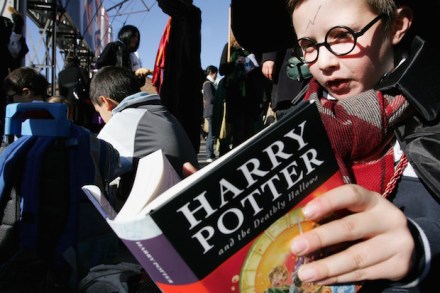
Which Hogwarts house would you be in? There are four options, and everybody fits into one. The brave and chivalrous are put in Gryffindor. Patient and loyal types head to Hufflepuff. Ravenclaw is for the witty and intelligent. The cunning and ambitious — and potentially evil — are destined for Slytherin. In the Harry Potter books, a pugnacious talking hat, known as the ‘Sorting Hat’, carries out the selection. If you are like me and under 35, you probably didn’t need that explaining. Almost every young person who can read has read Harry Potter — 450 million copies have been sold worldwide. Not to do so was an act of rebellion. On Monday, fans will celebrate the 20th anniversary of the first book’s publication — two decades on and J.K.

A method to his madness

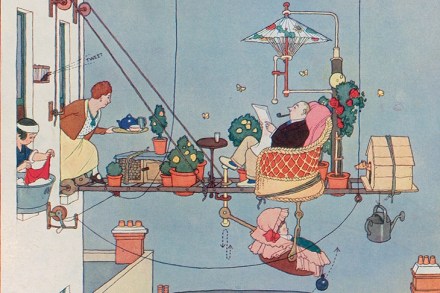
I first came across the extraordinary creations of the artist and illustrator William Heath Robinson at least 60 years ago. I loved them, even though I may not have understood every nuance. When I look once more at old favourites such as the machine for conveying peas to the mouth I often spot in the corner some little twist or joke that I had not seen before. What also wasn’t clear at the time is how prescient some of his contraptions were — in one illustration you can see a prototype selfie stick; in another he invents the silent disco. Many of his madcap solutions were semi-serious responses to societal problems. Some weren’t far off what serious inventors were coming up with themselves.

J. K. Rowling and the curse of the left

How people who want a fairer society should vote at this election is causing agonies across the liberal-left. It is easy to mock the torn activists. Why do they bother? One vote is worth next to nothing under a PR system. Under first past the post there are hundreds of safe seats where there’s no point in voting, let alone worrying about how you vote. The number of safe Tory seats is likely to grow after this election. Indeed, if you believe the opinion polls, it is likely to rocket. The futility of casting a token anti-Tory vote is more apparent than ever. For all that, those who laugh at conscientious leftists are laughing at democracy. How can you justify it unless voters care about who they vote for?

From page to stage

Reading Elena Ferrante’s Neapolitan quartet is a heady experience. You not only see, hear, know her characters — you can almost taste them. The villain of the first of the four books, which follow the friendship of mercurial Lila and striving Lenù from childhood into their sixties, is Don Achille, an ‘ogre’ who sweats the smells of ‘salami, provolone, mortadella, lardo and prosciutto’. Lila herself, always wriggling free of the nets of others, is ‘skinny, like a salted anchovy’. Nino, loved by both Lila and Lenù, is ‘an anomalous, sweet fruit’.

The lonely passion of Beatrix Potter

The story of the extraordinary boom in children’s literature over the last 100 years could be bookended with a ‘Tale of Two Potters’ — Beatrix and Harry. The adventures of the latter have sold millions, but the foundations of his success were laid by the former, whose series of ‘little tales’ Matthew Denison estimates in his equally condensed new biography, ‘are purchased somewhere in the world every 15 seconds’. That is not bad for an author whose first book, The Tale of Peter Rabbit, came out in 1902 — 40 million copies sold so far, and counting — with neither the benefit of the internet or a movie franchise to spread the word. Much has been presumed about the effect of J.K.

Can this sweet little girl get out of Aleppo alive?

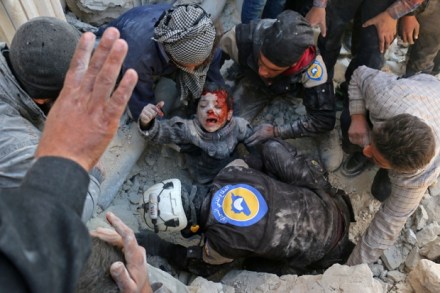
Every morning, after the children go to school, I turn on my computer to check that Bana Alabed is alive and unharmed. I do the same at night. I have never met Bana. She is a sweet-faced, skinny seven-year-old girl who tweets from rebel-held east Aleppo with the help of her mother, Fatemah, an English teacher. Last weekend, as the Syrian government, Russian and Hezbollah forces took over north-eastern Aleppo amid heavy bombardments, Bana tweeted: ‘Tonight we have no house. It’s bombed and I got in rubble. I saw deaths and nearly died.’ As she and her family contemplated their rapidly narrowing options, Bana wrote to her escalating number of followers: ‘I want to live, I don’t want to die.

Losing the plot | 4 August 2016

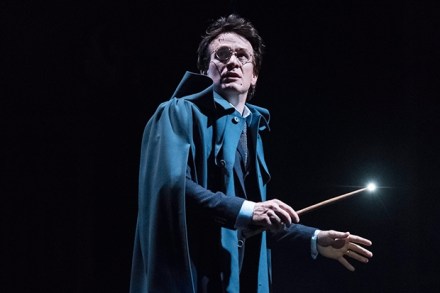
Consider it commercially. So powerful is the pull of the Potter franchise that the characters could simply re-enact the plot of ‘Incy-Wincy Spider’ and the fans would swoon with joy. The stage show has been written by a two-man committee, Jack Thorne and John Tiffany, with the help of billionaire equality campaigner J.K. Rowling. Harry is now 37 and working as a Whitehall clodhopper at the Ministry of Magic. He’s troubled by his stompy bed-wetter of a son, Albus, whose tantrums cause the middle-aged miracle-worker to suffer agonies of weepy self-doubt. Together they visit Hogwarts and the multifarious plotlines start to punch each other in the face.

Beyond the looking-glass

Children’s fantasy literature has never been just one thing. Animal fables, folk and fairy tales were not originally intended for a child audience, while the relatively recent phenomenon that is entertaining (rather than principally didactic) children’s literature has many origins that are not fantastic at all. Michael Levy and Farah Mendlesohn draw a line — well, many lines — from these assorted beginnings to today’s world, in which fantasy specifically aimed at young readers is a large and noisy part of the publishing market, but still very far from a single coherent one.

Pardon my Scots, J.K. Rowling tells the French

Despite becoming a Cybernat target during the Scottish referendum after she donated £1 million to the Better Together campaign, J.K. Rowling has not been deterred from putting Scottish Nationalists in their place. Such an opportunity arose today, after a Yes voter came up with a rather tenuous reason as to why they would continue the fight for Scottish independence: liberating Scotland from 'corrupt Norman rule'. According to the Scottish Nationalists, not only are the English to blame for their reduced oil supplies -- as well as causing austerity -- they also have the audacity to be related to the French. A point which the Harry Potter author poked fun at online: https://twitter.

Diary – 7 May 2015

I am writing a play about Dr Johnson and his Dictionary. It will be performed in Scotland later this year. Five out of the great man’s six helpers were Scots (the only Englishman, V.J. Peyton, was considered a fool and a drunkard) and it’s timely to think of all those Scotsmen working away to consolidate the English language while their descendants try to define the general election. As a fully functioning Willie (‘Work in London, Live in Edinburgh’), I am startled by the zeal with which the SNP plans to take its revenge on Westminster after a decisive ‘no’ vote in the referendum.

UKIP: The First 100 Days, Channel 4, review: a sad, predictable, desperate hatchet job

Just three months into Ukip’s shock victory as the party of government and already Nigel Farage’s mob are starting to show their true colours: morris dancing has been made compulsory for every able-bodied male between the age of 30 and 85; in ruthlessly enforced union flag street parties, brown-skinned people are made to show their loyalty by eating red-, white- and blue-coloured Battenberg cakes until they explode. And what is that acrid smell of burnt fur now polluting Britain’s hitherto gloriously carbon-free air? Why it is all the kittens that Nigel Farage and his evil henchmen are tossing on to beacons from John O’Groats to Land’s End in order to demonstrate that Ukip are the masters now.

UKIP: The First 100 Days, Channel 4, review: a sad, predictable, desperate hatchet job | 18 February 2015

This is an extract from this week’s magazine, available from tomorrow Just three months into Ukip’s shock victory as the party of government and already Nigel Farage’s mob are starting to show their true colours: morris dancing has been made compulsory for every able-bodied male between the age of 30 and 85; in ruthlessly enforced union flag street parties, brown-skinned people are made to show their loyalty by eating red-, white- and blue-coloured Battenberg cakes until they explode. And what is that acrid smell of burnt fur now polluting Britain’s hitherto gloriously carbon-free air?

J.K. Rowling is just too nice – and too lucky – to satirise publishing

J.K. Rowling’s second novel under the Robert Galbraith moniker is a whodunit set in the publishing industry. This isn’t a rare set-up for crime fiction. Authors, no matter how grungy and streetwise they pretend to be, spend most of their time doing dreary things with people they dislike in the name of selling books. They are itching to put their agents, publishers and fellow authors on the page so that they can slay them. Thing is, if you’re the most famous author in the world, bearing a grudge against publishing might look a bit ungrateful. Rowling realises this and adjusts her approach accordingly. The Silkworm is a soft, toothless, inept novel with a kind heart. Our private eye Cormoran Strike is back.

Dan Snow’s diary: Making World Cup history

Could there be a more timely advert for the Better Together campaign than on the field of sport? What the England football team manifestly need is the man who is now the best British player, an offensive winger with the speed of a cheetah and the tactical brain of Rommel — proud Welshman, proud Brit, Gareth Bale. My obsession during international sports tournaments is to find appropriate historic parallels for every game. Holland made it easy for me with a destruction of Spain reminiscent of the 1639 annihilation of the Spanish fleet at the Battle of the Downs off the east coast of Kent: a decisive clash that ended conclusively the age of Spanish naval hegemony. I was looking for an England performance against Italy akin to Boudicca’s rout of the IX Legion.

The strange case of the missing novelist

Mr Steerpike was last night invited to the launch of Esme Kerr’s debut novel at Daunt’s in Holland Park. The author herself was nowhere to be seen. The organisers of the launch, journalists Emily Bearn and Claudia Fitzherbert, were as uncertain as Mr S as to Kerr’s whereabouts. ‘She’s definitely here somewhere. Look there she is,’ proclaimed Fitzherbert, pointing to Bearn who was also scanning the room for the elusive Esme. Mr Steerpike suspected some rum goings-on. Despite Kerr's mysterious absence, the party was a great success. Several stalwarts of this parish attended: former Spectator editor Alexander Chancellor, journalist Mary Killen and biographer Piers Paul Read.

It’s the summer of the topless man – and there’s nothing we can do to stop it

Topless men. What does that mean, then? I was opposite one on the tube the other day, heading north from Finsbury Park, and I just couldn’t stop -staring. In terms of sheer comfort, I was quite jealous. There was me, sweating in my shirt and suit trousers, and there was him, open to the air in shorts and nothing else. He was sweating too, of course. As I watched, a rivulet of the stuff ran from his neck and through the thicket of his chest to hang as a globule from a thatch of hair above his right nipple. Frankly, that globule made me anxious. Any moment, I knew, our train would burst into the overland sunshine of Arnos Grove and I feared it might function as a lens, perhaps even setting him alight. Men are stripping off.

Suzanne Collins, J.K. Rowling and the albatross of success

Suzanne Collins, author of The Hunger Games, has announced that her next book will be a picture book. Rather than writing a follow-up dystopian adventure for her teenage readers, she has decided to engage with four-year-olds in Year of the Jungle, a story about how her family coped when her father spent a year serving in Vietnam. Collins is not the only staggeringly successful children’s author who has taken an unexpected step away from her fan base with her writing. Whereas Collins is turning to younger children, J.K. Rowling turned to grown-ups with her recent adult novel about provincial life, The Casual Vacancy. Many Harry Potter fans were disappointed. While they didn’t expect wizards, magic and Hogwarts, neither did they expect such a grim, miserable novel.

Of snobs, nobs and plebs

The muggles of Tutshill, Gloucestershire, have a bone to pick with J.K. Rowling. Tutshill is where Rowling spent her unhappy teens and apparently it is the model for Pagford, the snob-ridden village in Rowling’s anticipated foray into “grown-up fiction”, The Casual Vacancy. The villagers (who I assume cannot have seen an advance copy of the book, which is in solitary confinement until its release on Thursday) are livid at the rumoured insult they are about to be paid. One resident quipped: ‘She is a fantasy writer after all. This sounds like another of her fantasies.’ Rowling’s fantasies, though, have usually contained a small measure of social realism.