J.d. vance

Alien fever shows no signs of abating

These two books are about aliens – intelligent beings who may or may not have visited our planet. Jonathan Caplan is a distinguished lawyer and believer; Danny Lavelle is a journalist and sceptic. Aliens have always been with us. For at least 4,000 years there have been reports of strange visitations assumed to come from heaven, hell or simply the universe. Angels and demons were commonplace, but they were eventually replaced by technology-based visions, most often flying saucers. These could be quietly ignored until 1947, when postwar alien fever was sparked in Roswell, New Mexico. Metal and rubber debris were found which the US army initially claimed were parts of a ‘flying disc’.

Portrait of the week: Trump attacks the Pope, Trump praises the King and Melania goes public

Home Lord Robertson of Port Ellen, the former secretary general of Nato, said: ‘We are under attack. We are not safe... Britain’s national security and safety is in peril.’ The government ran out of time to pass legislation to give the Chagos Islands to Mauritius before the end of the current session of parliament. Sir Keir Starmer, the Prime Minister, visited Saudi Arabia, the UAE, Bahrain and Qatar. He said in the Guardian that renewable energy would give Britain resilience in an unstable world. The IMF forecast that the Iran war would hit Britain’s economy the hardest, among G7 countries, reducing its estimate for growth this year to 0.8 per cent, from the 1.3 per cent predicted in January.

Has a US-UK trade deal inched closer?

13 min listen

As Donald Trump’s policies on tariffs keep shifting, leaving countries scrambling to react, there has been some good news for Keir Starmer and the Labour government. Speaking to UnHerd, the US vice-president J.D. Vance spoke up the UK’s chances of securing a trade deal. While this would be a win for Starmer, questions remain over the substance – from agriculture to food, what would be included? And can we really believe it will happen? The Spectator’s political editor Katy Balls and deputy US editor Kate Andrews join Patrick Gibbons to discuss.  Produced by Patrick Gibbons.

De Gaulle or nothing: lessons from the General

The first time I set foot in the White House as a Labour political adviser, in spring 2024, to see a then all-powerful Jake Sullivan as the US National Security Adviser, I went as an Atlanticist. By my final visit to the West Wing in January, accompanying David Lammy as his aide to see J.D. Vance, I was an Anglo-Gaullist. In between lay the humiliation of Chagos, twists and turns over Ukraine, surprise American strikes on Iran and the realisation that our closest ally, the superpower we had built our entire security around, had become erratic, emotional and unpredictable. When Labour came to power, I truly believed the country had been suffering mainly from Tory problems. I learnt the hard way that our instability stemmed mostly from British problems. And this brought me to Gaullism.

Does it matter if Prince William believes in God?

The Prince of Wales seeks to assure us that, as a friend puts into his mouth, ‘I might not be at church every day, but I believe in it.’ That formulation does not necessarily mean he believes in God or the doctrines of the Church of England. All it means is that he believes in the efficacy of the C of E and will dutifully fulfil his future role as its Supreme Governor. Actually, that is all we need to know. His great Tudor predecessor said she did not want to ‘make windows into men’s souls’; even kings are only men. The important thing, from a constitutional as opposed to a spiritual point of view, is that he acts the part with good grace, which he surely will. Whether he does so by divine grace poured into his heart is a question above all our pay grades.

Will the ‘bunny boiler’ tag continue to haunt single women?

Even if you’ve never seen Adrian Lyne’s 1987 thriller Fatal Attraction, you’ll know what a ‘bunny boiler’ is. When Alex (Glenn Close) slaughters her lover Dan’s family pet and leaves it simmering on the stove, she invented a universal shorthand for the obsessive, unstable woman who can’t take romantic rejection. In the film, Alex is portrayed as the destroyer of domestic happiness: an embittered career woman on the wrong side of 35, who is made literally sick when she spies on the contentment shared by Dan (Michael Douglas), his wife and his daughter. Audiences loathed her. Susan Faludi, in her book Backlash, reported cries of ‘Kill the bitch!’ and ‘Punch the bitch’s face in!’ during the film’s violent climax.

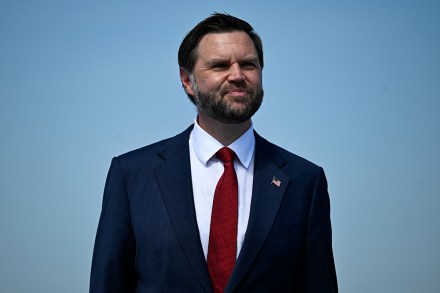
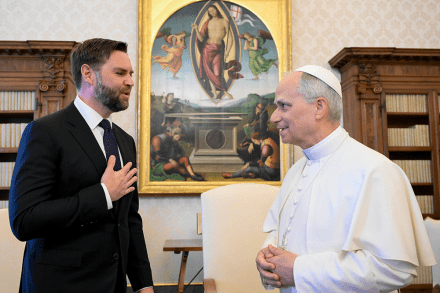
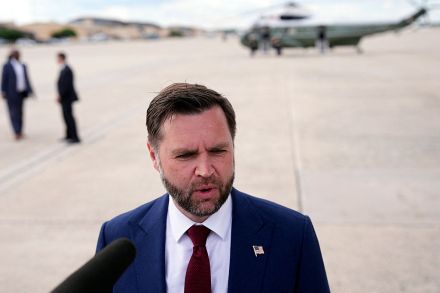
Can anyone stop J.D. Vance becoming president?

As Donald J. Trump flew to the Holy Land on Sunday to declare peace, his Vice-President took to the airwaves to address the rumbling civil conflict on the home front. J.D. Vance did not rule out invoking the 1807 Insurrection Act in order to quell the violent protests against Immigration and Customs Enforcement officials in several American cities. ‘The problem is the fact that the entire media in this country, cheered on by a few far-left lunatics, have made it OK to tee off on American law enforcement,’ he told NBC News. ‘We cannot accept that in the United States of America.’ This is now Vance’s familiar role. He’s not bad cop to Trump’s good, exactly, more the administration’s favourite pitbull.

Patrick Kidd, Madeline Grant, Simon Heffer, Lloyd Evans & Toby Young

28 min listen

On this week’s Spectator Out Loud: Patrick Kidd asks why is sport so obsessed with Goats; Madeline Grant wonders why the government doesn’t show J.D. Vance the real Britain; Simon Heffer reviews Progress: A History of Humanity’s Worst Idea; Lloyd Evans provides a round-up of Edinburgh Fringe; and, Toby Young writes in praise of Wormwood Scrubs – the common, not the prison. Produced and presented by Patrick Gibbons.

Give J.D. Vance a glimpse of real Britain

We’re used to strange sights in north Oxfordshire. The first person I ever met in our small Cotswolds town was a lady who brandished a tin of homemade mackerel pâté at me. It was delicious, but the nature of her greeting gives you an idea of the kind of eccentricity that’s familiar in this part of the world. Yet despite the area’s high tolerance of the bizarre – hardly diminished by the presence of Jeremy Clarkson up the road – I’ve lately witnessed a series of events that have stood out as particularly unusual. I recently took a train surrounded by dozens of confused Americans and their children carrying mounds of luggage bearing ‘VP Vance’ tags.

Vance & Farage’s budding bromance

16 min listen

Nigel Farage hosted a press conference today as part of Reform's summer crime campaign 'Britain is lawless'. He unveiled the latest Tory defector: Leicestershire's Police & Crime Commissioner Rupert Matthews. Amidst all the noise of whether crime in the UK is falling or not, plus the impact of migration on crime, is Reform's messaging cutting through? Would US Vice President agree with Farage's message that Britain is lawless? Vance is in the UK, staying in the Cotswolds, as part of his summer holiday. Tim Shipman and Lucy Dunn are joined by James Orr, associate professor at Cambridge University, and a friend of Vance's to talk us through the dynamics between Trump, Vance, Starmer, Lammy and Farage. Does Farage have Vance's ear?

Christianity, culture wars and J.D. Vance: a conversation with James Orr

62 min listen

James Orr was living the life of a young, high-flying lawyer when, after a few drinks at a New Year's Eve party, he asked for signs that God existed. The signs came; among other things, he narrowly avoided a fatal skiing accident. Now he is a passionate Christian and a conservative culture warrior who helped defeat an attempt to impose the tyranny of critical race theory on Cambridge University, where he is an associate professor of the philosophy of religion. He's also an intellectual mentor to the vice president of the United States; Politico describes him as 'J.D. Vance's English philosopher king'. Dr Orr says Vance is 'extremely articulate, but he takes no prisoners'.

The bully-boy tactics of Trump and J.D. Vance

Just before Russia invaded Ukraine three years ago, Vladimir Putin and Xi Jinping announced a ‘friendship without limits’. The phrase seems to apply equally well to Vladimir Putin and Donald Trump. Has Trump ever breathed a word of serious criticism of Putin, questioned his democratic mandate, challenged his right to invade an independent country, condemned his kidnapping of children? Before his inauguration, Trump stepped in on behalf of ‘the hostages who are being held so violently, inhumanely and against their will in the Middle East’. He warned Hamas that there ‘would be ALL HELL to PAY’ for the perpetrators and that they must ‘RELEASE THE HOSTAGES NOW!’.

Vance criticises Britain: is this a new era for free speech?

15 min listen

The fallout continues from US vice-president J.D. Vance's speech at the Munich Security Conference. Criticising Europe over what he sees as the retreat of free speech, he singled out the case of Adam Smith-Connor in the UK as something that worries him about the direction that Britain is heading in. Smith-Connor was arrested in 2022 and prosecuted for breaching an abortion buffer-zone in Bournemouth. Freddy Gray speaks to Paul Coleman at the ARC conference in London. Paul is executive director of ADF International, a faith-based legal advocacy organisation that has been advocating for Smith-Connor. What is the truth behind abortion buffer-zones? Is this part of a wider 'censorship industrial complex'? And does Vance's criticism signal a new era of free speech?

J. D. Vance is the future of MAGA

The vice-presidency of the United States has always been the butt of jokes. ‘I don’t plan to be buried until I’ve died,’ quipped Daniel Webster when he declined William Henry Harrison’s offer of the role. John Nance Garner, who served as FDR’s vice-president, dismissed it as ‘not worth a bucket of warm piss’. Even John Adams, the first to hold the office, was equivocal: ‘I am Vice-President. In this I am nothing, but I may be everything.’ He may prove to be a more effective standard bearer for Trumpism than Trump himself That ‘everything’ has proven elusive.

We need to learn to pray again

In The Spectator’s basement kitchen a few weeks ago, I cornered a young colleague, Angus Colwell, and asked him what he made of Rod Dreher’s new book Living in Wonder. The thrust of it is that we are not in an age of enlightenment so much as ‘endarkenment’ (Dreher’s term) and that, having turned our backs on God, we have become easy pickings for demonic forces. ‘Oh Lord’, said Angus, turning wearily away, ‘I’m so sick of demons.’ This delighted me then and still delights me, both because it’s so surreal and also because it rings so true. If you’d told me ten years ago that young political types in 2024 would be talking knowingly about the ancient devil-gods of the Mesopotamian region – Moloch, Ishtar and Baal – I’d have said your vape was spiked.

Can Trump ‘Get Out the Vote’?

35 min listen

Freddy keeps up Americano tradition by speaking to Daniel McCarthy ahead of the election. On the podcast they discuss how Trump’s get-out-the-vote project is working and the impact low-propensity voters could have on the result, whether this election will be plagued by inefficiencies in the American electoral system and if J.D. Vance is actually the heir apparent to the MAGA title.

Which campaign has the better ground game?

Republican strategist, and friend of Americano, Luke Thompson joins Freddy Gray to talk about the ground game of Kamala Harris and Donald Trump. From postal voting, to party registration, to machine politics, whose is better? And what impact did Biden's exit from the race have on the organised parts of the Democratic Party?  With Luke's unique insight working on two current senate races, and as a longtime consultant to Vice-Presidential nominee J.D. Vance, they analyse the state of an election that continues to be unpredictable.  Produced by Patrick Gibbons.

Two-child benefit cap row – Starmer’s first big test?

13 min listen

Keir Starmer is coming under pressure to commit to scrapping the two-child benefit cap, introduced in 2017 by the Conservatives. Plaid Cymru, the Greens, Nigel Farage, the SNP, and now some Labour backbenchers are all calling for its removal. Can Starmer hold the line? Elsewhere: in Wales, First Minister Vaughan Gething has resigned after four months in the job, and in the US, Donald Trump has chosen the junior senator from Ohio J.D. Vance as his nominee for Vice-President. What could these developments mean for Labour?Lucy Dunn speaks to Katy Balls and Isabel Hardman.  Produced by Patrick Gibbons and Oscar Edmondson.

Is Klaus Schwab the greatest threat of our time?

New York Alexandra rang me from London to enquire about a man by the name of Klaus Schwab: ‘He sounds like the greatest threat of our time. Should I be worried?’ ‘Nah,’ I answered. ‘He’s just another typical smooth-talking, smarmy Davos Man. ‘That’s what scares me,’ said the wife. For the very few of you who have not heard of Klausie baby, he is the founder and executive chairman of the World Economic Forum, or WEF, a grandiose title and well deserved to be sure, although it once created a social media video that contained the slogan: ‘You will own nothing, And you’ll be happy.’ The WEF is where technocratic dreams make contact with business and political biggies high up in the Swiss Alps.