Italy

Europe gripped by a fifth wave

From our UK edition

How quickly things change. Just a month ago many EU countries were being praised for keeping some Covid restrictions in place, in many cases operating vaccine passport systems. By contrast, Britain was being attacked for removing most Covid restrictions in July. The UK suffering elevated infection rates ever since, leading to predictions that we could be back in lockdown by Christmas. Now, many EU governments are panicking as infection rates soar — and protesters have taken to the streets to oppose new lockdowns and, in the case of Austria, compulsory vaccinations from next February. What is the situation in the worst-affected countries?

Florence with Dante

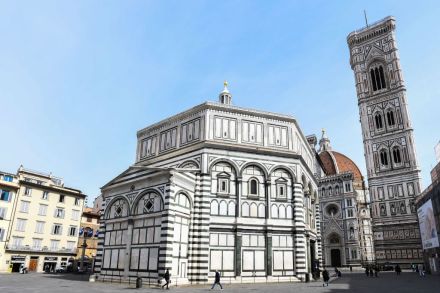
The trouble with Florence, says Ricardo, a local journalist, is that we’re just living off our past glories. “Aren’t we all?” I reply. Florence could perhaps be forgiven when it has accumulated such vast cultural and physical capital, built up over centuries. Signs remind you that it’s 700 years since the death of its most famous son, Dante, father of the Italian language. I must admit I’ve always been too intimidated to read his epic, The Divine Comedy, which T.S. Eliot said was “as great as poetry ever gets.” To prepare for my assault on the summit, I have been reading about Dante himself. I hadn’t known he had no more than a passing acquaintance with his great love, Beatrice.

florence

How to spend 48 hours in Rome

From our UK edition

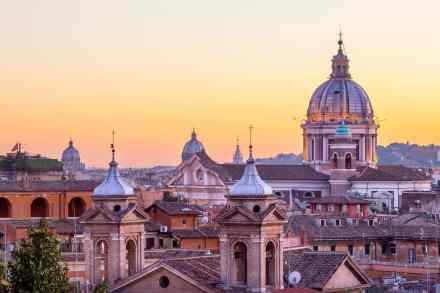
Contrary to the title of this article, do not spend 48 hours in Rome on your first attempt. Unless you have legs of steel, high levels of determination and a desire for non-stop sightseeing. The two pivots about which the city’s history turns – the Vatican and the Roman Forum – are best taken a day each and visited early, fuelled by €1 coffees and sweet, crumbly pasticcini off sticky local bar counters: 48 hours, done. But to focus on these titanic monuments of European history alone is to miss the real chatter of the city: couples meeting for Monday drinks by the Ponte Sisto, watching the sun go down on the Tiber from the Isola Tiberina, lingering under the vaults of (some) of Rome’s more than 900 churches.

How Rome’s rubbish became a political problem

From our UK edition

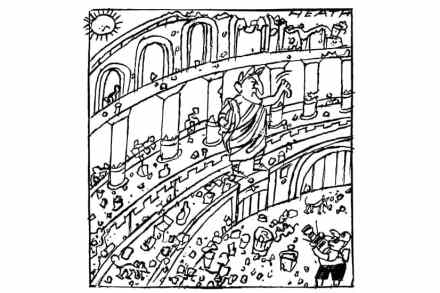
‘Excommunication,’ reads a stone plaque on the wall of the church of St Theodore in Rome, ‘and a fine of 200 gold ducats for any person who should dare to unload… waste of any kind and cause a stink outside these precincts.’ This threat might have worked when the plaque was erected in 1703, but it certainly doesn’t work now. A few paces down the street, a waist-high pile of stinking rubbish bags festers in the autumn sunlight, pecked at by seagulls. In Rome, even the rubbish is eternal. Italy’s capital is strewn with litter — geological layers of the stuff. In a pile of last year’s crumbled leaves by my house on the Tiber embankment I found a beer bottle with a sell-by date of September 2020.

Reports of the demise of Italian populism are greatly exaggerated

From our UK edition

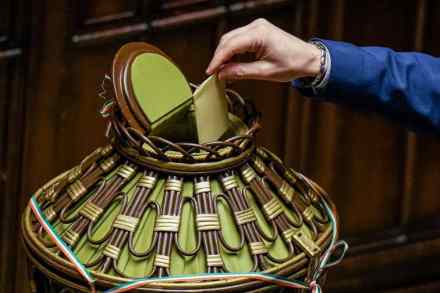
Britain’s newspapers have called the results of the local elections in Italy the death of populism. The Times, for example, grandly proclaims that the Italian elections this week ‘appear to have brought down the curtain on an experiment in anti-establishment politics that inspired populist movements around the world.’ The Guardian, meanwhile, wonders joyfully if what has occurred signals ‘a renaissance’ for the left. I am sorry to have to ruin the party but yet again the mainstream media have got it wrong. The fact that the Italian left, whose main component is the post-communist Partito Democratico (PD), retained Milan plus Bologna and Naples, where the left has governed for donkey’s years, is neither here nor there.

Was the US involved in neo-fascist Italian terrorism?

From our UK edition

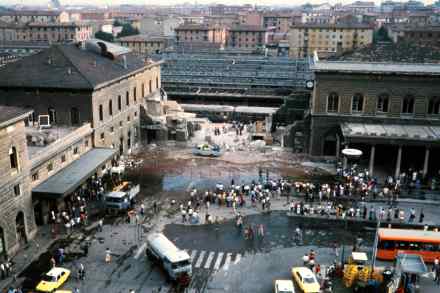
Last month, Italy’s Prime Minister Mario Draghi promised to declassify government documents involving two organisations: Gladio, an anti-communist paramilitary group linked to Nato and the CIA, and a masonic lodge known as P2. These two groups are believed by some to have been involved in the darkest moments of post-war Italian history. For much of the latter half of the 20th century, Italy had the unenviable position of being the epicentre of European terrorism. The blast at the Bologna train station in 1980, which left 76 people dead and more than 200 wounded, was at the time the bloodiest terrorist attack ever suffered by a European country. The bombing was pinned on a small neo-fascist militia called Armed Revolutionary Nucleus.

Why there’s never been a better time to see Venice

From our UK edition

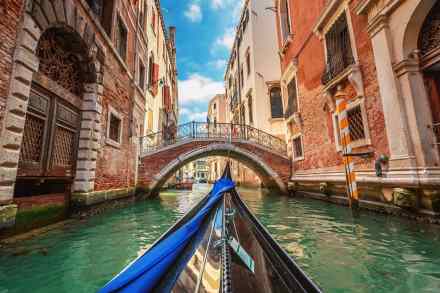
You’re never going to see Venice quite like this again. Usually swarming with tourists – not to mention the enormous cruise ships that dock in its waters ­– the city has been given a serious breather by the coronavirus pandemic. Those lengthy queues to get into its most famous hotspots have disappeared; the picturesque back streets lie empty and a dramatic fall in water traffic has seen the sediment in its 150 canals settle, allowing their vibrant colour to return. La Serenissima – much to many of the locals’ relief – has become serene once more.

Churchill did admire Mussolini

From our UK edition

In his ruthless demolition of Geoffrey Wheatcroft's new Churchill biography in last week's Spectator, the historian Andrew Roberts pours scorn on the ‘insinuation that Churchill had fascist leanings in the 1920s’ as it is not supported by ‘any actual evidence (for there is none)’. Well, however justified his hatchet job of Wheatcroft's book is in general, Roberts is deeply mistaken about Churchill and fascism. Like so many in the 1920s and well into the 1930s, from all sides of the political divide, Churchill was a fervent admirer of the former revolutionary socialist Benito Mussolini and the fascist movement which he founded in 1919.

The wine that made me change my mind about Valpolicella

From our UK edition

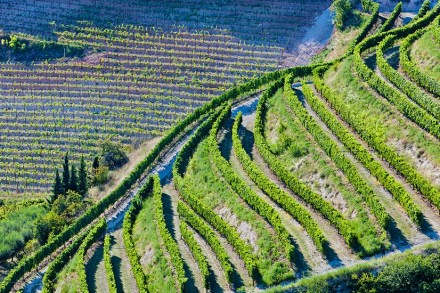
There was a marvellous general of yesteryear called George Burns. He had a good war and a splendid peace. He also held senior posts for longer than would be permitted in these diminished times. Colonel of the Coldstream for 32 years, he was Lord-Lieutenant of Hertfordshire for a quarter of a century. Many stories are told about him. Connoisseurs of equestrianism say that he was much the worst rider ever to appear at the Queen’s Birthday Parade, always looking like a magnificently attired and bemedalled sack of potatoes. He also had a set diet: a game bird at every meal. Once, he collapsed, was rushed to hospital and opened up. The medics expected to find terminal stomach cancer. Instead, they encountered what looked like the overflowing harvest from an enormous tin of caviar.

Italians are seeing red over the Covid ‘Green Pass’

From our UK edition

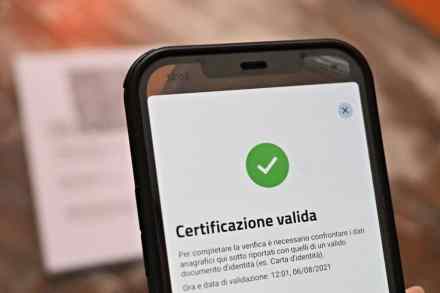
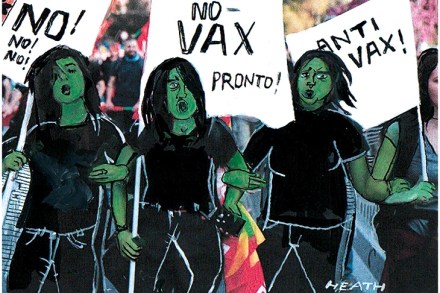
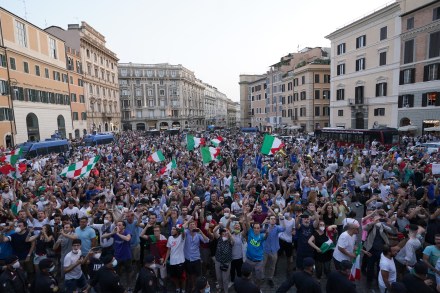
Rome Following Emmanuel Macron’s example, the Italian Prime Minister, Mario Draghi, has announced the introduction of a ‘Green Pass’. Draghi’s initiative, which was announced at a press conference on 24 July and comes into effect on 6 August, has sparked protests all over Italy The Green Pass will discriminate between Italians who are vaccinated and those who are not. Anyone who has not received their jabs, or cannot show a recent negative test or that they have recovered from Covid in the past six months, will be denied access to indoor restaurants, museums, cinemas and exhibitions. Further restrictions under discussion would prevent them from access to trains and ferries. There are also plans to limit entry into schools and universities to the vaccinated.

Why are only Italy’s ‘far right’ opposing vaccine passports?

From our UK edition

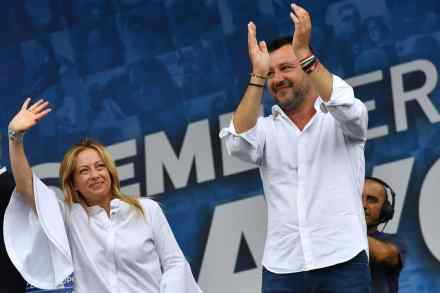
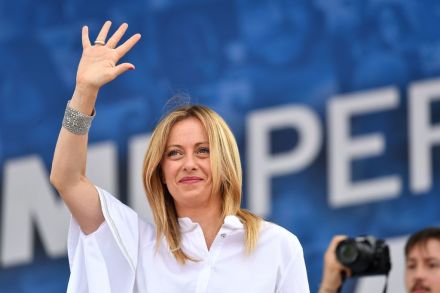
Dante’s Beach, Ravenna Here is your starter for ten. Which Italian political party believes that individual liberty is sacred? Answer: the party invariably defined by the international media as ‘far right’ or ‘fascist’ and jointly Italy’s most popular party in the opinion polls: in other words, the Fratelli d’Italia (Brothers of Italy). Here in Italy, birthplace of fascism, the 44-year-old leader of the right wing Fratelli d’Italia – Giorgia Meloni – has been busy promoting distinctly anti-fascist values. In defence of human liberty, she has spoken out passionately against the decree issued on 22 July by Italian premier Mario Draghi which will introduce the ‘Green Pass’ to Italy.

The Italians are deluding themselves about the English

From our UK edition

Not content with winning Euro 2020, many Italians have spent the days since the final engaged in a febrile orgy of moral supremacy. Italians are not just much better than the English at football, you see (which is fair enough, although they did only win on penalties), but many Italians are insisting, even more excitedly, that the Italians are much better people than the English. To which I, as a Brexiteer expat Briton who has lived amongst Italians for donkey's years, have this to say: Si calmino, signori, si calmino! (Calm down dears!). The English football team have been branded as bad losers and cheats; their supporters have been labelled as rude, arrogant, hypocritical, violent, drunken thugs and racists.

The challenges of being an England supporter in Italy

From our UK edition

Dante’s Beach, Ravenna My fiery Italian wife Carla is not just a passionate patriot but also a devout Catholic, and so with perfidious Albion looking good and leading gli azzurri one-nil she disappeared to wash her hair and pray to the Madonna. The next day, when the dust had settled, I asked her why. ‘I was suffering so much pain that I felt like swearing and blaspheming at the inglesi,’ she said. That left me — a lone inglese — in front of the TV with our six children (aged five to 17) who feel passionately Italian despite being half English. When Italy scored the dreaded equaliser they exploded with joy and Carla returned briefly to watch the replays, wrapped in a towel and with her long black corkscrew hair still dripping with water.

Will Italy’s Euro win lead to a baby boom?

From our UK edition

Could Italy’s triumph on Sunday result not just in a trophy for the azzuri, but a baby boom for a nation with one of Europe’s lowest fertility rates? The anecdotal evidence would support this theory. Nine months after Iceland beat England in a Euro 2016 match, it experienced an unprecedented increase in births. This was the first time the nation had ever qualified for a major European tournament, and close to 10 per cent of its 300,000 population watched the game in person. Spain’s birth rate also shot up 16 per cent nine months after Barcelona won the 2009 Champions League. Yet a new paper from Luca Fumarco and Francesco Principe pours cold water on the idea that sports success euphoria boosts human conception.

Italian politics is fracturing

From our UK edition

Just in time for the football final, Italy’s Five Star party reached a deal. Giuseppe Conte, a former prime minister, has agreed to take on the leadership of the party, but only on condition that he will be fully in charge of the politics of the movement and of the parliamentary party. Beppe Grillo, the party’s founder, agreed to those conditions, which reduces his hold. This compromise may not last. Many details have yet to be agreed. But Conte is in a strong position because the majority of parliamentarians and voters are behind him — a powerful combination.

England had it and they threw it away

From our UK edition

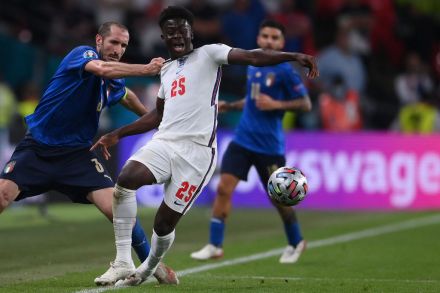
England: 1 (Shaw)  Italy: 1 (Swarthy cheat) England had it and threw it away. Much the better side in the first half, finding acres of space along the right flank. But the Italian manager, Roberto Mancini, recognised the problem and changed the game. As Italy swarmed forward in the second half, Gareth Southgate had no answer: it was almost a re-run of the 2018 semi final in Russia against Croatia – he cannot grasp when a game is going against him and has no comprehension of what to do to change it. His substitutions were appalling: Henderson horribly off the pace, Saka horribly out of his depth. Two very bad changes indeed. The godforsakenly late introduction of Grealish gave England a new cutting edge: too little, too late, Gareth.

England, Italy and the power of national pride

From our UK edition

As an Englishman in enemy territory I am lucky that love is a more powerful emotion than patriotism otherwise after a month of Euro 2020, climaxing in tonight’s final between Italy and England, my marriage to my Italian wife, Carla, would be well and truly on the rocks – even though she is a devout Catholic. Carla is so fiercely pro gli azzurri that it is a case of ‘o con noi, o contro di noi’ (either with us or against us) – the clarion call of the fascist dictator Benito Mussolini. Every time the Italians have scored a goal this past month my very fiery wife has exploded from the mega sofa in front of the wide-screen TV we got from a bar roaring ‘Si!’ and ‘Grande!’ and ‘Che uomo!’ (what a man!

Euro 2020: This game is tailor-made for Southgate’s England

From our UK edition

Right now, it’s a bit like you’re five years old and it’s the night before Christmas but you can’t be sure who is going to come down the chimney, Santa Claus or Benito Mussolini. I mean for football fans – not for the public school bedwetters on here who refer to the world’s favourite sport as ‘girlball’. Italy are unbeaten in their last 33 games: good. Runs come to an end sooner or later. This is a game tailor-made for Southgate’s favourite tactics of stifling containment. This may well turn out to be one of the most boring matches in the history of football. I would start with Sancho and Grealish, just to worry their backline a little. But he won’t. And who, now, is to say that he is wrong, given what he has achieved?

Can the EU save Italy?

From our UK edition

There’s been a lot of hype around the green light given by the European Commission yesterday to Italy’s recovery plan. But let’s break it down: the final headline numbers are €68.9 billion in EU grants by the year 2026 and €123 billion in loans. If you take the grant component, and divide it over the six-year duration, you arrive at an average of 0.6-0.7 per cent of Italy’s 2019 GDP each year. It is front-loaded, and it’s by no means a modest sum. What’s harder to accept however, is folding in the loan component to arrive at some giant fake headline number. The whole point of this exercise is not to produce a classic fiscal boost, but fiscally-assisted structural reforms.

The sumptuous Suffolk estate that transports you to Tuscany

From our UK edition

Ah Italia! Land of gelato, Vespas and frescoes – I’ve pined for the place so many times over the last year that it’s difficult to know which I love more: Italy itself or the idea of Italy.  The joy of travel is always sparked in part by imagination: the anticipation of a place before you arrive; the memory of it once you leave. And it's not without reason that we love to recreate the places we admire back home. The Chinese have even gone so far as to enshrine their nostalgia for England through Shanghai’s mock English suburb Thames Town. It’s a riot of British stereotypes – from phone boxes to village greens.