Italy

Portrait of the week: Chancellor unveils his unBudget, Hilary Mantel dies and corgi prices soar

From our UK edition

Home Kwasi Kwarteng, the Chancellor of the Exchequer, presented a far-reaching ‘fiscal event’ (ineligible to be called a Budget), said to have cut more tax than any measure since 1972. The markets’ immediate response was to sell pounds, and sterling fell to $1.07 (though the euro also continued in its own decline against the dollar and the Chinese yuan fell sharply). The Treasury defensively said it would publish proposals for dealing with its debt and the Bank of England said it would buy government bonds to help ‘restore orderly market conditions’. The IMF spoke out, inviting the government to ‘re-evaluate’ its tax changes.

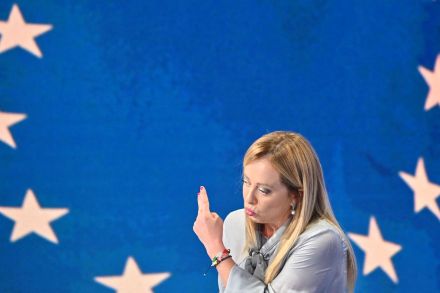
Giorgia Meloni can’t afford to fight the EU

From our UK edition

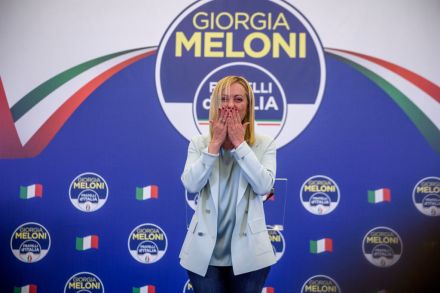
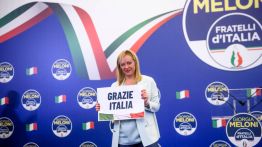
Ravenna, Italy The victory of Giorgia Meloni in Italy with a huge majority of seats in parliament has prompted the expected political indignation. It’s not just the international press, either. Yesterday, for instance, my 17-year-old son Francesco Winston told me that at his school – we live near Ravenna in the Red Romagna, a hotbed of ex-communists – all his companions were in mourning. Why, I asked? ‘They say she's going to abolish abortion,’ he explained. Why do they believe that? I asked. ‘They're badly informed,’ he replied. Bravo figlio mio, bravo! Meloni would not abort an unborn child herself – she told me when I interviewed her in Rome last month – but nor would she impose her view on any other woman.

The BBC’s Meloni problem

From our UK edition

Here is a quote from the BBC Europe Editor, Katya Adler’s, very short piece on the BBC Radio 4 Six O'Clock News this evening, concerning the electoral victory of Giorgia Meloni in Italy: Millions of Italians didn’t vote for her. They say they do not recognise themselves in her nationalist, protectionist proposals, her anti-immigration rhetoric and her conservative family mores. Isn’t that remarkable? Can you imagine the awful Adler, or indeed any correspondent, commenting on the victory of a left-wing candidate:  Millions of people didn’t vote for her.

Giorgia Meloni should inspire American conservatives

Giorgia Meloni and her Brothers of Italy party were swept into power in elections this weekend, a development that the media complex in America greeted with all the subtlety of a bird smacking into a sliding door. The New York Times managed to call her a “fascist” 28 times in a single article. Meloni stands to become Italy’s first female prime minister — but I suppose it’s only good for women to break glass ceilings if they’re the correct kind of women.

Giorgia Meloni is no springtime for Italian fascism

Is it springtime for fascism in Europe? First, it was Sweden. Now, it’s Italy. To judge by the reaction to Giorgia Meloni’s victory in the Italian elections on Sunday, the moment to say arrivederci to democracy has arrived. “Giorgia Meloni will be a minister-president whose political examples will be Viktor Orbàn and Donald Trump,” Katharina Barley, the vice-president of the European Parliament, declared. Maybe so, but will she actually be able to transform her country? Fratelli d’Italia, the Brothers of Italy, is a nationalist party that traces its roots back to Mussolini and is led by the charismatic Meloni. It's about to play a starring role in the Italian political firmament.

Will Meloni be able to govern Italy?

From our UK edition

Mario Draghi's national unity government lost badly in yesterday's Italian election – worse even than the polls predicted. Fratelli d'Italia, the main opposition party, was the big winner. Five Star, which pulled the plug on Draghi's government, also gained. What we did not see is a big shift between left and right. The right coalition of Fratelli d’Italia, Lega, and Forza Italia, got 44 per cent. The really big movements occurred within the coalition. Giorgia Meloni's FdI ended up with 26 per cent – way ahead of the published polls. Lega got only 9 per cent. The coalition is on course to secure a majority in both houses of parliament, though not the two-thirds majority needed to amend the Italian constitution. Meloni will almost surely be the next prime minister.

Second chances: The Marble Staircase, by Elizabeth Fair, reviewed

From our UK edition

To reject ‘in rainy middle age the poignant emotions that belonged to youth and Italy’ is the lesson learned by the heroine of Elizabeth Fair’s last novel. More than 60 years after its author consigned the typescript to a black tin trunk, following her literary agent’s failure to find a publisher for this, her seventh novel, The Marble Staircase finally sees the light. This is thanks to Furrowed Middlebrow and Dean Street Press, the company responsible for reprinting the six light, romantic comedies that, in the 1950s, earned Fair an appreciative following and commendations from writers such as Compton Mackenzie, John Betjeman and Stevie Smith. Literary rediscoveries are always potentially exciting.

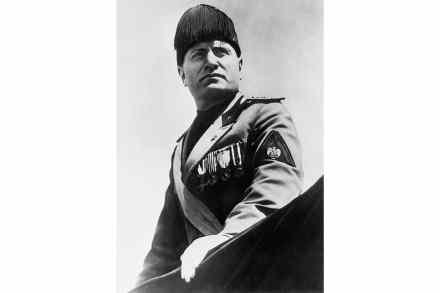
Pre-Mussolini, most Italians couldn’t understand each other

From our UK edition

Towards the end of Dandelions, Thea Lenarduzzi’s imaginative and deeply affecting memoir, the author quotes her grandmother’s remark that there are tante Italie – many Italys. ‘Mine is different to hers, which is different to my mother’s, which is different to my father’s, and so on down the queue,’ she writes. These Italys – of fascismo, of Garibaldi, of emigrants living in Sheffield and Manchester, of 31 dialects – are not far-flung historical oddities confined to documentaries or textbooks but are, in Lenarduzzi’s account, the patchwork story of one family.

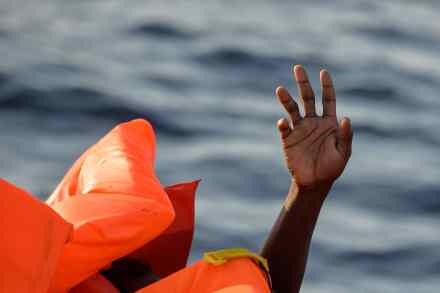
Europe’s new migrant crisis

From our UK edition

Earlier this month I spent a week in Sicily, driving south from Palermo to Agrigento and then east to Syracuse and Messina. It was my first visit to Sicily in 17 years and, given the media reports, I had expected to find the island crowded with migrants from Africa. In fact, I saw none, other than those I glimpsed in a fenced-off processing centre at the quayside in Agrigento, the first port of call for many migrants who arrive in Sicily. Last week the local paper in Agrigento drew on official government figures to reveal that so far in 2022, 45,664 migrants have landed on Italian territory, an increase of 40 per cent on the same period last year.

Dear America: moving to Europe won’t solve all your problems

“In Europe people wear breathable clothes made out of natural materials, in the USA people wear plastic.” “In Europe people sleep indoors, not in tents on the street like Los Angeles.” “Unfortunately people have a lot of reactions to gluten in the US and zero issues in Europe” “How can you avoid looking like an American tourist in France?” Scroll through your news feed and you’ll witness a lot of Americans, usually those who pride themselves on their progressive views, indiscriminately romanticizing “Europe.” In the wake of the endless Covid restrictions and after Roe v. Wade was overturned, there’s been endless social media chatter about how to move from the US to Europe.

europe

Dark days in Hollywood: Mercury Pictures Presents, by Anthony Marra, reviewed

From our UK edition

Summer is a time for blockbusters and Anthony Marra has delivered the goods with Mercury Pictures Presents, a sweeping book about 1940s Hollywood, Mussolini’s Italy and America’s entry into the second world war. The action opens in the executive offices of Mercury Pictures International, a struggling film studio run by Artie and Ned Feldman, two brothers modelled on Jack and Harry Warner. It’s late summer 1941, and as well as fighting each other, the Feldmans are fighting the isolationist senators accusing Hollywood of pushing America into war. The battle to get the script for Devil’s Bargain approved is ‘shaping into a pivotal confrontation between campaigners for free speech and crusaders for government censorship’.

How Italy’s most famous coastline stays crowd-free

From our UK edition

A five-minute taxi journey costs €50, a single drink can set you back more than €20 – and if you want to avoid shelling out €60 for a plate of pasta, you might struggle to find a supermarket. But the Costa Smeralda offers one luxury that's hard to put a price on at the peak of the summer holiday season – a surprising lack of crowds. Back in the 1960s, this 20km stretch of beaches and pine forest on Sardinia's northern coastline was uninhabited and deemed of little value to the country's farmers. But the Aga Khan spotted a business opportunity. He purchased the land and began the process of turning it into a tourist destination for the upper classes, establishing a consortium to ensure all future development remained tightly controlled.

Why Italy’s Emilia-Romagna beats Tuscany

From our UK edition

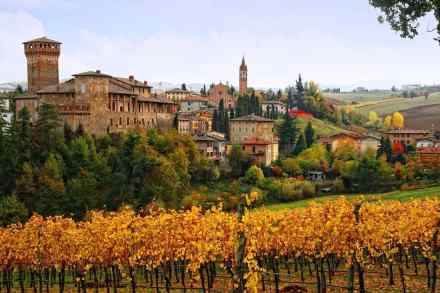
The guidebooks will tell you that Emilia-Romagna is Tuscany without the crowds. It’s generally true, though at the moment – in the peak summer season and when all the world seems to be descending on Italy after years of Covid-imposed separation from la dolce vita – there’s really tourists everywhere in Italy. But yes, with a savvy itinerary, Emilia-Romagna does offer the prospect of lesser crowds than Tuscany or the Amalfi Coast while still getting all the sun, sea, sightseeing and sensationally good food that Italy is all about. Bologna Bologna - a Mecca for foodies Italy’s culinary capital, Bologna is a city in which you can eat exceedingly well.

Nancy Pelosi’s Italian job

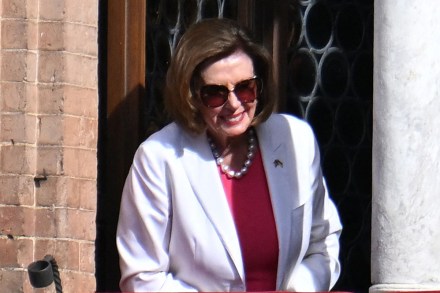
The price of gasoline in California is averaging at over $6 a gallon. Inflation is 8.6 percent. The nation is reeling after yet another mass shooting, and the Democratic base is furious at their party for being caught flat-footed by the Supreme Court on abortion. How are our nation’s leaders responding? Well, Nancy Pelosi and her ample bosom are taking a waterfront stroll at a private beach club in Italy. The Speaker of the House looked well below her eighty-two years as she showcased her tanned figure in a turquoise-patterned bathing suit. Pelosi and her beau Paul are taking a break from, respectively, suspect stock trading and drink driving at the highly exclusive Alpemare Beach Club near Florence, owned by Italian opera star Andrea Bocelli.

nancy pelosi breasts

Where to invest on Italy’s islands

From our UK edition

A world away from TV dating reality shows, raucous party boats and the VIP areas of nightclubs in the Balearics, the Italian islands are hard to beat when it comes to understated chic. Harder to reach too, and generally more arduous places to purchase a home in, the islands can offer property hunters something special. TV and film producers know this well: picture the Baroque palazzos of Inspector Montelbano’s Sicily, the private beach of Ischia or the winding cobbled streets of neighbouring Procida used in The Talented Mr Ripley. For wild empty beaches, secret coves and quaint fishermen’s houses lining ancient quaysides, the islands in the Gulf of Naples are a good place to start, reached by ferry from Naples.

Following the seam of the Iron Curtain

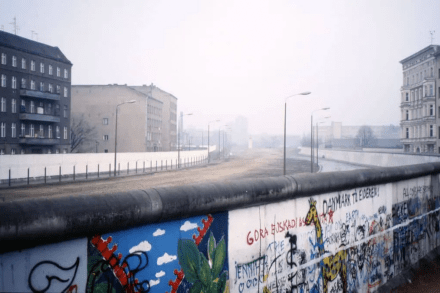
Just before the pandemic, I spent several months traveling through Europe, from the north of Norway to Istanbul and beyond to Azerbaijan. I saw unforgettable sights: the endless daylight of the Arctic summer; the vast Hammershus castle on the Danish island of Bornholm; Vienna’s ornate Prunksaal library; and the sandy beaches of Corfu. But the focus of my journey was precisely those things that most travelers to these places often ignore. I was following the route of the Iron Curtain. My aim was to visit every part of that old great divide, all the places where NATO once abutted the Warsaw Pact, where overwhelming military might stood constantly primed for apocalypse.

Italy’s hostility to Nato is building

From our UK edition

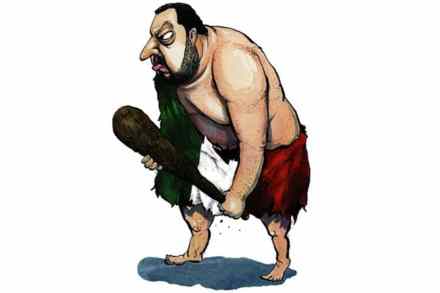
Ravenna, Italy The war in Ukraine has caused an unholy convergence of the left and right in Italy. While there is nothing formal so far about this alliance of enemies, it nevertheless threatens to destroy the unity of Nato. The most high-profile participant is -Matteo Salvini, leader of the Lega – the party with the second-highest number of MPs in Italy’s parliament – which is invariably defined as ‘far right’. Salvini, who has been one of Vladimir Putin’s strongest supporters outside Russia, condemned the invasion of Ukraine and has now come out as a pacifist. He opposes Finland and Sweden joining Nato, or sending more arms to Ukraine, on the grounds that both would make peace less likely.

How to spend 48 hours in Turin

From our UK edition

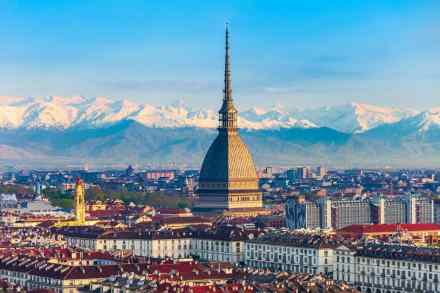
This May Turin’s stately boulevards and grand piazzas will be flooded with sequin-clad divas and flag-brandishing fans, as it gears up to host the 66th edition of the Eurovision song contest. This is only the third time ever that Italy has hosted the competition, following Rome in 1991 and Naples in 1965. The country’s first ever capital (from 1861 to 1865) and the urban hub of the stunning Piedmont region (a foodie haven) – Turin is an under-appreciated gem among European city breaks. There's no better to time to discover the best of what the city has to offer ahead of the Eurovision Grand Final on 14 May. What to do With a seductive mix of Renaissance, Baroque, Rococo, Neoclassical, and Art Nouveau buildings, Turin (or Torino) is best explored on foot.

The horror of gluten-free beer

From our UK edition

I was reminded of the worst liquid that I have ever consumed. It was the last occasion on which I drank Coca-Cola, nearly 50 years ago. To be fair to Coke, this bottle was at room temperature, and the room was in the Anatolian peninsula, during the ferocity of high summer. A group of us were travelling in a battered old bus, still four hours by bad roads from Izmir, hot water and cold beer. Having run out of bottled water, we needed something to stave off dehydration. The village offered a choice: well water or parboiled Coke. An aristocratic French leftie was moved to a declamation: ‘Moi, j’ai un horreur de Coca-Cola.’ I concurred.

A taste of la dolce vita in Tuscany

From our UK edition

Amid the grandeur of old Edinburgh, in the lee of the castle, is one of the finest buildings in Scotland: George Heriot’s School. But Heriot’s is more than an architectural gem. It is an epitome of Scotland as it used to be, before the Scottish esprit de corps succumbed to kailyard grievance-mongering under the rule of Sturgeon the tricoteuse and her Nationalist administration. George Heriot, ‘Jingling Geordie’ as he was nicknamed after the coins supposedly jingling in his pockets, was one of many Scotsmen who went south to make their fortune after the Union of the Crowns in 1603. ‘The noblest prospect a Scotsman ever sees is the high road… to England’ applied then as well as in Dr Johnson’s time.