Italy

Can Italy’s arch Eurocrat save his country?

From our UK edition

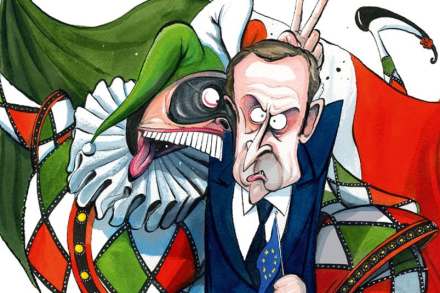
The world these days is so blasè about the destruction of democracy that no one even thinks it worthy of comment that an important free country such as Italy has not had an elected prime minister since the last one, Silvio Berlusconi, was forced to resign in 2011 during the Eurozone crisis after a palace coup orchestrated by Brussels, Berlin and Paris. That is ten years without a prime minister chosen by the Italian people at the ballot box in a general election. The electoral system, currently a hybrid of first past the post and proportional representation, is partly to blame. But the real reason is the Italians. They seem anthropologically incapable of giving enough votes to form a government, even to a coalition of parties — let alone one single party.
Can ‘super’ Mario Draghi save Italy from itself?

From our UK edition

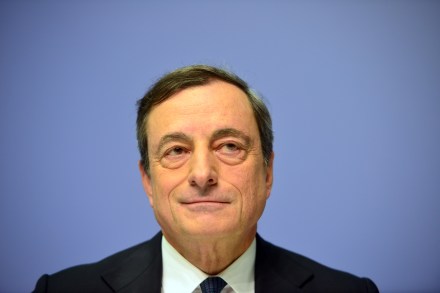
In the aftermath of the financial crash, two 'Super Marios' came to Italy's rescue. Mario Draghi, then president of the European Central Bank, and Mario Monti, an economics don turned politician, both helped steady the ship. Now, more than a decade on, one of those Marios is back. But is he the man Italy needs in its hour of need? Draghi, who is set to become Italy's new prime minister, has followed a well-trodden path to this moment. Like Monti, he has worked in academia and is a Goldman Sachs alumnus with a stellar EU career on his back. It all sounds very familiar. But can Draghi avoid the fate of the other Mario and ensure that Italians don't quickly turn against him?

How Argentina conquered Malbec

From our UK edition

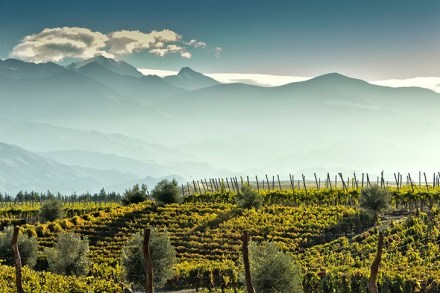
When Napoleon III proclaimed himself Emperor of France in 1852, he unwittingly kickstarted quality wine production in Chile and Argentina. A mass exodus of republicans ensued, one of whom happened to be a skilled agronomist from Tours named Michel Aimé Pouget. Pouget carried with him a cache of French grape cuttings that were to change the course of wine history and formed the basis for Argentina’s wine industry today. Because of the phylloxera plague, French wine production fell by 75 per cent between 1875 and 1889. Today the vines of Europe are still grafted on to phylloxera-resistant American root stock. In Argentina and Chile, which have no phylloxera, old ungrafted European vines are flourishing.

Every page of this astonishingly beautiful ode to the citrus is a treat

From our UK edition

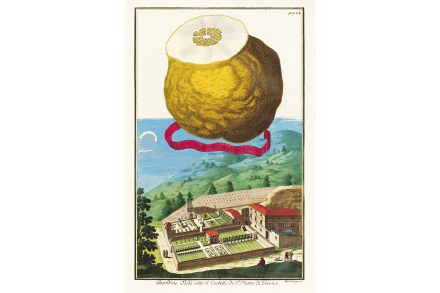
There’s an episode of Yes Minister called ‘Equal Opportunities’. Minister Jim Hacker is under pressure to recruit more women to the civil service. The hunt is on for female mandarins. ‘Ah,’ says principal private secretary Bernard. ‘Sort of… satsumas?’ At this time of year, I can’t help thinking of Bernard as I hover in the Co-op over nets of tangerines, mandarins, clementines, satsumas and ‘easy peelers’, whatever they are. ’Tis the season for citrus. For oranges at the bottom of stockings, for Buck’s Fizz on Christmas morning, for smoked salmon blinis with slices of lemon, for Milanese panettone with candied parings of peel, and for J.C.

A tinpot Caesar

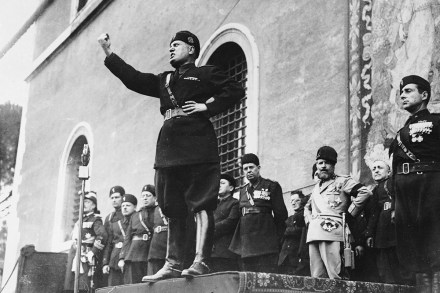
In 1919, an obscure political agitator called Benito Mussolini assembled a ragbag of Blackshirt diehards in the Lombard capital of Milan and launched the movement that was to become, two years later, the National Fascist party. The party took its name from the classical Roman symbol of authority — an ax bound in rods, or fasces. Once in power, Mussolini introduced the stiff armed Roman salute after the handshake was deemed fey and unhygienic. At times he wore a richly tasseled fez and thrust out his chin pugnaciously for the cameras. For all his posturing and demagoguery, Mussolini was widely admired in pre-war Britain, where Lord Rothermere’s Daily Mail routinely carried flattering portraits of him.

mussolini

Italy is about to hijack the eurozone

From our UK edition

There is still some debate about who came up with the adage that ‘if you owe the bank $100 that is your problem. If you owe the bank $1 million dollars that is their problem’. It is usually attributed to the oil tycoon J. Paul Getty, which may help explain how he became the richest man of his era. Occasionally, and in a slightly modified form, it is attributed to John Maynard Keynes in his advice to the British cabinet after world war two. And yet in truth, it should probably have been coined by an Italian. Why? Because the country now owes so much money to the rest of the eurozone it looks about to hijack the whole system.

Every scene Sophia Loren isn’t in feels like a wasted one: The Life Ahead reviewed

From our UK edition

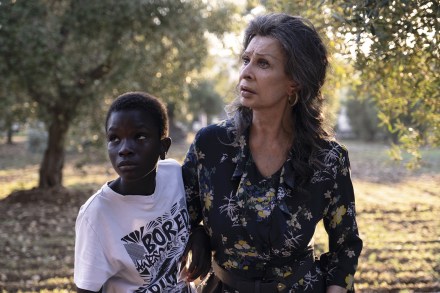
The Life Ahead stars Sophia Loren, and if there is one reason to see The Life Ahead it is this: Sophia Loren. And if you need a second reason, it is this: Sophia Loren. Also, it is the third, fourth, fifth, sixth and seventh reason. And probably the eighth. She is magnificent, truly. Directed by Edoardo Ponti, Loren’s son, the film is based on the 1975 novel The Life Before Us by Romain Gary. It was filmed in 1977 as Madame Rosa, starring Simone Signoret, and won the Oscar for best foreign film. Here, the action has been transposed from France to Italy and the port city of Bari which is, from what we see of it, rough and poverty-stricken rather than picturesque. And our Madame Rosa is Loren, in her first proper film role for 11 years.

Why did the ‘Florence Three’ keep testing positive for Covid?

From our UK edition

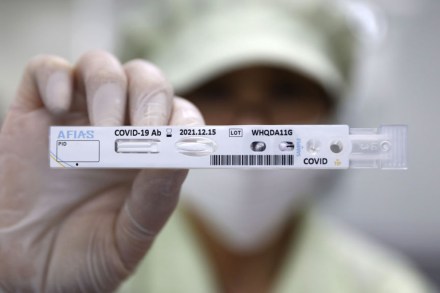
Worse tales have emerged during the pandemic than that of the ‘Florence Three’ – Rhys James, Quinn Paczesny and Will Castle, who have all now returned home to Britain after 61 days incarcerated in a hotel in the Italian city. Some might say a couple of months stuck in Florence could have been a blessing – and so it might have been, had they not each been stuck in solitary confinement and fed microwaved mush, with no more chance to go out to a trattoria than to visit the Uffizi. But what stands out about the story of the Florence Three is not so much their plight, but what it tells us about Covid-19 tests. The three men, who are aged between 20 and 23, met in Northern Italy while teaching English over the summer.

Britain’s bizarre Italian travel guidance

From our UK edition

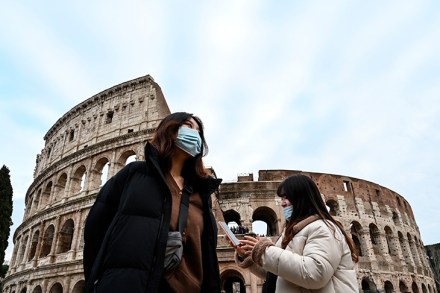
Here’s a tip. When the Foreign Office advises against going somewhere, hop on the next plane. The mandarins have advised against visiting Italy because of Covid-19. It’s as bizarre as everything else that our rulers have said about the virus. Confirmed cases in the UK are currently more than twice as high per 100,000 as in Italy. Anyone with our welfare at heart should be telling us to go to Italy at once. I left the next day. The Italians could be forgiven for serving us our own medicine and quarantining all arrivals from the UK. As it is, they test you at the airport, and quarantine is only required if you test positive. It is rational and very efficient. It takes only ten minutes and costs nothing. Generally, however, the Italian government has much to answer for.

How democracy can subvert itself: Bunga Bunga reviewed

From our UK edition

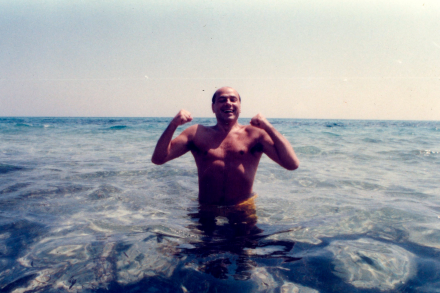
Italy has long captivated romantics from rainy, dreary, orderly northern Europe. Goethe, Stendhal, Keats and Shelley all flocked to Italy in search of the ideal society. There they found what they thought was a utopia. ‘There is,’ Byron marvelled in a letter home from Ravenna, ‘no law or government at all, and it is wonderful how well things go on without them.’ Well, Silvio Berlusconi has made some of Europe’s wisest men sound like chumps. If the notorious career — chronicled in the podcast Bunga Bunga — of the longest-serving prime minister of Italy since Mussolini and its sometime richest man has done one good thing, it’s to have dispelled for good our quixotic fantasies about his troubled nation.

A leaf from Verdi’s book

Radicchio, radicchio, wherefore art thou radicchio? A red-leafed chicory by any other name would doubtless taste as bitter — but it certainly wouldn’t sound as pedigreed. Consider the following bit of dialogue: ‘Would you like a chicory salad?’ The natural response is a hasty, ‘Not just at the moment, thank you,’ the very name of chicory summoning up painful memories of undercooked chickpeas and bowls of foliage into which well-meaning persons have seemingly shaken the broken fragments at the bottom of the cereal box. Compare and contrast with the following overture: ‘Would you care for some grilled Chioggia radicchio embellished with small cubes of buffalo mozzarella and drizzled with a reduction of Balsamico di Modena?

radicchio

Soave, an original sin-free wine

From our UK edition

‘The Lord God walking in the garden in the cool of the day’: surely one of the most beautiful images in all writing. One might have thought that it would have softened the Almighty’s mood, so that He would have given Adam and Eve a mere ticking-off for scrumping. But no: that stroll ended in the doctrine of original sin. For those who suffer under it, there is one aesthetic relief from stifling, humid heat: stucco seen through green-leaved branches. That combination refreshes the soul. It works even better, of course, if lesser regions have a less aesthetic form of refreshment: the cool of the glass. In pursuit of garden wines, I have been drinking a lot of Soave and trying to learn more about it. My ignorance extended to the very name.

Happy hours

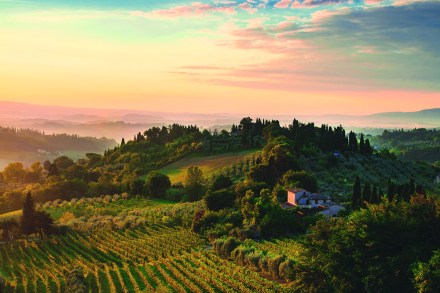
A family of peacocks is sunning itself in our villa garden. They all look extraordinarily happy and composed, especially the baby one for whom (like us, come to think of it) this is a whole new experience. But then, the 150 hens wandering in and out of their coops painted like beach huts don’t look exactly overburdened themselves. Nor do the sheep, pigs and cows in their 220 acres of lush Tuscan terrain near the Merse river.

tuscany

Italy’s Achilles heel: corruption and cronyism

From our UK edition

Tim Parks is a seasoned, incisive observer of football, the railways, work, domestication and plenty more in his adoptive country of half a lifetime. What is, what ought to be and the machinations in the delta between provide much of his material. In this tale of two countries in one, bright, hard-working Valeria leaves Basilicata in southern Italy to study communications and marketing at a private university in Milan — shiny subjects in a city of business a long way from home (the same distance could take her to Tunis or Belgrade). She arrives laden with bread, pastries, fruit and wine, given to her by three aunts at railway stations on her journey. Her family and her circle of friends are all from the south, but she wants her life to be in the north.

How to get into a club and on to a plane

From our UK edition

Disaster struck the Young family last Friday. My 12-year-old son Charlie woke up with a temperature. Ordinarily, that wouldn’t matter, but we were in the Dolomites and due to fly back to England from Venice later that day. On the flight out, we’d all had our temperature checked with an infrared thermometer pointed at our foreheads, and there was a similar policy in place at Marco Polo airport for our return journey. Would Charlie’s fever mean none of us would be allowed to board the plane? And would we be interned in some ghastly Travelodge for 14 days? The responsible thing would have been to remain in Italy until Charlie recovered, just in case he had the virus.

How Britain lost the war against coronavirus

From our UK edition

Sun Tzu, the great Chinese military commander, said that all battles are won or lost before they are ever fought. By first week of February, the UK and many other European countries had lost the battle against coronavirus. Another of my favourite life sayings is that ‘Assumption is the mother of all screw-ups’. Assumptions by UK government, Sage, NHS, Public Health England and the Department of Health and Social Care were certainly the mother and father of this one. The NHS, PHE and Sage thought they were well prepared for a pandemic: there were dozens of reports, response strategies, protocols, operating plans, models, transmission studies — you name it, there was a long document about it. There was even a full simulation, Exercise Cygnus, in 2016.

Bergamo and the enigma of Covid-19

From our UK edition

There seems to be only one certainty with Covid-19: that every day we will be bombarded with fresh evidence and scientific opinion that is contradictory and leaves us a long, long way from understanding this disease. Just when it seemed that antibody tests were indicating infection rates of no more than 10 per cent in the worst-affected countries and no greater than 20 per cent in the worst-affected cities, along comes a study which points to vast numbers of infections. This morning, the public health agency in the Northern Italian city of Bergamo – the epicentre of the Italian outbreak in March – reports that a random sample of 9,965 residents from the worst-affected areas show the presence of antibodies in a remarkable 57 per cent of cases.

Covid statistics are just politics by other means

From our UK edition

Statistics is the continuation of politics by other means, to misquote Clausewitz. One hundred and fifty years after the crushing of the revolutionary Paris Commune, historians still clash aggressively about the death toll. Was it as high as 40,000 or as low as 10,000? It matters because the Paris Commune is a shibboleth, a great left-wing site of memory and martyrdom, made famous by Karl Marx’s pamphlet The Civil War in France. He presented the Paris Commune as the first great experiment in communist government. Its crushing by the army of the conservative Adolphe Thiers is depicted in left-wing folk memory as the ‘reactionary, repressive forces of capitalism’ ending an idyllic experiment in socialism.

Have we been fighting a very different disease to China?

From our UK edition

One of the great mysteries of coronavirus is how the epidemic has become much more severe in Europe and North America than in the Far East. A disease which appeared to be on the wane in China, South Korea and elsewhere in mid-February suddenly erupted with a vengeance in Europe in March, with death tolls quickly surpassing those in Wuhan. Various explanations have been offered: from the Chinese lying about the extent of cases and deaths to the difficulties of enforcing lockdowns and launching intrusive tracking and tracing strategies in western democracies. But then have we really been fighting the same disease?

Will coronavirus kill the eurozone?

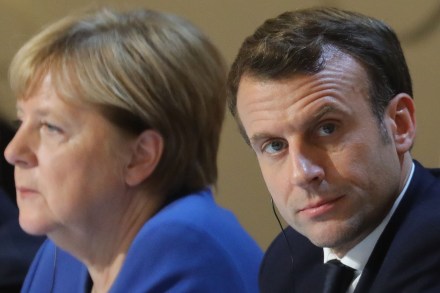
The familiar should be a consolation amid the terrible novelties of COVID-19, but the pandemic’s effects on the European Union threaten to turn familiar fiasco into dangerous novelty. As a weakened Angela Merkel faces Germany’s crisis of economic responsibility, and France floats the idea of issuing its own ‘corona bond’, the EU and its currency face what Emmanuel Macron would probably not want to call its Waterloo.Henry Kissinger’s remark — ‘Who do I call if I want to speak to Europe?’ — has never seemed more true. Britain is leaving.

eurozone