Italy

The romantic return of Florence’s wine windows

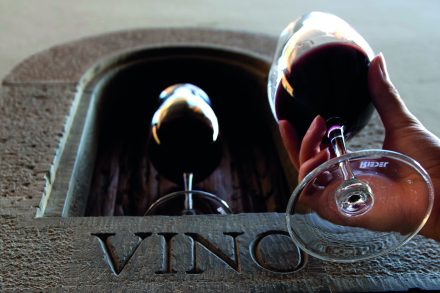
Stroll around Florence and you’ll notice little ornate openings embedded in the walls of Renaissance palazzos. They look like doorways for tiny people, though they would have to be quite athletic tiny people, as the openings are three feet off the ground. But they’re not entrances for Tuscan pixies — they’re for selling wine. There are more than 150 buchette del vino dotted around the city and they date back to the 17th century. You’d knock on the door, hand over some money and a bottle, and the mysterious person behind the wall would fill it full of wine. It wouldn’t have been just any old plonk either; the great merchant houses of the city like Frescobaldi, Ricasoli and Antinori, who still make some of Tuscany’s best wines, would sell in this way.

Wine

Elena Ferrante’s Italian job

As there’s nothing more annoying than when someone tells you ‘I told you so’, I shall refrain from telling you so for as long as possible. But it will be hard. There I was, lying on the couch one afternoon at work and reading Twitter, when I noticed LitHub appearing in my feed. Now, I am usually as glad to see LitHub in my feed as a prize race horse is to see cat food in his. LitHub is one of those trendy, sort-of academic websites that talks about things like ‘digital humanities’ and does its earnest best to take the fun out of reading and the point out of book-reviewing when, as any-one knows, reading and writing book reviews is a waste of time unless there’s blood and feathers everywhere by the end of the first paragraph.

elena ferrante
Amanda Knox

School of hard Knox

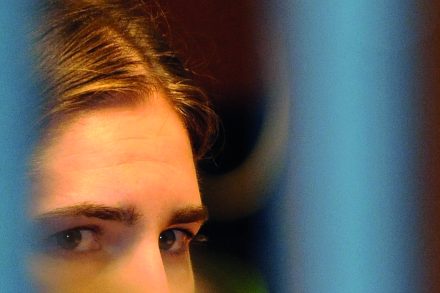
Rudy Guede was released from prison this past December. If that name doesn’t ring a bell, it’s because for a long time, the brutal murder he was sentenced for was blamed on Amanda Knox. The 2007 burglary gone wrong made worldwide headlines for years. Knox, a photogenic American student studying abroad in Perugia, and her nerdy Italian boyfriend, Raffaele Sollecito, were found guilty, twice, of murdering Knox’s British roommate Meredith Kercher in what the Italian police called a ‘drug-fueled sex game gone awry’. Everyone, save Knox and those close to her, was shocked to learn four years later that there was no slasher sex game, and, more importantly, there was absolutely no DNA linking Knox and Sollecito to the crime scene that imprisoned them for years.

Wine by the jug in Venetian Venice

From our UK edition

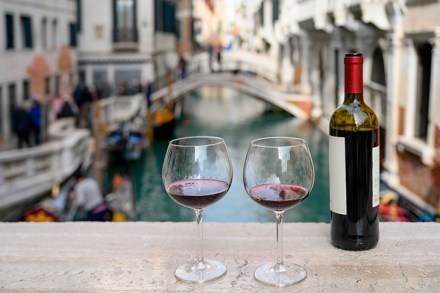
We were discussing travel, that forbidden delight now tantalisingly close. Where would be our first destination? Forswearing originality, I chose Venice. Among the world’s greatest paintings, one in particular does not merely come to mind. It fills the mind. I have never been in the Serenissima for the Feast of the Assumption of the Virgin, probably just as well. In mid-August, there are bound to be pedestrian traffic jams all the way from the Piazza to the Rialto. But it is possible to imagine the event. Go to Santa Maria Gloriosa dei Frari. Use your inner eye to fill the church with the entire nobility of Venice, festooned with gold and jewels. The choir and the censers are both in full cry.

Pictures at an exhibition

Deeply learned and with a style all his own, Marco Grassi is as at home with Duccio as with Norton Simon; Bronzino as with Bernard Berenson; a painting on his desk as with a ‘Last Supper’ in Florence’s Basilica of Santa Croce. In the Kitchen of Art presents Grassi’s most memorable essays over a span of nearly 20 years. Beginning with a previously unpublished memoir of his Florentine upbringing, and continuing with in-depth critical discussions of the greats of Italian art along with recollections of the grandest collectors of the 20th century, this book shows the art world in the round.

grassi

Spaghetti puttanesca: turn your leftovers into something special

From our UK edition

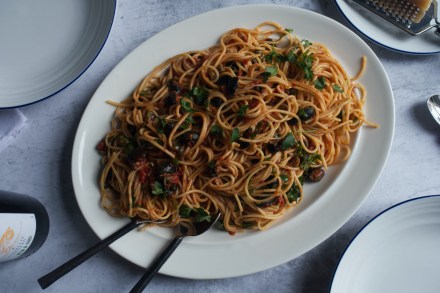
If you’ve heard a story about puttanesca it is likely that it translates as whore’s spaghetti – that it was born in the brothels of Naples’ Spanish quarters, a favourite of the prostitutes who worked there, for its quick, cheap and easy nature. But – ah, isn’t it always the way? – the truth is perhaps a little more prosaic. The word puttanesca is indeed derived from the Italian for prostitute (‘puttana’), but the same word is also used as a catch-all profanity, an Italian ‘crap’. In this vein, the dish would come to mean ‘any old crap’ pasta. This makes sense, because puttanesca is a true store-cupboard dish, made almost entirely from tins and jars and dried pasta (entirely if you forgo the parsley).

Europe’s reckless caution over AstraZeneca

From our UK edition

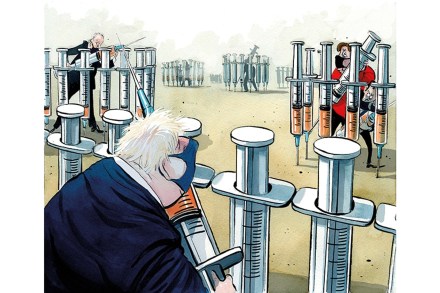
The first smear campaign against AstraZeneca, when Emmanuel Macron falsely claimed at the start of the year that the jab was ‘quasi--ineffective’ in over-65s, did serious damage to public confidence in the Oxford vaccine across Europe. The latest concerted action by the leaders of Germany, France, Italy, Spain and the Netherlands may have destroyed it altogether. The decision temporarily to ban Astra-Zeneca originated in the German health ministry, which was spooked by reports of cerebral venous sinus thrombosis, and was blindly followed by other European leaders. This is a scandal whose roots are political, not medical, and it will have terrible consequences.

Portrait of the week: Tributes to Sarah Everard, rows over AstraZeneca and Nokia cuts jobs

From our UK edition

Home A Metropolitan Police officer, Wayne Couzens, 48, was charged with the kidnap and murder of 33-year-old Sarah Everard, who was last seen on 3 March as she walked home from Clapham to Brixton. A mass vigil on Clapham Common was called off after the High Court declined to interfere with a police ban on the event in accord with coronavirus regulations. The Duchess of Cambridge came alone and left some daffodils at the bandstand. Women who stayed in their hundreds saw police struggle with women who refused to leave the bandstand. There were four arrests and pictures of policemen subduing one of them, Patsy Stevenson, on the floor fed a widespread anger against the police.

The EU’s ugly vaccine nationalism

From our UK edition

We have to rid the world of vaccine nationalism. No one is protected until we are all protected. And we need, above all, solidarity to fight a virus which by its nature does not respect borders or boundaries. Over much of the last year, European Union officials, led by the President of the Commission Ursula von der Leyen, have led the world in grandiose rhetoric about how we have to lead a global effort to fight Covid-19, contrasting its own noble internationalism with the grubby self-interest of the likes of Donald Trump or indeed Boris Johnson. But hold on. After much speculation, the EU has itself started firing the first shots in the vaccine wars, permitting Italy to block the export of 250,000 doses of the Oxford-AstraZeneca jab to Australia.

Can Italy’s arch Eurocrat save his country?

From our UK edition

The world these days is so blasè about the destruction of democracy that no one even thinks it worthy of comment that an important free country such as Italy has not had an elected prime minister since the last one, Silvio Berlusconi, was forced to resign in 2011 during the Eurozone crisis after a palace coup orchestrated by Brussels, Berlin and Paris. That is ten years without a prime minister chosen by the Italian people at the ballot box in a general election. The electoral system, currently a hybrid of first past the post and proportional representation, is partly to blame. But the real reason is the Italians. They seem anthropologically incapable of giving enough votes to form a government, even to a coalition of parties — let alone one single party.

Can ‘super’ Mario Draghi save Italy from itself?

From our UK edition

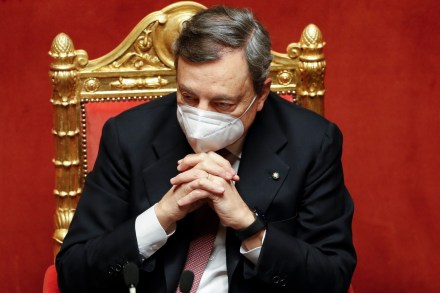
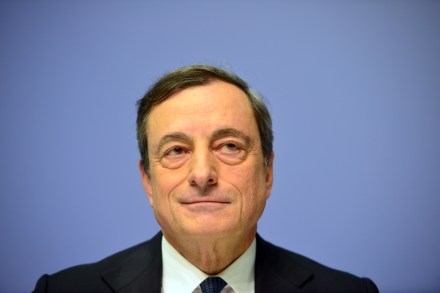
In the aftermath of the financial crash, two 'Super Marios' came to Italy's rescue. Mario Draghi, then president of the European Central Bank, and Mario Monti, an economics don turned politician, both helped steady the ship. Now, more than a decade on, one of those Marios is back. But is he the man Italy needs in its hour of need? Draghi, who is set to become Italy's new prime minister, has followed a well-trodden path to this moment. Like Monti, he has worked in academia and is a Goldman Sachs alumnus with a stellar EU career on his back. It all sounds very familiar. But can Draghi avoid the fate of the other Mario and ensure that Italians don't quickly turn against him?

How Argentina conquered Malbec

From our UK edition

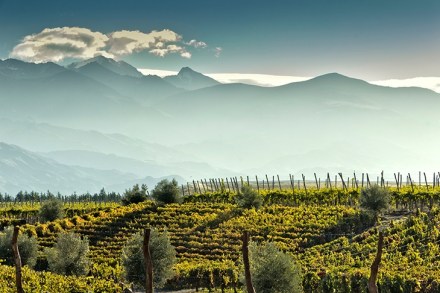
When Napoleon III proclaimed himself Emperor of France in 1852, he unwittingly kickstarted quality wine production in Chile and Argentina. A mass exodus of republicans ensued, one of whom happened to be a skilled agronomist from Tours named Michel Aimé Pouget. Pouget carried with him a cache of French grape cuttings that were to change the course of wine history and formed the basis for Argentina’s wine industry today. Because of the phylloxera plague, French wine production fell by 75 per cent between 1875 and 1889. Today the vines of Europe are still grafted on to phylloxera-resistant American root stock. In Argentina and Chile, which have no phylloxera, old ungrafted European vines are flourishing.

Every page of this astonishingly beautiful ode to the citrus is a treat

From our UK edition

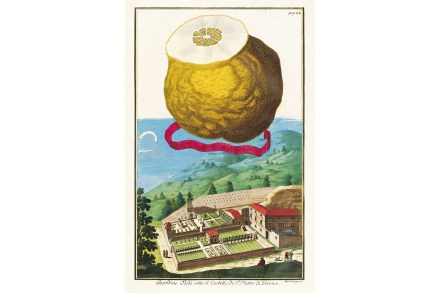
There’s an episode of Yes Minister called ‘Equal Opportunities’. Minister Jim Hacker is under pressure to recruit more women to the civil service. The hunt is on for female mandarins. ‘Ah,’ says principal private secretary Bernard. ‘Sort of… satsumas?’ At this time of year, I can’t help thinking of Bernard as I hover in the Co-op over nets of tangerines, mandarins, clementines, satsumas and ‘easy peelers’, whatever they are. ’Tis the season for citrus. For oranges at the bottom of stockings, for Buck’s Fizz on Christmas morning, for smoked salmon blinis with slices of lemon, for Milanese panettone with candied parings of peel, and for J.C.

A tinpot Caesar

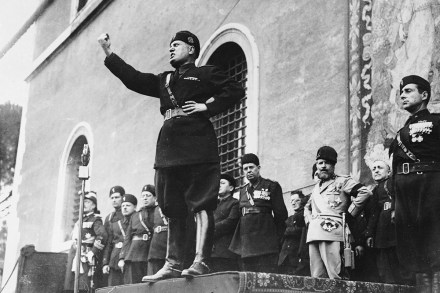
In 1919, an obscure political agitator called Benito Mussolini assembled a ragbag of Blackshirt diehards in the Lombard capital of Milan and launched the movement that was to become, two years later, the National Fascist party. The party took its name from the classical Roman symbol of authority — an ax bound in rods, or fasces. Once in power, Mussolini introduced the stiff armed Roman salute after the handshake was deemed fey and unhygienic. At times he wore a richly tasseled fez and thrust out his chin pugnaciously for the cameras. For all his posturing and demagoguery, Mussolini was widely admired in pre-war Britain, where Lord Rothermere’s Daily Mail routinely carried flattering portraits of him.

mussolini

Italy is about to hijack the eurozone

From our UK edition

There is still some debate about who came up with the adage that ‘if you owe the bank $100 that is your problem. If you owe the bank $1 million dollars that is their problem’. It is usually attributed to the oil tycoon J. Paul Getty, which may help explain how he became the richest man of his era. Occasionally, and in a slightly modified form, it is attributed to John Maynard Keynes in his advice to the British cabinet after world war two. And yet in truth, it should probably have been coined by an Italian. Why? Because the country now owes so much money to the rest of the eurozone it looks about to hijack the whole system.

Every scene Sophia Loren isn’t in feels like a wasted one: The Life Ahead reviewed

From our UK edition

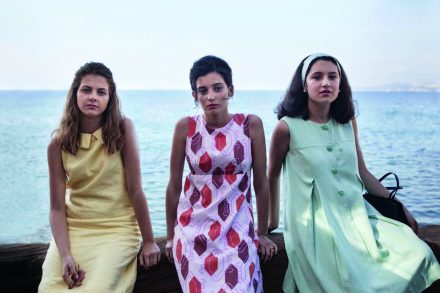
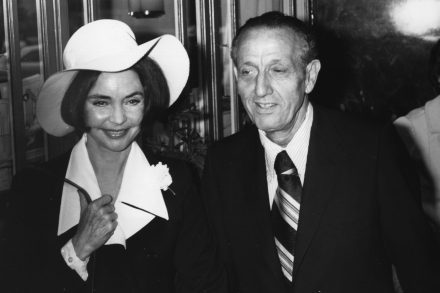
The Life Ahead stars Sophia Loren, and if there is one reason to see The Life Ahead it is this: Sophia Loren. And if you need a second reason, it is this: Sophia Loren. Also, it is the third, fourth, fifth, sixth and seventh reason. And probably the eighth. She is magnificent, truly. Directed by Edoardo Ponti, Loren’s son, the film is based on the 1975 novel The Life Before Us by Romain Gary. It was filmed in 1977 as Madame Rosa, starring Simone Signoret, and won the Oscar for best foreign film. Here, the action has been transposed from France to Italy and the port city of Bari which is, from what we see of it, rough and poverty-stricken rather than picturesque. And our Madame Rosa is Loren, in her first proper film role for 11 years.

Why did the ‘Florence Three’ keep testing positive for Covid?

From our UK edition

Worse tales have emerged during the pandemic than that of the ‘Florence Three’ – Rhys James, Quinn Paczesny and Will Castle, who have all now returned home to Britain after 61 days incarcerated in a hotel in the Italian city. Some might say a couple of months stuck in Florence could have been a blessing – and so it might have been, had they not each been stuck in solitary confinement and fed microwaved mush, with no more chance to go out to a trattoria than to visit the Uffizi. But what stands out about the story of the Florence Three is not so much their plight, but what it tells us about Covid-19 tests. The three men, who are aged between 20 and 23, met in Northern Italy while teaching English over the summer.

Britain’s bizarre Italian travel guidance

From our UK edition

Here’s a tip. When the Foreign Office advises against going somewhere, hop on the next plane. The mandarins have advised against visiting Italy because of Covid-19. It’s as bizarre as everything else that our rulers have said about the virus. Confirmed cases in the UK are currently more than twice as high per 100,000 as in Italy. Anyone with our welfare at heart should be telling us to go to Italy at once. I left the next day. The Italians could be forgiven for serving us our own medicine and quarantining all arrivals from the UK. As it is, they test you at the airport, and quarantine is only required if you test positive. It is rational and very efficient. It takes only ten minutes and costs nothing. Generally, however, the Italian government has much to answer for.

How democracy can subvert itself: Bunga Bunga reviewed

From our UK edition

Italy has long captivated romantics from rainy, dreary, orderly northern Europe. Goethe, Stendhal, Keats and Shelley all flocked to Italy in search of the ideal society. There they found what they thought was a utopia. ‘There is,’ Byron marvelled in a letter home from Ravenna, ‘no law or government at all, and it is wonderful how well things go on without them.’ Well, Silvio Berlusconi has made some of Europe’s wisest men sound like chumps. If the notorious career — chronicled in the podcast Bunga Bunga — of the longest-serving prime minister of Italy since Mussolini and its sometime richest man has done one good thing, it’s to have dispelled for good our quixotic fantasies about his troubled nation.

A leaf from Verdi’s book

Radicchio, radicchio, wherefore art thou radicchio? A red-leafed chicory by any other name would doubtless taste as bitter — but it certainly wouldn’t sound as pedigreed. Consider the following bit of dialogue: ‘Would you like a chicory salad?’ The natural response is a hasty, ‘Not just at the moment, thank you,’ the very name of chicory summoning up painful memories of undercooked chickpeas and bowls of foliage into which well-meaning persons have seemingly shaken the broken fragments at the bottom of the cereal box. Compare and contrast with the following overture: ‘Would you care for some grilled Chioggia radicchio embellished with small cubes of buffalo mozzarella and drizzled with a reduction of Balsamico di Modena?

radicchio