Italy

Life’s survivors: The Angel of Rome and Other Stories, by Jess Walter, reviewed

From our UK edition

Anyone who has read Jess Walter’s Beautiful Ruins will want to turn straight to ‘The Angel of Rome’, the title story in this second collection by the versatile American author. Like the novel that elevated Walter from an underrated writer of police procedurals and thrillers to one capable of bestsellers, ‘The Angel of Rome’ is set in Italy and features a filmset and glamorous actors. Both are also partly based on real life. In Beautiful Ruins, Walter plays with what happened during the filming of the 1963 epic Cleopatra. Here he bases the story on an episode in the life of Edoardo Ballerini, an actor who read Beautiful Ruins.

Giorgia Meloni’s first 100 days have proved her critics wrong

From our UK edition

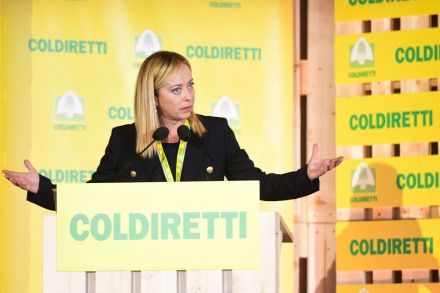
Macho Italy’s first woman prime minister Giorgia Meloni has now governed for 100 days and I cannot help but notice the enormous elephant in the room: the failure of the global media even to acknowledge, let alone apologise for, how wrong they were to warn the world that Italy was on the verge of a far-right, ergo fascist, take-over.   During the election campaign and immediate aftermath the crème de la crème of the world’s media were chock-a-block with warnings that Meloni and her party – Brothers of Italy – were the equivalent of a Biblical plague of locusts in jackboots about to engulf Italy and from there Europe.

On the hunt for my fiancé’s Christmas shotgun

A platitude oft repeated by left-wing activists is that its easier to buy a gun in the United States than it is to purchase medicine or vote. Feminists similarly like to say that American women have fewer rights than firearms. If anyone on the left would like to test these obviously absurd claims, I would challenge them to start by trying to buy a Benelli M2 Field Shotgun. I went down the Benelli rabbit hole a couple of months ago after my fiancé told me he wanted one for Christmas. When I discovered the hefty price tag on an M2, I somewhat jokingly protested à la A Christmas Story that he might shoot his eye out. Just like young Ralphie, my fiancé was undeterred.

benelli shotgun

Wining and walking in Turin and Genoa

Turin at the end of August is pleasingly melancholic. The city has emptied after the feast of Ferragosto on August 15 and won’t fill up again till September. Solid bourgeois streets, with eighteenth- and nineteenth-century buildings now housing banks, are deserted save for the occasional confused tourist. What brings others to Turin in August I cannot say. For me, it was a wedding in Milan at the end of the week and the prospect of a little vacation ahead of it. Turin was a whim. I was meant to meet a college friend in Genoa on Monday, but my Sunday-night redeye from New York was canceled. Saturday was the only option, and so I was left at a loose end. Options abounded: I could stay overnight in Milan and head to Genoa with my friend the next day.

turin

On the trail of Gomorrah in Naples

From our UK edition

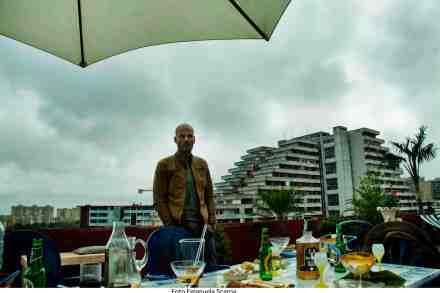
‘Isn’t Naples beautiful? I’ve always dreamt about it. I always wanted this city all for myself; I didn’t want to share it… I alone deserved it because of everything I lost and I would have done anything to get it.’ So says Ciro Di Marzio – nicknamed ‘the immortal’ because he has survived so much mafia bloodletting – in the hit TV crime drama Gomorrah.   He is not talking about the churches or castles, the arcades or theatres or museums. He may have been out on the bay at night when the words are uttered, but the Naples he knows, grew up in and by then controls is the Naples of Scampia and Secondigliano, places up on the ridgeline of the city: the Naples of high rises and concrete, the Naples of drugs and murder.

Remembering Mussolini’s March on Rome

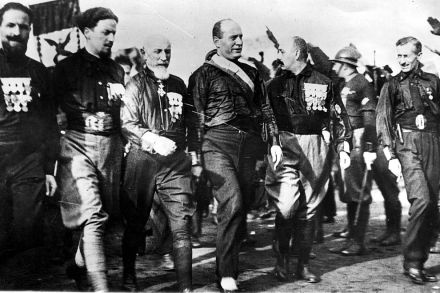
Shortly after 11 on the unseasonably warm Monday morning of October 30, 1922, a 39-year-old, one-time schoolteacher-turned-political journalist — and former Socialist Party activist — named Benito Mussolini stepped down from a train arriving at Rome’s Termini station. He had traveled in overnight from his home in Milan, and before embarking he told the local station master, pausing to cast his black eyes up and down the empty platform, “I need to be punctual. From now on there must be no more delays.” This was the source of the sardonic joke that at least under Mussolini the trains always ran on time.

The prodigal daughter

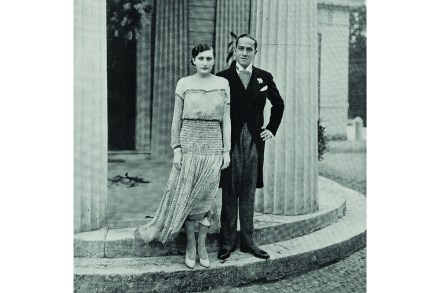
In April 1930, the nineteen-year-old Edda Mussolini married Count Galeazzo Ciano, aged twenty-seven, after a brief courtship in which love appears to have played little part. Her father, Il Duce, wanted the magnificent occasion to be not merely the wedding of the century but a grand, almost royal, demonstration of fascist might and a celebration of fecundity. Edda, his beloved firstborn, was to stand for everything that was best about fascist womanhood, while the groom was to carve out the path of “the new Italian man.” These were the glory years, and thousands of schoolchildren sent poems and cards with angels in advance of the occasion, which the Papal Nuncio attended with a present from the Pope.

mussolini

Why does the media never call world leaders ‘far left’?

Italy is about to have its first female leader and the American left is furious. Giorgia Meloni grew up in a working-class neighborhood in Rome and was raised by a single mother, after her father, a communist, fled to the Canary Islands and was later convicted of drug trafficking in Mallorca. She wrote in her autobiography that her mother planned to have an abortion when she was pregnant with her but changed her mind at the last minute. Meloni worked as a nanny, a waitress, and a bartender before getting into politics, but she’s no AOC. Meloni, 45, is the leader of the right-wing populist Brothers of Italy party, which recently won Italy’s general election with 26 percent of the vote. She’s widely expected to be named Italy’s first female prime minister.

Giorgia Meloni and the reactionary axis that wasn’t

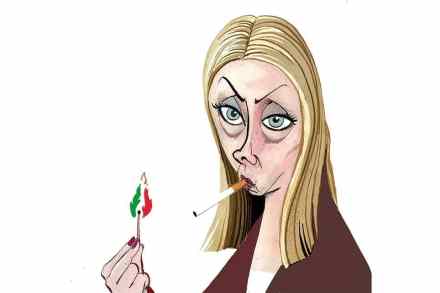
One is a blonde, photogenic woman who grew out of a youthful infatuation with Benito Mussolini to become the first female prime minister of Italy. The other is anything but photogenic, a grizzled veteran of more than three decades of political combat, who began his career as a student activist and became a respectable center-right statesman, only to reinvent himself as a populist firebrand. But if you were to judge Giorgia Meloni and Hungarian Prime Minister Viktor Orbán by the frequency with which they appear together in media coverage, usually with adjectives like “far-right” and “extreme” attached, you might assume that the two conservative heads-of-state are basically indistinguishable. The European Union and its assorted sympathizers certainly seem to think so.

giorgia meloni

Portrait of the week: Chancellor unveils his unBudget, Hilary Mantel dies and corgi prices soar

From our UK edition

Home Kwasi Kwarteng, the Chancellor of the Exchequer, presented a far-reaching ‘fiscal event’ (ineligible to be called a Budget), said to have cut more tax than any measure since 1972. The markets’ immediate response was to sell pounds, and sterling fell to $1.07 (though the euro also continued in its own decline against the dollar and the Chinese yuan fell sharply). The Treasury defensively said it would publish proposals for dealing with its debt and the Bank of England said it would buy government bonds to help ‘restore orderly market conditions’. The IMF spoke out, inviting the government to ‘re-evaluate’ its tax changes.

Giorgia Meloni can’t afford to fight the EU

From our UK edition

Ravenna, Italy The victory of Giorgia Meloni in Italy with a huge majority of seats in parliament has prompted the expected political indignation. It’s not just the international press, either. Yesterday, for instance, my 17-year-old son Francesco Winston told me that at his school – we live near Ravenna in the Red Romagna, a hotbed of ex-communists – all his companions were in mourning. Why, I asked? ‘They say she's going to abolish abortion,’ he explained. Why do they believe that? I asked. ‘They're badly informed,’ he replied. Bravo figlio mio, bravo! Meloni would not abort an unborn child herself – she told me when I interviewed her in Rome last month – but nor would she impose her view on any other woman.

The BBC’s Meloni problem

From our UK edition

Here is a quote from the BBC Europe Editor, Katya Adler’s, very short piece on the BBC Radio 4 Six O'Clock News this evening, concerning the electoral victory of Giorgia Meloni in Italy: Millions of Italians didn’t vote for her. They say they do not recognise themselves in her nationalist, protectionist proposals, her anti-immigration rhetoric and her conservative family mores. Isn’t that remarkable? Can you imagine the awful Adler, or indeed any correspondent, commenting on the victory of a left-wing candidate:  Millions of people didn’t vote for her.

Giorgia Meloni should inspire American conservatives

Giorgia Meloni and her Brothers of Italy party were swept into power in elections this weekend, a development that the media complex in America greeted with all the subtlety of a bird smacking into a sliding door. The New York Times managed to call her a “fascist” 28 times in a single article. Meloni stands to become Italy’s first female prime minister — but I suppose it’s only good for women to break glass ceilings if they’re the correct kind of women.

Giorgia Meloni is no springtime for Italian fascism

Is it springtime for fascism in Europe? First, it was Sweden. Now, it’s Italy. To judge by the reaction to Giorgia Meloni’s victory in the Italian elections on Sunday, the moment to say arrivederci to democracy has arrived. “Giorgia Meloni will be a minister-president whose political examples will be Viktor Orbàn and Donald Trump,” Katharina Barley, the vice-president of the European Parliament, declared. Maybe so, but will she actually be able to transform her country? Fratelli d’Italia, the Brothers of Italy, is a nationalist party that traces its roots back to Mussolini and is led by the charismatic Meloni. It's about to play a starring role in the Italian political firmament.

Will Meloni be able to govern Italy?

From our UK edition

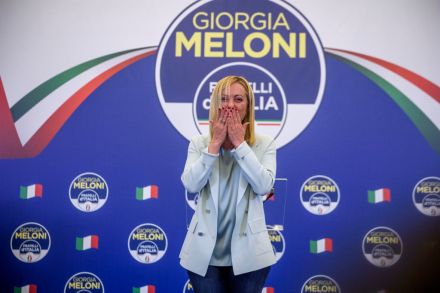
Mario Draghi's national unity government lost badly in yesterday's Italian election – worse even than the polls predicted. Fratelli d'Italia, the main opposition party, was the big winner. Five Star, which pulled the plug on Draghi's government, also gained. What we did not see is a big shift between left and right. The right coalition of Fratelli d’Italia, Lega, and Forza Italia, got 44 per cent. The really big movements occurred within the coalition. Giorgia Meloni's FdI ended up with 26 per cent – way ahead of the published polls. Lega got only 9 per cent. The coalition is on course to secure a majority in both houses of parliament, though not the two-thirds majority needed to amend the Italian constitution. Meloni will almost surely be the next prime minister.

Second chances: The Marble Staircase, by Elizabeth Fair, reviewed

From our UK edition

To reject ‘in rainy middle age the poignant emotions that belonged to youth and Italy’ is the lesson learned by the heroine of Elizabeth Fair’s last novel. More than 60 years after its author consigned the typescript to a black tin trunk, following her literary agent’s failure to find a publisher for this, her seventh novel, The Marble Staircase finally sees the light. This is thanks to Furrowed Middlebrow and Dean Street Press, the company responsible for reprinting the six light, romantic comedies that, in the 1950s, earned Fair an appreciative following and commendations from writers such as Compton Mackenzie, John Betjeman and Stevie Smith. Literary rediscoveries are always potentially exciting.

Pre-Mussolini, most Italians couldn’t understand each other

From our UK edition

Towards the end of Dandelions, Thea Lenarduzzi’s imaginative and deeply affecting memoir, the author quotes her grandmother’s remark that there are tante Italie – many Italys. ‘Mine is different to hers, which is different to my mother’s, which is different to my father’s, and so on down the queue,’ she writes. These Italys – of fascismo, of Garibaldi, of emigrants living in Sheffield and Manchester, of 31 dialects – are not far-flung historical oddities confined to documentaries or textbooks but are, in Lenarduzzi’s account, the patchwork story of one family.

Europe’s new migrant crisis

From our UK edition

Earlier this month I spent a week in Sicily, driving south from Palermo to Agrigento and then east to Syracuse and Messina. It was my first visit to Sicily in 17 years and, given the media reports, I had expected to find the island crowded with migrants from Africa. In fact, I saw none, other than those I glimpsed in a fenced-off processing centre at the quayside in Agrigento, the first port of call for many migrants who arrive in Sicily. Last week the local paper in Agrigento drew on official government figures to reveal that so far in 2022, 45,664 migrants have landed on Italian territory, an increase of 40 per cent on the same period last year.

Dear America: moving to Europe won’t solve all your problems

“In Europe people wear breathable clothes made out of natural materials, in the USA people wear plastic.” “In Europe people sleep indoors, not in tents on the street like Los Angeles.” “Unfortunately people have a lot of reactions to gluten in the US and zero issues in Europe” “How can you avoid looking like an American tourist in France?” Scroll through your news feed and you’ll witness a lot of Americans, usually those who pride themselves on their progressive views, indiscriminately romanticizing “Europe.” In the wake of the endless Covid restrictions and after Roe v. Wade was overturned, there’s been endless social media chatter about how to move from the US to Europe.

europe

Dark days in Hollywood: Mercury Pictures Presents, by Anthony Marra, reviewed

From our UK edition

Summer is a time for blockbusters and Anthony Marra has delivered the goods with Mercury Pictures Presents, a sweeping book about 1940s Hollywood, Mussolini’s Italy and America’s entry into the second world war. The action opens in the executive offices of Mercury Pictures International, a struggling film studio run by Artie and Ned Feldman, two brothers modelled on Jack and Harry Warner. It’s late summer 1941, and as well as fighting each other, the Feldmans are fighting the isolationist senators accusing Hollywood of pushing America into war. The battle to get the script for Devil’s Bargain approved is ‘shaping into a pivotal confrontation between campaigners for free speech and crusaders for government censorship’.