Italy

Italy is about to hijack the eurozone

There is still some debate about who came up with the adage that ‘if you owe the bank $100 that is your problem. If you owe the bank $1 million dollars that is their problem’. It is usually attributed to the oil tycoon J. Paul Getty, which may help explain how he became the richest man of his era. Occasionally, and in a slightly modified form, it is attributed to John Maynard Keynes in his advice to the British cabinet after world war two. And yet in truth, it should probably have been coined by an Italian. Why? Because the country now owes so much money to the rest of the eurozone it looks about to hijack the whole system.
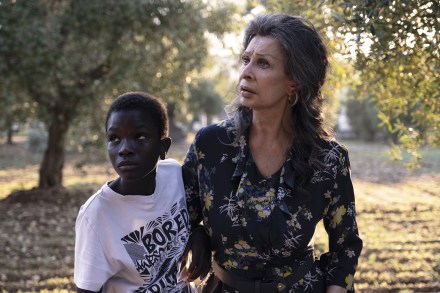
Every scene Sophia Loren isn’t in feels like a wasted one: The Life Ahead reviewed

The Life Ahead stars Sophia Loren, and if there is one reason to see The Life Ahead it is this: Sophia Loren. And if you need a second reason, it is this: Sophia Loren. Also, it is the third, fourth, fifth, sixth and seventh reason. And probably the eighth. She is magnificent, truly. Directed by Edoardo Ponti, Loren’s son, the film is based on the 1975 novel The Life Before Us by Romain Gary. It was filmed in 1977 as Madame Rosa, starring Simone Signoret, and won the Oscar for best foreign film. Here, the action has been transposed from France to Italy and the port city of Bari which is, from what we see of it, rough and poverty-stricken rather than picturesque. And our Madame Rosa is Loren, in her first proper film role for 11 years.

Why did the ‘Florence Three’ keep testing positive for Covid?

Worse tales have emerged during the pandemic than that of the ‘Florence Three’ – Rhys James, Quinn Paczesny and Will Castle, who have all now returned home to Britain after 61 days incarcerated in a hotel in the Italian city. Some might say a couple of months stuck in Florence could have been a blessing – and so it might have been, had they not each been stuck in solitary confinement and fed microwaved mush, with no more chance to go out to a trattoria than to visit the Uffizi. But what stands out about the story of the Florence Three is not so much their plight, but what it tells us about Covid-19 tests. The three men, who are aged between 20 and 23, met in Northern Italy while teaching English over the summer.

Britain’s bizarre Italian travel guidance

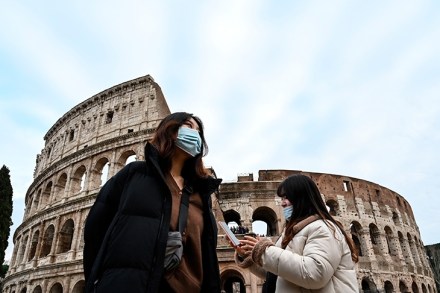
Here’s a tip. When the Foreign Office advises against going somewhere, hop on the next plane. The mandarins have advised against visiting Italy because of Covid-19. It’s as bizarre as everything else that our rulers have said about the virus. Confirmed cases in the UK are currently more than twice as high per 100,000 as in Italy. Anyone with our welfare at heart should be telling us to go to Italy at once. I left the next day. The Italians could be forgiven for serving us our own medicine and quarantining all arrivals from the UK. As it is, they test you at the airport, and quarantine is only required if you test positive. It is rational and very efficient. It takes only ten minutes and costs nothing. Generally, however, the Italian government has much to answer for.

How democracy can subvert itself: Bunga Bunga reviewed

Italy has long captivated romantics from rainy, dreary, orderly northern Europe. Goethe, Stendhal, Keats and Shelley all flocked to Italy in search of the ideal society. There they found what they thought was a utopia. ‘There is,’ Byron marvelled in a letter home from Ravenna, ‘no law or government at all, and it is wonderful how well things go on without them.’ Well, Silvio Berlusconi has made some of Europe’s wisest men sound like chumps. If the notorious career — chronicled in the podcast Bunga Bunga — of the longest-serving prime minister of Italy since Mussolini and its sometime richest man has done one good thing, it’s to have dispelled for good our quixotic fantasies about his troubled nation.

A leaf from Verdi’s book

From our US edition

Radicchio, radicchio, wherefore art thou radicchio? A red-leafed chicory by any other name would doubtless taste as bitter — but it certainly wouldn’t sound as pedigreed. Consider the following bit of dialogue: ‘Would you like a chicory salad?’ The natural response is a hasty, ‘Not just at the moment, thank you,’ the very name of chicory summoning up painful memories of undercooked chickpeas and bowls of foliage into which well-meaning persons have seemingly shaken the broken fragments at the bottom of the cereal box. Compare and contrast with the following overture: ‘Would you care for some grilled Chioggia radicchio embellished with small cubes of buffalo mozzarella and drizzled with a reduction of Balsamico di Modena?

radicchio

Soave, an original sin-free wine

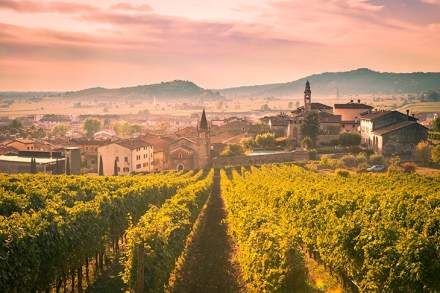
‘The Lord God walking in the garden in the cool of the day’: surely one of the most beautiful images in all writing. One might have thought that it would have softened the Almighty’s mood, so that He would have given Adam and Eve a mere ticking-off for scrumping. But no: that stroll ended in the doctrine of original sin. For those who suffer under it, there is one aesthetic relief from stifling, humid heat: stucco seen through green-leaved branches. That combination refreshes the soul. It works even better, of course, if lesser regions have a less aesthetic form of refreshment: the cool of the glass. In pursuit of garden wines, I have been drinking a lot of Soave and trying to learn more about it. My ignorance extended to the very name.

Happy hours

From our US edition

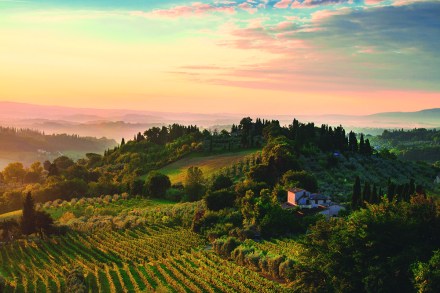
A family of peacocks is sunning itself in our villa garden. They all look extraordinarily happy and composed, especially the baby one for whom (like us, come to think of it) this is a whole new experience. But then, the 150 hens wandering in and out of their coops painted like beach huts don’t look exactly overburdened themselves. Nor do the sheep, pigs and cows in their 220 acres of lush Tuscan terrain near the Merse river.

tuscany

Italy’s Achilles heel: corruption and cronyism

Tim Parks is a seasoned, incisive observer of football, the railways, work, domestication and plenty more in his adoptive country of half a lifetime. What is, what ought to be and the machinations in the delta between provide much of his material. In this tale of two countries in one, bright, hard-working Valeria leaves Basilicata in southern Italy to study communications and marketing at a private university in Milan — shiny subjects in a city of business a long way from home (the same distance could take her to Tunis or Belgrade). She arrives laden with bread, pastries, fruit and wine, given to her by three aunts at railway stations on her journey. Her family and her circle of friends are all from the south, but she wants her life to be in the north.

How to get into a club and on to a plane

Disaster struck the Young family last Friday. My 12-year-old son Charlie woke up with a temperature. Ordinarily, that wouldn’t matter, but we were in the Dolomites and due to fly back to England from Venice later that day. On the flight out, we’d all had our temperature checked with an infrared thermometer pointed at our foreheads, and there was a similar policy in place at Marco Polo airport for our return journey. Would Charlie’s fever mean none of us would be allowed to board the plane? And would we be interned in some ghastly Travelodge for 14 days? The responsible thing would have been to remain in Italy until Charlie recovered, just in case he had the virus.

How Britain lost the war against coronavirus

Sun Tzu, the great Chinese military commander, said that all battles are won or lost before they are ever fought. By first week of February, the UK and many other European countries had lost the battle against coronavirus. Another of my favourite life sayings is that ‘Assumption is the mother of all screw-ups’. Assumptions by UK government, Sage, NHS, Public Health England and the Department of Health and Social Care were certainly the mother and father of this one. The NHS, PHE and Sage thought they were well prepared for a pandemic: there were dozens of reports, response strategies, protocols, operating plans, models, transmission studies — you name it, there was a long document about it. There was even a full simulation, Exercise Cygnus, in 2016.

Bergamo and the enigma of Covid-19

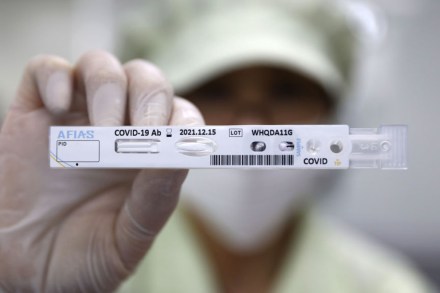
There seems to be only one certainty with Covid-19: that every day we will be bombarded with fresh evidence and scientific opinion that is contradictory and leaves us a long, long way from understanding this disease. Just when it seemed that antibody tests were indicating infection rates of no more than 10 per cent in the worst-affected countries and no greater than 20 per cent in the worst-affected cities, along comes a study which points to vast numbers of infections. This morning, the public health agency in the Northern Italian city of Bergamo – the epicentre of the Italian outbreak in March – reports that a random sample of 9,965 residents from the worst-affected areas show the presence of antibodies in a remarkable 57 per cent of cases.

Covid statistics are just politics by other means

Statistics is the continuation of politics by other means, to misquote Clausewitz. One hundred and fifty years after the crushing of the revolutionary Paris Commune, historians still clash aggressively about the death toll. Was it as high as 40,000 or as low as 10,000? It matters because the Paris Commune is a shibboleth, a great left-wing site of memory and martyrdom, made famous by Karl Marx’s pamphlet The Civil War in France. He presented the Paris Commune as the first great experiment in communist government. Its crushing by the army of the conservative Adolphe Thiers is depicted in left-wing folk memory as the ‘reactionary, repressive forces of capitalism’ ending an idyllic experiment in socialism.

Have we been fighting a very different disease to China?

One of the great mysteries of coronavirus is how the epidemic has become much more severe in Europe and North America than in the Far East. A disease which appeared to be on the wane in China, South Korea and elsewhere in mid-February suddenly erupted with a vengeance in Europe in March, with death tolls quickly surpassing those in Wuhan. Various explanations have been offered: from the Chinese lying about the extent of cases and deaths to the difficulties of enforcing lockdowns and launching intrusive tracking and tracing strategies in western democracies. But then have we really been fighting the same disease?

Will coronavirus kill the eurozone?

From our US edition

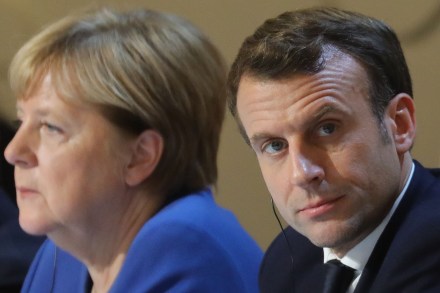
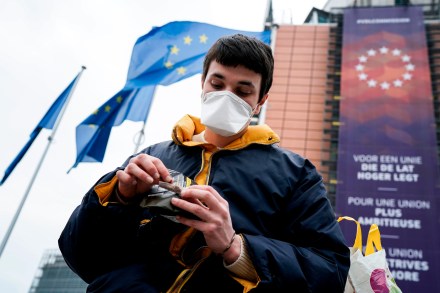
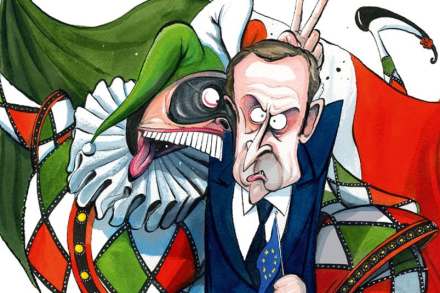
The familiar should be a consolation amid the terrible novelties of COVID-19, but the pandemic’s effects on the European Union threaten to turn familiar fiasco into dangerous novelty. As a weakened Angela Merkel faces Germany’s crisis of economic responsibility, and France floats the idea of issuing its own ‘corona bond’, the EU and its currency face what Emmanuel Macron would probably not want to call its Waterloo.Henry Kissinger’s remark — ‘Who do I call if I want to speak to Europe?’ — has never seemed more true. Britain is leaving.

eurozone

I’m recovering – but I glimpsed the coronavirus cliff edge

So I’ve had the virus. Or rather, I think I have. Ordinary mortals can no longer get tested by the NHS unless they’re admitted to hospital and I was nowhere near that point. I self-diagnosed, based on having some of the symptoms, and took to my bed. Needless to say, Caroline is convinced the whole thing was a sham to avoid doing the housework, which has increased exponentially during lockdown thanks to four kids and no cleaner. Now that I’m out of bed she’s exacting sweet revenge. I first developed a temperature on Tuesday 24 March, along with chills, a headache, a blocked-up nose and fatigue. A tickle at the back of my throat, but no persistent dry cough, so perhaps it was just seasonal influenza.

Coronavirus is straining an already fractured EU

When EU finance ministers ended their crisis meeting this morning, they had spent 16 hours trying to establish what collective help, if any, they wish to offer to the countries most affected by the epidemic: Spain and Italy. They agreed on not a thing. Instead, the meeting broke up acrimoniously with Italy, Spain and France demanding that the European Central Bank issue ‘coronabonds’ to help finance economic recovery – while Germany, the Netherlands and others resisted. So we see the EU split along the same lines as did the 2008/09 crisis, and indeed along the same fault lines that have been growing ever wider over the past three decades.

Italy gave China PPE to help with coronavirus — then China made them buy it back

From our US edition

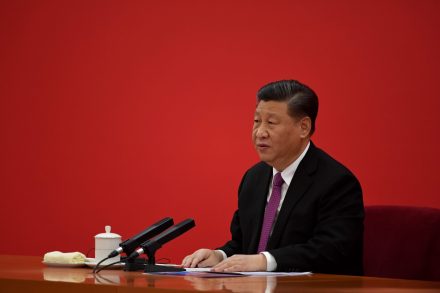
China has tried to restore its image after lying to the world about the seriousness of its coronavirus outbreak, but its attempts at humanitarianism have turned out to be as slippery as its wet markets. After COVID-19 made its way to Italy, decimating the country's significant elderly population, China told the world it would donate Personal Protective Equipment (PPE) to help Italy stop its spread. Reports later indicated that China had actually sold, not donated, the PPE to Italy. A senior Trump administration official tells The Spectator that it is much worse than that: China forced Italy to buy back the PPE supply that it gave to China during the initial coronavirus outbreak.

Chinese President Xi Jinping

Spain and Italy have been abandoned by the EU

If ever there was a time for the EU to show the benefit of belonging to an economic bloc with coherent cross-border cooperation you would think it would be now. But that is not quite how things are working out. On the contrary, the EU has erupted into open warfare between north and south. The rifts caused by the 2008/09 financial crisis have been torn open again, with Italy and Spain desperately pleading for help from a reluctant Germany and other northern countries. If anyone thought harmony would reign once troublesome Britain was out of the EU, there was not much evidence of it at a virtual summit held last week to discuss the coronavirus crisis.

How deadly is the coronavirus? It’s still far from clear

In announcing the most far-reaching restrictions on personal freedom in the history of our nation, Boris Johnson resolutely followed the scientific advice that he had been given. The advisers to the government seem calm and collected, with a solid consensus among them. In the face of a new viral threat, with numbers of cases surging daily, I’m not sure that any prime minister would have acted very differently. But I’d like to raise some perspectives that have hardly been aired in the past weeks, and which point to an interpretation of the figures rather different from that which the government is acting on.