Islam

Why does David Cameron refuse to admit that the terrorist attack in Nairobi is linked to Islam?

Do you know the name of Muhammed’s mother? No, me neither. I can manage the names of two of his wives and his Christian concubine, plus his daughter, but not his mother. The matter was, however, of more than academic interest when gunmen took over the Westgate shopping centre in Nairobi. According to witnesses, members of the public were lined up and then gunned down if they failed to name the mother of the founder of Islam or recite verses from the Koran. Those lucky enough to be able to speak Arabic — possibly passages from the Koran — were let go. The rest were fair game. Now, whatever else you can say about these individuals, I think we can agree, can’t we, that religion looms quite large in their world view?

The silence of our friends – the extinction of Christianity in the Middle East

The last month and a half has seen perhaps the worst anti-Christian violence in Egypt in seven centuries, with dozens of churches torched. Yet the western media has mainly focussed on army assaults on the Muslim Brotherhood, and no major political figure has said anything about the sectarian attacks. Last week at the National Liberal Club there was a discussion asking why the American and British press have ignored or under-reported this persecution, and (in some people's minds) given a distorted narrative of what is happening. Among the four speakers was the frighteningly impressive Betsy Hiel of the Pittsburgh Tribune-Review, who has spent years in Egypt and covered Iraq and Afghanistan.

Charles Moore’s notes: Liberal-leaning Muslims are the people most opposed to the niqab

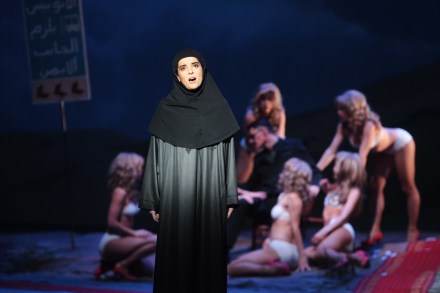
We are not allowed to know any details about the Muslim woman, charged with intimidating a witness, who has been ordered to take off her full-face veil to give evidence in court. But when it is all over, it will not be surprising if she turns out to be a convert. All mainstream religions have some sort of teaching about what to wear. Within living memory, for example, it was all but compulsory for women to have their heads covered in church. But general teachings in favour of modesty have different cultural applications, and it is usually false to claim that a religion absolutely insists upon a particular garment. What happens is that zealots, often manipulating ignorant converts, decide to make dress into a shibboleth.

The Story of the Jews, by Simon Schama – review

The recorder of early Jewish history has two sources of evidence. One is the Bible. Its centrality was brought home to me by David Ben-Gurion when I went to see him in Jerusalem in 1957. He had a big Bible on his desk, and banged it repeatedly with his fist: There, it’s all there, the past, present and future of the Jewish people. God? Who knows God? Can you believe in someone you don’t know? But I believe in the Bible. [Bang, bang.] The Bible is a fact. [Bang.] A record and a prophecy. [Bang.] It’s all there, Mr Johnson. Read your Bible, understand your Bible, and you won’t go wrong about the Jews. [Final bang.] Simon Schama, being a learned scholar as well as a proud and sensitive Jew, is not so sure.

What are we supposed to say when a grooming ring comes to light?

It is a tragedy that some of us are born in the wrong times. According to that increasingly gobby conduit of right-on morality, the NSPCC, girls these days feel compelled to act like porn stars in order to ingratiate themselves with boys. I am not sure quite what, in day to day life, this involves. I only know that they made no similar attempts during my adolescence, or if they did I didn’t notice. I vaguely recall one young lady in my school class telling me, when I was 14, that she had engaged in sexual intercourse the previous night with a boy from a neighbouring town. ‘What was it like, Debs?’ I asked, wide-eyed. ‘Didn’t touch the fucking sides,’ Debs spat with all the contempt she could muster.

Taki: Stephen Fry and the gay lobby should cool it over the Winter Olympics

Gstaad I’ve met Stephen Fry twice in my life, both times long ago. The first time at a dinner given by the then editor of The Spectator, Dominic Lawson, in London, and the second time in a restaurant in New York with the writers Jay McInerney and Brett Easton Ellis. The first time I was completely out of it, the second he was, hence we didn’t exactly connect. Fry has been in the news lately for demanding a boycott of the 2014 Winter Olympics in Sochi, Russia. His beef is Russian anti-gay legislation. Now there’s a hell of a lot of things that are wrong with Russia — first and foremost all the criminal-oligarchs are abroad instead of in jail — but anti-gay legislation is on the bottom of the pile. Let’s start with the hypocrisy of the bleating.

Lion Heart by Justin Cartwright – review

Justin Cartwright is famously a fan of John Updike — and here he seems to owe a definite debt to one of his hero’s lesser known novels. In Memories of the Ford Administration, Updike interwove the sexual adventures of a 1970s history professor with substantial chunks from the professor’s notes on President James Buchanan, a man whose life Updike had earlier researched for his only play. In Lion Heart, Richard Cathar, an Oxford postgraduate and somewhat solemn philanderer, provides similarly lengthy extracts from his investigations into Richard I and the fate of the True Cross — which were also the subjects of a 2001 TV documentary by Justin Cartwright.

Richard Dawkins attacks Muslim bigots, not just Christian ones. If only his enemies were as brave

It’s August, and you are a journalist stuck in the office without an idea in your head. What to write? What to do? Your empty mind brings you nothing but torment, until a thought strikes you, ‘I know, I’ll do Richard Dawkins.’ Dawkins is the sluggish pundit’s dream. It does not matter which paper you work for. Editors of all political persuasions and none will take an attack on Darwin’s representative on earth. With the predictability of the speaking clock, Owen Jones, the Peter Hitchens of the left, thinks the same as Craig Brown, Private Eye’s high Tory satirist. Tom Chivers, the Telegraph’s science blogger, says the same as Andrew Brown, the Guardian’s religious affairs correspondent. The BBC refuses to run contrary views.

How the Egyptian army handed the Muslim Brotherhood a victory

You don’t have to be a supporter of the Muslim Brotherhood’s clerical fashion to recoil at the draconian treatment of its members yesterday. Indeed, some reports now suggest that more than 500 people were killed with thousands more injured. By conspiring against it the army has inadvertently handed the Muslim Brotherhood a remarkable victory. Before he was forced from office, Mohammed Muris’s administration was failing in almost every respect. That is why ordinary Egyptians railed against it with the slogan ‘bread not beards.’ Even when those protests intensified there was value in letting Mursi’s administration run a little longer, if only to illuminate the full extent of its shortcomings.

The Muslim Brotherhood’s fight for existence

Speak to members of the Muslim Brotherhood and you get a sense of just how imperilled they feel. Ever since Mohammed Mursi was overthrown, members of the group have come to believe they’re engaged in a fight for the Muslim Brotherhood’s existence. Indeed, there is a popular perception among Brotherhood members that the entire movement’s trajectory will be determined by what transpires in Egypt now. Western governments have traditionally indulged themselves with the fantasy of a stratified Brotherhood consisting of ‘extreme’ and ‘moderate’ elements. This view confuses strategic pragmatism with ideology. Focus on the group’s core beliefs and what you’re left with is a unified movement striving for the same Islamist endgame.

The name game

The ONS have published its list of popular names, and so it’s time for that annual ritual of debating whether Mohammed, if you include all eight spellings, is really the most popular name in Britain. It depends; if you include spelling variations in a name, do you also include diminutives, in which case Oliver and Ollie, and Henry and Harry, outnumber all Mo’s. But then diminutives are sort of separate names where variations are not, Isabella, Lisa and Jack all having started as diminutives, now surely names in their own right. Why on earth does this pedantry pop up?

British jihadis, go to Yemen

The British embassy in Yemen is to be closed for a couple of days because the Americans have got wind of a terrorist threat. The Foreign Office has gone so far as to urge all Britons to leave the fractious, arid, maniac-bedevilled wasteland right now. I think they should stay where they are. Any Britons visiting Yemen are either mentally ill or actually involved in plotting the very terrorist violence the FCO is worried about. If only we could persuade all of our trainee jihadis to export their talents to this desolate agglomeration of rocks and sand, Britain would be a happier and safer place to live in.

Egypt’s Muslim Brotherhood should have learnt from Nasser

Egypt used to be good at revolutions. When Gamal Abdel Nasser’s Free Officers overthrew the monarchy in July 1952, hardly a shot was fired in anger, and jubilant crowds took to the streets of Cairo chanting ‘Long live the revolution’. Even the deposed King Farouq seemed to agree that Nasser had done the right thing. As the doleful monarch prepared to sail off into exile aboard the royal yacht Mahroussa from Alexandria, to the resounding echo of a 21-gun salute, Farouq cryptically remarked to General Muhammad Naguib, the head of the Egyptian armed forces, ‘You’ve done what I always intended to do myself.’ The creation of the Egyptian republic was not entirely without suffering.

Tunisia is not following Egypt’s path

In recent days Tunisia has seen major unrest after the assassination of opposition leader Mohamed Brahmi. Faced with growing unrest over a faltering economy and rising violence by extremists, Tunisia’s moderate Islamist led government is facing its biggest test. But this is not Egypt. Nascent democracies in the region are not acting in a uniform fashion. Each has political and socio-economic issues that make them unique. But what unites the new democracies in the region is an urgent need to accommodate the religious and secular communities in their new democratic systems. Many thought the Arab uprisings would marginalise religion’s impact in those countries. But this simply isn’t the case. The revolts were not about Islam.

The View from 22 — Twitter abuse wars, Theresa vs Boris and Egypt’s Arab winter

Will online abuse and trolling ever be stopped? On this week's View from 22 podcast, Hugo Rifkind discusses his Spectator column on the subject with Helen Lewis of the New Statesman. They ask if trolling has got better or worse? What, if anything, can or should be done about 'morons' who mindlessly attack people? And should politicians — like Stella Creasy — be influencing the moderation policies of social networks like Twitter? James Forsyth and Toby Young discuss the next Tory leadership battle: Theresa May vs. Boris Johnson. James reports that these two top Tories are jostling to succeed David Cameron, even though the PM is expected to be in situ after 2015: Boris isn’t even going to stand in the 2015 election. Who is most likely to be successful?

Freeing terrorists for peace?

Amid all the bloodshed in Egypt and Syria at the moment the fact that the Israelis and Palestinians are once again at the negotiating table has received less notice than usual. Which is not necessarily a bad thing. The intense international focus on the dispute seems to me a minor contributing reason why the dispute remains unresolved. But there is one aspect of the talks which really ought to be highlighted. That is the Palestinian demand that Israel release 104 Palestinian terrorists from prison before talks commence. While agreeing to this precondition, Israel has not asked for – and is not getting – anything in return. Of course Israel has been here before. Many times.

Mehdi Hasan and the EDL

At the weekend I was on the BBC TV programme Sunday Morning Live. We discussed pilgrimages and the ethics of the banking industry. But the first debate was the most heated. It was titled, ‘Are Muslims being demonised?’ The Huffington Post’s UK political director, Mehdi Hasan, claimed that Muslims are indeed being demonised. For my part I argued that while there are serious reasons – principally terrorism and murder – to be concerned about some strands of Islam, those who would tar all Muslims with the brush of the extremists are doing something very wrong. I thought it an interesting and lively discussion. However at the very end Mehdi Hasan told a smear which I think needs correcting.

As an Anglican ex-bishop, I can tell you: Iran’s new president could be our best hope for peace

The installation of Hassan Rouhani as President of Iran next month heralds a new chapter for the country. It is clear that he was elected not only because it was felt — both at the highest levels and by the people — that he was best placed to negotiate with the West on Iran’s nuclear programme but also because he was the candidate most likely to appeal to reform-hungry Iranians. Rouhani is a protégé of the former president Muhammed Khatami, with whom I have had the chance to work. When he was President, I spent a whole day with him meeting political, civil society and religious leaders. Visiting him in Iran, I was always struck by his learning and his humility.

The EU fails to ban Hezbollah

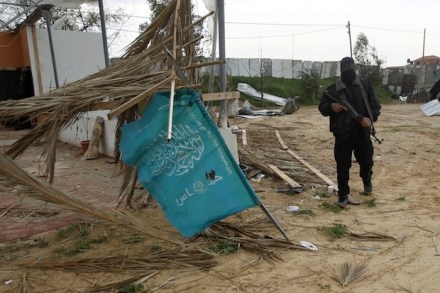
As though the sunny weather and the royal baby were not enough, here comes yet more good news. The European Union has finally banned the military wing of Hezbollah. This is something I have argued for often, including here, here, and here. After recent trials of Hezbollah operatives and Hezbollah operations – including the Bulgaria bombing – on European soil the decision did seem inevitable. Yet there is a cloud on the silver lining - which is that the EU, in somewhat characteristic fashion, has only managed to do a partly good thing. While they have banned the ‘military wing’ of Hezbollah they continue to allow the ‘political’ wing to fundraise and recruit in Europe.

It’s fine to be a ‘new’ atheist, so long as you don’t object to Islam

Rationality can be an overrated quality in politics. Communism was, after all, so rational that it imagined humans as lumps of clay to be moulded at will – with unsuitable ‘elements’ consigned to the Gulag. The attempt to apply rational political criteria to the actions of psychopathic movements has also historically led to erroneous political decisions at home: appeasement in the case of Nazi Germany and a frivolous desire to find materialist ‘root causes’ of Islamic extremism. As the great documenter of Stalinism Robert Conquest put it: Reliance on reason alone is itself irrational: It neglects the instinctual and deep-set elements of the real human being.