Islam

The human stories of slavery

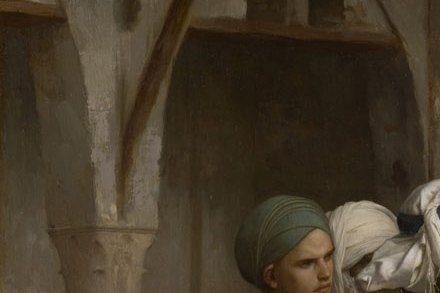
With a new history of slavery and the slave trade in the Islamic world just published, I am under strict instructions not to make any fatwa-related jokes. The Holy Trinity, if I can mix my faith metaphors for a moment, of publisher, agent and wife have advised me strongly against it. ‘No jokes about fatwas, please,’ were my wife’s exact words ahead of an appearance at Chalke History Festival. ‘No one finds them funny.’ I disagree. They can be extremely funny. But on balance it may be wisest to err on the side of caution.

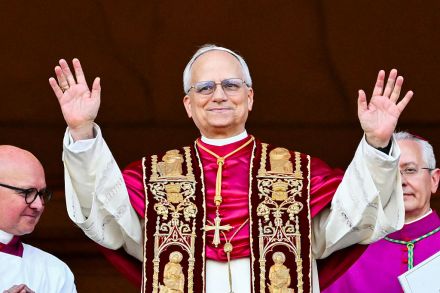
Will Pope Leo stand up to Islam?

From our US edition

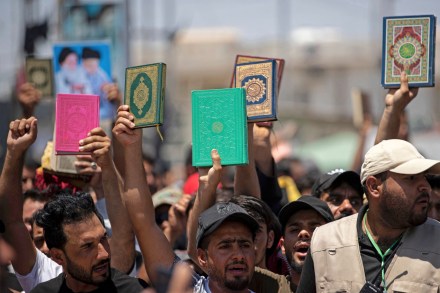
As Muslim migration roils Europe, some Catholic bishops are starting to notice. "For decades, the Islamization of Europe has been progressing through mass immigration,” Polish Bishop Antoni Długosz said July 13, adding that illegal immigrants “create serious problems in the countries they arrive in." Bishop Athanasius Schneider of Kazakhstan spoke more bluntly in March: "We're witnessing an invasion. They are not refugees. This is an invasion, a mass Islamization of Europe." Yet Pope Leo XIV lives in a different dimension. "In a world darkened by war and injustice . . . migrants and refugees stand as messengers of hope," Leo said July 25.

The Spectator and Douglas Murray win UK defamation claim

From our US edition

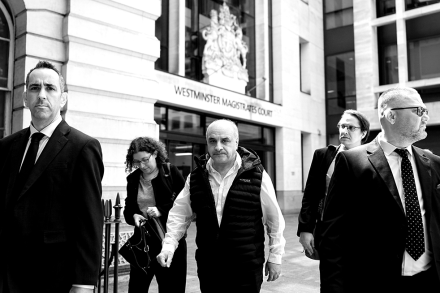
The Spectator and Douglas Murray have today won a defamation claim brought by Mohammed Hegab, who "lied on significant issues" in court and gave evidence that "overall, is worthless." The judge rejected Hegab’s claim because the videos he publishes are ‘at least as reputationally damaging to him as the article’ Hegab, a YouTuber who posts under the name Mohammed Hijab, claimed that an article published in September 2022 about the riots in Leicester, England, had caused serious harm to his reputation and loss of earnings as a result.

douglas murray

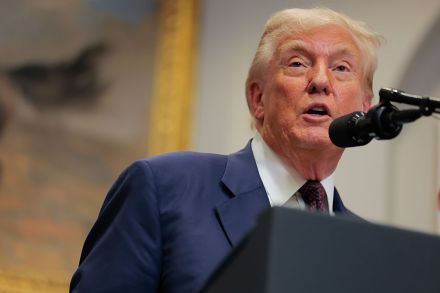
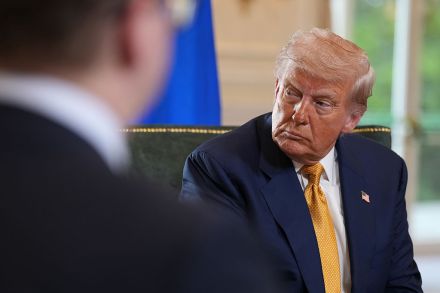
Will Trump take a stand against the Muslim Brotherhood?

From our US edition

Senator Ted Cruz isn’t giving up. Cruz, who believes that the Muslim Brotherhood serves as the “key foundation stone for radical Sunni terrorism,” has just reintroduced – together with five Republican senators and bipartisan support in the House of Representatives – the Muslim Brotherhood Terrorist Designation Act, which he first proposed in 2015. Cruz is no stranger to controversy when it comes to Islam: in March 2016, following a terrorist attack in Brussels, he said that it was imperative to “patrol and secure Muslim neighborhoods” in America before they became radicalized. Now he is reupping his call to focus on the Muslim Brotherhood. Founded in Egypt in 1928, it is a dangerously militant Islamic organization with affiliates around the globe.

Trump unleashes the evangelists

From our US edition

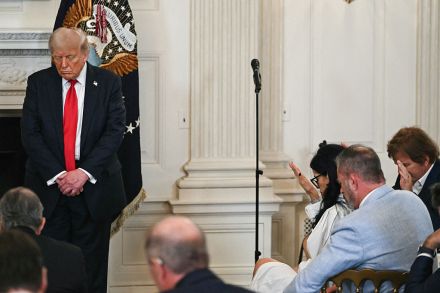
The Trump administration issued a memo Monday saying that federal workers are openly allowed to express religious beliefs in the workplace “to the greatest extent possible unless such expression would impose an undue hardship on business operations.” This means that they can display Bibles, religious artwork and items “such as crosses, crucifixes and mezuzah,” among other religious symbols. But that’s not all. Workers are also allowed to talk about how their own faith is “correct” and how others should “re-think” their beliefs. “During a break, an employee may engage another in polite discussion of why his faith is correct and why the nonadherent should re-think his religious beliefs.

Trump has the resolve to defend the West

From our US edition

There is never a dull moment in the second, more cheerful reign of Donald Trump. I am writing from London, but was in France last week, picking my way through various battlefields and cemeteries in and around Verdun, Bastogne (think “Easy Company” and “Battle of the Bulge”), and Reims. Well-informed readers will know, as I did not, that “Reims” is not pronounced as its letters might suggest but rather as a nasalized “Reince.” I have always associated the place with champagne, and I am pleased to say that the city capitalizes on the association. But one point of interest had nothing to do with that magical elixir. Reims was also the location of General Dwight D. Eisenhower’s headquarters at the end of World War II.

Trump borders

Who knows Iran best?

From our US edition

In a recent interview, Tucker Carlson sat across from Iranian President Masoud Pezeshkian, asking polite, unchallenging questions of a man who represents a regime that has issued a fatwa against a sitting US president and enshrined “Death to America” as a founding slogan. It was a stark contrast to Carlson’s often combative posture with American lawmakers – from mocking Representative Alexandria Ocasio-Cortez to his recent grilling of Senator Ted Cruz – as if democratically elected US officials were more of an adversary than the head of a theocracy with a long record of hostage-taking, terror sponsorship, nuclear brinkmanship and brutal repression at home. But Carlson’s posture is not an anomaly.

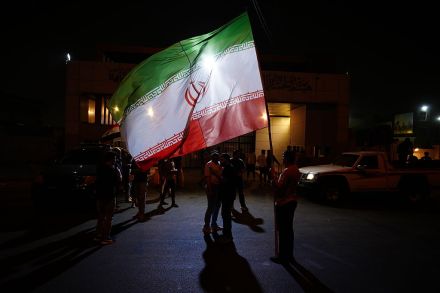
Iranian flag after Israel-Iran ceasefire (Getty)

The unspoken truth about 7/7

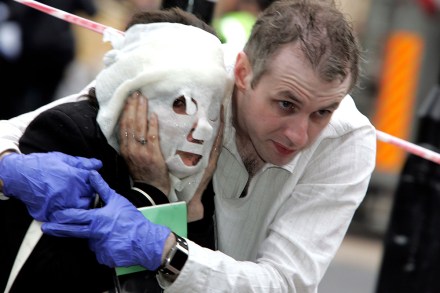
Did you take part in any of the mysterious commemorations last weekend? The newspapers were full of it – something called 7/7, apparently. I read a long report on the BBC’s website about this tragedy but remained entirely unclear as to who killed the people on those trains and bus. The report said ‘bombs were detonated’ on the Tube, as if the bombs – anxious to fulfil their purpose in life – had blown themselves up, without the aid of any external agency. Nowhere in the report did it mention who brought the bombs down from Yorkshire and then set them off. Nowhere in the entire article were the words ‘Islam’ or ‘Islamist’ or even ‘Muslim’ mentioned, nor even the names of the murderers.

Zohran Mamdani’s selective scrutiny

From our US edition

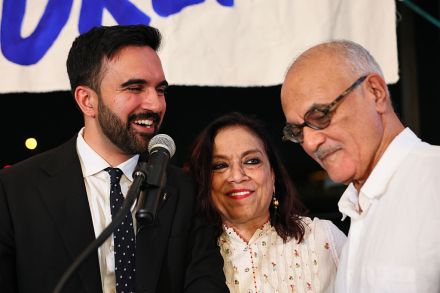
Within weeks of launching his campaign to be mayor of New York City, Zohran Mamdani declared that he was also running to be the first South Asian mayor. He began aggressively courting this demographic, which accounts for around five percent of the city’s population, as well as the seizable total Asian population of almost 15 percent. Mamdani reached out to the desi community with the help of the Indian subcontinent’s great unifier, Bollywood. The Hindi film industry that even those who don’t speak the language in South Asia can relate to. He used a 1980 Bollywood song "Meri Umar Ke Naujawano", roughly translating to "my fellow youngsters", to explain the NYC’s ranked choice voting system using popular desi drink, the lassi, as prop.

Zohran Mamdani

This is a dangerous moment for free speech

Britain without blasphemy laws is a surprisingly recent development. Blasphemy was abolished as a common law offence in England and Wales only in 2008 and in Scotland in 2021. But that was the final burial of a law dead for much longer. The last execution for the crime was in 1697; the last imprisonment in 1921; and the last successful trial in 1977 – Mary Whitehouse’s prosecution of Gay News for publishing a poem about a centurion’s rape of Christ’s corpse. Even if 11 local councils banned Monty Python’s Life of Brian two years later, the trend since has been towards trusting that the Almighty is big enough to fend for himself. Yet this week the clock seemed to have been turned back to around ad 650.

Nazis, killer dogs and weird sex: Empty Wigs, by Jonathan Meades, reviewed

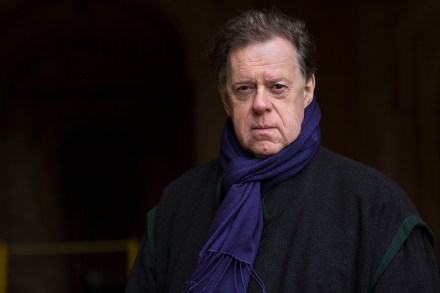
Jonathan Meades is, you might say, a baroque artist in a mannerist age. Whereas today’s younger and more widely feted writers think small – a Brooklyn sublet, a Camden Town love nest, the cracked mirror of the self – Meades goes big. And not just in physical terms (Empty Wigs tips the scales at nearly 3lb), but in scope. Where his contemporaries’ prose can be affectless and somehow skinless (a Paris Review interviewer said of Rachel Cusk, with apparent admiration, that her writing ‘feels contemporary, swift and “clean”’), Meades piles on the style, packing in metaphors, coinages and allusions until the crystals can’t take it, swooping between social classes, doing the police in different voices.

Is Britain ready for blasphemy laws?

In its infinite wisdom, the Labour government appears to be reconsidering the introduction of a blasphemy law in the UK. It has picked up this idea despite it being so idiotic that it was even rejected by the last Conservative government. That well-known theologian Angela Rayner has decided to set up a council to look into the question of ‘Islamophobia’. As mentioned, there was a push to do this during the Conservative era, when a committee including some of the worst people then in public life – Dominic Grieve, Naz Shah, Anna Soubry – looked into the same thing. Their scholarship foundered, as it always will, on how you protect Muslims without simply protecting the feelings of Muslims.

If you have two hours to spare, spend it anywhere but here: The Years reviewed

The Years is a monologue spoken by a handful of actresses, some young, some old enough to carry bus passes. They stand in black costumes on a white stage explaining to us the significance of memory, history and feelings. Then the story begins. The narrator is a precocious chatterbox born in France during the war who has no aim in life other than sensual gratification. She’s not a human being, just a cluster of nerves, like a taste bud, that registers nice or nasty, sweet or bitter. And that’s it. She has no morality. She doesn’t develop personally because her nature isn’t capable of emotional growth. Yet the audience is expected to admire everything she says about her experiences. Sex is her obsession. As a teen, she brings herself to orgasm on the corner of a table.

Extraordinary: The Seed of the Sacred Fig reviewed

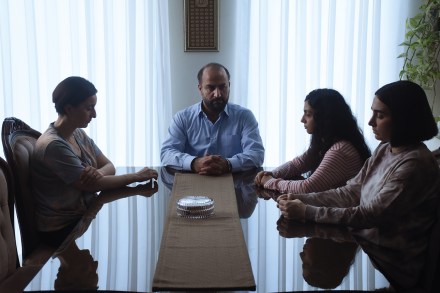
The Seed of the Sacred Fig is by the Iranian filmmaker Mohammad Rasoulof and all you need to know is that it is extraordinary. What you don’t need to know, but may like to know, is that Rasoulof, who has already been imprisoned multiple times by the authorities, filmed it clandestinely while directing remotely from an undisclosed location and then had to flee Iran on foot. The journey was extremely complicated and dangerous and took 28 days. You could never accuse Rasoulof of taking filmmaking lightly. But that’s not the bottom line. The bottom line is: it’s enthralling cinema. The film follows a family in Tehran. Iman (Misagh Zare) is the patriarch who has just been appointed an investigating judge in Iran’s revolutionary court.

For all its fame, the Great Siege of Malta made no difference to the course of history

Strategically located in the narrows of the Mediterranean between Sicily and Tripoli, with a fine natural harbour, Malta has attracted the attention of successive conquerors for two millennia: Phoenician, Carthaginian, Roman, Byzantine, Arab, Norman, Aragonese, French and finally British. In 1565, the island was occupied by a power that was already beginning to look anachronistic: the Knights of the Hospital of Saint John of Jerusalem. The Hospitallers were an aristocratic order of monk-knights, founded at the end of the 11th century to shelter Christian pilgrims and defend the Holy Land during the brief period when it was part of the crusader kingdoms of the Levant.

‘Islamophobia’ and the grooming gangs scandal

At PMQs this week, Kemi Badenoch told MPs that Labour’s adoption of the All Party Parliamentary Group on British Muslim’s definition of ‘Islamophobia’ has inhibited public discussion of rape gangs. She pointed out that, according to this definition, anyone who draws attention to the over-representation of Muslims in the grooming gangs is guilty of Islamophobia. This, she argued, is why some members of the Parliamentary Labour Party have been ‘scared to tell the truth’. She’s right, but the problem runs deeper than that. The definition Mrs Badenoch referred to was drawn up by the APPG in 2018, when the co-chairs were Wes Streeting and Anna Soubry.

William Morris’s debt to Islam

When William Morris was born in Walthamstow, in 1834, it was little more than a clump of marshland at the edge of the Epping Forest. This was the terrain of his free, frolicsome childhood, and it would forever form his image of humble, Edenic England, uncorrupted by the industrialist’s yoke. About the only thing that remains of this prelapsarian Walthamstow, amid its railway lines and brownfield sites, is the family home where Morris grew up, in some splendour – now a gallery dedicated to his artistic legacy. ‘To us pattern designers, Persia has become a holy land, for there our art was perfected’ The landscape has been supplanted, and much of the population transplanted.

The death of free speech in Britain

In Michel Houellebecq’s satirical novel Soumission, the French elite submits to Islamic rule rather than accept a National Front government. Nine years after its publication, submission seems more imminent on this side of the English Channel. My American friends are surprised to learn there’s no equivalent to the First Amendment in Britain. They have forgotten a free press was one of the things their ancestors rebelled to establish in the US. Free speech is a much more recent thing in the UK. If it was born in the 1960s, it seems to be dying in the 2020s. If free speech in the UK was born in the 1960s, it seems to be dying in the 2020s After the recent riots, people were given prison sentences for posting words and images on social media.

The Shabana Mahmood Edition

45 min listen

Shabana Mahmood is the shadow secretary of state for justice. She was born in Birmingham to migrant parents. After studying Law at Lincoln College, Oxford, where Rishi Sunak was a contemporary, she qualified as a barrister and lived and worked in London. First elected to Parliament in 2010, representing Birmingham Ladywood, she was one of the UK’s first female Muslim MPs. On the episode, Katy Balls talks to Shabana about her upbringing in the UK and in Saudi Arabia; how her faith is central to who she is as a person; and her approach to the tricky issues of abortion and assisted dying. Produced by Oscar Edmondson and Cindy Yu.

Waging war through poetry

From our US edition

Poetry is politics in the Yemen. When the last imam of Yemen, who was also the hereditary ruler, was deposed in a coup in 1962, it was a local poet who announced the change of regime on the radio, in verse of course. And the current al-Houthi regime in the north of the country, like all its predecessors, asserts its legitimacy, confounds its enemies and rallies its supporters through poetry. As an aspect of their cause, they have consciously avoided high-Arabic poetry — a literate, urban cultural form — and have made use of the zamil tradition, which immediately speaks not of the palaces of emirs and princes, but takes the listener to sit beside the farmers and Bedouin shepherds in the villages and hills.

poetry