Islam

Meet Farah Ahmed, Jason Arday’s colleague

After the Jason Arday disaster, here is new evidence that things have gone deeply wrong at Cambridge University. We can reveal that a former supporter of Hizb ut-Tahrir, now banned as a terror group, has been appointed assistant research professor of education at Cambridge, in the same faculty as Arday. Farah Ahmed has explicitly attacked “western education” as a “threat” to Muslims, condemned democracy and integration, and criticized British schools for teaching pupils that child marriage is wrong. During her time at Cambridge, she has written that the Islamic concept of education is sharply opposed to “gaining literacy and numeracy and other disciplinary skills demonstrated through qualifications.

farah ahmed

Christian soldiers in retreat – the disastrous Fifth Crusade

The Fifth Crusade, which was fought between 1217 and 1221, marked a new direction for the crusading movement of the Middle Ages. Instead of invading Palestine, as the first three crusades had done, and the Fourth Crusade might have done, the crusaders decided to attack Egypt. That was not the original idea. The formidable Pope Innocent III, who launched the Fifth Crusade, had envisaged a repeat of the old strategy of marching on Jerusalem from the sea. The invasion of Egypt was decided on the initial wave of forces after they had reached the Levant. There was a sort of logic behind the decision. The crusading kingdom of Jerusalem had been destroyed in 1187, when its army had suffered a crushing defeat at the hands of Saladin at the Horns of Hattin above the Sea of Galilee.

Christian soldiers in retreat – the disastrous Fifth Crusade

The Fifth Crusade, which was fought between 1217 and 1221, marked a new direction for the crusading movement of the Middle Ages. Instead of invading Palestine, as the first three crusades had done, and the Fourth Crusade might have done, the crusaders decided to attack Egypt. That was not the original idea. The formidable Pope Innocent III, who launched the Fifth Crusade, had envisaged a repeat of the old strategy of marching on Jerusalem from the sea. The invasion of Egypt was decided by the initial wave of forces after they had reached the Levant. There was a sort of logic behind the decision. The crusading kingdom of Jerusalem had been destroyed in 1187, when its army had suffered a crushing defeat at the hands of Saladin at the Horns of Hattin above the Sea of Galilee.

‘Make Germany normal again’: an interview with Germany’s exiled spy chief

Hans-Georg Maassen is an unlikely dissident. In his trademark three-piece suits and small glasses, he looks more like a law professor. Indeed, that is what he studied, earning a doctorate on the legal status of asylum seekers in international law. This bourgeois exterior is the perfect cover for a man who was Germany’s top spy, charged with protecting the country from the far-right and Islamists. But now he is no longer under the quiet protection of the German state; he is its victim. He is under investigation from the agency he once led, the Federal Office for the Protection of the Constitution (BfV). Like George Smiley, Maassen is a remnant of an older and more powerful country, soldiering on in spite of the decline, trying to preserve what he can.

hans-georg maassen

The obvious truth about anti-Semitism

There are many ways to do nothing. One is to sit on your hands; another is to call for ‘a conversation’. I have noticed quite a lot of calls for ‘a conversation’ since the stabbing of two Jewish men in Golders Green last week. Some politicians and pundits have even been bold enough to call for a ‘national conversation’. This is when you can tell people are pulling out the big guns. One reason I say it is also a variant on doing nothing is because this has happened so many times before. I remember Theresa May standing near the site of the London Bridge attacks in 2017, surrounded by various leaders, insisting that we need to tackle ‘extremism’. The results were a real stunner – even for connoisseurs of inertia.

The only ‘civilization’ Trump will destroy is his own

If, as Donald Trump had threatened, “a whole civilization” had died earlier this month, the whole civilization concerned would have been that of the United States, not of Iran. If an American president had deliberately ordered the death of a civilization – whether or not such a thing is achievable – America’s claim to world leadership would have collapsed. Like, I suspect, many, however, I did not go to bed that night thinking that Trump would carry out his threat. I remember my parents telling me that, during the Cuban missile crisis, people truly believed there might be nuclear conflagration at any moment. It did not feel like that this time. It felt as if Trump had said something frightening and horrible to claim mastery over whatever was going to happen next.

civilization

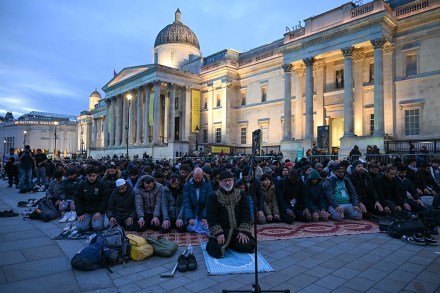
I stand by my comments about Islamic public prayer

Following my appointment as shadow justice secretary, I was moved to a bigger office in parliament. Where once I enjoyed a tiny room directly above the chamber (perfect for rushing to votes), now I have a plush room much further away. It is directly above the irksome Steve Bray, who continues his noisy campaign against Brexit. Of course his anti-social behaviour should mean he is moved on by the police, but these days officers balance the public interest against Bray’s ‘rights’. I recently relied on some Anglo-Saxon vernacular to tell Bray what I thought of his protest, and realised afterwards in today’s upside-down world the police would probably finger my collar – not his. Opponents of Labour’s ‘Islamophobia’ definition warned it would stop us debating religious ideas.

Will books soon become extinct?

I am glad that BBC Radio 4 is producing a series called How Reading Made Us, presented by the subtle, super-literate Times of London columnist James Marriott. I must declare an interest. Roughly 98 percent of my earnings over 45 years have depended on the fact that plenty of people like reading. Now we are thinking harder, however, about the fact that form affects substance. The idea of an encyclopedia, for example, as developed (from classical roots) in the 18th century, was that all needful knowledge on a particular subject could be assembled and consulted in a book or series of books. With AI, there is little need for this form. The form of a book, which often seemed so compendious, can now seem cumbersome. Fiction, too, is affected by form.

books

Another interview goes awry…

Twenty minutes into what seemed a routine softball literary interview for Bloomberg TV in London last month, the conversation took a prickly turn. My interviewer had tripped across some remark in one of my podcast appearances that set her off. So much for talking about my new novel. For the following 20 minutes, leaning over the table and poking at the air between us, she proceeded to hector me about why I seemed to discuss Muslims in general terms rather than as individuals. I objected that she was being disingenuous. Journalists regularly address issues involving groups of people in general terms. (For an opinion piece, I’m to interview all two billion Muslims individually and cite each in turn?

We don’t need Islamo-fashion

When the ghastly Lynda Snell of The Archers ‘did’ fasting last year at Ramadan to suck up to the new Muslim family in town, I thought this kind of thing had got about as silly as it was possible to be. But reading about what happened last week at London Fashion Week took the gluten-free cake.  Non-Muslims either choosing or being compelled to celebrate Muslim holidays has been going on for some time. Understandably if disagreeably, with its Muslim mayor, London splurges on the celebration of Ramadan, decorating Piccadilly – the heart of the city – with 30,000 (sustainable) lights.

Iran: why theocracies survive – with Peter Frankopan

25 min listen

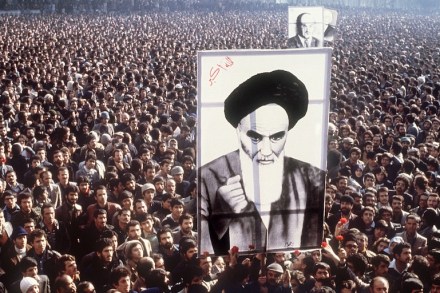
In the 21st century, the theocratic nature of the Iranian regime – ruled by senior Shia clerics – appears to be a rarity. The constitutional role of religion is perhaps matched only by the Vatican City and Afghanistan, though these vary in terms of autocracy – as evidenced by the brutal suppression of protests across Iran in the past few weeks. The regime, installed following the 1979 revolution and led first by Ayatollah Khomeini and now Ayatollah Khameini, has proven remarkably resilient; how has it survived so long?

Why you are probably a hero

From our US edition

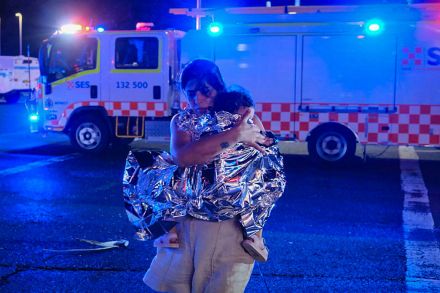
The Bondi murders painted a picture constituted out of the contrast between shade and light. This was the chiaroscuro massacre. But, perhaps because we have become desensitized by endless dark descriptions of mass killings over the years, our attention was as much on the moments of brightness on that Sydney beach: the onlookers who grappled with the shooters, the lifeguards who sprinted towards danger, those who shielded strangers with their own bodies. These acts of heroism seemed all the more remarkable because of all we have been led to believe about how people act in emergencies.This can be summarized in one word: panic. When the going gets tough, ordinary people fall apart.

Bondi

Will bromance bloom between Trump and Jordan Bardella?

From our US edition

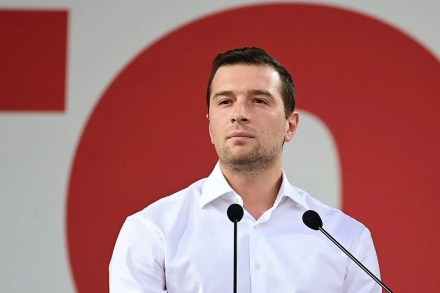
Life has never been so good for Jordan Bardella, the 30-year-old president of Marine Le Pen's National Rally. A recent opinion poll had him as the runaway favorite to win the 2027 presidential election. One man who believes in his credentials is the former president of France, Nicolas Sarkozy. Now out of prison and promoting the book he wrote during his 20-day incarceration, the center-right Sarkozy said that Bardella reminds him of a young Jacques Chirac. Despite Sarkozy’s conviction for criminal conspiracy, he retains a large and loyal fanbase among the metropolitan boomer bourgeois, a demographic that the National Rally has traditionally struggled to attract.

bardella

Bonnie Blue: I stand with Nigel Farage

From our US edition

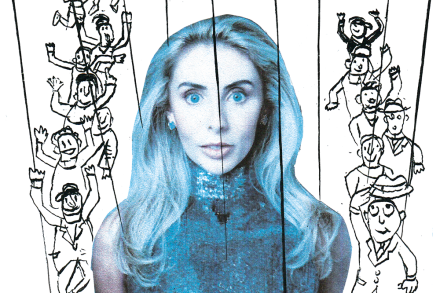
I have sweet memories of Christmas. My dad is proper old-school and would set up the video recorder. I don’t think we’ve ever watched the footage; I don’t know if he was even filming. But we couldn’t do anything until it was filmed. We never had loads of money, but Mum always went above and beyond. There was gold wrapping paper for presents from Santa. My family say I’m impossible to buy for now I’m better off. This year, I’ve asked for Disney princess pajamas. Christmas is a time for me to give back. Last Christmas was a bit of a shock. I was due to be in Australia but was then banned for my sexual stunts. My family was glad because it meant they got me for Christmas. Not that I’m much help. Cooking isn’t my forte.

Yes, Europe’s civilization is being erased

From our US edition

Last week the Trump administration expressed its fear that Europe faces "civilizational erasure." Its concern was articulated in a 33-page National Security Strategy that outlined Donald Trump’s world view and how America will respond economically and militarily. The sentence that caused the most reaction on the other side of the pond was the assertion that, if current trends continue, Europe will be "unrecognizable in 20 years or less." Those trends are mass immigration and what conservative French commentators call the "Islamification" of Europe. If Europe doesn’t address these trends, the Trump administration predicts the continent’s "civilizational erasure.

ISIS is stirring once more

Indications that the Islamic State (ISIS) has begun to employ artificial intelligence in its efforts to recruit new fighters should come as no surprise. At the height of its power a decade ago, Isis was characterized by its combination of having mastered the latest methods of communication with an ideology and praxis that seemed to have emerged wholesale from the deserts of 7th century Arabia. In 2014 and 2015, ISIS recruitment took place on Twitter and Facebook. YouTube was the favored platform for the dissemination of propaganda. The group's videoclips of its barbaric prisoner executions, including the beheadings of a series of western journalists and aid workers and the immolation of a captured Jordanian pilot, became the organization’s gruesome trademark.

isis

What Islam can teach us about AI

From our US edition

In Islamic cosmology there are three orders of intelligent beings. Angels, made of light, have no choice but obedience. Humans, formed from clay, carry the burden of free will. Between them live the djinn, created from “the smokeless flame of fire.” The djinn are, in many ways, like people, but they categorically are not people – from their constitution to their morality. Like the Good Neighbors of British and Celtic tradition, the djinn exist in parallel to us. They think and decide, marry and worship, and are fallible, just as we are. The Qur’an describes some as believers and others as not: “And among us are Muslims [in submission to Allah], and among us arethe unjust.

islam

Uzbekistan by high-speed rail

From our US edition

I am in Tashkent, the capital of Uzbekistan. I am standing in a historic complex of madrasas and mosques, courtyards and dusty roses and I am staring at the “oldest Quran in the world.” It is a strange and enormous thing: written in bold Kufic script on deerskin parchment; it was supposedly compiled by Uthman ibn Affan, the third Caliph of Islam, who was murdered while reading it. And so it is, as I linger here and reverently regard the Book, while scrolling my phone for more fascinating info, that I discover the world’s oldest Quran is actually in Birmingham. Yes, that’s right, Birmingham, England. It’s probably in some obscure library, lodged between a thesis on post-colonial emojis and a flyer for Falafel Night.

Georgia Toffolo: In defence of my husband James Watt

Rough justice Sir: The Church Commissioners’ plan to establish a £100 million (rising to £1 billion) fund for ‘reparative justice’ is indeed ‘the most egregious example of lanyard Anglicanism’ as your leading article says (‘Laud’s prayer’, 11 October). It is deeply flawed in conception, substance and process – and is especially ill-judged when parish clergy are atrociously paid and many parishes face an existential crisis. The critique made by the Policy Exchange paper ‘The Case Against Reparations’, written by Professor Lord Biggar, Dr Alka Sehgal Cuthbert and me, is reasonably well known.

The mayor of Dearborn called me an ‘Islamophobe’

From our US edition

I didn’t remotely expect to go viral when I walked into the city council meeting here in Dearborn, Michigan, last week. But I’m glad I did. I say that not out of ill will towards the honorable mayor, Abdullah Hammoud, who called me an “islamophobe” for objecting to the name chosen for two intersections. I say it because the incident makes me think of much more serious experiences of prejudice against fellow Christians in so many Islamic countries around the world – and now also in western countries. This problem urgently needs to be counteracted with the type of peace (please, not hostility) and freedom that we have often enjoyed in Christian-influenced countries.

Abdullah Hammoud