Iran

The only ‘civilisation’ Trump will destroy is his own

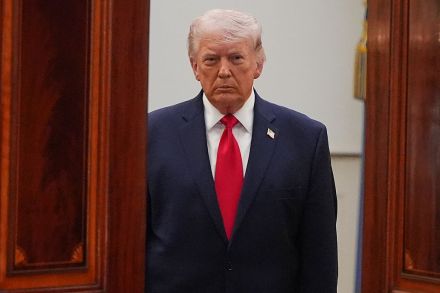
If, as Donald Trump had threatened, ‘a whole civilisation’ had died on Tuesday night, the whole civilisation concerned would have been that of the United States, not of Iran. If an American president had deliberately ordered the death of a civilisation – whether or not such a thing is achievable – America’s claim to world leadership would have collapsed. Like, I suspect, many, however, I did not go to bed that night thinking that Trump would carry out his threat. I remember my parents telling me that, during the Cuban missile crisis, people truly believed there might be nuclear conflagration at any moment. It did not feel like that this time.
Trump: the boy who cried war

From our UK edition

Did Donald Trump ever intend to obliterate Iranian civilisation?  Some will see the past week as one in which the world pulled back from the brink, when an unhinged US president experienced a rare moment of lucidity at the last crucial minute. Trump’s oscillation is, his defenders argue, the ‘madman theory’ in operation. This was the name given to the approach employed by Richard Nixon in Vietnam, when he tried to persuade the North Vietnamese that he had become so unstable he was capable of just about anything – nuclear annihilation included. Nixon believed his foe would have no option but to come to the negotiating table. Trump has succeeded in convincing many western commentators that he is genuinely on the point of lunacy – heedless of slaughter.

What do you do with a captured soldier?

From our UK edition

What do you do with a captured soldier? In 255 BC, fighting the Carthaginians, the Roman consul and general Marcus Atilius Regulus was taken prisoner near Tunis. They sent him back to Rome, having sworn an oath that he would ensure the release of some important Carthaginian prisoners; but if he failed, he himself would return to Carthage. Regulus went back, informed the Senate of his mission, took no part in the discussions or the vote, except saying that the prisoners were fine, active young officers, while he was bowed with age. The Senate decided not to return them, and Regulus made his way back to Carthage, well aware of the consequences.

What will the Iran ceasefire cost Trump?

Might Donald Trump travel to Tehran this spring to open an American embassy and declare that he’s fallen in love with the new Iranian leadership? His volte-face on Tuesday night – announcing a two-week ceasefire with Iran – suggests that Trump is embarking upon a new course in the Middle East. After threatening to bomb Iran back to the Stone Age, Trump announced that it’s time to call the whole thing off: “We received a 10-point proposal from Iran, and believe it is a workable basis on which to negotiate.”  What that negotiation will look like is an open question.

ceasefire

Why Trump is tempting 25th Amendment talk

During his remarks in Budapest, Vice President J.D. Vance, who is trying prop up Hungarian Prime Minister Viktor Orbán as he runs for reelection, appeared to think the unthinkable. Vance, who has been a hero for MAGA anti-interventionists, went all-in on attacking Iran. He indicated that America might resort to “tools” in its arsenal that “we so far haven’t decided to use.” Now the White House is denying that it plans to deploy nuclear weapons against Iran, after frenzied social media speculation that it might. Negotiations with Tehran are ongoing – and Trump told Fox's Bret Baier that "if negotiations move forward today, and there is something concrete" that tonight's 8 p.m. deadline "could change.

25th amendment

The new battle over American airspace

Last month, a mysterious drone swarm led to a lockdown at Barksdale Air Force Base in Louisiana. Nothing was damaged and none of the 40 B-52 bombers or their cruise missiles were hit. At least not this time. But modern war no longer starts with an open attack. Instead we see hybrid actions: cyberattacks, information and psychological operations, GPS disruptions, damage to undersea communication cables and, increasingly, drone incursions into military sites and critical infrastructure. There is rarely a formal declaration. Russia’s invasion of Ukraine, the largest war in Europe since the Second World War, was labelled a “special military operation.

Trump’s threat to destroy Iran is detailed and credible

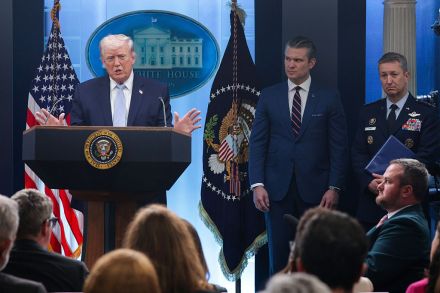
Monday’s White House press conference came in two distinct parts. The first was an extraordinary tale of heroism in the rescue of two downed pilots. America’s military and intelligence leaders provided details that were new to the public. The danger of a daytime rescue mission in the face of enemy fire. The harrowing climb by one officer to a crevice in the mountains. The technical sophistication needed to find him. And the misdirection executed to confound Iranian forces in the area, determined to capture the American serviceman before help arrived.  It was impossible to listen to that tale of bravery and professional excellence without an overwhelming sense of patriotic emotion, suffused with gratitude for the men and women who have pledged their lives to keep America safe.

Trump
Hegseth

Is Pete Hegseth waging a Christian Zionist war?

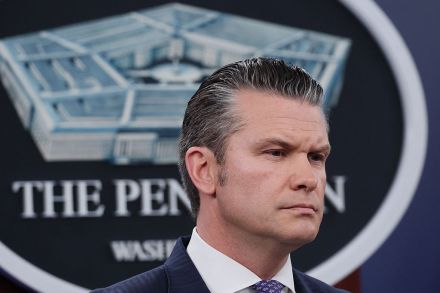
In his war briefings, Pete Hegseth pushes religion almost as much as US military might. This has raised questions about whether the War Secretary is a Christian Zionist – and if he views current events in the Middle East as prophetic of the end times. His Pentagon updates often include prayers, Bible readings and religiously-inflected statements about pursuing “overwhelming violence of action against those who deserve no mercy.” When asked during his 2025 Senate confirmation hearing if he was a "Christian Zionist," Hegseth affirmed, "I am a Christian, and I robustly support the state of Israel.

Will Trump really obliterate Iran on Tuesday?

Was Donald Trump’s profane and threatening tweet, which included an F-bomb and an allusion to Iran’s leaders as "crazy bastards," on Easter Sunday itself a bunch of BS? Trump is riding high after the daring rescue of an American airman from Iran, but its leadership doesn’t appear to be overly impressed by his tweet threatening a major attack on Tuesday if the Strait of Hormuz is not reopened. On Saturday, Iran’s military leadership indicated that it had no intention of complying with Trump’s demands, dismissing his vow to destroy its infrastructure as a "helpless, nervous, unbalanced and stupid action.

Trump

Why Pakistan is brokering peace in Iran

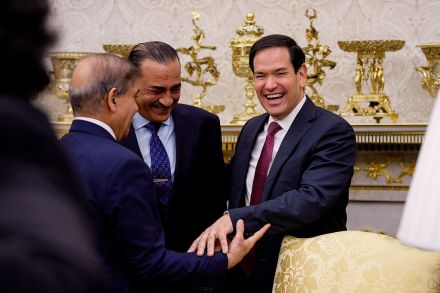
Pakistan, the world’s only Muslim nuclear power, has traditionally been an international sideshow. No longer. The country has reportedly been passing messages between Washington and Tehran in efforts to bring an end to the Iran war. It is has a five-point plan aimed at restoring “peace and stability” across the region. How have the Pakistanis pulled off this remarkable diplomatic makeover? The answer starts with some critical decisions the Pakistanis took last year. After the four-day armed conflict between Pakistan and India in May 2025, both sides claimed “victory”. But crucially Islamabad publicly acknowledged Washington’s role in achieving a ceasefire (something India refused to do). Pakistan later nominated President Donald Trump for the Nobel Peace Prize.

Pakistan

This is what Trump means by ‘victory’ in Iran

President Trump has now told us something very important about the war with Iran. Ponder his address to the nation this week and you discover how he defines victory. Nothing that happens from here on out will change that. As Trump sees it, he is the winner, having achieved all his goals. He has accomplished regime change in Iran by eliminating the men who led the regime when the war started. America has so damaged the country’s military infrastructure that it will not be able to produce or deliver a nuclear weapon for at least a decade, by which time it will be up to a future American president to take the needed action. So, no need to cart away or destroy Iran’s enriched uranium.

iran

Ignore the propaganda war

Prediction: by the time you read this, the joint US-Israeli operation in Iran will be all but over. In fact, it had mostly ended by the start of April. The Kool-Aid-dispensing press has been telling us since the conflict began that Iran was winning. They wanted it so badly to be true. Being adept at magical thinking, they also believe that what they wanted to be the case would suddenly, hey presto, become the case. A cover story in the Economist declared “Advantage Iran.” “A month of bombing Iran,” that once-sober publication announced, “has achieved nothing... For now, at least, the advantage lies with the Islamic Republic.” Not to be outdone, the Financial Times weighed in with “Iran could emerge from the war stronger and more dangerous.” Right. Iran’s navy? Sunk.

propaganda war trump iran

Donald Trump is going on a firing spree

The surprising thing isn’t that Donald Trump fired his attorney general Pam Bondi and appointed Deputy Attorney General Todd Blanche her temporary successor. It’s that he waited as long as he did. After exercising what is for him unusual restraint – his cabinet was in a state of perpetual upheaval during his first term as president – Trump is going on a firing spree. "He’s very angry, and he’s going to be moving people," one top administration official told Politico yesterday. Next on the chopping block could be a host of Trump loyalists – Commerce Secretary Howard Lutnick, Labor Secretary Lori Chavez-Remer, FBI Director Kash Patel, and Director of National Intelligence Tulsi Gabbard – whom the President has found wanting.

trump

Operation Epic Fury is costing Trump his coalition

As US troops flock to danger, Donald Trump seeks ways to disentangle himself from the war on Iran. “We are on track to complete all of America’s military objectives shortly, very shortly,” he said in a 19-minute address at the start of the month. “It’s very important that we keep this conflict in perspective.” What’s increasingly clear is that, despite its tactical successes, Operation Epic Fury is turning into a strategic quagmire and a political miscalculation. The President’s approval rating has sunk to -18 percent, the lowest in his second term. Among independents, Trump is on -45 percent, the worst recorded score of any second-term president. That is the perspective concerning the White House.

epic fury

How bad could the energy price crisis get in Britain?

The energy price surge caused by war in the Middle East has sent shockwaves through Westminster. It has pushed up inflation and the cost of borrowing, causing panic in the cabinet and the recognition that government intervention could be needed on a vast scale to support the cost of living. The UK Prime Minister told a private audience: "The assumption that the growth of the developed countries can proceed steadily on the basis of cheap energy has been shattered almost overnight." He further observed: "The problem is not simply one of inflation. It is the whole structure of the economy." In the Treasury there is something approaching a siege mentality. The Chancellor has "to spend [her] time firefighting.

energy crisis
iran

Trump’s rambling Iran address was full of wishful thinking

In his nationwide address on Wednesday, Donald Trump could not have been clearer about the course of the Iran war. It’s not ending any time soon and there will be no deescalation of military force. Instead, channeling his inner General Curtis LeMay, Trump announced, “We are going to hit them extremely hard over the next two to three weeks. We’re going to bring them back to the stone ages where they belong.”  No, they don’t. It was a jarring reference to an ancient and proud Persian civilization that has been commandeered by a gang of thugs.

war

Trump touts the successes of his war for peace

“Ceasefire!” Some people worried that President Trump was taking to the air waves tonight in order to declare a ceasefire with Iran. That, clearly, was what Masoud Pezeshkian, the President of Iran hoped for in his careful, lengthy and mendacious “Letter to the American People” today. Pezeshkian said that “portraying Iran as a threat is neither consistent with historical reality nor with present-day observable facts.” Tell that to the hundreds of American victims of Iranian aggression. Tell it to the thousands of victims of Iran’s proxies like Hezbollah and Hamas.  President Trump was having none of it.

Portrait of the week: Oil prices surge, Scott Mills is sacked and the Houthis join the war

From our UK edition

Home Sir Keir Starmer, the Prime Minister, said: ‘We are working on a viable plan for the Strait of Hormuz.’ Insisting that ‘it’s not our war, but it is our duty to protect British citizens’, he urged business leaders to help protect households from soaring prices. Brent crude sloshed up to $116 and back a little. From 1 April average household energy bills fell by the equivalent of £117 a year, until they go up in July. Some 12 million drivers mis-sold car finance agreements will receive compensation averaging £829. A 17‑year‑old boy admitted shoplifting goods worth £137,342 from branches of Boots and £2,415 from Holland & Barrett shops in London. A Tesco supermarket in Orkney gave away bananas after accidentally ordering 38,000 of them.

Russia has its eyes on Svalbard

From our UK edition

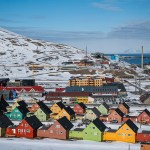
Svalbard The quiet hillside by Longyearbyen’s church gives visitors to the capital of Norway’s Svalbard archipelago an austere but beautiful panorama of the bay that cradles the town. Tall, sharply steep mountains, blanketed with snow, collide with the blue-grey waters of the Arctic below. From that hillside, I watched the quiet bustle of Longyearbyen. Since Donald Trump threatened Nato with the biggest crisis in the alliance’s history by stating his desire to take control of Greenland in the name of US ‘national security’, Svalbard’s residents have been uneasily looking westward. The US President has repeatedly claimed that only he can prevent the island, which is just 185 miles from Svalbard, being used as a staging post for an attack on the West by Russia or China.

Britain must recognise Somaliland

From our UK edition

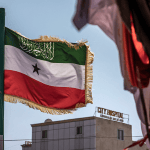
Somalia has been a byword for failed statehood and violence for so long that the calm of Somaliland, its neighbour to the north-east, feels almost miraculous. In contrast to Mogadishu, the bustling streets of Hargeisa, Somaliland’s capital, aren’t patrolled by grim-faced soldiers. Government offices aren’t huddled behind blast walls and protected by foreign troops. You can wander into a restaurant and enjoy camel steaks (a national speciality) without worrying about al-Shabaab terrorists. It is a former British colony which, for 30 years after independence, was joined to what had been Italian Somaliland.