Iran

The Washington Delusion

In one sense, of course, John McCain is correct to say: “The president saying that we didn’t want to be perceived as meddling, is, frankly, not what America’s history is all about.” And while one may say that, more often than not, the United States has been one of, for want of a less crude way of putting it, the Good Guys even that country’s admirers must acknowledge that this has not always or universally been the case. And that has led to problems. It also, frankly, makes one pretty happy that John McCain ain’t President. Relatedly, it would be useful if Obama’s advisors ceased this sort of nonsense: But

Talking Tough on Iran

If you knew that you were likely to be framed by the police, would you go ahead and commit the crime anyway, reasoning that you had nothing to lose? Would that be the sensible thing to do? Then, at trial, suppose you decided that, even though you were innocent of the charges brought against you, it would be sensble to behave in a manner that gave the jury reason to suppose that you might in fact be guilty after all. Would that be a sensible policy? That’s the rough-and-ready comparison I’d draw with the question – still vexed, it seems – of how to talk about events in post-election Iran.

Commentariat v Bloggertariat event

Really interesting debate on who is winning the Blog/Comment War last night at Edelman HQ in Victoria Street. I tried to argue that they are part of the same continuum. I have never seen them as particularly antagonistic.  I suggested that we are yet to see a “classic” or “great” blog posting in the way that you have memorable comment pieces that stay with you for life. Peter Beaumont’s Observer piece about Iran at the weekend is one such article. There has been some good discussion of the debate at journalism.co.uk and Mark Reckons. Mark (a Lib Dem blogger) has challenged my assertion that there are no classic blog posts and

David Cameron Fails his Persian Exam.

Iain Dale, however, thinks Cameron passed with flying colours. I suppose it was merely a matter of time before the “Why Won’t Obama Come to the Aid of the Protestors?” meme spread to this side of the Atlantic and now, courtesy of the good* Mr Dale, it has. And apparently Gordon Brown and David Milliband havel also failed to help the Iranian regime by offering sufficiently forceful denunciations of their behaviour. That’s not what Iain wants, but it’s what would have happened if the President, Prime Minister and Foreign Secretary had followed his advice. Iain’s post is headlined “What Would Thatcher & Reagan Have Done About Iran?” which is itself

Blogging the Revolution

I was playing cricket* yesterday, so wasn’t able to follow events in Iran too closely. Happily, Andrew Sullivan’s blog means that it’s easy to catch-up. Andrew, of course, has been at his considerable best these past few days, but yesterday’s marathon live-blog was something else. Newspapers, at least in this instance, are now the second draft of history; blogs, Youtube, camera phones and Twitter are the first. Reading Andrew’s live-blog – a compendium of tweets from Iran, video footage, stills photography, commentary and links to other sources of information around the web – is a pretty draining experience; producing it must have exhausted Andrew and his brace of helpers, Chris

What matters more: the Iranian bomb or Persian political reform?

In his cover story for this week’s edition of the magazine James is, quite characteristically, honest enough to acknowledge that the consequences of attacking Iran would be “horrendous” and, of course, he is also right to argue that there are any number of terrible possibilities if Iran does acquire nuclear weapons. He sums them up: It would spark an arms race across the Middle East. Many in the intelligence community are convinced that Saudi Arabia has a deal with Pakistan to buy a bomb off the shelf if Iran goes nuclear: a Shiite bomb must be countered with a Sunni one. Iran would also step up its support for disruptive,

The Ridiculous Glibness of National Review

Could American conservatives be any more glib? Here’s Rich Lowry, editor of National Review, in a post titled Obama Throughout History: On the Sack of Rome: “Any time a major urban area is plundered so quickly, it is concerning to us. We are sure the Gauls and Chieftain Brennus understand Roman worries about the utter devastation of their city.” On the Blitz: “Any time a city is bombed for 57 straight nights, we take notice. That is something that interests us. We hope all national air forces involved in this dismaying conflict behave responsibly.” On the creation of the Berlin Wall: “Any time a barrier divides people we get worried,

The People Who Are Not Marching Through Tehran Matter Too

How best to help the Iranian dissidents? George Packer suggests that they need our aid and encouragement and that, despite what many people think, we shouldn’t worry too much about any putative backlash. In one sense this is fair enough, given that the regime is blaming outside interests for whipping up dissent anyway. But, well, first here’s what Packer has to say: A number of writers seem to know exactly what the Iranians in the streets want from us, and what they want is for us to stay out of it. I wonder how many Iranians these writers have talked to. But even if you don’t have Iranian contacts, you

Mousavi and the South African Example

Democracy in America goes back to pre-election profiles of Mir Hossein Mousavi and finds a “cautious, pragmatic, vague and increasingly shrewd politician.” This seems a fair verdict and, as we know, Mousavi can hardly be the perfect poster-boy for liberals since, if he were, he wouldn’t have been permitted to stand in the first place. But that was then and this is now. The movement is bigger than Mousavi now and it’s hard to see how much of it he and his advisers really control anyway. What can be said is that reform is a process, not an event. Furthermore, I would hazard that the regime faces a pretty bleak

Neocons in a Persian Wonderland

Apparently black is white and up is down when it comes to some people’s analysis of events in Iran. Here, for instance, is our old friend Stephen Hayes: Obama says he doesn’t want to be seen as “meddling” given the long history of US-Iranian relations. Leave aside the question of whether simply stating the obvious is “meddling.” If the majority of Iranians believe that Ahmadinejad’s re-election is not legitimate, isn’t it more likely that Obama’s silence in the face of a stolen election will be viewed as another chapter in that long history rather than the end of it? There’s a simple answer to this: no it is not likely

Obama's Alliance with the Iranian Regime? Really?

Remember how in the months before the Iraq war, anyone who doubted the wisdom of military intervention was accused of being “objectively” on Saddam Hussein’s side. I do, not least because I was quite happy to so label folk. Sad times. Anyway, I see Robert Kagan has returned to that theme in his column today. It’s just like the good old days… It would be surprising if Obama departed from this realist strategy now, and he hasn’t. His extremely guarded response to the outburst of popular anger at the regime has been widely misinterpreted as reflecting concern that too overt an American embrace of the opposition will hurt it, or

The Cynical Case Arguing that Mousavi Doesn't Matter At All

Beneath the headline Iran’s Brave Revolutionaries Can Change Nothing But the Faces Con Coughlin sighs, lights a cigar, pours himself another brandy and explains to those folk foolish enough to believe that anything can change for the better in Iran just why they’re not much more than a bunch of naive, though charmingly well-intentioned, fools: For the past 30 years, Mr Mousavi and his supporters have demonstrated their unswerving dedication to the cause of revolutionary Islam. Under his premiership in the late 1980s, Iran came close to all-out war with the US and its allies during the death throes of the Iran-Iraq war. The greatest advances in the country’s nuclear

Is the Iranian Regime More Irrational Than it was Last Week?

Ezra Klein has copped some stick for his observation that: There are a couple things to say about this, all of them depressing. First, those of us who have long argued for the fundamental rationality of the Iranian regime have seen our case fundamentally weakened. A rational regime might have stolen the election. But they would not have stolen it like this, where there is no doubt of the theft. I a) disagree with Ezra and b) think he’s being too hard on himself. That is, there is a difference between the rationality of the Iranian regime’s foreign policy and its attitude towards domestic dissent. One can believe that Iran

Is this 1989 in Poland or 1989 in China?

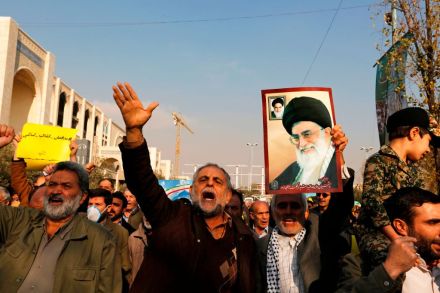
That’s a gross simplification, of course, but it’s also, in the broadest terms, the question. Or one of them, anyway*. The death – no, murder – of a protestor increases the stakes still further. Meanwhile, what’s happening in the provinces? Photo: AFP/Getty Images Iranians carry a wounded protestor after gunmen opened fire during an opposition rally in Tehran on June 15, 2009. One protestor was shot dead and several were wounded during a rally in Tehran staged by hundreds of thousands of people demonstrating against the re-election of President Mahmoud Ahmadinejad, a local Iranian photographer told AFP. The incident occurred in front of a local base of the Basij volunteer

Iran Coverage: New Media vs MSM

I agree with James’s view that this New York Times’ blog is doing an excellent job of keeping one up-to-date on the turmoil in Iran. I’d also recommend Andrew Sullivan’s site. What happens next is, frankly, anyone’s guess. But something is happening and the situation is so fluid that it’s difficult for newspapers to keep up. That is, the internet and technology – Youtube, Twitter, blogs etc – is transforming the way we follow breaking news and permitting one to have a better, if still necessarily imperfect, understanding of what may or many not be going on. It’s sometimes said that the internet rewards certainty at the expense of nuance

Bait & Switch in Persia

Iranian riot policemen stand guard outside the British embassy in Tehran on June 15, 2009 during a protest by supporters of President Mahmoud Ahmadinejad against European interference in the Islamic Republic’s latest election results. EU foreign ministers expressed ‘serious concern’ at Tehran’s crackdown on opposition protesters and called for a probe into the conduct of the June 12 presidential election. Photo: Atta Kenare/AFP/Getty Images. This is, I think, a telling protest. While the opposition is rallying in central Tehran, the regime retreats to the time-honoured tradition of rallying the masses against perfidious foreign interference. In that sense, the twin protests illuminate the contrasts between those looking to Iran’s future and

Caption Contest: Ahmadinejad Edition

TEHRAN, IRAN – JUNE 14: Iran’s President Mahmoud Ahmadinejad holds a press conference on June 14, 2009 in Tehran, Iran. Photo: Majid/Getty Images. Well, you’d be chuckling if you’d stolen an election too, wouldn’t you? Suggestions for what Ahmadinejad is saying here are, of course, encouraged…

What Should Obama Say About the Iranian Elections?

Since I’ve been sceptical about some of Barack Obama’s rhetoric on democracy promotion and human rights, Stephen Hayes’s comments at the Weekly Standard merit some attention: Obama could tap into the enthusiasm and frustration of the protesters with a few well-chosen words about democracy, the rule of law, the will of the people, consent of the governed and legitimacy. He could choose a compelling story or two from inside Iran to make his points most dramatically, perhaps an anecdote about sacrifices some Iranians made to vote or an example of post-election intimidation. When Barack Obama was elected, his supporters promised that his foreign policy would seek to effect important change

Ahmadinejad's American Supporters

I don’t pretend to have a sophisticated grasp on the complexities of Iranian politics and society, but it’s worth noting that Ahmadinejad had support outside Iran too. To wit, Daniel Pipes: while my heart goes out to the many Iranians who desperately want the vile Ahmadinejad out of power, my head tells me it’s best that he remain in office. When Mohammed Khatami was president, his sweet words lulled many people into complacency, even as the nuclear weapons program developed on his watch. If the patterns remain unchanged, better to have a bellicose, apocalyptic, in-your-face Ahmadinejad who scares the world than a sweet-talking Mousavi who again lulls it to sleep,

Godwin's Law: The Persian Variation

For real: Iranian President Mahmoud Ahmadinejad on Wednesday accused his election rivals of adopting smear tactics used by Germany’s dictator Adolf Hitler and said they could face jail for insulting him. Ahmadinejad was speaking at a rally in Tehran on the final day of an increasingly bitter and hard-fought election campaign, in which he faces a growing challenge from moderate former prime minister Mirhossein Mousavi. Mousavi and the two other candidates say Ahmadinejad has lied about the state of the economy which is suffering from high inflation and a fall in oil revenues from last year’s record levels. Ahmadinejad said his rivals had broken laws against insulting the president. “No